
The case of North Carolina resident Swetha Neerukonda and her 3-year-old daughter has drawn widespread attention after the child suffered a severe anaphylactic reaction on a Qatar Airways flight allegedly triggered by a Kit Kat bar given to her by a flight attendant. The incident, now at the center of a $5 million negligence lawsuit, has raised urgent questions surrounding how airlines manage allergy-related safety risks, the responsibilities of flight crews when informed of medical conditions, and what protocols exist when life-threatening emergencies occur mid-flight.
The lawsuit claims that clear warnings were given multiple times regarding the child’s severe dairy and nut allergies, yet a crew member still provided the toddler with a common candy containing milk. What followed was a rapid and dangerous decline in the child’s condition, two hospitalizations, and questions about whether the airline failed to act in accordance with its legal and procedural duties during the emergency.
The allegations and circumstances surrounding the incident provide a complex look into flight preparedness, emergency medical response limitations in the air, and increasing concerns among traveling families dealing with severe food allergies.
Warnings Before and During the Flight
Before boarding Qatar Airways flight QR710 from Washington Dulles International Airport on 9 April, Swetha Neerukonda made the cabin crew aware that her daughter had life-threatening allergies to dairy and nuts. The lawsuit states that Neerukonda gave these warnings clearly and repeatedly, including upon boarding and later during the flight. These warnings, the complaint argues, placed a clear duty on the crew to ensure that no food containing allergens would be offered to the child. For passengers with severe allergies, proactive communication is a common and necessary precaution, especially during long-haul international flights where food service is standard and exposure risks can be high.
The lawsuit contends that the staff not only acknowledged these allergy warnings but agreed to be mindful of them. However, the situation took a troubling turn when Swetha Neerukonda briefly left her seat to use the bathroom. According to the complaint, a flight attendant agreed to watch the child during this time. This interaction, the lawsuit says, included yet another reminder of the allergy, which the flight attendant allegedly confirmed.
When Swetha Neerukonda returned to her seat, she discovered that the flight attendant was feeding her daughter a Kit Kat bar. Given that Kit Kat contains milk, this represented direct exposure to the allergen she had repeatedly tried to prevent. The lawsuit states that when confronted, the flight attendant admitted to giving the child the chocolate but responded by minimizing and dismissing Neerukonda’s concerns. The shock of the situation was compounded by how swiftly the toddler began reacting.
The complaint describes the child’s oxygen saturation levels dropping and her physical condition deteriorating within a short period, symptoms consistent with anaphylaxis, a rapid and life-threatening allergic response that can impair breathing and organ function if not treated immediately.
Read : Passengers Remove Clothes, Faint on Qatar Airways Plane as AC Stops Working in Greece
The lawsuit claims that the cabin crew did not follow essential emergency response procedures once the child’s condition worsened. According to the allegations, no announcement was made to request medical assistance from passengers onboard, a common practice in medical emergencies on commercial flights. Instead, Swetha Neerukonda administered an EpiPen that she had brought with her. While the child stabilized enough to continue to the connecting airport in Doha, the situation was far from resolved, as subsequent events demonstrated.
Emergency Care and Recurrent Reactions After Landing
After the plane landed in Doha, the family continued their travel to India as originally planned, but the episode was not over. Once they arrived in India, the child suffered a second severe anaphylactic reaction, requiring immediate medical attention and admission to an intensive care unit. The lawsuit notes that the toddler remained in the ICU for two days receiving treatment before she stabilized. Anaphylaxis can recur hours after the initial reaction, and secondary reactions often require close monitoring in a hospital setting.
The lawsuit asserts that the extended physiological and emotional distress endured by the child demonstrates the severity of the in-flight exposure and the lasting medical consequences. The legal complaint underscores that the mother was largely left to manage the medical crisis alone. It states that the flight crew should have taken a number of steps, including making an urgent announcement requesting medical professionals onboard and utilizing ground-based telemedicine support, which many airlines employ during emergencies.
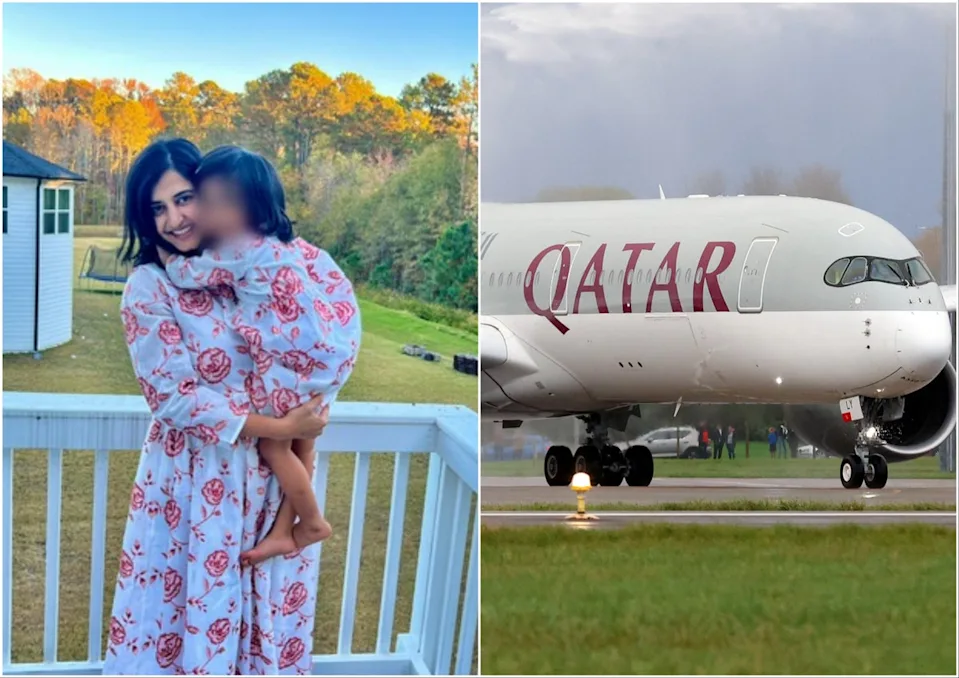
Additionally, while airlines are required to carry emergency medical kits that include vials of epinephrine, United States regulations do not require them to carry auto-injectors such as EpiPens, which are specifically designed for quick treatment without medical training. Because vials of epinephrine require medical expertise for correct dosing and administration, passengers may not be able to rely on airline medical kits unless a doctor or paramedic is present.
There have been multiple recent incidents of severe allergic reactions on major airlines, some resulting in emergency landings, and others prompting legal action. These cases highlight a persistent question: whether airlines should be required to carry EpiPens and provide standardized emergency allergy protocols that are more responsive and medically reliable in urgent situations. The complications faced by Neerukonda’s daughter during and after the flight illustrate how quickly allergy emergencies can escalate when treatment is delayed or inconsistent.
Legal Claims and Broader Industry Context
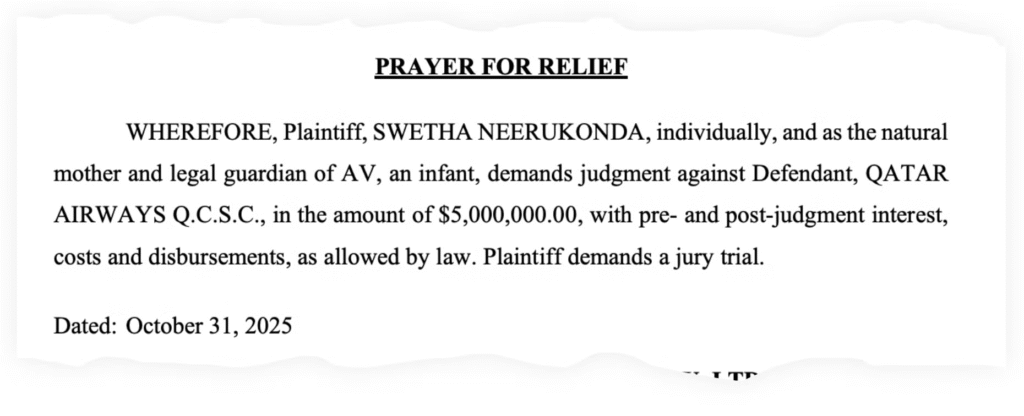
The lawsuit filed in federal court in Alexandria, Virginia, demands $5 million in damages on behalf of Swetha Neerukonda and her daughter. It claims negligence, emotional distress, and failure to meet a duty of care owed by the airline once it was made aware of the medical condition.
The legal argument asserts that once the crew was informed of the allergy, they bore responsibility to ensure the child was not given an allergen under any circumstance. The lawsuit states that feeding the child a dairy-containing snack not only violated that responsibility but did so in a context where the parent was temporarily absent but had arranged supervision specifically because of the medical condition.
The complaint also alleges that the flight crew acted dismissively and obstructively, including intervening when Swetha Neerukonda attempted to communicate with a fellow passenger she believed witnessed the incident. The claim suggests that this behavior contributed to preventing later corroboration and potentially interfered with the mother’s ability to advocate for her child’s urgent care.
Read : Australian Couple Forced to Sit Next to Woman’s Dead Body for 4 Hours on Qatar Airways Flight
Qatar Airways has not yet issued a formal response to the lawsuit, and no court ruling has been made at this stage. However, the case has begun circulating widely due to the combination of a vulnerable child, repeated alleged warnings, and the apparent ease with which the allergen was provided despite those warnings.
The aviation industry has faced increasing pressure regarding food allergy handling, particularly as global travel becomes more accessible to young children with chronic medical conditions. Airlines operate under differing national regulations, and emergency preparedness varies widely across carriers. Some passengers report cooperative experiences where crews take precautions such as announcing allergy advisories or restricting certain foods onboard, while others describe indifference or lack of awareness among staff.
The context of this case intersects with a broader pattern of reported incidents across major airlines. Recent lawsuits have involved passengers experiencing life-threatening reactions after being served meals containing shellfish or nuts despite pre-flight notifications. In some instances, flights were diverted for emergency medical care; in others, passengers suffered significant medical complications. The recurrence of such incidents suggests ongoing gaps in training, procedural consistency, or logistical implementation of allergy awareness protocols.
The stakes in such cases are considerable because anaphylaxis can become fatal within minutes if proper treatment is delayed. Families of children with severe allergies often take extensive precautions in daily life on the ground, and flying introduces unique challenges due to confined space, reliance on airline staff, and limited medical support options at high altitude. Clear communication, strict adherence to documented warnings and procedures, and rapid emergency actions can significantly reduce risks.
Neerukonda’s lawsuit highlights not only the immediate physical danger but also the emotional and psychological trauma experienced by both the child and the parent. The toll of managing a life-threatening allergy is already high, and crises occurring in environments where caregivers are temporarily dependent on others can amplify distress and fear. The legal allegations suggest that this distress was intensified by the response of the flight crew, which the complaint characterizes as dismissive rather than engaged and supportive.
The outcome of the case may influence future policies on airline medical kits, employee training, and allergy-related protocols. It could potentially contribute to discussions about requiring EpiPens on all commercial flights or establishing more standardized global training expectations for cabin crews on managing medical emergencies involving allergies.
It’s constantly a good idea to contrast various companies
prior to you hire one.
Thank you for the good writeup. It in fact was
a amusement account it. Look advanced to far added agreeable from you!
However, how can we communicate?
Slot tại 888slot có biểu tượng động và hiệu ứng rung (trên điện thoại) – tăng cảm giác chân thực và phấn khích khi trúng thưởng lớn. TONY01-06S