
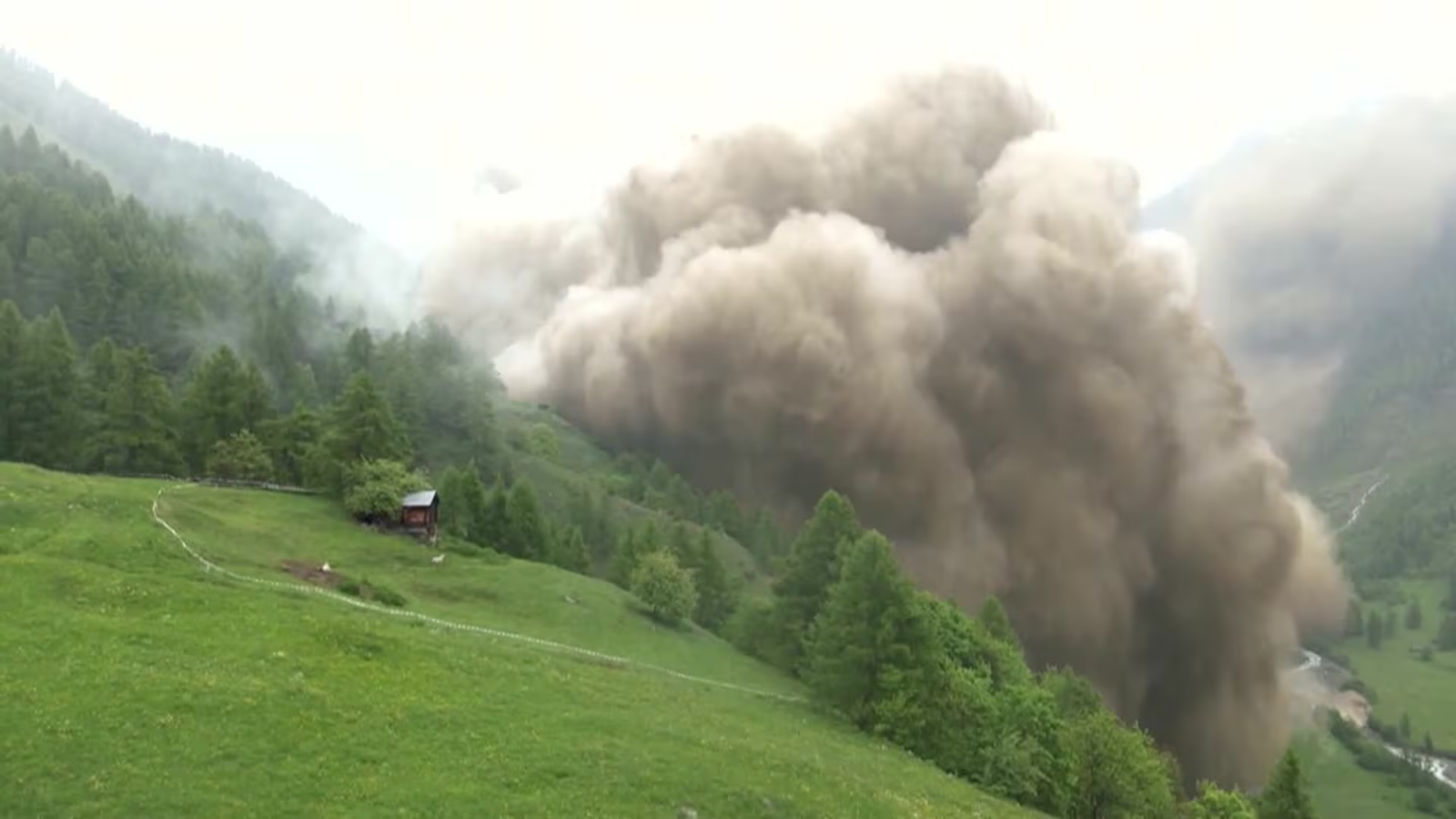
The serene Alpine village of Blatten, nestled in Switzerland’s Valais Canton, has faced an unprecedented catastrophe. On May 28, a partial collapse of the Birch Glacier triggered a massive landslide that buried nearly 90% of the village under mud, boulders, and debris.
This catastrophic event, captured in dramatic footage, paints a stark picture of the escalating risks climate change poses to mountain communities in the Swiss Alps. While the village’s physical landscape has been devastated, the resilience and spirit of its people remain unbroken.
The Catastrophic Collapse: What Happened to Blatten?
Blatten, a small Alpine village with about 300 residents, found itself at the mercy of nature’s fury when the Birch Glacier partially collapsed. For weeks prior to the disaster, visible cracks in the glacier ice had raised alarm bells among Swiss glaciologists and local authorities.
These warnings prompted a precautionary evacuation of the village and its livestock early in May, a measure that likely prevented a higher human toll. Despite this, the landslide unleashed an overwhelming torrent of mud, rocks, and ice debris that swept across the valley, engulfing homes, infrastructure, and farmland.
The collapse released an estimated 9 million metric tonnes of debris, an almost unimaginable volume that transformed the once peaceful village into a muddy wasteland. Dust clouds billowed through the valley as hillsides gave way under the force of the landslide, fundamentally altering the landscape.
Emergency responders have reported no confirmed fatalities so far, but one man, 64 years old, remains missing amidst the wreckage. A search and rescue operation continues, led by the Cantonal Police of Valais with support from the Swiss army’s disaster relief units.
Breaking:
— The Curious Quill (@PleasingRj) May 29, 2025
A glacier collapse has buried the Swiss village of Blatten under mud. 💔
The Lonza River is dammed and large parts of the town have been evacuated.
Tragic — but thanks to early warnings from scientists, lives were likely saved.#Switzerland #Blatten #ClimateCrisis… pic.twitter.com/ryxn8NlALL
The landslide’s impact extends beyond the immediate destruction of Blatten. The debris buried the bed of the Lonza River, raising fears of secondary disasters such as flooding. The blockage creates a dam-like effect, threatening to unleash sudden and unpredictable floods downstream. Consequently, neighboring villages have faced partial evacuations as a precaution against potential flooding, intensifying the crisis in the Valais region.
Community Response and Recovery Efforts
Despite the devastation, the people of Blatten have shown remarkable resilience and solidarity. Mayor Matthias Bellwald expressed a poignant message of hope amid the tragedy, stating, “We’ve lost the village, but not the heart. We will support each other and console each other. After a long night, it will be morning again.” His words reflect the enduring spirit of a community determined to rebuild and recover.
Residents like Martin Henzen are still coming to terms with the scale of destruction. Henzen noted the emotional complexity within the village, saying, “Most are calm, but they’re affected.” This mix of shock and calm determination is characteristic of communities hit by natural disasters, especially those who understand the risk but cannot fully anticipate the magnitude of the event.
Read : First Woman to Be Fined Under Burqa Ban In Switzerland Refused to Pay
Local authorities and geologists have been working tirelessly to assess the full extent of the damage. Raphael Mayoraz, a cantonal geologist involved in hazard management, acknowledged that while preparations had been in place for natural disasters, the scale of this glacier collapse was beyond expectations. The magnitude of debris and the blockage of the Lonza River bed present ongoing challenges that complicate recovery and safety efforts.

The Swiss government has mobilized resources to assist in recovery and relief. Disaster relief units from the Swiss army are on site, helping with search and rescue as well as initial recovery efforts. Additionally, government officials have visited the scene to coordinate aid and support the local administration. However, officials emphasize that recovery will be a long-term effort, likely spanning several years, as the village has been rendered largely uninhabitable.
A Dire Warning: The Role of Climate Change in Glacier Collapse
The collapse of the Birch Glacier is not an isolated event but part of a disturbing trend linked to climate change. Swiss glaciologists have noted accelerating glacier retreat and unprecedented ice loss across the Swiss Alps. In 2022, Switzerland’s glaciers lost 6% of their volume, followed by an additional 4% loss in 2023. This rapid thawing has destabilized ice masses, increasing the frequency and severity of glacier collapses and related hazards such as landslides and floods.
Raphael Mayoraz warned that Switzerland’s vulnerability to glacier loss is becoming more acute. “These events are not just natural — they’re warnings,” he stated, emphasizing that glacier collapses reflect deeper environmental shifts caused by human-driven climate change. The loss of glacier ice reduces natural barriers and alters hydrological systems, leaving Alpine communities exposed to risks that were previously rare or unknown.
The tragedy in Blatten underscores the urgent need for enhanced monitoring and adaptation strategies in mountain regions. This is not only to protect lives and property but also to prepare for a future where glacier-related disasters may become more common. The recent discovery of five bodies on another Swiss glacier near Zermatt highlights the growing dangers for residents and visitors alike in the Alps.

Swiss glaciologists advocate for comprehensive climate action alongside local hazard management. While immediate disaster response is critical, mitigating climate change’s root causes remains essential to reducing long-term risks. The collapse at Birch Glacier serves as a powerful symbol of what is at stake — not just for Blatten, but for vulnerable mountain communities worldwide.
Lessons from Blatten and the Path to Resilience
The destruction of Blatten village is a stark reminder of nature’s power and the accelerating impact of climate change on fragile ecosystems. The disaster has sparked conversations about how communities can better prepare for and adapt to these emerging threats. It also highlights the importance of early warning systems and proactive evacuations, which undoubtedly saved lives in this instance.
For Blatten’s residents, the road to recovery will be arduous. Rebuilding homes and infrastructure amid the unstable terrain and risk of further flooding will require coordinated efforts between local authorities, the Swiss government, scientists, and disaster relief teams. Support networks, both within the community and from external agencies, will be vital to help residents heal emotionally and economically.
On a broader scale, the Blatten landslide is a call to action for policymakers and environmental leaders to accelerate climate mitigation efforts. Protecting the Alps and other mountain regions from similar catastrophes hinges on reducing greenhouse gas emissions and implementing sustainable environmental policies.
In the meantime, Blatten’s story stands as a testament to human resilience and the complex challenges posed by a warming planet. The village may be buried under mud and debris, but its spirit endures, reminding us all that even in the face of disaster, hope and recovery are possible.
The catastrophe at Blatten and the Birch Glacier collapse offer a sobering glimpse into the realities of climate change’s impact on alpine environments. As recovery unfolds, the lessons learned here will be crucial for protecting other vulnerable mountain communities from similar fates in the years to come.