
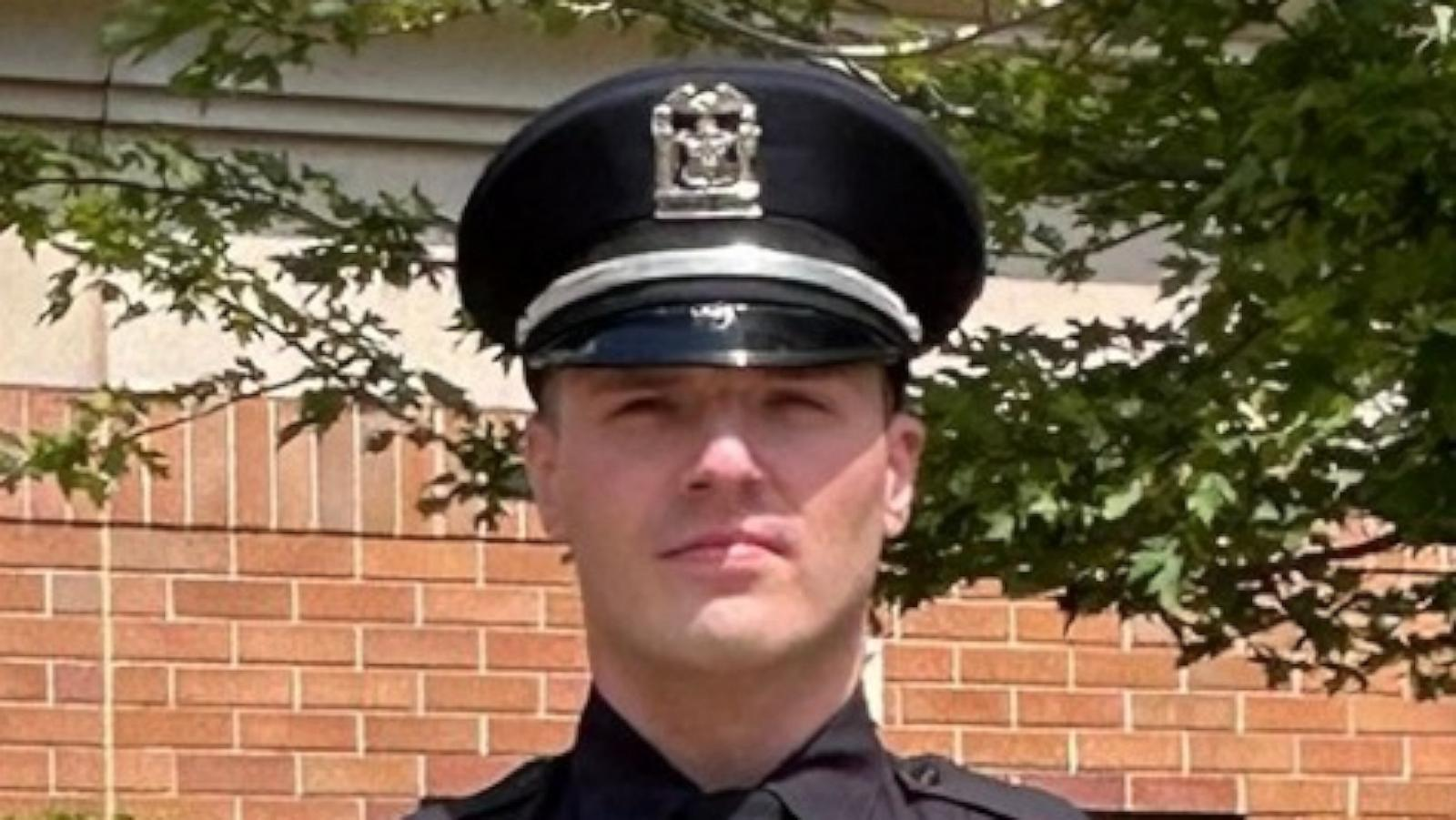
The arrest of a suburban Chicago police officer accused of being in the United States illegally has sparked a heated debate over immigration enforcement, local hiring practices, and the vetting processes of law enforcement agencies. The case of Radule Bojovic, a Montenegrin native employed by the Hanover Park Police Department, has drawn national attention after U.S. Immigration and Customs Enforcement (ICE) announced his detention as part of “Operation Midway Blitz,” a recent federal immigration crackdown in Illinois.
According to the Department of Homeland Security (DHS), Radule Bojovic overstayed his visa by a decade and was required to leave the country in 2015. His subsequent employment as a sworn police officer, equipped with a badge and firearm, has triggered criticism from federal officials who accuse Illinois’ leadership of disregarding immigration laws.
The village of Hanover Park, however, insists that Bojovic was hired legally and that all documentation, background checks, and federal authorizations were properly verified. The unfolding controversy underscores deep divisions between state and federal authorities over immigration enforcement and the complexities surrounding lawful employment verification in the United States.
Federal Operation Uncovers Immigration Violation
The Department of Homeland Security revealed on Thursday that ICE agents arrested Radule Bojovic during a targeted enforcement operation. The 34-year-old officer was reportedly taken into custody as part of “Operation Midway Blitz,” a DHS-led initiative aimed at identifying and detaining individuals who are in the U.S. unlawfully, particularly those working in sensitive or high-security positions. The enforcement action forms part of a broader surge in federal immigration operations across Illinois, marking a notable escalation in the federal government’s efforts to tighten oversight of sanctuary jurisdictions and ensure compliance with federal immigration statutes.
In a strongly worded statement, DHS Assistant Secretary Tricia McLaughlin condemned the circumstances that allowed Radule Bojovic to serve as a police officer while allegedly residing illegally in the country. “Governor J.B. Pritzker doesn’t just allow violent illegal aliens to terrorize Illinois’s communities, he allows illegal aliens to work as sworn police officers,” McLaughlin said. She described Bojovic’s employment as emblematic of “a breakdown of our national security framework,” asserting that it is “a felony for someone in the U.S. illegally to carry a firearm.”
Radule Bojovic’s visa history, as outlined by DHS, indicates that he entered the United States legally on a tourist visa but failed to depart when it expired, remaining in the country for nearly a decade without authorization. Federal authorities claim that he was ordered to leave the U.S. in March 2015 and that his continued presence constitutes a violation of immigration law. The agency also noted that his possession of a firearm in the course of his duties could expose him to criminal prosecution under federal law.
A suburban Chicago police officer has been arrested by ICE after officials discovered he has been living in the United States illegally for more than 10 years.
— True Crime Updates (@TrueCrimeUpdat) October 17, 2025
Radule Bojovic, a native of Montenegro, was arrested on Thursday morning as part of ICE's "Operation Midway Blitz." He… pic.twitter.com/eUmNfJRAnj
Despite the strong language from federal officials, DHS has not disclosed the exact circumstances surrounding Bojovic’s arrest, including where and when it took place. Online detainee records confirm that he is currently in ICE custody, though his precise location remains undisclosed. The arrest reportedly coincided with preparations for his formal swearing-in ceremony before the Village of Hanover Park Board—a public event that was set to occur the same day the federal announcement was made.
Village Defends Hiring Process and Legal Compliance
The Village of Hanover Park swiftly responded to the arrest with a statement defending the integrity of its hiring process and emphasizing that Bojovic was employed in accordance with all applicable laws. According to the village, Bojovic presented valid federal work authorization documents issued by U.S. Citizenship and Immigration Services (USCIS) during his application and underwent an extensive background check before being hired as a full-time police officer in January 2025.
“The bottom line is that all information we received from the federal government indicated that Officer Bojovic is legally authorized to work in the United States as a police officer,” the village said in its official statement. “Clearly, without that authorization, the Village would not have hired him.”
Officials added that the village has “not received any notice from any federal or state agency that his work authorization status has ever been revoked,” and therefore acted in good faith based on the documentation provided by federal authorities. Bojovic’s employment records show that he was accepted into the Hanover Park Police Pension Fund earlier this year with a starting salary of nearly $79,000. He graduated from the Suburban Law Enforcement Academy in August, an achievement publicly celebrated by the department on social media.
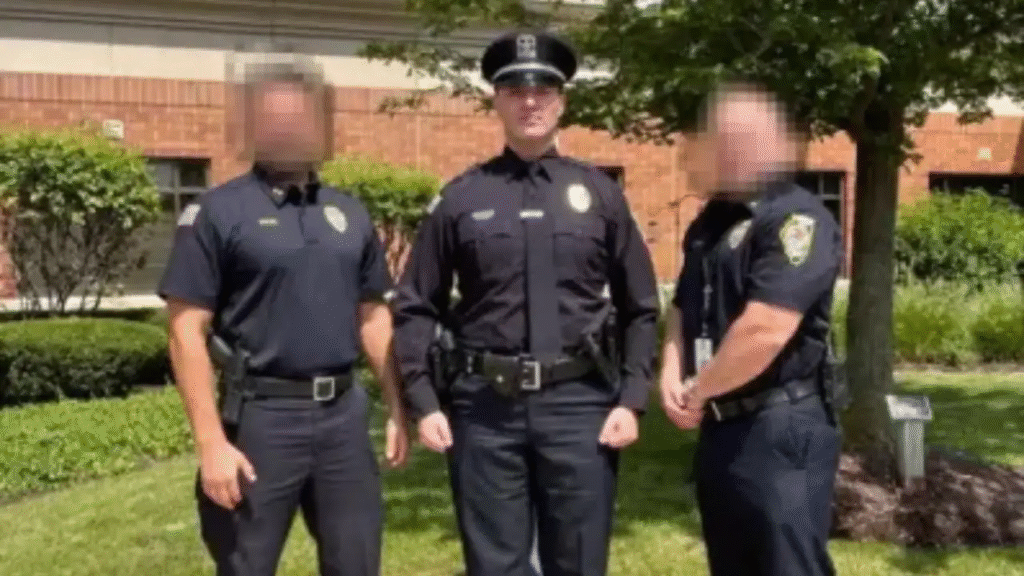
Village President Rodney Craig addressed the issue during the Hanover Park board meeting on Thursday evening, calling the situation “of interest to many in our community” and expressing confidence in the village’s vetting procedures. “First and foremost, the village and the police department conducted its own thorough due diligence as part of this hiring process, as is the case with the hiring of all police officers,” Craig stated.
The village also clarified that Bojovic has been placed on administrative leave pending the outcome of his immigration proceedings. Should federal authorities determine that he is legally permitted to remain in the U.S., Hanover Park indicated he would be reinstated to full duty status.
This defense underscores the bureaucratic complexity surrounding federal immigration and employment verification systems. Even as DHS asserts that Radule Bojovic was unlawfully present in the country, Hanover Park maintains that its hiring decisions were made based on federally issued documentation affirming his eligibility to work and to carry a service weapon. The conflicting positions between local and federal authorities highlight the difficulties municipalities face in verifying immigration statuses, especially when those statuses may be in flux or subject to appeal.
Political Fallout and National Reactions
The arrest has reignited the national debate over sanctuary policies and state-level cooperation with federal immigration enforcement. Illinois, under the administration of Governor J.B. Pritzker, has maintained a strong stance against participation in federal deportation initiatives, frequently clashing with U.S. immigration authorities over the state’s “Welcoming Illinois” policies. These laws limit state and local cooperation with ICE and prohibit local police from detaining individuals solely on the basis of immigration status.
DHS officials, as well as several prominent Republican leaders, seized upon Radule Bojovic’s arrest as evidence of what they describe as systemic failures in states that oppose federal immigration enforcement. Homeland Security Secretary Kristi Noem posted on social media that “radical sanctuary politicians have allowed criminal illegal aliens to infiltrate our school districts, communities, and even police departments,” pledging that “President Trump and I will continue to put the safety of Americans FIRST.”
Senator J.D. Vance also weighed in, calling for accountability among state leaders and suggesting that Governor Pritzker “should suffer some consequences” for the policies that allegedly enabled Radule Bojovic’s employment. In response, Pritzker dismissed the criticism, reportedly saying, “Come and get me,” in a defiant rebuke of the Trump administration’s threats of enforcement against Illinois’ leadership.

While federal officials characterized the case as a grave security lapse, immigration advocates argue that it illustrates the confusion and inconsistency of the country’s immigration bureaucracy rather than any willful negligence by local authorities. They note that work authorization can be granted to individuals with pending immigration applications or appeals, and that federal databases do not always reflect the latest status updates in real time. Legal experts further point out that local governments rely on federal verification systems—such as E-Verify and USCIS-issued documents—to determine employment eligibility, meaning any discrepancies in those systems can lead to inadvertent errors.
At the community level, Radule Bojovic’s arrest has caused visible unease. Residents of Hanover Park expressed both surprise and concern, with some questioning how such a situation could occur despite stringent background checks. Others voiced sympathy for the officer, emphasizing that he had completed all required police training and had been viewed as a promising recruit within the department. For many, the case raises broader questions about fairness, accountability, and the balance between immigration enforcement and local governance.
Radule Bojovic’s personal background remains limited in public records, but available information suggests he had built a stable life in the U.S. since his arrival from Montenegro. His career in law enforcement appeared to represent a culmination of professional training and community service aspirations—now abruptly derailed by federal intervention.
In a broader sense, the controversy underscores the intersection of immigration policy, law enforcement, and political ideology in contemporary America. It also exposes the challenges municipalities face when federal and state frameworks conflict, leaving local agencies vulnerable to political crossfire. The case has intensified scrutiny of Illinois’ sanctuary policies and reignited partisan debates about who bears responsibility when immigration enforcement clashes with local autonomy.
As the legal proceedings unfold, Radule Bojovic’s future remains uncertain. ICE has not released details about the next steps in his case, and no court hearings have been publicly announced. The Hanover Park Police Department continues to cooperate with federal authorities, according to village officials, while maintaining that it adhered to all procedural and legal requirements in Radule Bojovic’s hiring.
Whether this case becomes a symbol of systemic failure or a cautionary tale about federal-local miscommunication may depend on the outcome of those proceedings. For now, the arrest of a sworn suburban police officer accused of living illegally in the United States stands as a striking and controversial episode in the ongoing national discourse over immigration enforcement and public trust in government institutions.