
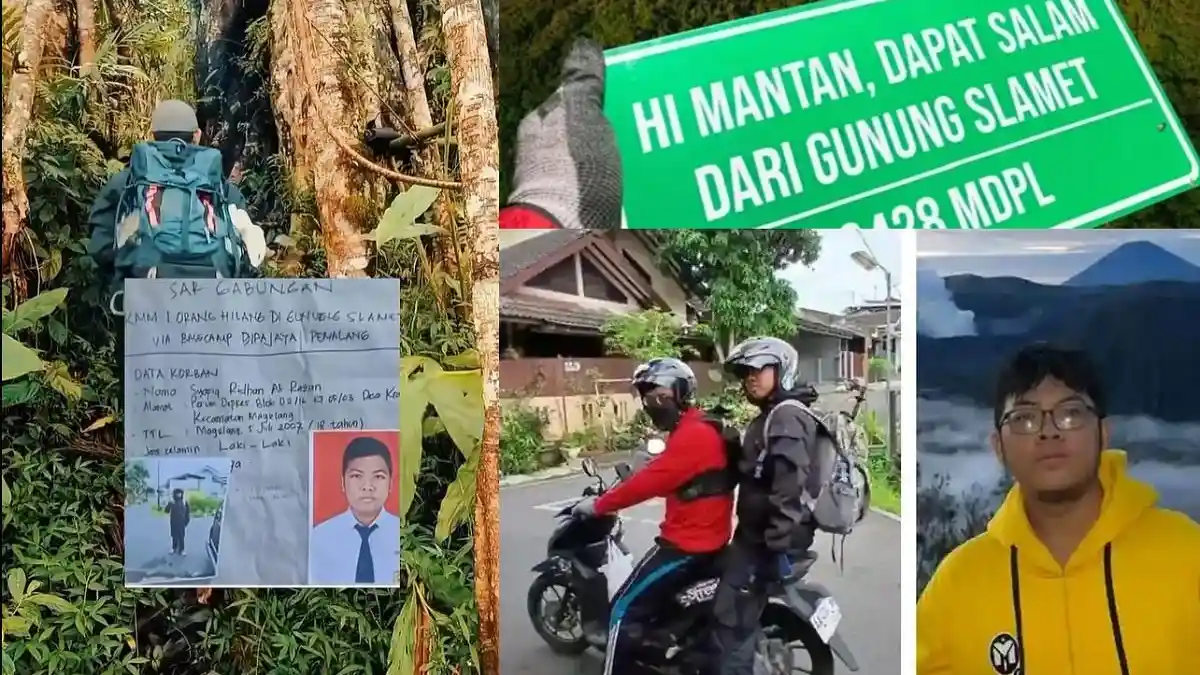
An 18-year-old hiker who disappeared during a climb on one of Indonesia’s most challenging mountains has been found dead after an extensive search operation that lasted more than two weeks. The discovery of Syafiq Ridhan Ali Razan’s body brought a tragic conclusion to a case that drew national attention and underscored the dangers associated with high-altitude trekking, even for young and determined climbers.
Razan vanished while hiking Mount Slamet with a friend in late December, prompting a multi-agency rescue effort involving professional search teams and local volunteers. When his body was eventually recovered from a deep ravine, investigators concluded that the teenager likely died after suffering a fatal fall while attempting to seek help for his injured companion.
Mount Slamet, located in Central Java, is Indonesia’s second-highest volcano and a popular destination for hikers seeking demanding terrain and panoramic views. Its unpredictable weather, steep slopes, and long trails require careful preparation and coordination among climbers. Razan’s death has raised renewed discussion around hiking safety, emergency response challenges in remote environments, and the risks that arise when climbers become separated in mountainous regions.
The Hike That Turned Tragic on Mount Slamet
Syafiq Ridhan Ali Razan began his hike on Dec. 27 alongside his friend, Himawan Haidar Bahran, setting out from the Dipajaya basecamp in Pemalang Regency. The two young men were reportedly experienced enough to attempt the climb, which typically takes multiple days due to its elevation and terrain. Their plan followed a commonly used route that includes a series of numbered posts marking progress toward the summit, with post 9 located less than 2,000 feet below the peak.
The hike took a sudden turn the following day when Bahran experienced severe leg cramps that prevented him from continuing. Faced with a difficult decision, the pair separated so that Razan could descend the mountain to seek assistance. Such decisions, while sometimes necessary in emergencies, carry significant risks, particularly in remote areas where communication is limited and conditions can change rapidly.
When Razan failed to return, concern grew. Bahran, despite his injury, managed to climb onward to post 9, where he was eventually located alive by search and rescue teams on Dec. 30. His survival offered a moment of relief, but it also confirmed fears that Razan had gone missing somewhere along the rugged trail. That same day, authorities officially reported Razan as missing, triggering a large-scale search effort.
Read : Damon Leonard Charged After 13-Year-Old Neighbor Found Dead in Ravine
Mount Slamet’s terrain complicated rescue operations from the outset. Dense vegetation, steep slopes, and narrow paths limited visibility and slowed progress. Weather conditions fluctuated, further hampering efforts to systematically cover the area. Search teams had to carefully balance speed with safety, as rescuers themselves faced the same dangers as the missing hiker.
Search Efforts and the Discovery of the Body
The search for Razan extended over 16 days and involved professional rescue teams, local authorities, and volunteer groups familiar with the mountain. Operations focused on areas near the route Razan was believed to have taken while descending, as well as locations close to where Bahran was found alive. Despite these targeted efforts, the search proved difficult, highlighting the challenges of locating individuals in expansive and unforgiving mountain environments.
Read : Japan: A Journey Through the Land of the Rising Sun
On Wednesday, Jan. 14, the search finally came to an end when Razan’s body was discovered near post 9 of the hiking trail. He was found at the base of a slope on the southern side of Mount Slamet, inside a ravine measuring approximately 65 feet deep. According to reports from The Independent and The Star, the body was recovered by a group of volunteers who had joined the search efforts.

The location of the discovery suggested that Razan had not strayed far from the main trail, a detail that added to the tragedy of the case. Being relatively close to a known route and not far from where his friend was eventually rescued indicated that a single misstep or accident could have led to fatal consequences. Transporting the body out of the ravine required careful coordination, as rescuers had to navigate steep terrain while ensuring the remains were handled respectfully and safely.
Following the recovery, Razan’s body was taken for examination at Goeteng Taroenadibrata General Hospital in Purbalingga, Java. Medical findings indicated evidence of a fracture in his left thigh, leading authorities to conclude that he likely fell to his death. Based on the condition of the body, officials believe Razan died approximately two weeks before being recovered, meaning he may have succumbed to his injuries shortly after the fall.
The Semarang Search and Rescue Office confirmed that the official cause of death would be announced by the hospital. While the hospital and SAR Semarang did not immediately respond to requests for comment from international media outlets, preliminary findings were consistent with an accidental fall rather than foul play or other causes.
Questions, Safety Concerns, and Broader Implications
Razan’s death has prompted renewed attention on safety practices for hikers in Indonesia and beyond. Mount Slamet, while popular, is known for its demanding conditions, and authorities regularly advise climbers to hike in groups, carry proper equipment, and avoid separating from companions whenever possible. The decision for Razan and Bahran to part ways, though made under pressure, reflects a common dilemma faced by hikers when emergencies arise in remote areas.
Search and rescue officials often emphasize the importance of communication devices, clear emergency protocols, and pre-registered hiking plans. In mountainous regions where mobile phone signals are unreliable or nonexistent, delays in reporting incidents can significantly affect survival chances. Razan’s case illustrates how quickly a situation can escalate when one member of a hiking party is left alone in hazardous terrain.

The involvement of volunteers in the search also highlights the role local communities play in rescue operations. Familiarity with the landscape can be invaluable, particularly when official resources are stretched over large areas. However, reliance on volunteers also underscores the need for better infrastructure and preparedness measures to reduce response times in future incidents.
For families and fellow hikers, the case has been a stark reminder of the unpredictability of nature. Even well-planned trips can take unexpected turns due to injuries, weather changes, or simple miscalculations. While investigations continue to finalize the cause of death, the prevailing assessment remains that Razan lost his life in an accident while attempting to help his friend.
As authorities await final medical conclusions, the focus has shifted toward prevention and awareness. Hiking organizations and outdoor groups have reiterated calls for stricter adherence to safety guidelines, including turning back as a group when one member is injured, rather than splitting up. Such measures, while sometimes disappointing for those eager to reach a summit, can be critical in ensuring that all members return safely.
Syafiq Ridhan Ali Razan’s death stands as a tragic example of how quickly circumstances can change in high-risk outdoor environments. The proximity of his body to a well-known trail and to the location where his friend was rescued underscores the fine margin between survival and tragedy. While the mountain remains a destination for adventurers, Razan’s story serves as a sobering account of the risks involved and the importance of caution, preparation, and collective decision-making during such journeys.