
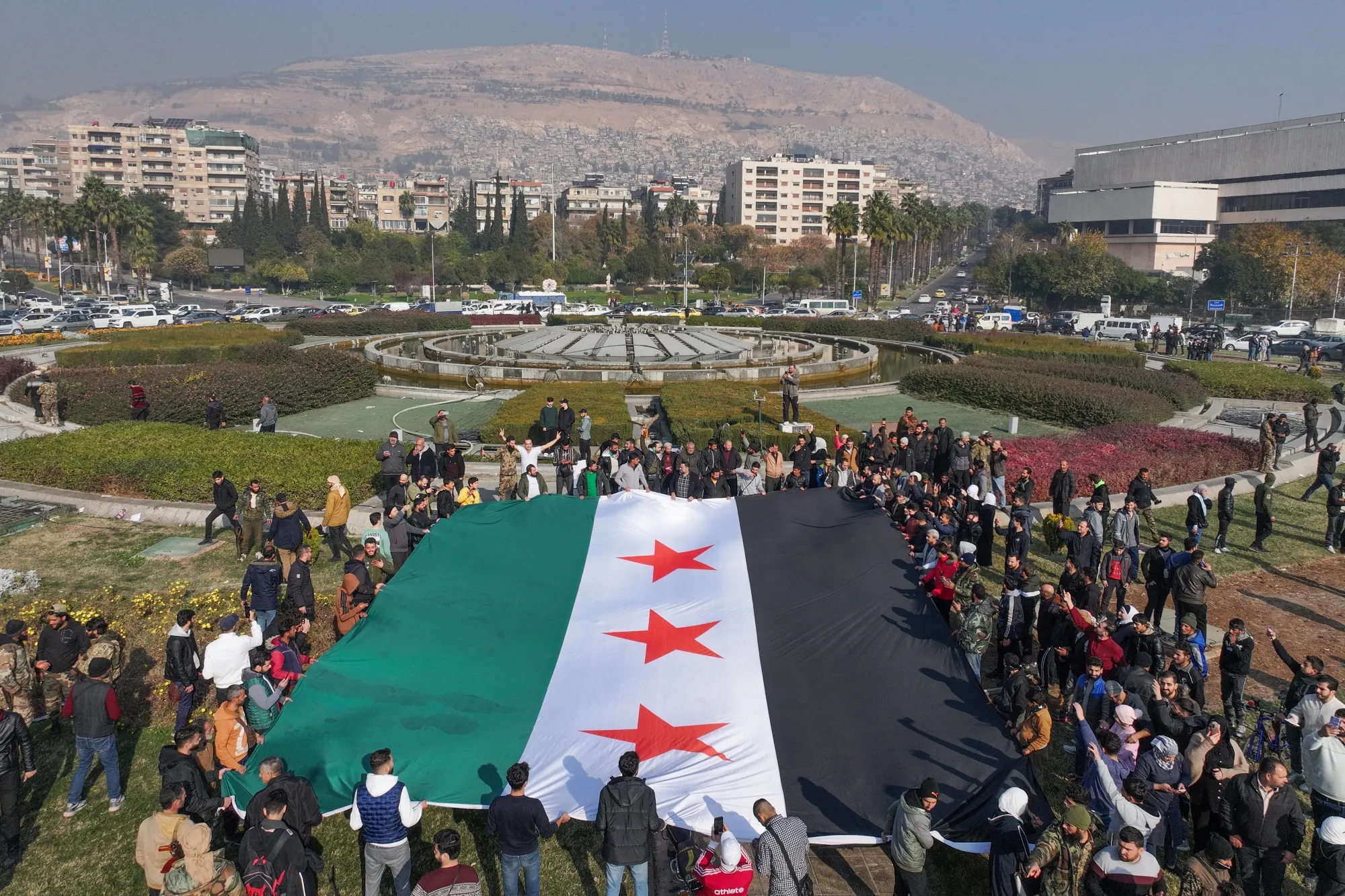
The sudden overthrow of Syrian President Bashar al-Assad marks a pivotal moment in the nation’s history, bringing an end to decades of Baath Party rule and sparking both hope and uncertainty about the country’s future.
The transition, led by the rebel alliance, is set to redefine Syria’s political landscape. However, challenges abound as the country grapples with governance, reconciliation, and regional dynamics.
The End of Assad’s Reign
Bashar al-Assad’s rule, characterized by authoritarianism and widespread human rights abuses, has long been a source of contention both within Syria and on the global stage.
His regime’s reliance on detention centers, brutal crackdowns on dissent, and militarized governance defined his 13-year presidency. The Assad family’s grip on Syria, which began with his father, spanned over five decades, marked by heavy-handed policies and systemic repression.
Read : Syrian Rebels Said They Won’t Impose Dress Code on Women
The overthrow unfolded rapidly over 12 days, catching both regional players and global powers off guard. Islamist-led rebels, spearheaded by Hayat Tahrir al-Sham (HTS) under the leadership of Abu Mohammed al-Jolani (real name Ahmed al-Sharaa), stormed the capital Damascus.
Read : Be Aware Before Crossing the Line: Top Ten Most Dangerous Borders Around the World
Assad’s flight to Moscow signaled the end of an era but left the nation at a crossroads, with pressing questions about governance, accountability, and the future direction of the country.
Rebuilding Syria Amid Uncertainty
Ahmed al-Sharaa and the HTS have vowed to lead Syria into a new era of freedom, equality, and democracy. Meeting with outgoing Prime Minister Mohammed Ghazi Jalali, al-Sharaa initiated steps to ensure a smooth transfer of power to the Salvation Government, a coalition of opposition forces that has operated as a quasi-state since 2017.
Despite its efforts to present a more moderate image, HTS remains designated as a terrorist organization by the UN and many countries, casting doubts over its ability to gain international legitimacy.
The incoming authorities have pledged to prosecute officials responsible for crimes during Assad’s rule, signaling a commitment to justice.

Al-Sharaa’s focus on rebuilding infrastructure, addressing human rights abuses, and fostering inclusivity has been underscored by statements promising a future grounded in democratic principles. However, Syria’s fragmented opposition, diverse ethnic and religious communities, and years of war-torn devastation make this a daunting task.
International observers remain skeptical. The United Nations Security Council (UNSC) convened in an emergency session to discuss the implications of Assad’s ouster.
Russia, a longtime ally of Assad, expressed surprise at the rapid developments. Meanwhile, the United States is exploring diplomatic avenues to engage with Syrian rebel groups, seeking pathways to ensure the establishment of a stable and rights-respecting governance structure.
Regional and Global Repercussions
The transition in Syria has far-reaching implications for the region. Neighboring countries and global powers are cautiously monitoring the developments, wary of the potential spillover effects of instability.
Israel has seized a buffer zone in southern Syria, citing security concerns, a move condemned by Arab nations, including Egypt, Qatar, and Saudi Arabia. Riyadh warned that such actions could undermine Syria’s prospects for restoring peace and stability.
For Israel, the rise of an Islamist-led government poses a strategic challenge. The Tel Aviv administration has launched airstrikes, asserting its right to defend its borders but refraining from direct involvement in Syria’s internal conflict. Meanwhile, Turkey, which has historically supported Syrian opposition groups, may play a key role in shaping the transitional phase.

The challenges for the incoming administration are multifaceted. Beyond addressing domestic governance and reconciliation, Syria must navigate complex geopolitical relationships and the involvement of external actors with competing interests.
For instance, while Russia’s role in supporting Assad has waned, it remains a critical player in the region. Similarly, the United States and its allies are likely to influence Syria’s transition, leveraging their support to push for reforms aligned with international norms.
Hope Amid Challenges
The Syrian people’s desire for freedom and democracy is palpable as they look to rebuild their nation. However, the path forward is fraught with challenges.
Years of civil war have left the country’s infrastructure in ruins, its economy crippled, and its population deeply traumatized. Ensuring inclusivity and fairness in governance while balancing regional and international pressures will be critical for the new administration.
The transition presents an opportunity for Syria to break free from its history of authoritarianism and sectarianism. The success of the rebel-led Salvation Government will depend on its ability to establish a stable and inclusive administration, address the grievances of diverse communities, and gain the trust of the international community.