
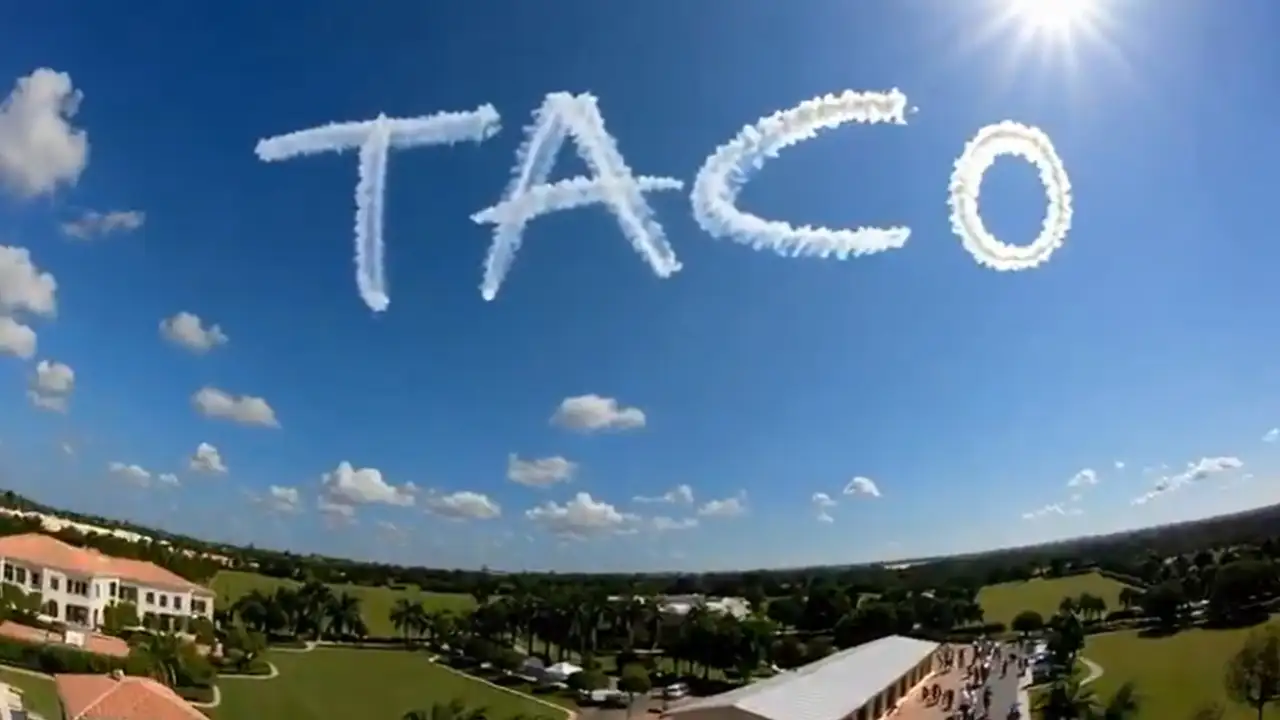
In an age where misinformation can spread at lightning speed, the internet found itself captivated yet again by a bizarre spectacle: alleged footage showing the word “TACO” spelled out in skywriting above former U.S. President Donald Trump’s Mar-a-Lago estate in Florida.
The video, which surfaced on May 29, 2025, quickly made its way across multiple social media platforms, attracting millions of views and sparking heated discussions about its authenticity. But upon closer inspection, the truth behind the viral sensation reveals a more complex—and artificially generated—narrative.
The Origins and Spread of the Video
The initial source of the video was the X account @SkylineReport, where it was first shared publicly and quickly gained traction, amassing over one million views. The footage shows jet contrails forming large letters in the sky spelling out “TACO” above what appears to be Mar-a-Lago, Trump’s well-known private club and residence in Palm Beach. The video captured the public’s attention not just for its peculiar imagery, but also due to its seemingly political subtext.
Shortly after the video went viral, some online communities began associating “TACO” with the phrase “Trump Always Chickens Out.” According to social media narratives, this acronym had allegedly gained popularity among investors who believe Trump tends to retract controversial decisions in the face of negative market responses. This phrase, catchy and biting, added fuel to the fire and encouraged further spread of the video.
The footage appeared not just on X but also spread to TikTok, Facebook, Instagram Threads, and YouTube. Various users reposted it, commented on it, and speculated about its meaning. While some immediately found it humorous or politically poignant, others raised concerns about its legitimacy. Still, a large portion of viewers appeared to take the video at face value, expressing shock, amusement, or admiration for what they believed was a real act of airborne protest.
HOLY. FUCKING. SKYWRITING.
— P a u l ◉ (@SkylineReport) May 29, 2025
Did someone seriously just smoke-write "TACO" in giant letters over Mar-a-Lago?! 💨🌮
Like the heavens themselves got bored and decided to roast Trump from above.
This is legendary-level trolling. I can't breathe. 😂🔥 pic.twitter.com/HQ1wUL9mVk
Despite numerous attempts, the media was unable to reach the original poster @SkylineReport for clarification or comment. With no firsthand explanation available, public curiosity only intensified, leading to widespread discussions about the message’s origin and authenticity.
Analyzing the Footage: Red Flags and Digital Deception
While at first glance the video may seem plausible, a deeper analysis reveals several glaring inconsistencies that strongly suggest it is not real. Experts and skeptical viewers have pointed to a number of red flags that align with characteristics often found in AI-generated or manipulated footage.
One of the first things to note is the lack of corroborating evidence from credible news sources. A thorough search using keywords such as “Trump,” “TACO,” and “Mar-a-Lago” yields no articles or reports from reputable outlets confirming the event. Given the high-profile nature of Donald Trump and the dramatic nature of skywriting a politically loaded term above his home, it is highly unlikely such an event would go unreported by mainstream media.
Furthermore, the video appears to feature only a single angle of the supposed skywriting. In the era of smartphones and social media, an event of this magnitude occurring in public view would undoubtedly inspire multiple recordings from different perspectives. One would expect footage from bystanders, club members, tourists, or even drone footage to surface independently, yet no such evidence exists. The sole video available is suspiciously the only visual documentation of the alleged event.
Read : Who Is NBA YoungBoy Pardoned by Trump for Gun Charges?
There are also significant technical issues with the footage itself. In the video, an aircraft is only visible at the very end, briefly appearing next to the letter “O” about four seconds in. This is highly improbable. In genuine skywriting displays, the aircraft remains visible throughout the entire writing process as it emits condensation or smoke to form the letters. The sudden appearance of the plane, unaccompanied by any visible motion that created the preceding letters, is a strong indicator of digital tampering.
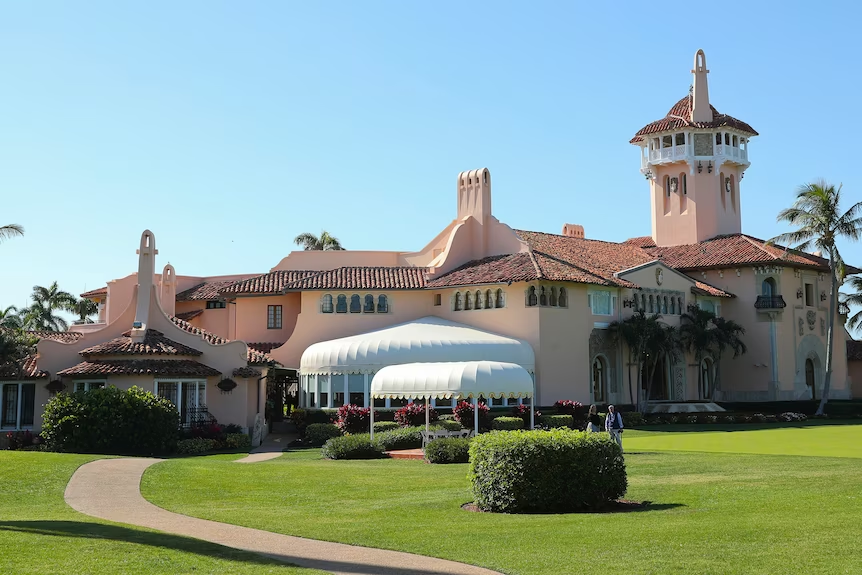
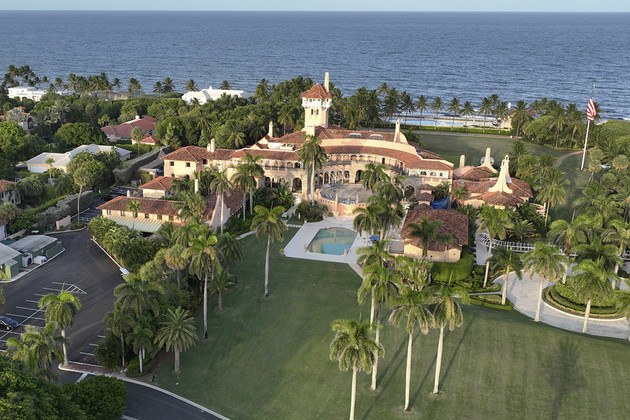
Another critical flaw is in the depiction of the landscape beneath the skywriting. The video shows a notably long building directly below the word “TACO,” which the narrator or posters claim is part of the Mar-a-Lago estate. However, satellite imagery from Google Earth of the Mar-a-Lago property does not match this portrayal. There is no such elongated structure on the premises, which suggests that the backdrop was either digitally altered or not Mar-a-Lago at all.
The lighting and shadows in the video also appear slightly inconsistent with real-world physics, a common issue with AI-generated visuals. These discrepancies further reinforce suspicions that the footage was likely fabricated using modern generative tools or video editing software.
The Implications of Viral Misinformation in the Digital Age
This incident is far from an isolated case. In recent years, deepfakes and AI-generated media have increasingly complicated the public’s ability to distinguish fact from fiction. The rise of generative AI tools capable of creating hyper-realistic images and videos has made it easier than ever to spread misleading or entirely fabricated content.
The “TACO” video exemplifies how political commentary and satire can now be presented through extremely convincing visuals. This can create an illusion of authenticity that misleads even critical viewers. The blending of humor, digital art, and misinformation in such videos underscores the growing importance of media literacy and skepticism in the digital age.
The association of “TACO” with the phrase “Trump Always Chickens Out” also speaks to the power of language and branding in political discourse. Whether or not the term was widely known before the video, its reintroduction alongside fabricated evidence lends it new cultural weight. Such tactics—pairing catchy slogans with seemingly “real” footage—can subtly influence public perception even when the content is debunked later.
What is particularly troubling is the way such content can hijack public attention, dominate the news cycle, and shape narratives regardless of its authenticity. Even after being exposed as fake, the memory of the video can linger, contributing to a larger atmosphere of distrust, ridicule, or misinformation surrounding the targeted individual or event.
This raises important ethical questions about the use and spread of AI-generated content. Should social media platforms take stricter action against fake videos that gain virality? Should creators of such content be held accountable, especially when their work has the potential to influence public opinion or elections?
Moreover, the fact that so many users believed the video without questioning it speaks to a broader issue: the erosion of trust in traditional media and institutions. As audiences increasingly rely on decentralized and often unverified sources for information, the role of responsible journalism becomes ever more critical.
The “TACO” skywriting hoax also serves as a cautionary tale about the potential consequences of political polarization and the hunger for viral moments that validate one’s worldview. In a landscape where content is consumed rapidly and often without scrutiny, even absurd or implausible claims can gain traction and become part of the public conversation.
The video showing the word “TACO” written in the sky over Donald Trump’s Mar-a-Lago home is a product of digital deception, not reality. It illustrates the dangers of unchecked misinformation, especially when political biases and sophisticated technology converge. As viewers and digital citizens, we must approach such viral sensations with critical thinking and demand higher standards for truth in the content we consume and share.