
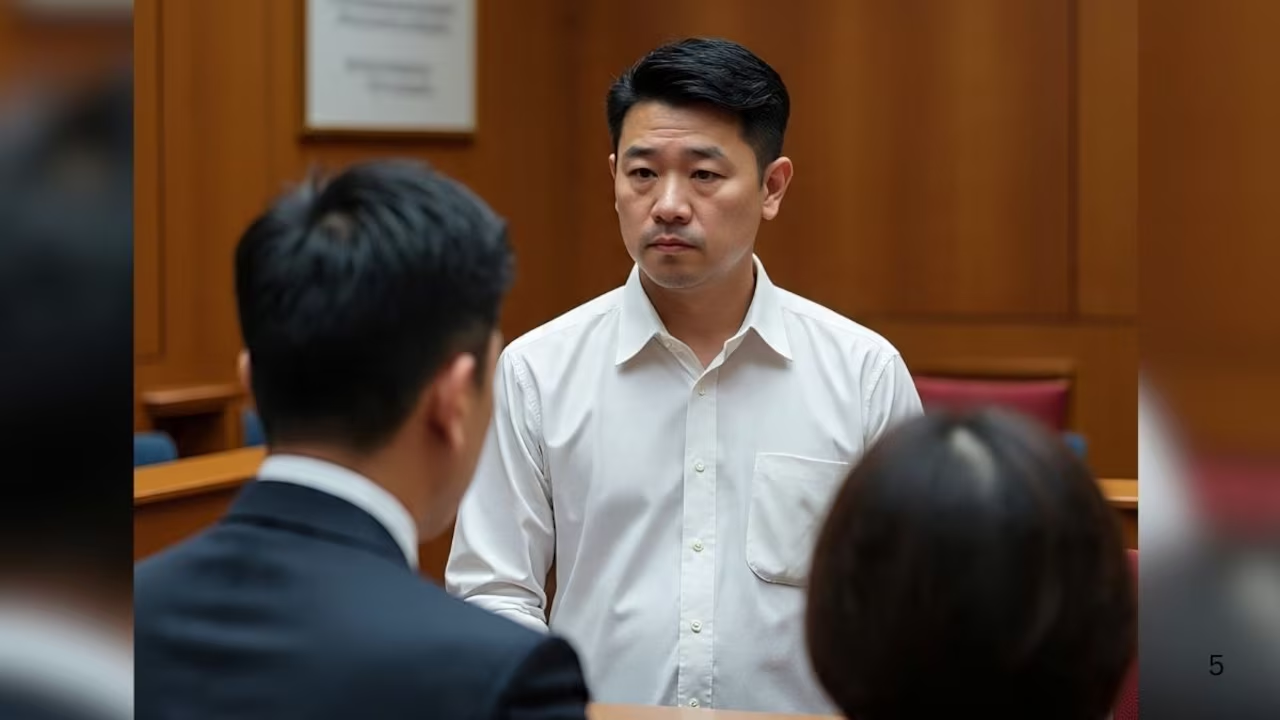
In a striking case that underscores the emotional and legal toll of infidelity, a Taiwanese Man Sues Wife’s Lover, seeking substantial damages for the destruction of his marriage. The lawsuit, filed after the husband stumbled upon evidence of the affair, highlights growing trends in Taiwan’s judicial approach to marital disputes. On October 9, 2025, reports emerged detailing how the man, referred to pseudonymously as Wei, demanded 800,000 Taiwanese dollars—equivalent to nearly ₹1 crore—for emotional distress and infringement of spousal rights. This development has captured public attention, reflecting broader societal concerns over fidelity and accountability in modern relationships.
The case originated in a seemingly stable household that unraveled due to workplace entanglements. Wei and his wife, Jie, had built a life together since their marriage in 2006, raising two children and maintaining what appeared to be a harmonious partnership for over 15 years. Both worked in education, with Jie serving as a teacher at a local school. Unbeknownst to Wei, Jie’s professional environment became the breeding ground for betrayal when she initiated an affair with a senior colleague in 2022.
The lover, identified as Yong, held the position of accounting director at the same institution, placing him in a supervisory role over Jie. Court documents and media reports indicate that their relationship quickly escalated from professional interactions to intimate encounters. The pair frequently met at hotels and exchanged explicit messages, crossing boundaries that Wei would later argue constituted a deliberate violation of his marital rights. Yong’s higher salary and authority within the school added layers to the power dynamics, which the court later factored into its deliberations.
The turning point came in November 2023, when Wei accessed his wife’s phone and uncovered a trove of incriminating text messages. These communications not only confirmed the physical nature of the affair but also revealed ongoing emotional involvement that had persisted for over a year. Devastated, Wei reported experiencing severe psychological repercussions, including panic attacks that disrupted his daily life and work. Medical records submitted during the trial supported his claims of emotional distress, though the judge noted some pre-existing symptoms unrelated to the discovery.
Read : 23-Year-Old Diego Dorantes Sanchez Goes Missing While on Vacation in Taiwan
Rather than pursuing immediate divorce proceedings against Jie, Wei directed his legal energies toward Yong, holding him accountable as the third party who “interfered” in the marriage. Under Taiwan’s civil code, which recognizes spousal rights and allows for compensation in cases of adultery-induced harm, Wei’s suit argued that Yong’s actions amounted to a tortious infringement. He sought 800,000 yuan (approximately ₹99.7 lakh or NT$800,000) to cover therapy costs, lost productivity, and the intangible pain of betrayal. This amount was calculated based on expert assessments of emotional damage and comparisons to similar precedents in Taiwanese courts.
Read : China Warns US to Not Interfere in Detection of Boat Crew: Claims Taiwan
The lawsuit gained traction amid a rising number of such claims in Taiwan, where infidelity lawsuits have surged by 20% over the past five years, according to judicial statistics. Legal experts attribute this to evolving social norms, increased awareness of mental health, and a judiciary more willing to quantify the non-financial costs of affairs. Wei’s case, heard in a district court, exemplifies how plaintiffs are leveraging these provisions to seek redress beyond mere dissolution of marriage.
Court Proceedings Unfold: Evidence and Arguments
The trial, which spanned several months and concluded with a ruling earlier this week, brought to light meticulous evidence that painted a clear picture of the affair’s scope. Prosecutors presented phone records, hotel receipts, and witness testimonies from school staff who had observed the couple’s unusual closeness. Jie’s messages to Yong were particularly damning, with phrases suggesting deep affection and plans for future encounters, far removed from platonic collegiality.
Yong mounted a defense centered on ignorance and mutual consent. He claimed he was unaware of Jie’s marital status when the relationship began, portraying it as a consensual romance between adults. However, the court dismissed this assertion, citing inconsistencies in his testimony and evidence of his knowledge—such as references to Jie’s family in their communications. The judge emphasized that Yong, as a senior figure, bore a higher responsibility to verify boundaries, especially given the workplace context.

A key element in the proceedings was the assessment of emotional harm. Wei testified about sleepless nights, heightened anxiety, and strained interactions with his children, who sensed the familial tension. Psychological evaluations corroborated these effects, linking the panic attacks directly to the affair’s revelation. The court weighed this against Yong’s financial status; as the higher earner with an annual salary reportedly three times Wei’s, Yong was deemed capable of bearing a meaningful penalty without undue hardship.
Jie’s role, while not the primary target, was scrutinized as well. She admitted to the affair during cross-examination but expressed remorse, stating it stemmed from marital routine and workplace stress. The couple remains legally married, with divorce proceedings pending separately. This separation of claims allowed Wei to focus on Yong’s liability, a strategic move advised by his legal team to maximize compensation without immediately upending family stability.
Media coverage during the trial amplified the case’s visibility, with outlets like ET Today and Mothership detailing each hearing. Public interest peaked when leaked excerpts of the messages surfaced, fueling debates on privacy versus accountability. Legal analysts praised the court’s handling, noting it balanced empathy for the victim with fairness to the defendant. The bench’s decision to award partial damages—300,000 yuan (about ₹37 lakh)—reflected a calibrated response: punitive enough to deter similar conduct, yet not crippling.
Verdict Reached: Compensation Awarded and Appeal Options
In a ruling delivered on October 8, 2025, the district court sided with Wei, ordering Yong to pay 300,000 Taiwanese dollars in compensation. This figure, roughly 37.5% of the demanded amount, acknowledges the proven infringement while accounting for evidentiary nuances. The judge explicitly ruled that Yong “knowingly interfered” in the marriage, violating Wei’s exclusive spousal rights under Article 195 of Taiwan’s Civil Code, which covers non-pecuniary damages from intentional torts.
The compensation breaks down into components: 150,000 yuan for verified emotional distress, including therapy expenses; 100,000 yuan for loss of consortium (the relational bond with Jie); and 50,000 yuan for punitive measures to affirm marital sanctity. This structure aligns with recent precedents, such as a 2024 Miaoli District Court case where a similar affair led to a 250,000-yuan award. The ruling underscores Taiwan’s progressive stance on “heart balm” torts, influenced by global trends like North Carolina’s alienation of affection laws, though adapted to local cultural emphases on family harmony.
Yong expressed disappointment post-verdict, maintaining his innocence regarding intent. He has 20 days to file an appeal to the High Court, where he could challenge the infringement finding or seek a reduction based on shared fault. Legal observers predict a strong defense on appeal, potentially introducing character witnesses or further medical rebuttals on Wei’s pre-existing conditions. If upheld, the payment must be made within 30 days, enforceable via wage garnishment if necessary.

For Wei, the outcome provides partial vindication but not full closure. He has stated intentions to use the funds for family counseling and personal recovery, emphasizing his priority remains the children’s well-being. Jie, meanwhile, faces potential alimony adjustments in their divorce, with courts often penalizing the at-fault spouse in asset divisions.
This verdict arrives amid heightened scrutiny of workplace romances in Taiwan, where new guidelines from the Ministry of Labor mandate disclosure of superior-subordinate relationships to prevent conflicts. Educational institutions, like the one employing Jie and Yong, have since implemented ethics training, citing this case as a cautionary example.
Broader Implications: Redefining Marital Justice in Taiwan
The ripple effects of Wei’s lawsuit extend far beyond the courtroom, igniting conversations on fidelity, gender dynamics, and legal evolution in Taiwan. With divorce rates hovering at 2.5 per 1,000 residents—among Asia’s highest—cases like this signal a shift toward holding third parties accountable, reducing the isolation felt by betrayed spouses. Advocacy groups for mental health have lauded the emphasis on emotional damages, arguing it validates invisible wounds often dismissed in traditional family courts.
Critics, however, question the precedent’s sustainability. Some feminists highlight gender biases, noting that women plaintiffs in similar suits historically receive lower awards due to earning disparities. In this instance, Yong’s superior income tipped the scales, raising equity concerns. Online forums buzz with divided opinions: supporters hail Wei’s courage in confronting the “homewrecker,” while detractors decry it as vengeful overreach, potentially chilling consensual adult relationships.
Comparatively, this case echoes international analogs, such as a 2018 North Carolina ruling awarding $9 million under alienation laws, though Taiwan’s caps on damages keep awards modest. Domestically, it follows a July 2025 Miaoli case where a wife secured 300,000 yuan from her husband’s lover, reinforcing bilateral application of spousal rights.
As appeals loom, the saga underscores Taiwan’s balancing act between personal freedoms and collective values. For professionals in hierarchical settings, it serves as a stark reminder: affairs aren’t just personal—they carry legal freight. Wei’s pursuit, while unconventional, has fortified protections for marital integrity, potentially deterring future interlopers. In a society grappling with rapid modernization, this ruling reaffirms that trust, once shattered, demands tangible reckoning.
cybhf6
**mind vault**
mind vault is a premium cognitive support formula created for adults 45+. It’s thoughtfully designed to help maintain clear thinking