
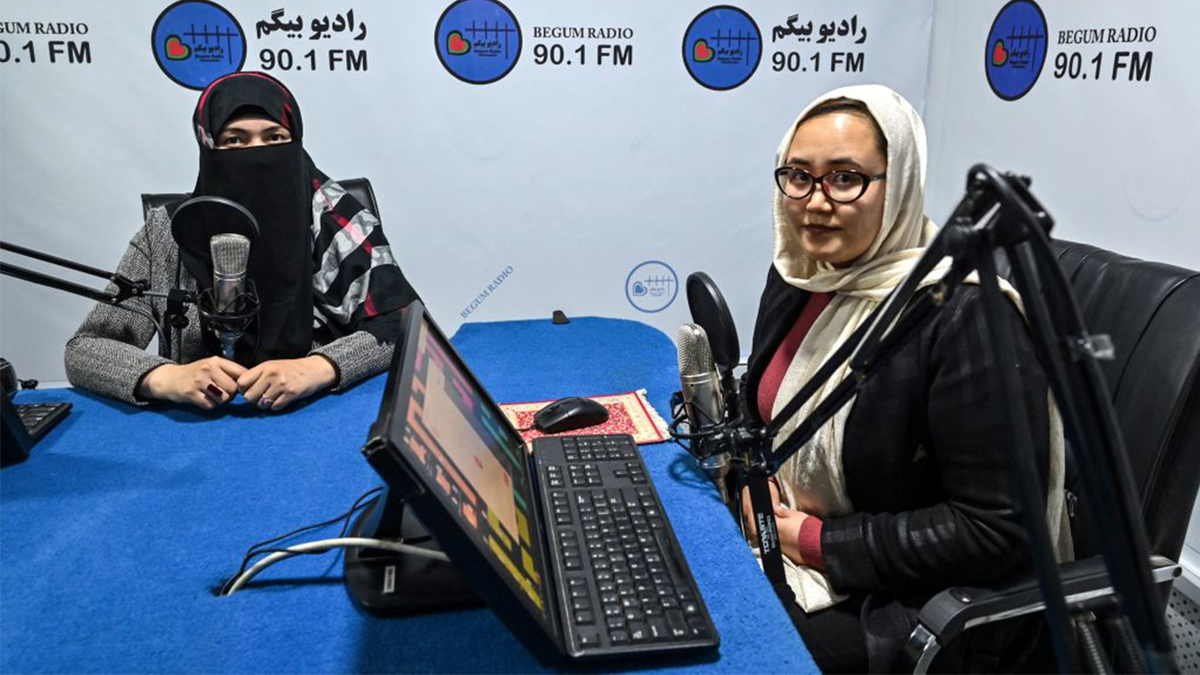
The Taliban in Afghanistan have lifted the suspension on Begum FM, the country’s only women-led radio station, after the station agreed to adhere to the principles set forth by the Taliban regime.
This development comes after months of uncertainty, during which the station was shut down over alleged cooperation with a foreign media outlet. The return of Begum FM marks a significant moment for Afghan women in journalism, though it remains unclear what limitations have been placed on its broadcasts.
The Suspension and Its Aftermath
Begum FM was launched on International Women’s Day in March 2021, just months before the Taliban took control of Afghanistan in August of that year.
The station, run entirely by Afghan women, provided a rare platform for female voices in a country where women’s rights have been systematically dismantled under Taliban rule.
However, in February 2024, Taliban officials raided the station’s headquarters in Kabul, seizing computers, hard drives, and phones, and detaining two male employees who held no senior positions.
The Taliban’s Ministry of Information and Culture accused the station of cooperating with a foreign TV channel, though it did not specify which one.
Read : Taliban Suspends Afghanistan’s Only Women Radio Station ‘Begum FM’
The ministry cited “violations” and suspended Begum FM, leading to international condemnation from press freedom organizations. Reporters Without Borders, which ranks Afghanistan among the worst countries for press freedom, noted that the Taliban have increasingly targeted journalists, particularly women, since their return to power.
#Gravitas | A win for women in Afghanistan: Radio Begum makes a comeback, its content is entirely produced by Afghan women, giving them a platform to be heard.@MollyGambhir brings you this report pic.twitter.com/vrzfIyvFcG
— WION (@WIONews) February 24, 2025
The suspension of Begum FM highlighted the broader crackdown on independent media in Afghanistan. Since 2021, the Taliban have banned women from education beyond the sixth grade, restricted their ability to work, and significantly limited their presence in public life.
Many female journalists lost their jobs, and media organizations faced heavy censorship. Begum FM’s shutdown was seen as yet another step in the Taliban’s efforts to silence female voices in the country.
Conditions for Resumption
After months of negotiations, the Taliban announced that they would allow Begum FM to resume operations, provided it adhered to certain conditions.
According to the Ministry of Information and Culture, the station made “commitments” to Taliban officials, promising to operate within the “principles of journalism” and the “regulations of the Islamic Emirate of Afghanistan.” However, the ministry did not clarify what these regulations entailed, raising concerns about the extent of editorial freedom the station will have.
The station has not publicly disclosed details about the agreements made with the Taliban, but it has confirmed that it will resume broadcasting.
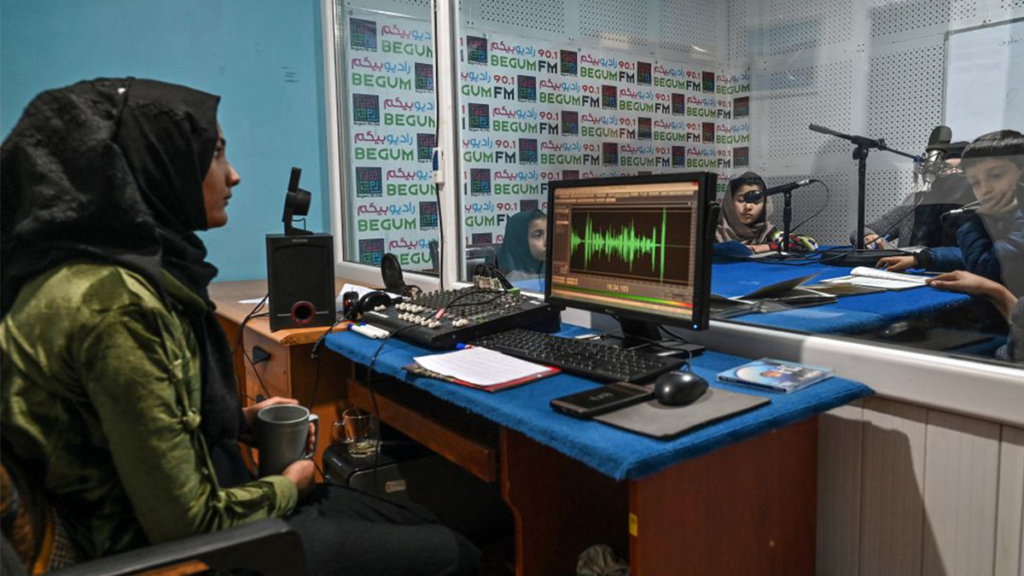
Given the Taliban’s strict media controls, it is likely that Begum FM will face significant restrictions on its programming. In the past, the station aired discussions on women’s rights, education, and other social issues, but under Taliban rule, such topics may now be off-limits.
One major concern is whether Begum FM will be able to provide content that is truly independent. The Taliban have already imposed strict rules on other media outlets, prohibiting criticism of the regime and mandating that all news coverage align with their ideology.
If Begum FM is forced to conform to these guidelines, it may lose its role as a voice for Afghan women and instead become a tool for state-controlled messaging.
The Future of Women in Afghan Media
The lifting of the ban on Begum FM is a small victory for media freedom in Afghanistan, but it does not change the dire situation facing women journalists in the country.

Since the Taliban’s takeover, nearly all women working in media have either lost their jobs or been forced into exile. The regime’s restrictions on women’s education and employment have made it nearly impossible for new female journalists to enter the field.
Afghanistan’s ranking in the 2024 Press Freedom Index dropped to 178 out of 180 countries, reflecting the increasing repression of journalists.
The Taliban have repeatedly targeted media outlets that do not align with their views, shutting down stations, arresting reporters, and censoring content. The fate of Begum FM remains uncertain, as the station could be shut down again if it is deemed to violate the Taliban’s regulations.
Despite these challenges, the station’s return offers a glimmer of hope. It proves that Afghan women are still fighting to have a voice, even in the face of extreme adversity.
The world will be watching closely to see how Begum FM operates under its new conditions and whether it can continue to provide meaningful content for Afghan listeners. The station’s ability to navigate the restrictions imposed by the Taliban will determine whether it remains a symbol of resilience or becomes another casualty of media suppression in Afghanistan.