
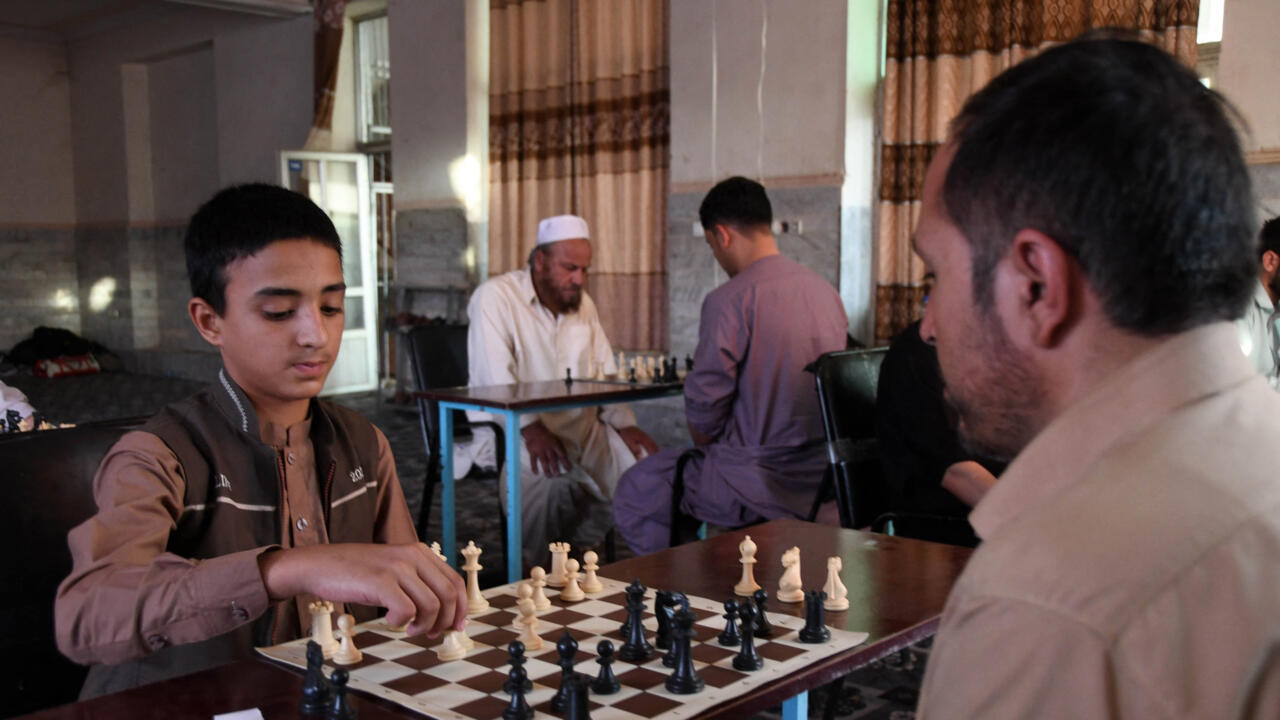
The Taliban government in Afghanistan has once again taken the global spotlight with another controversial decision—this time, by suspending the game of chess across the country. Citing concerns that chess may be used as a form of gambling and may be inconsistent with Islamic Sharia law, the authorities have imposed an indefinite ban on the centuries-old game.
This move has triggered reactions from chess enthusiasts, human rights advocates, and international observers, highlighting the growing constraints on public life in Afghanistan since the Taliban’s return to power in 2021.
Taliban Suspends Chess in Afghanistan
The announcement to suspend chess was made by Atal Mashwani, the spokesman for the Taliban government’s sports directorate, who stated that the sport has religious implications and needs to be evaluated for its compatibility with Islamic law.
Until such a determination is made, the game will remain prohibited. “There are religious considerations regarding the sport of chess,” Mashwani said. “Until these considerations are addressed, the sport of chess is suspended in Afghanistan.”
For the Taliban, who rule under a strict interpretation of Sunni Islamic Sharia law, activities deemed to involve gambling or inappropriate entertainment are often subject to restriction or prohibition. According to their interpretation, any activity that might lead to gambling—whether directly or indirectly—is considered sinful.
Chess, though often viewed globally as a strategic and intellectual pursuit, has historically been a point of debate among conservative Islamic scholars. While the game is accepted and even celebrated in several Muslim-majority nations such as Iran, Indonesia, and the UAE, the Taliban has chosen a more rigid approach.
Read : California Lawyer Sara Jacqueline King Jailed for Spending Over $9M of Clients’ Money on Gambling
The authorities have not clarified the specific Sharia interpretations or religious rulings they are relying on, leaving many in ambiguity. As a result, the game is not only being removed from official events and tournaments but also from cafes and public gatherings, where it has long been a staple pastime.
Impact on Afghan Society and Young Enthusiasts
The social implications of the ban are significant. In Kabul, and across various Afghan cities, chess has been more than a game—it has been a mental exercise, a leisure activity, and for many, a small escape from the turmoil of daily life.
Particularly among the youth, the game has provided a peaceful and intellectually stimulating form of recreation amid the limited entertainment options available under Taliban rule.
Azizullah Gulzada, a cafe owner in Kabul, expressed disappointment over the decision. His cafe had become a known spot for informal chess tournaments, attracting many young visitors who would spend hours engaged in matches over tea.
“Young people don’t have a lot of activities these days, so many came here every day,” Gulzada said. “They would have a cup of tea and challenge their friends to a game of chess.”
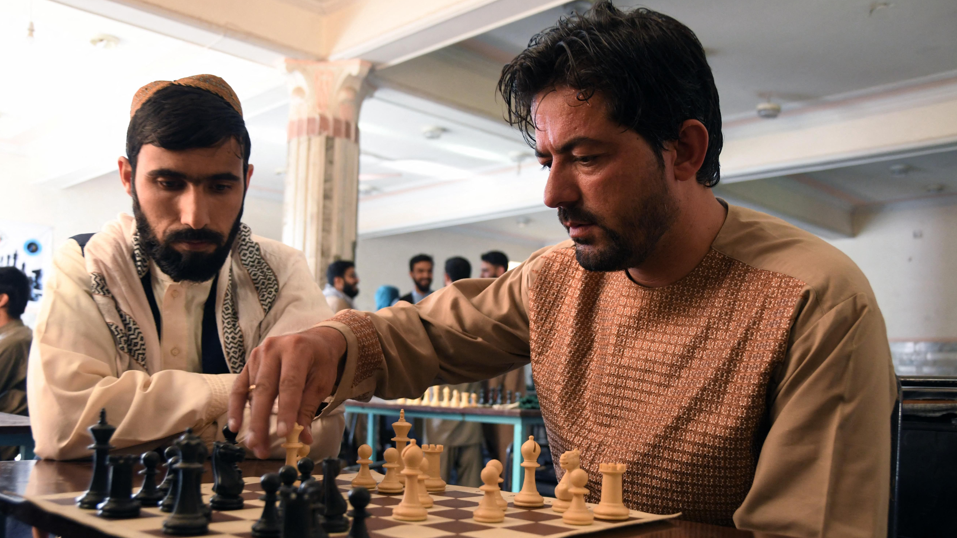
The ban not only threatens the mental well-being of Afghanistan’s youth but also impacts small businesses like Gulzada’s, which rely on the modest commerce generated by social games and community gatherings.
In a country where economic opportunities are already scarce and youth unemployment is high, taking away yet another outlet for constructive engagement could further deepen feelings of isolation and despair.
Moreover, chess has long been associated with education and critical thinking. Many schools and educational centers promoted the game as a means to improve cognitive abilities, decision-making skills, and strategic thinking.
The suspension of chess risks limiting yet another avenue for intellectual development, particularly for young boys—since girls have already been barred from secondary and higher education.
Chess as the Latest Casualty in a Series of Bans
Chess is only the latest sport to be targeted by the Taliban. Since returning to power in August 2021, the Taliban has systematically restricted sports and cultural activities, especially those that allow public gatherings or physical contact. Women’s participation in sports has been almost entirely eradicated.
Female athletes have been silenced, removed from teams, and even threatened with imprisonment if they engage in athletic activities. This has prompted an exodus of sportswomen from Afghanistan, many of whom now live in exile.
In 2021, the Taliban effectively banned Mixed Martial Arts (MMA), claiming that “face-punching” was in direct violation of Islamic values. While the sport had gained popularity in parts of Afghanistan over the past decade, it was deemed too violent and incompatible with religious teachings. Last year, a spokesperson reiterated that “it was found that the sport is problematic with respect to Sharia and it has many aspects which are contradictory to the teachings of Islam.”
Such prohibitions are part of a broader campaign by the Taliban to reshape Afghan society according to their austere ideological vision. Music concerts, movies, kite-flying, and even certain forms of art have faced restrictions or outright bans.
The stated aim is to eliminate “immoral” influences and re-establish what they call a “pure” Islamic society. However, critics argue that this has led to an increasingly repressive environment, stifling freedom of expression and eroding cultural identity.
The move also contrasts starkly with the way chess is perceived and practiced in other Islamic nations. Countries like Iran have a rich tradition of chess, with grandmasters and national tournaments drawing wide participation and viewership.
Chess federations across the Arab and Muslim world regularly participate in international competitions. In fact, several Islamic scholars throughout history, including the famous Persian polymath Al-Razi, have spoken favorably about chess, regarding it as a tool for sharpening the mind.
This makes the Taliban’s decision even more contentious. Rather than being rooted in a unified Islamic stance, the ban reflects a hyper-conservative reading of religious texts that is not universally accepted among Muslim scholars.
A Nation Drifting Further Into Isolation
The ban on chess in Afghanistan is more than just the prohibition of a game. It symbolizes a broader trend of societal restriction, one where intellectual and cultural pursuits are gradually being squeezed out in favor of rigid doctrinal control. For a nation already reeling from poverty, humanitarian crises, and international isolation, the suppression of games like chess could further erode the morale of its people.
Chess, with its emphasis on strategic thinking and patience, has long been seen as a metaphor for life’s challenges—requiring foresight, planning, and the ability to anticipate consequences. Ironically, these are the very qualities that Afghanistan desperately needs in its leadership and governance.
The removal of chess from Afghan life, under the pretext of religious morality, deprives the people not only of a recreational outlet but of a symbol of intellectual empowerment. As the international community continues to engage with the Taliban regime on issues of human rights and social freedoms, decisions like this will serve as key indicators of the regime’s trajectory.
While the Taliban insists it is upholding Islamic values, many Afghans—and indeed many Muslims around the world—see in these measures a return to a darker time, where cultural expression and individual choice were subordinated to an extreme and narrow ideology.
Whether or not chess returns to Afghanistan will depend on how the Taliban chooses to interpret religious teachings and how much pressure the public and global institutions can exert. For now, however, the game of kings remains off the board in a nation struggling to define its future.