
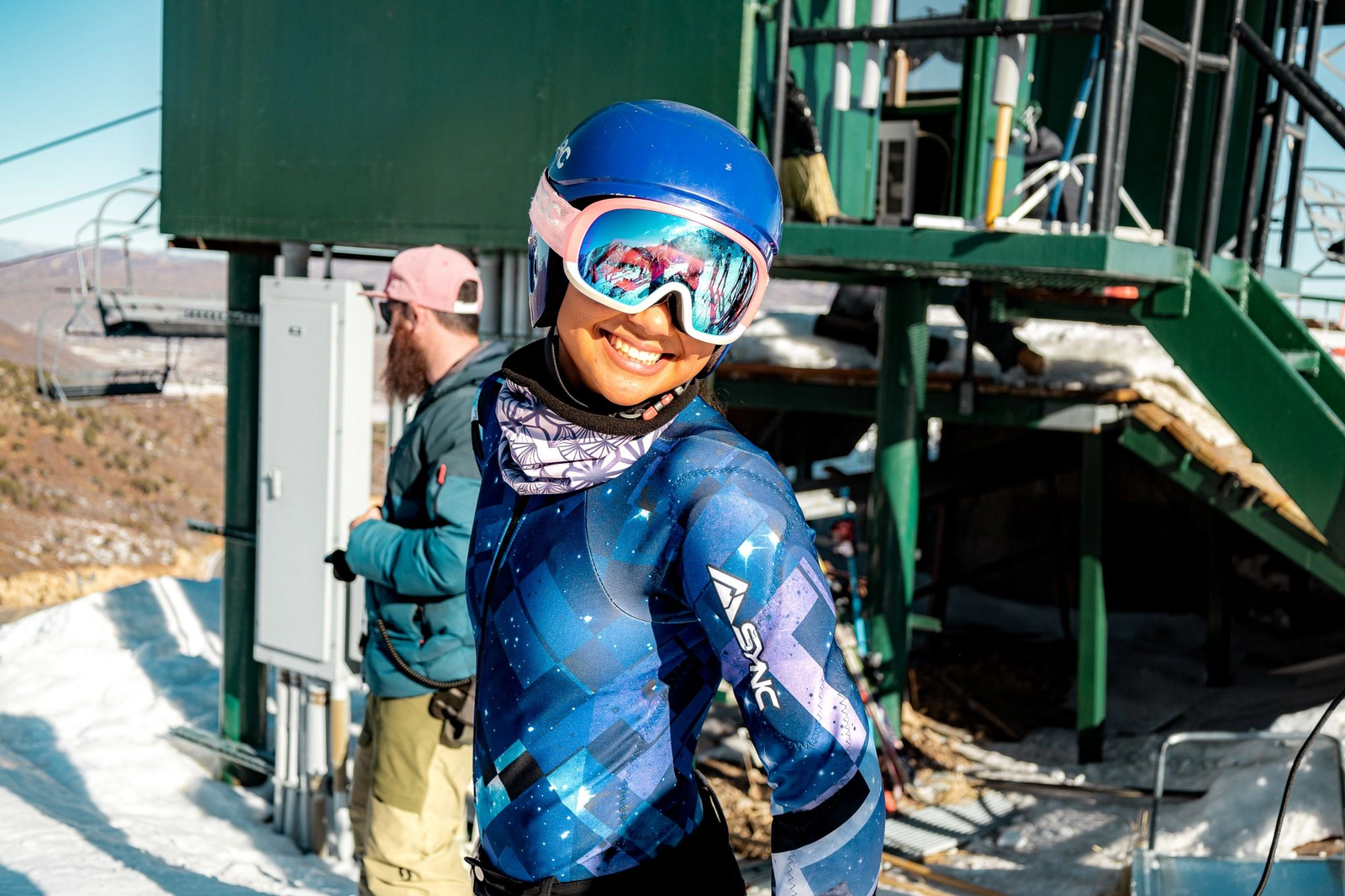
At just 17 years old, Tallulah Proulx has secured a place in Olympic history long before she has had time to fully absorb the magnitude of the achievement. Last month, on the final day of alpine skiing qualifications in northern California, the teenage skier completed her last slalom run not knowing whether it would be enough to earn her a spot at the 2026 Winter Olympics in Milan and Cortina d’Ampezzo.
The uncertainty lingered even after she left the mountain, sitting with her mother in their car as they prepared to drive home. When confirmation arrived moments later, it carried with it more than just Olympic qualification. Tallulah Proulx had become the first female athlete from the Philippines to compete in a Winter Olympics, and the youngest Winter Olympian in the nation’s history.
Her journey to that moment reflects years of family sacrifice, calculated decisions, and steady progression through some of the most competitive youth ski programs in the United States. While she grew up training on American mountains, her Olympic debut will come under the Philippine flag, a choice rooted in both heritage and opportunity. As she prepares to race against the world’s elite in Cortina, Proulx represents not only a personal milestone but also a symbolic expansion of what winter sports can look like for countries without deep snow traditions.
From Toddler Turns to Olympic Qualification
Tallulah Proulx’s introduction to skiing came almost as early as her ability to walk. She was three years old when she first clicked into skis, growing up in Berkeley, California, where weekend family trips to Lake Tahoe became a routine part of her childhood. Those early years established a familiarity with snow and speed rather than an immediate focus on competition, but they laid the foundation for what would eventually become a full-time pursuit.
The rhythm of those weekends was interrupted when Proulx was seven, after her mother’s job relocated the family to Iowa. The contrast was stark. With limited elevation and only a single small ski area, Sundown Mountain, opportunities were fewer, but they were not absent. Tallulah Proulx joined the local race team, continuing to develop her skills despite the geographical limitations. The experience reinforced her determination and clarified that skiing was not simply a recreational interest but a central ambition.
By age 10, her parents made a significant commitment to that ambition, enrolling her in a six-day-a-week ski program in Vail, Colorado. The move required separation from home and a demanding schedule, but it also placed Tallulah Proulx in an environment designed to cultivate elite alpine racers. A year later, in 2018, she relocated again, this time to Park City, Utah, to continue training at a higher competitive level. Eventually, her family followed, underscoring the collective nature of her journey.
We can't wait to see Tallulah Proulx hit the slopes at #MilanoCortina2026! 🤩🇵🇭#Olympics@milanocortina26 | @fisalpine | @OlympicPHI pic.twitter.com/Y2wtXyWDE1
— The Olympic Games (@Olympics) January 28, 2026
Throughout these transitions, Tallulah Proulx progressed through youth and junior competitions, refining her technique and race discipline. Alpine slalom, with its emphasis on precision and speed through tightly spaced gates, became her specialty. By her mid-teens, she was competing seriously for international qualification points, culminating in the tense final day in California where her Olympic fate would be decided. The narrow margin by which she qualified underscored both the competitiveness of the field and the consistency required to reach the Olympic threshold.
Choosing the Philippines and Carrying a New Flag
As Proulx approached Olympic eligibility, a critical decision emerged: whether to attempt qualification under Team USA or represent the Philippines, a country of her family heritage. The choice was shaped by a clear-eyed assessment of opportunity rather than sentiment alone. The United States boasts one of the deepest alpine skiing talent pools in the world, where Olympic selection often requires years on the national team and extended development beyond junior competition.
Representing the Philippines offered a more direct pathway, given the smaller number of winter sport athletes and developing infrastructure. As a dual national, Proulx was eligible to compete for either country, and after careful consideration, her family opted for the Philippine route. Proulx has openly acknowledged that qualifying under the U.S. flag would likely have required a longer timeline and additional hurdles that might have delayed or prevented her Olympic debut.

The decision carried symbolic weight. Winter sports are rarely associated with the Philippines, a tropical nation without snow-covered mountains. By qualifying for the Milano Cortina Games, Proulx became the first female Winter Olympian in Philippine history and the youngest athlete ever to represent the country at the Winter Games. Her presence challenges conventional assumptions about which nations belong on winter Olympic start lists.
That symbolism was on full display during the Opening Ceremony on February 6, 2026, in Cortina d’Ampezzo, when Proulx served as the Philippine flag bearer. Walking into the stadium beneath the national colors, she represented a new chapter for Filipino athletes on the global stage. The role was both an honor and a responsibility, reinforcing her awareness that her participation extends beyond individual performance.
Pressure, Perspective, and the Meaning of Representation
As Proulx prepares to compete against the world’s top alpine skiers, she is candid about the pressure that accompanies her Olympic debut. At 17, the Milano Cortina Games mark her first major international competition at the highest level, a transition that brings heightened scrutiny and expectation. Yet she approaches the challenge with a perspective shaped by years of incremental progress and family support.

Rather than framing the Olympics solely in terms of results, Proulx has emphasized the importance of experience and mindset. She has spoken about maintaining positivity regardless of outcome and focusing on enjoyment and learning in an environment defined by elite performance. That approach reflects both her youth and an understanding that this appearance may represent the beginning rather than the culmination of her Olympic journey.
Beyond personal goals, Proulx has articulated a broader message for young athletes, particularly those from underrepresented countries or communities. She has highlighted the importance of supportive networks, passion, and resilience, suggesting that access and belief can be as critical as raw talent. For young Filipinos and Filipinas watching her compete, her presence alone carries significance.
In a nation where winter sports remain unfamiliar to many, Proulx’s story introduces new possibilities. She has described Filipinos as among the most supportive people, emphasizing pride in identity as a source of motivation. By competing in the Winter Olympics, she positions herself as a first step rather than an endpoint, hoping her tracks on the snow will encourage others to imagine similar paths.
As the slalom courses of Cortina await, Tallulah Proulx stands at an intersection of personal ambition and national representation. Her journey from toddler skis in Lake Tahoe to Olympic qualification in northern California illustrates the cumulative power of dedication, opportunity, and strategic choice. Regardless of final standings, her role in the 2026 Winter Olympics has already reshaped the narrative of who can belong in winter sport, and which flags can fly at the finish line.