
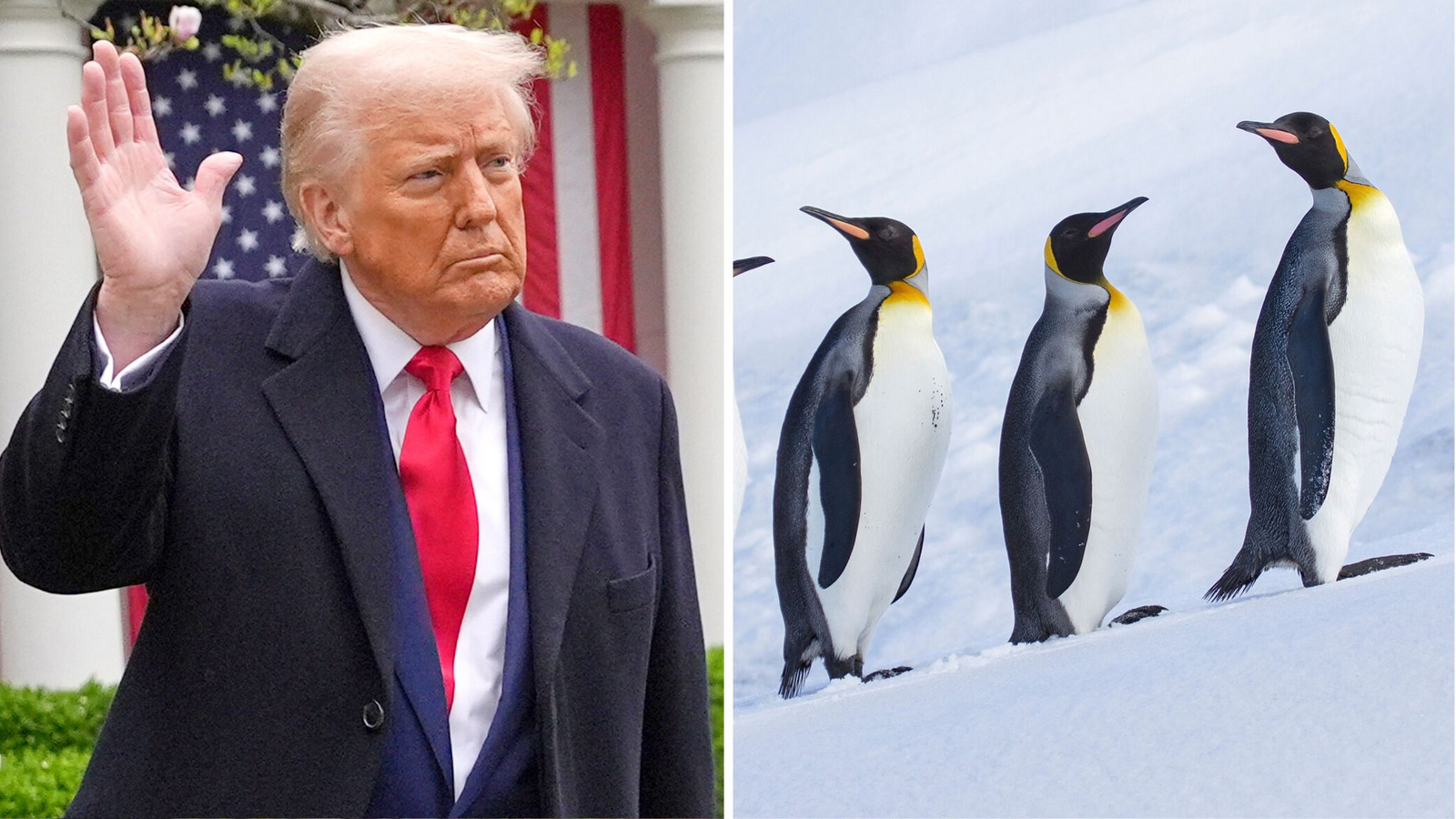
When former US President Donald Trump announced his new wave of tariffs under the banner of “Liberation Day tariffs,” nations around the world braced for economic impact. However, in an unexpected move, his administration also included an entirely uninhabited Australian territory in the tariff list.
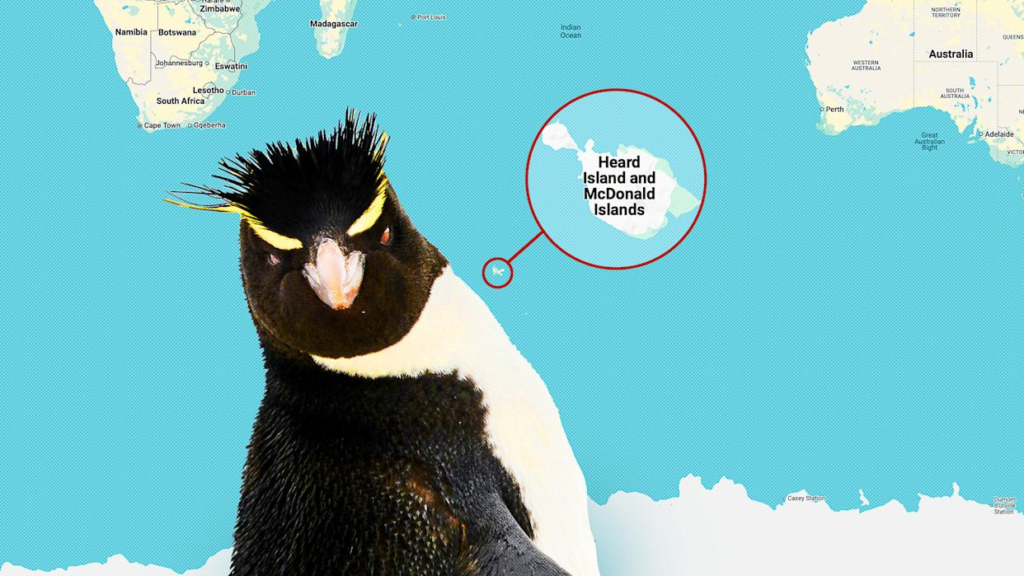
Heard and McDonald Islands, a remote sub-Antarctic region home only to penguins, seals, and seabirds, found themselves subject to a 10% tariff, despite their complete lack of human habitation.
A Tariff on the Uninhabited: Heard and McDonald Islands
The inclusion Tariff On Island Nation With Only Penguins sparked confusion and controversy. The islands, located in the Indian Ocean over 4,000 kilometers southwest of mainland Australia, are among the most remote places on Earth.
Their only residents are large colonies of seabirds and marine mammals, including endangered species protected under international conservation laws.
According to a White House official cited by Axios, the islands were subject to the tariff simply because they are part of Australian territory. During Trump’s announcement in the White House Rose Garden, he presented a chart listing affected nations and territories.
Among them were several Australian external territories, including the Cocos (Keeling) Islands, Christmas Island, and Norfolk Island. However, Heard and McDonald Islands stood out because they are entirely uninhabited and rarely visited by humans.
Read : Senator Cory Booker Gives 25-Hour Long Non-Stop Speech Against Trump
Despite the apparent absurdity of imposing tariffs on a landmass devoid of human economic activity, the administration defended its decision, citing trade imbalances, currency manipulation, and unspecified trade barriers.
A printed sheet distributed to reporters even specified that the islands currently impose a “Tariff to the USA,” justifying Washington’s reciprocal action.
Australian Response: “Nowhere on Earth is Safe”
The Australian government reacted with a mixture of humor and frustration to the news. Prime Minister Anthony Albanese took to social media platform X (formerly Twitter) to express his views on the matter.
“These are uncertain times – but all Australians can be certain of this. These tariffs are not unexpected, but they are unwarranted. Many other countries will be hit harder by today’s decision than Australia – and no nation is better prepared than Australia,” he stated. However, he also added a grim observation: “Nowhere on Earth is safe.”
The tariffs came as part of a broader strategy targeting Australian trade policies. While mainland Australia was hit with a 10% tariff, Norfolk Island, a small inhabited territory with a population of just over 2,000 people, faced a particularly harsh 29% tariff.
Our Government will always stand up for Australia.
— Anthony Albanese (@AlboMP) April 2, 2025
These are uncertain times – but all Australians can be certain of this: we will always stand up for Australian jobs, Australian industry, Australian consumers and Australian values.
These tariffs are not unexpected, but they… pic.twitter.com/bXaFTcvnN8
The decision to impose tariffs on external territories, including some with minimal economic output, raised eyebrows among trade analysts. The Heard and McDonald Islands, which are designated as a UNESCO World Heritage site, have not had human visitors in nearly a decade.
The Australian Antarctic Program describes them as one of the “wildest and remotest places on Earth,” emphasizing their ecological significance rather than their economic impact. The islands are only accessible via a 10-day journey by ship from Fremantle, Western Australia, a journey that very few undertake.
The Symbolism and Consequences of the Tariff
The tariff on Heard and McDonald Islands may not have direct economic consequences—given the absence of trade—but it has sparked debates on the symbolism of such a decision. Critics argue that the move underscores the erratic nature of Trump’s trade policies, which have historically focused on broad punitive measures rather than targeted economic strategy.
From an environmental standpoint, imposing a tariff on a protected wildlife sanctuary seems bizarre. The islands serve as an important habitat for vulnerable species, including elephant seals and albatrosses.
While there is no commercial activity from the islands, conservationists fear that placing them under a trade dispute could somehow jeopardize their protected status or lead to future exploitation.
On the global stage, Trump’s tariff move signals a continuation of his unpredictable approach to international trade. By including uninhabited islands alongside major economies, the policy raises questions about the depth of analysis behind such trade decisions.
Meanwhile, Australian officials have dismissed the tariffs as largely symbolic, given that no actual trade occurs between Heard and McDonald Islands and the United States. However, they worry that this could set a precedent for future trade disputes involving other external territories.
In the grand scheme of economic policy, this particular tariff may be inconsequential. Yet, its inclusion on the list has provided a moment of levity amid serious trade tensions, highlighting the sometimes surreal nature of global economic decisions.
Whether or not the tariff will remain in place or be quietly dropped remains to be seen, but for now, the penguins and seals of Heard and McDonald Islands remain unlikely participants in an international trade war.