
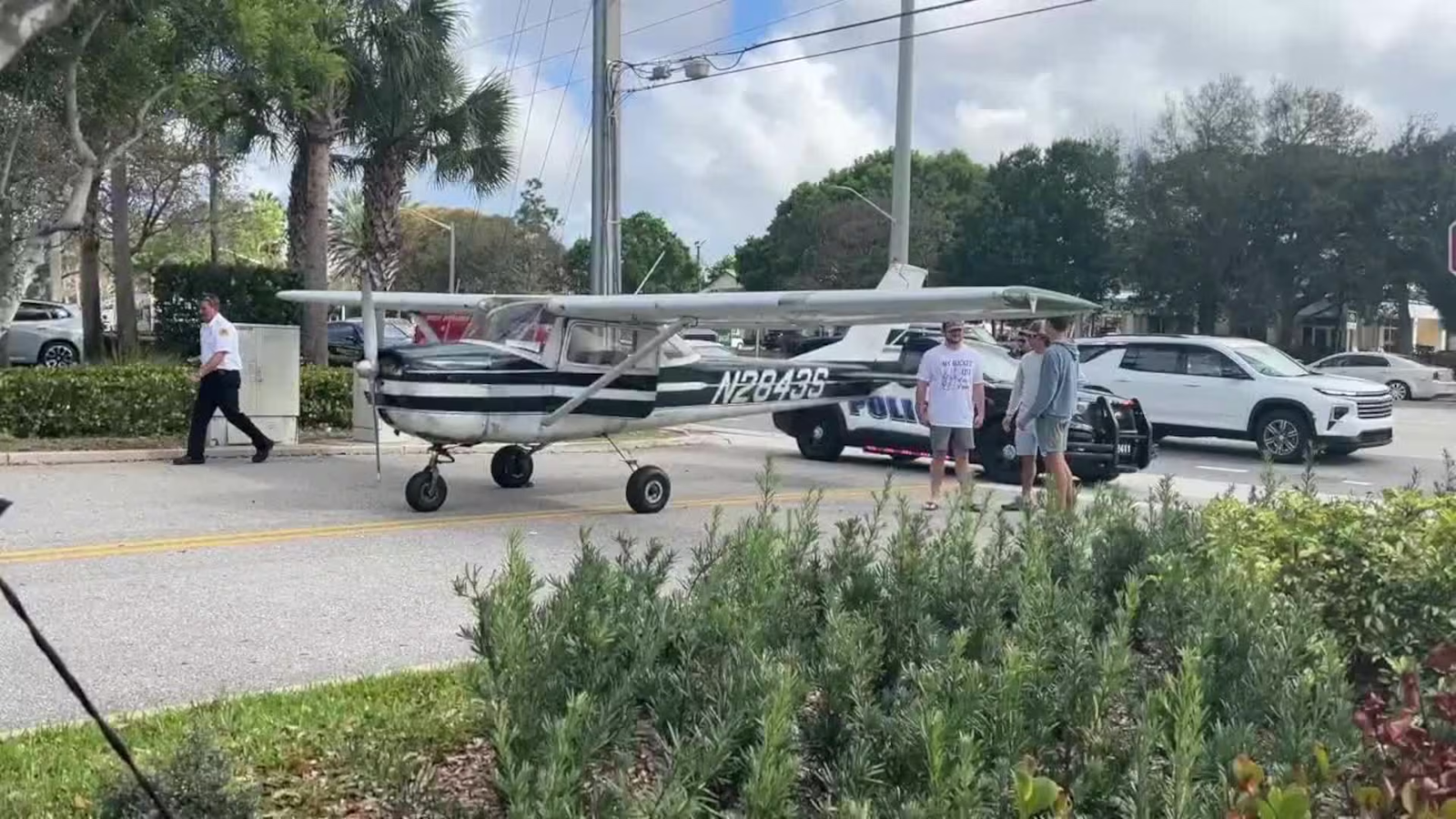
A routine afternoon flight turned into a tense and life-threatening situation when a young pilot was forced to land a small aircraft on a busy roadway in Jupiter, Florida. Nineteen-year-old Niko Bray found himself confronting one of the most challenging scenarios any pilot can face: a sudden loss of engine power shortly after takeoff. With only a few hundred feet of altitude and limited time to react, Bray had to quickly evaluate his surroundings, identify a possible landing location, and guide the powerless plane safely to the ground.
The dramatic incident unfolded during the afternoon rush hour, when traffic filled nearby roads and drivers were focused on their daily commutes. Niko Bray and a passenger had been in the air for only a short time when the aircraft began experiencing serious mechanical trouble. As the engine lost power, the young pilot immediately realized that the situation was critical. Without engine thrust, the plane could no longer maintain altitude and would inevitably descend. The challenge was no longer whether the plane would land, but where and how safely it could be brought down.
In aviation training, pilots are taught to remain calm and methodical during emergencies, relying on both practice and quick decision-making to navigate dangerous situations. Niko Bray’s experience became a real-world test of those lessons. In a matter of moments, he had to analyze the terrain below him, weigh his options, and choose the best possible location to attempt an emergency landing. The decision would affect not only his own safety and that of his passenger, but also the drivers traveling on the road beneath him.
What followed was a remarkable sequence of events that ended without injuries, despite the risks involved. Niko Bray managed to guide the aircraft onto a major roadway, avoiding vehicles and obstacles while coordinating with the unexpected assistance of a truck driver who helped clear a path through traffic. Emergency responders soon arrived at the scene after multiple witnesses reported the unusual landing. The safe outcome highlighted both the pilot’s composure under pressure and the quick reactions of those nearby who helped prevent a potential disaster.
A Sudden Loss of Power in Mid-Flight
The emergency began only minutes after Niko Bray’s aircraft departed on what was expected to be a routine flight. According to flight tracking information, the plane had been airborne for less than 17 minutes when the engine suddenly lost power. For pilots, an engine failure during the early stages of a flight can be particularly dangerous because the aircraft is often flying at relatively low altitude with limited options for landing.
Niko Bray quickly recognized the seriousness of the situation. He later explained that he knew he was only about 500 feet above the ground when the engine stopped producing power. At that height, a pilot has very little time to troubleshoot the problem or search for an ideal landing site. The aircraft will begin gliding immediately, and every second counts when choosing where to land.
During such emergencies, pilots are trained to maintain control of the aircraft first and foremost. Establishing a stable glide path helps ensure that the plane remains manageable while the pilot evaluates possible landing areas. Niko Bray followed this principle, focusing on guiding the plane safely downward rather than attempting risky maneuvers or panicked actions.
Initially, he considered landing on A1A, a nearby coastal roadway. However, after assessing the situation from the air, Niko Bray determined that the road was too narrow and crowded to safely accommodate the aircraft. The limited width and nearby obstacles made the option too risky, particularly given the number of vehicles likely traveling along the route.
🚨JUST IN: A Small plane flown by a 19 year old pilot with one passenger successfully makes an emergency landing on Indiantown Road in Jupiter, Florida.
— DK🇺🇸🦅🇺🇸 (@1Nicdar) March 7, 2026
There were cars on the roadway, but the pilot somehow managed to land without hitting a single vehicle. pic.twitter.com/IashLnmePm
Instead, he adjusted his plan and turned westward toward Indiantown Road, a wider roadway that offered a better chance of completing an emergency landing without striking vehicles or roadside structures. The decision required quick judgment and confidence, as there was little time to reconsider once the aircraft committed to the approach.
Niko Bray’s calm response in those moments played a crucial role in the outcome. Rather than allowing panic to take over, he focused on executing the emergency procedures he had learned during flight training. His ability to quickly identify a safer alternative landing site demonstrated both situational awareness and strong piloting skills.
A Risky Landing in the Middle of Traffic
Landing an aircraft on a busy road presents enormous challenges even under controlled conditions. Attempting such a maneuver during an emergency, with limited altitude and unpredictable traffic patterns, raises the difficulty significantly. As Niko Bray guided the powerless plane toward Indiantown Road, he had to carefully align the aircraft with the roadway while keeping a close eye on moving vehicles.
One unexpected factor that helped make the landing possible was the assistance of a truck driver who noticed the plane descending toward the road. Recognizing the danger, the driver took action by slowing down and blocking traffic behind him, effectively creating space on the roadway for the aircraft to land. This quick thinking helped prevent cars from moving into the plane’s landing path at the worst possible moment.
Read : Teen Pilot Influencer Ethan Guo Stranded in Antarctica Since June Agrees to $30000 Deal
Niko Bray continued descending toward the road, carefully controlling the glide of the small single-engine aircraft. The objective was to touch down smoothly while avoiding contact with vehicles, signs, or other roadside hazards. Even a minor miscalculation could have caused the plane to strike a car or veer off the roadway. At approximately 2:30 in the afternoon, emergency responders received multiple 911 calls reporting an aircraft landing on Indiantown Road.

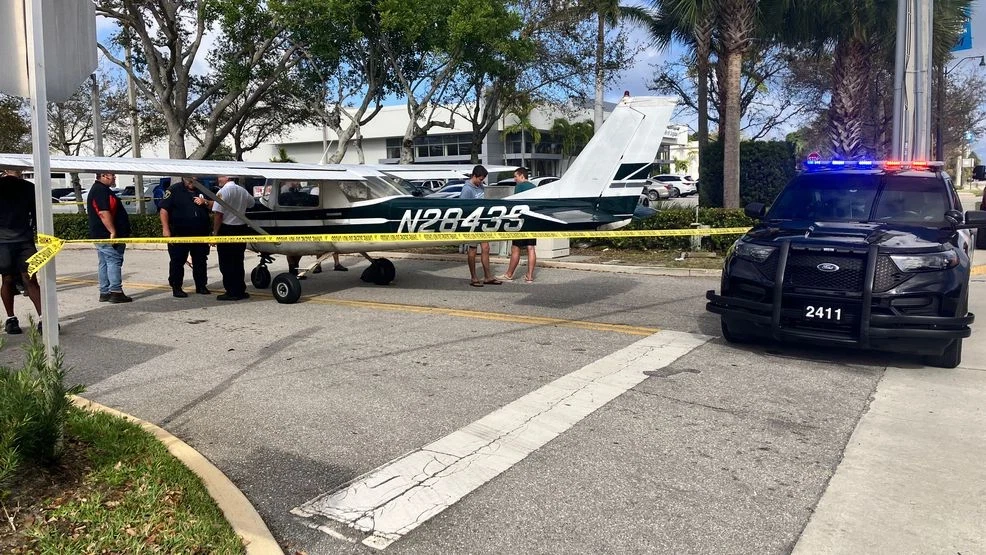
Witnesses described the unusual sight of the small plane descending onto the westbound lanes between Maplewood Road and Pennock Lane. For drivers nearby, it was a moment few would ever expect to see during a routine commute. Despite the risks, the landing was completed successfully. The plane touched down without hitting any vehicles, and both Niko Bray and his passenger emerged without injuries.
The successful outcome was remarkable given the circumstances, especially considering the presence of traffic and the limited time available to prepare for the landing. Palm Beach County Fire Rescue crews arrived at the scene within minutes of receiving the emergency calls. Responders secured the area and ensured that everyone involved was safe. After confirming that there were no injuries, crews worked to move the aircraft out of the roadway to restore normal traffic flow.
The plane was eventually pushed from the middle of the road into the parking lot of a nearby plaza. From there, arrangements were made to load it onto a flatbed truck for removal from the scene. What had briefly become an improvised runway was soon cleared, allowing drivers to continue their journeys.
A Young Pilot’s Dream Tested by Crisis
For Niko Bray, the emotional impact of the incident did not fully sink in until after the danger had passed. During the emergency, his focus remained on flying the aircraft and ensuring a safe landing. Only later, when he reunited with his mother, did the reality of the situation begin to settle in. The young pilot expressed deep gratitude for her support over the years. She had helped fund his pursuit of aviation, allowing him to train and build the experience necessary to become a licensed pilot.
Niko Bray described how meaningful it was to see her again after such a frightening ordeal, emphasizing how much her encouragement had meant throughout his journey. Aviation had been a passion for Bray since early childhood. He said he first dreamed of becoming a pilot when he was just five years old. Over time, that dream evolved into a dedicated pursuit of flight training, licensing, and hands-on flying experience. By the age of 18, Bray had already earned his commercial pilot license, a significant accomplishment that requires extensive training, testing, and flight hours.
Pilots pursuing this certification must demonstrate strong knowledge of aviation systems, navigation, emergency procedures, and aircraft control. Niko Bray had flown the same plane many times before without experiencing any mechanical issues. The sudden engine failure during this flight was unexpected and highlights the unpredictable nature of aviation, even when aircraft are properly maintained and operated by trained pilots.
Despite the frightening experience, Niko Bray made it clear that the incident would not discourage him from continuing his aviation career. Instead, he views the event as part of the reality of flying, where preparation and training are essential for handling emergencies. Investigators from the National Transportation Safety Board and the Federal Aviation Administration have begun examining the incident to determine what caused the engine failure.
Such investigations typically involve reviewing maintenance records, examining the aircraft’s engine and systems, and analyzing flight data to identify any mechanical or operational factors that may have contributed to the loss of power. Understanding the cause of the failure is important not only for the pilot involved but also for improving safety across the aviation community. Lessons learned from incidents like this can lead to improved maintenance practices, better training procedures, and enhanced safety measures for future flights.
For those who witnessed the dramatic landing, the event served as a reminder of both the risks and the skill involved in aviation. While emergencies are rare, the training pilots receive is designed precisely for moments like this. Niko Bray’s ability to remain calm, choose a landing site quickly, and guide the plane safely to the ground demonstrated the effectiveness of that preparation.
The busy roadway where the plane landed returned to normal shortly after the aircraft was removed. Drivers continued along their routes, many likely reflecting on the unusual sight they had witnessed. For Niko Bray and his passenger, however, the experience will remain a defining moment, one that tested both courage and skill in the face of sudden danger.