

On Wednesday, a devastating terrorist attack struck the headquarters of Turkish Aerospace Industries (TUSAS) in Kahramankazan, Ankara, resulting in the loss of three lives and leaving 14 others wounded.
The event, which unfolded with a deadly explosion and ensuing gunfire, has sent shockwaves through Turkey’s defense and aviation sectors. The motives behind the attack remain under investigation, but early reports suggest that it may have involved a coordinated suicide bombing and gun assault.
The incident marks a significant breach of security at one of Turkey’s most critical defense manufacturing facilities, shaking both the industry and the country as a whole.
Attack Details and Immediate Aftermath
According to the Turkish Interior Minister, Ali Yerlikaya, the attack on the TUSAS facilities was confirmed as a terrorist act. The assault occurred during a changeover of security personnel at the complex, which houses one of Turkey’s premier defense manufacturing hubs.
Turkish Aerospace Industries, known for producing cutting-edge military technology, including the KAAN national combat aircraft, was the target of a well-planned and highly coordinated attack.
The assault began when a group of assailants arrived at the TUSAS complex in a taxi, taking advantage of the shift change to strike at a moment of vulnerability. Eyewitnesses reported a massive explosion at the gate of the facility, followed by intense gunfire.
Read : Israeli PM Netanyahu is Trying to Drag Iran into the War: Turkey
Private television channel NTV indicated that at least one of the attackers detonated a bomb, likely a suicide vest, which breached the outer defenses of the complex. The remaining assailants then stormed the facility, leading to a prolonged exchange of gunfire with security personnel.
Television footage from the scene depicted chaotic and violent scenes, with gunfire echoing throughout the facility and helicopters circling overhead. Security forces responded swiftly, surrounding the complex, while emergency personnel worked to control the fire and aid the wounded. Ambulances and firefighters were dispatched to the scene, with casualties swiftly transported to nearby hospitals for treatment.
Read : Turkey Will Lose More Than It Gains: Putin on Trade with the West
The attack also led to significant disruptions in the area surrounding the complex, with roads blocked and authorities urging residents to remain indoors. The Turkish government immediately condemned the attack, and security measures across the nation were heightened in anticipation of further threats.
Turkish Aerospace Industries and Its Strategic Importance
Turkish Aerospace Industries (TUSAS) is a key player in the nation’s defense and aviation industries. Spanning 43 million square feet in Kahramankazan, the TUSAS facility is involved in the production of advanced military hardware, including aircraft, helicopters, drones, and satellites.
One of its most notable projects is the development of the KAAN national combat aircraft, a symbol of Turkey’s growing self-reliance in military technology.
TUSAS serves as the backbone of Turkey’s aerospace and defense ambitions, positioning the country as a rising power in military aviation. The company is responsible for significant contributions to NATO operations and plays a crucial role in Turkey’s defense exports.
Any disruption to its operations, such as the one caused by this attack, can have profound consequences for the country’s defense capabilities.
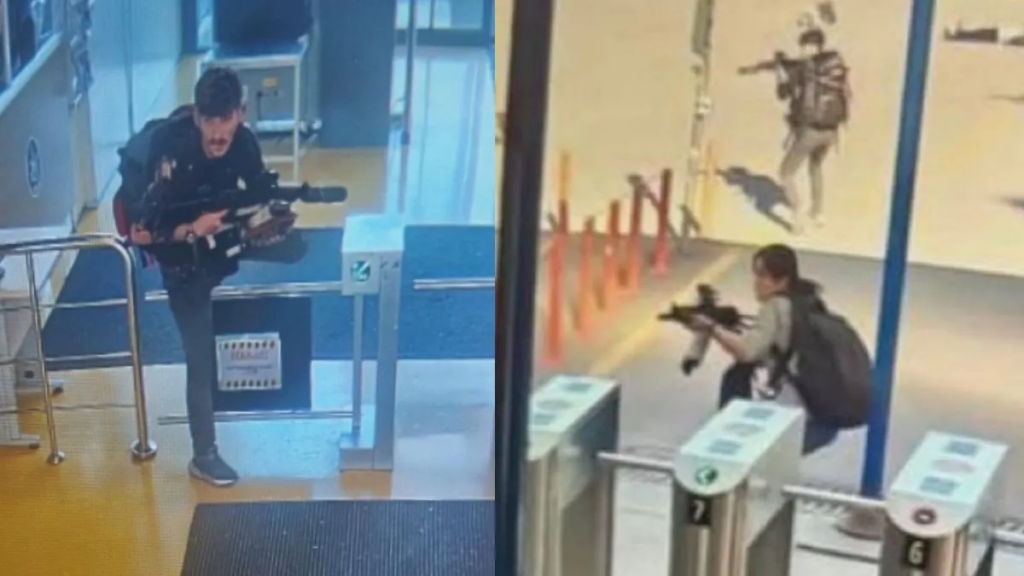
The assault on TUSAS is particularly alarming given its strategic significance. By targeting such a high-profile defense installation, the attackers aimed to not only inflict casualties but also send a message regarding the vulnerability of critical infrastructure in Turkey.
The incident raises questions about security protocols and preparedness at sensitive sites across the country, especially as Turkey continues to face internal and external threats from various terrorist groups.
The facility itself, being on the outskirts of Ankara, is typically a highly secure zone with layers of defenses. However, the attackers’ ability to breach these defenses so effectively highlights potential gaps in the security apparatus.
TUSAS’s operations are not only critical for domestic security but also for international partnerships, including cooperation with major defense contractors and aerospace firms globally.
Broader Impact and Response
The ramifications of the attack on TUSAS extend beyond the immediate loss of life and injuries. Economically, the attack has already triggered negative effects, with Turkey’s benchmark stock index experiencing a sharp drop, led by declines in key companies such as Turkish Airlines, retailer BIM, and conglomerate Koc Holding.
Investors reacted swiftly to the news, as fears of ongoing instability and the potential for further attacks on critical infrastructure loomed large.
This attack also serves as a reminder of the ongoing threat posed by terrorist groups in the region. While no group has yet claimed responsibility, there is speculation that the attack could be linked to long-standing conflicts involving insurgent groups such as the Kurdistan Workers’ Party (PKK) or radicalized elements aligned with ISIS. T
urkey has been a target for terrorist attacks in the past, with both domestic and international actors seeking to destabilize the country through violence.
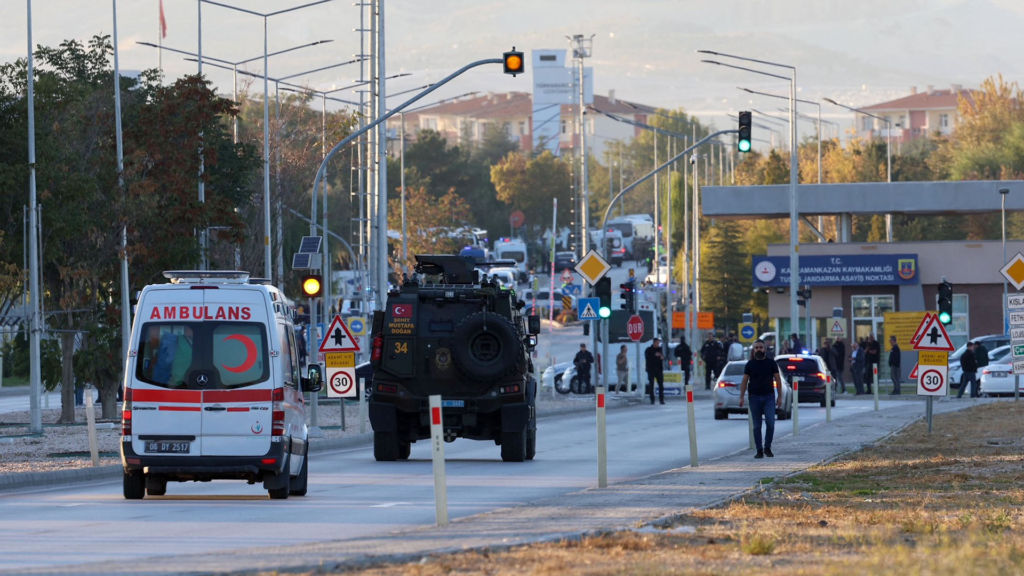
The Turkish government’s response to this attack will likely involve a multifaceted approach, combining military action, intelligence efforts, and internal security measures. In the immediate aftermath, the government has already increased security at key facilities across the nation, with military and police forces placed on high alert.
Interior Minister Ali Yerlikaya assured the public that authorities are conducting a thorough investigation into the attack and are committed to bringing the perpetrators to justice.
Internationally, the attack could affect Turkey’s defense partnerships and its role in the global arms market. TUSAS is a critical player in Turkey’s defense exports, and any disruption to its operations could delay important projects and contracts.
Furthermore, the attack could lead to increased scrutiny from Turkey’s international partners, who may raise concerns about the security of their investments and operations within the country.
The terrorist attack on the Turkish Aerospace Industries headquarters is a stark reminder of the ongoing security challenges that Turkey faces. With three lives lost and 14 others wounded, the incident has sent shockwaves throughout the country and raised serious concerns about the security of critical defense infrastructure.
The attack not only targeted one of Turkey’s most important defense firms but also sought to undermine the country’s stability and its role as a regional power.
As the investigation continues, the Turkish government will need to reassess its security protocols and enhance measures to prevent similar incidents in the future.
The broader implications of the attack, from economic repercussions to potential delays in defense projects, will likely be felt for some time. In the wake of this tragedy, Turkey must remain vigilant and resilient as it navigates the complex threats posed by both internal and external actors.