
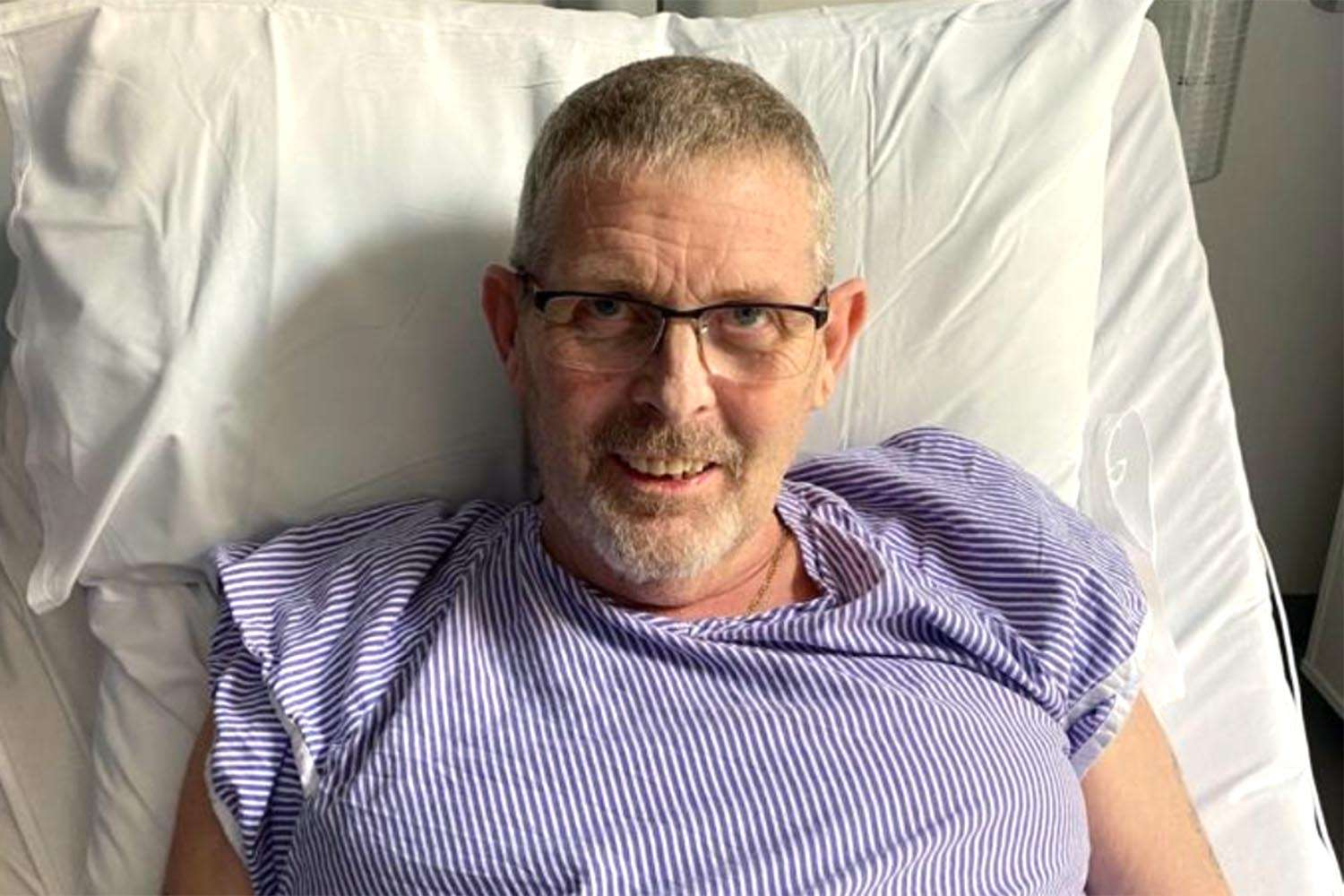
In a heartbreaking turn of events that highlights the challenges of early detection in medical diagnoses, 62-year-old Terry Harper, a dedicated bus driver from London, has been living with stage 3 multiple myeloma, an incurable blood cancer, since his diagnosis in February 2022. What began as what seemed like a routine back injury has evolved into a relentless battle against a disease that has profoundly altered his life. Harper’s story, which recently gained attention through various reports, underscores the importance of thorough medical investigations, especially when symptoms persist beyond initial expectations.
Terry Harper’s experience serves as a stark reminder of how common ailments can mask more serious conditions. Multiple myeloma, a cancer that affects plasma cells in the bone marrow, often presents with symptoms that mimic everyday issues like back pain or fatigue. According to health experts, this type of blood cancer impacts over 33,000 people in the UK alone, making it the third most common blood cancer.
Yet, its vague and overlapping symptoms frequently lead to delays in diagnosis, sometimes with devastating consequences. Harper’s case is particularly poignant because it illustrates how a simple assumption of a slipped disc could have cost him precious time in addressing the underlying issue. As we unpack this story, it becomes clear that awareness and persistence in seeking second opinions can be lifesaving.
This narrative is not just about one man’s struggle; it’s a call to action for better diagnostic practices in healthcare systems worldwide. With the current date being September 14, 2025, Harper’s battle remains ongoing, with recent updates revealing the cancer’s recurrence after a brief period of remission. His determination to continue working despite grueling treatments inspires many, but it also raises questions about support systems for patients facing incurable illnesses. In the following sections, we will examine the sequence of events that led to this diagnosis, the medical realities of multiple myeloma, and the broader implications for public health.
The Onset of Symptoms and the Road to Misdiagnosis
Terry Harper’s ordeal began innocently enough in February 2022, a time when the world was still emerging from the shadows of the global pandemic. As a 62-year-old bus driver residing in Chislehurst, south-east London, Harper was no stranger to physical labor. His job involved long hours behind the wheel, navigating the bustling streets of the city, and occasionally handling heavier tasks at home. It was during one such routine chore that the first signs of trouble appeared.
Harper recalled lifting a vacuum-packed mattress up the stairs of his home, a task that seemed straightforward but left him with excruciating back pain almost immediately afterward. The pain was sharp and persistent, radiating through his lower back and making even simple movements agonizing. Concerned but assuming it was a common injury, Harper sought medical attention at the Princess Royal University Hospital in south London.
In March 2022, he underwent a CT scan, which he claims revealed two slipped discs. The doctors, according to Harper, assured him that this was a typical issue for someone of his age and physical demands, advising that he should start feeling better within about six weeks. They recommended rest, pain management, and perhaps some physiotherapy, but nothing more invasive at that stage. Relieved by what sounded like a manageable explanation, Harper followed the advice, hoping to return to his normal routine soon.
Read : Tameika McBride’s Postpartum Depression Symptoms Turned Out to Be Thyroid Cancer
However, as the weeks turned into months, the pain did not subside as promised. Instead, it intensified, accompanied by other troubling symptoms such as fatigue and a general sense of unwellness. Harper, who had previously worked in manual labor jobs before transitioning to driving a bus, found himself unable to perform even basic tasks without discomfort. He had to quit his more physically demanding roles earlier due to back issues, but this felt different—more debilitating.
Read : Large Number of Lung Cancer Patients in India Never Smoked: Lancet Study
Despite follow-up visits, the initial diagnosis stuck, and Harper was left managing what he believed was a chronic slipped disc. This period of uncertainty was mentally taxing; Harper described feeling frustrated as his quality of life diminished. He continued working as a bus driver, pushing through the pain to support his family, including his long-term partner Della and his grandchildren.

Looking back, Harper’s experience aligns with common pitfalls in diagnosing back pain. Slipped discs, or herniated discs, are indeed prevalent, especially among older adults or those in physically active professions. They occur when the soft material inside a spinal disc pushes through its outer layer, irritating nearby nerves and causing pain. Symptoms often include localized back pain, numbness, or weakness in the legs, which can overlap significantly with other conditions. In Harper’s case, the CT scan likely showed disc abnormalities, leading to the straightforward conclusion without deeper investigation.
Yet, as time passed without improvement, red flags should have prompted further tests, such as blood work or an MRI, to rule out systemic issues. This misdiagnosis phase lasted several months, during which Harper’s condition worsened unnoticed. He lost weight unintentionally and struggled with recurring infections, symptoms he later learned were hallmarks of his underlying disease.
The emotional toll was immense; Harper felt dismissed at times, caught in a cycle of pain relief that only masked the problem. By persisting in seeking answers, he eventually pushed for more comprehensive evaluations, but the delay had allowed the cancer to progress to stage 3. This story highlights a critical issue in primary care: the balance between avoiding unnecessary tests and ensuring no serious conditions are overlooked. For patients like Harper, the cost of that balance tipping too far toward caution can be life-altering.
In retrospect, Harper’s determination to advocate for himself was key. Many individuals might have accepted the initial verdict and suffered in silence, but his insistence on further checks ultimately unveiled the truth. This phase of his journey, from the mundane act of lifting a mattress to the growing dread of unrelenting pain, sets the stage for the devastating diagnosis that followed. It serves as a cautionary tale for anyone experiencing persistent back pain, urging them to monitor symptoms closely and consult specialists if recovery stalls.
The Shocking Diagnosis: Uncovering Multiple Myeloma
The turning point came later in 2022 when Harper’s symptoms could no longer be ignored. After months of enduring what was labeled as slipped disc pain, he returned to medical professionals for more advanced testing. Blood tests and additional imaging revealed the horrifying reality: stage 3 multiple myeloma, an incurable blood cancer that had been silently ravaging his body. Harper was informed that the cancer had “eaten away at the vertebrae” in his spine, leading to the collapse of discs and a staggering loss of 4.5 inches in height. Furthermore, scans showed 12 tumors on his spine, compounded by osteoporosis, a bone-weakening condition triggered by the disease.
Multiple myeloma is a malignancy that originates in plasma cells, which are white blood cells responsible for producing antibodies to fight infections. In this cancer, abnormal plasma cells multiply uncontrollably in the bone marrow, crowding out healthy cells and leading to a cascade of problems. The disease weakens bones, making them prone to fractures, and interferes with the production of red blood cells, causing anemia and fatigue. It also impairs the immune system, increasing susceptibility to infections. For Harper, the back pain that mimicked a slipped disc was actually a result of bone lesions caused by the myeloma, eroding his spinal structure from within.
The moment of diagnosis was, in Harper’s words, indescribable emotional turmoil. “I can’t describe that emotional turmoil that you go through when you think you’ve just got a bad back and are told you’ve got cancer eating away at your spine,” he shared in interviews. Sitting in the doctor’s office, the world around him seemed to fade as the gravity of the news sank in. At stage 3, the cancer was advanced, with significant bone involvement and potential for further complications like kidney damage. Unlike curable cancers, multiple myeloma is managed rather than eradicated, requiring lifelong treatment to control its progression.

Harper’s diagnosis came as a “nightmare,” especially given the initial oversight. The misdiagnosis delayed intervention, allowing the tumors to develop unchecked. Medical literature notes that multiple myeloma is often missed because its symptoms—back pain, bone fractures, fatigue, and recurrent infections—are easily attributed to aging or minor injuries. In the UK, where healthcare is provided through the National Health Service, diagnostic delays are a known issue for this cancer, with some patients waiting months for accurate identification. Harper’s case exemplifies this, as the slipped disc label postponed blood tests that could have detected abnormal protein levels indicative of myeloma earlier.
Following the diagnosis, Harper’s treatment regimen began in earnest. He underwent chemotherapy starting in December 2023, a grueling process involving drugs designed to target the rogue plasma cells. The side effects were severe: nausea, hair loss, and profound exhaustion that made daily life a challenge. Despite this, Harper achieved remission, a brief respite where the cancer markers dropped and symptoms eased. This period allowed him to regain some normalcy, spending time with his family and even returning to lighter duties at work. However, hope was short-lived; in June 2025, tests confirmed the cancer’s return, necessitating a resumption of chemotherapy.
Now, at twice-weekly sessions, Harper balances treatment with his bus driving job, working four days a week to maintain financial stability. The physical toll has been immense, leaving him “run to the ground,” as he puts it. His daughter, Olivia Catterall, has stepped in to support him, launching efforts to raise funds for time off work and household expenses. This family solidarity has been a lifeline, but the incurability of the disease weighs heavily. Harper’s story reveals the human side of multiple myeloma: a disease that doesn’t just attack the body but also the spirit, demanding constant vigilance and adaptation.
Ongoing Battle, Family Support, and Lessons for Healthcare
As of September 2025, Terry Harper’s fight against multiple myeloma continues unabated. The cancer’s recurrence in June has intensified his treatment schedule, with chemotherapy infusions becoming a regular part of his routine. Despite the incurability, advancements in myeloma care offer some optimism; newer targeted therapies and immunotherapies can extend remission periods and improve quality of life. Harper remains committed to his work, viewing it as a source of purpose amid the chaos. However, the strain is evident—balancing shifts with medical appointments has exhausted him, both physically and emotionally.
Family has been Harper’s anchor throughout. His partner Della provides daily encouragement, while his grandchildren bring joy that counters the darkness of the disease. Olivia Catterall’s initiative to help with finances underscores the broader economic burdens of chronic illness. In the UK, where the NHS covers treatments, ancillary costs like travel to appointments and lost wages add up quickly. Harper’s determination to keep driving reflects not just necessity but also a refusal to let cancer define him entirely. He cherishes simple moments, like playing with his grandchildren, which remind him of what’s worth fighting for.
This case raises vital questions about healthcare practices. Misdiagnoses like Harper’s are not isolated; studies show that up to 44% of cancers may be initially misidentified, leading to delayed care and poorer outcomes. For blood cancers, the vagueness of symptoms exacerbates this risk. Experts advocate for routine blood tests in cases of persistent back pain, especially in older adults, to catch anomalies early. Myeloma UK’s resources emphasize education, noting that awareness can reduce diagnostic delays from months to weeks.
Harper’s journey calls for systemic changes: better training for primary care physicians on red-flag symptoms, faster access to specialized scans, and integrated care teams for chronic conditions. It also highlights the need for patient empowerment—encouraging individuals to question diagnoses and seek second opinions. While Harper’s story is personal, its resonance is universal, urging a reevaluation of how we approach ambiguous health complaints.
In conclusion, Terry Harper’s battle with multiple myeloma after a slipped disc misdiagnosis is a testament to human endurance. At 62, he faces an uncertain future with courage, supported by loved ones and driven by hope. His experience serves as a beacon, reminding us that behind every statistic is a life profoundly impacted. As research progresses, may stories like his lead to earlier detections and kinder treatments for all.
I like what you guys are up too. Such clever work and reporting! Keep up the superb works guys I have incorporated you guys to my blogroll. I think it will improve the value of my site 🙂
Youre so cool! I dont suppose Ive read something like this before. So good to search out somebody with some unique ideas on this subject. realy thanks for starting this up. this website is something that’s wanted on the internet, somebody with slightly originality. helpful job for bringing something new to the web!