
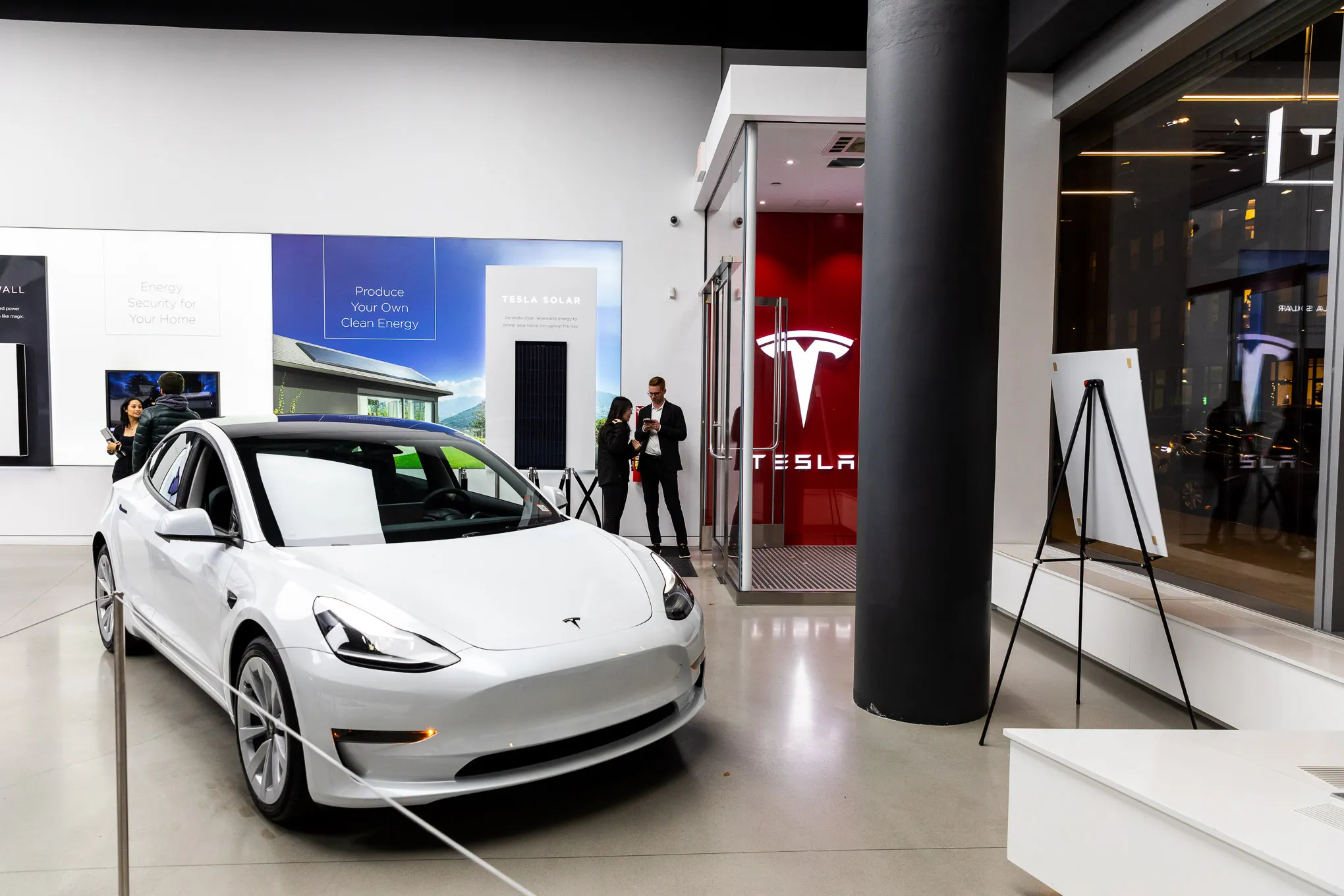
Tesla Inc. has experienced a significant decline in vehicle registrations in France, marking a 63% drop in January. This is the lowest number of Tesla cars registered in the country since August 2022.
The drop in registrations comes as the company faces multiple challenges in the European market, including political controversies, increasing competition, and shifting government policies on electric vehicle (EV) incentives.
Tesla’s Struggles in the European Market
Company has been facing a challenging landscape in Europe, particularly in France and Germany. In France, Tesla registered only 1,141 vehicles in January, a drastic decline compared to previous months.
This underperformance contrasts with the overall automotive industry, which saw a 6.2% drop in total vehicle sales and a mere 0.5% decline in EV registrations. The sharp fall in Company’s numbers suggests that the company is struggling to maintain its momentum in a highly competitive and evolving market.
Germany, Europe’s largest EV market, has also presented difficulties for Tesla. The company witnessed a 41% decline in sales in the country in 2023, significantly higher than the 27% drop in overall EV sales.
One of the major reasons for it’s struggles in Germany is the aging lineup of its models. While competitors such as BMW, Mercedes-Benz, and Volkswagen have introduced new electric models, Tesla’s offerings have not seen substantial updates.
Read : Elon Musk Nominated for Nobel Peace Prize 2025 by Slovenia MEP Branko Grims
Additionally, the withdrawal of government subsidies for EVs in late 2023 has further impacted sales in Germany. Many consumers in the region had relied on these subsidies to make electric cars more affordable, and their removal has made Tesla’s vehicles less attractive compared to other options.
Read : “Elon Is Going to Be the Biggest Loser”: Entrepreneur’s Advice to Musk Choosing China Over India
Tesla’s struggles in Germany have contributed significantly to its overall decline in the European market, as registrations across EU countries fell by 13% last year.
Elon Musk’s Political Involvement and Its Impact
One of the more unusual factors potentially affecting Tesla’s performance in Europe is Elon Musk’s increasing political involvement. The CEO has made headlines for supporting the far-right Alternative for Germany (AfD) party, a move that has sparked controversy in the country. AfD has been criticized for its nationalist policies and opposition to EU regulations, making Musk’s endorsement a highly polarizing stance.
In addition to his political engagement in Germany, Musk has also clashed with UK Prime Minister Keir Starmer and the Labour government. His recent statements against European regulations and policies have raised concerns among policymakers, potentially influencing consumer sentiment towards Tesla.
The extent to which Musk’s political views have impacted sales in Europe remains unclear. However, public perception plays a crucial role in brand loyalty, and Musk’s outspoken political stance could be alienating potential customers in the region. As Tesla faces increasing competition from European and Chinese automakers, maintaining a positive brand image is critical to sustaining its growth in the market.
Tesla’s Role in EU Emissions Regulations and Industry Reactions
Despite its declining sales, it remains a key player in helping other automakers comply with the EU’s stringent emissions regulations. In 2024, the company plans to pool its EV fleet with at least five other manufacturers, including Toyota, Stellantis, and Ford.
This strategy allows these companies to meet their emissions targets by offsetting their gasoline and diesel vehicle emissions with Tesla’s zero-emission cars.
However, Tesla’s influence on EU emissions policies has drawn criticism from European officials. Late last month, French government ministers urged the European Commission to suspend the regulation on CO2 emissions from passenger cars.
They argued that the existing framework benefits Chinese automakers and Tesla disproportionately, allowing them to generate significant revenue from emissions credit sales.
The ministers also pointed out that Musk’s open criticism of European regulations and values makes Company’s financial gains from these policies particularly concerning. If the EU decides to revise its emissions regulations, Tesla’s ability to capitalize on emissions credits could be reduced, further impacting its revenue in the region.
The Road Ahead for Tesla in Europe
Declining registrations in France and Germany highlight the broader challenges the company faces in the European market. The combination of an aging model lineup, reduced government incentives, and Musk’s controversial political involvement has created a difficult environment for the company.
To regain its footing in Europe, It may need to introduce new models or significant updates to its existing lineup. The company’s competitors are continuously innovating, with brands such as BMW, Mercedes-Benz, and Volkswagen offering advanced EVs with improved technology and design. If Company fails to keep up with these advancements, its market share in Europe could continue to decline.
Additionally, Tesla’s reliance on emissions credit sales as a revenue source could be at risk if the EU revises its regulations. If European policymakers decide to change the existing framework, Tesla may lose a crucial financial advantage, forcing the company to rely solely on vehicle sales for growth.
In the coming months, Tesla’s performance in Europe will be closely watched. The company’s ability to adapt to changing market conditions, address consumer concerns, and navigate political challenges will determine its future success in the region.