
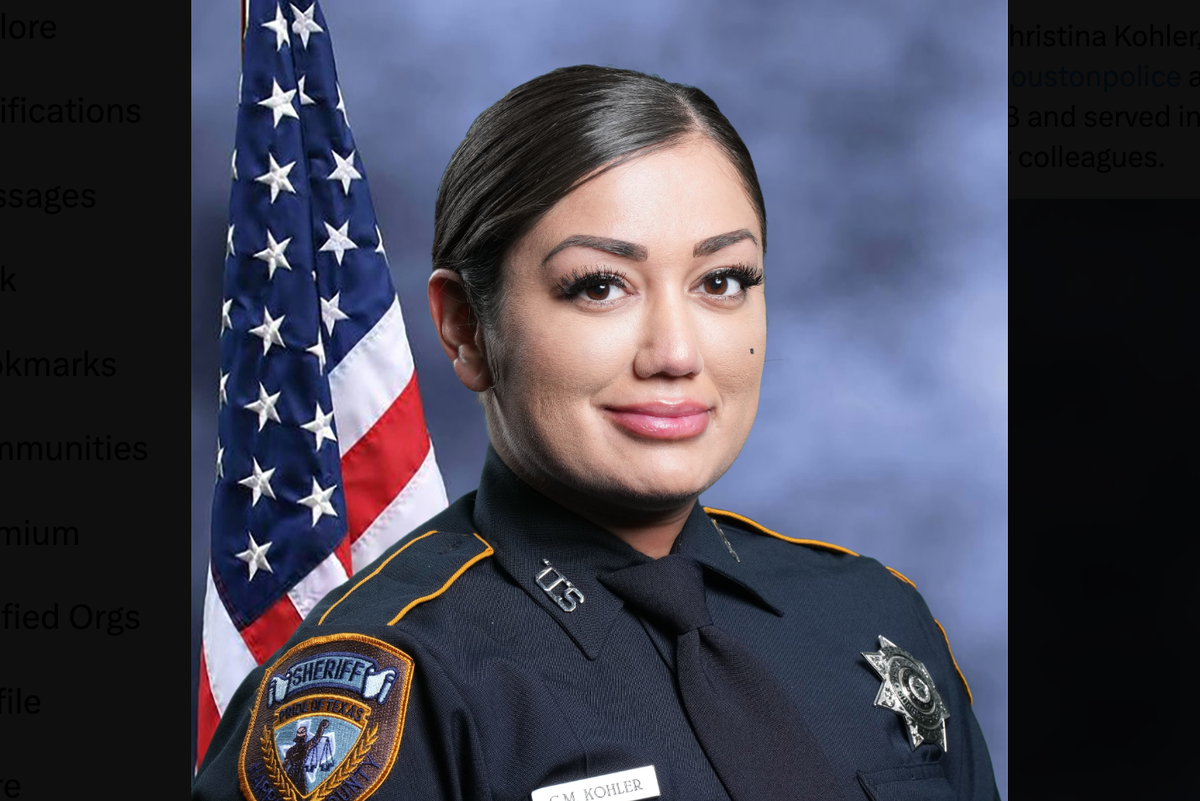
The law enforcement community in Texas is mourning after an unprecedented wave of tragedies struck the Harris County Sheriff’s Office (HCSO). Within a span of six weeks, four deputies, including Maria Vasquez, took their own lives, leaving their colleagues and the wider community in shock and sorrow.
This string of suicides has brought renewed attention to the mental health struggles faced by law enforcement officers and the urgent need for comprehensive support systems. The most recent loss was Deputy Christina Kohler, whose death was announced by HCSO last week.
The 37-year-old officer had been missing for two weeks before her body was discovered on March 13. Christina Kohler, who joined the force in 2018 and served in the courts division, was known for her dedication and commitment to public service. Her passing was followed by the tragic news of Maria Vasquez’s death, marking the fourth suicide within the department in just over a month.
The Impact on the Harris County Sheriff’s Office
The sudden loss of Christina Kohler in such a short period has left the department reeling. Jose Lopez, the president of the Texas Harris County Sheriff Deputies Organization, expressed his deep concern over the situation. “It caught a lot of us by surprise,” he stated. “One is too many. Two? Three? Yes, it’s definitely devastating.”
The deaths of Christina Kohler and Maria Vasquez follow those of two other former Harris County deputies, William Bozeman and Long Nguyen, who also died by suicide in the past few weeks.
Nguyen, 58, took his own life on February 6, while Bozeman was found dead under similar circumstances last week. These tragic losses have sparked conversations about the mental health crisis affecting law enforcement officers and the often-overlooked emotional toll of the profession.
Read : 13-Year-Old Girl Stabbed 19-Year-Old Neighbor at The Aldine Apartment Complex in Harris County
The Houston Police Officers’ Union president, Douglas Griffith, highlighted the alarming statistics regarding suicide risks among law enforcement personnel.
Read : Hurricane Beryl Storm Kills Eight, Cuts Power to Millions of Houses in Texas
Studies indicate that suicide rates are 54% higher among officers than the general population. This shocking statistic underscores the immense pressure and trauma that officers endure daily, often without sufficient mental health resources or support.
The Psychological Toll of Law Enforcement Work
Dr. Thomas McNeese, director of the Harris County Sheriff’s Office Behavioral Health Division, described the recent losses as deeply distressing for the department. “It has been a difficult time for our staff and the sheriff’s office as a whole,” he said.
He explained that law enforcement is a demanding profession that takes a cumulative emotional and psychological toll on officers. “The longer you’re in it, the more of a toll it takes, and it changes people,” McNeese noted. “The average citizen may be exposed to two critical incidents in a lifetime, whereas one of our officers might experience that in a single shift.”

This relentless exposure to traumatic events, including violent crimes, fatal accidents, and confrontations with dangerous individuals, can contribute to mental health struggles such as PTSD, anxiety, depression, and substance abuse. The culture of toughness and resilience in law enforcement often discourages officers from seeking help, leading many to suffer in silence.
The recent tragedies in Harris County illustrate the urgent need for breaking the stigma surrounding mental health discussions within the law enforcement community. Officers must be encouraged to seek support without fear of judgment or repercussions for their careers.
Addressing the Crisis: The Need for Comprehensive Mental Health Support
In response to the deaths, HCSO has reiterated the availability of mental health resources for officers and staff. However, many believe that more proactive measures are needed to address the root causes of the crisis. Simply providing resources is not enough; a cultural shift within law enforcement is necessary to prioritize mental health and well-being.
One of the most significant barriers to mental health support in law enforcement is the stigma attached to seeking help. Officers often fear being perceived as weak or unfit for duty if they admit to struggling. Addressing this issue requires leadership within departments to actively promote a culture where mental health is treated as a critical component of overall well-being.

Additionally, departments should implement regular mental health check-ins and mandatory counseling sessions, particularly for officers exposed to high-stress situations. Peer support programs can also play a crucial role, allowing officers to confide in colleagues who understand the unique challenges of the job.
Beyond internal departmental support, state and federal initiatives should focus on increasing funding for mental health programs specifically designed for law enforcement personnel. Dedicated hotlines, crisis intervention teams, and wellness programs can provide officers with immediate and long-term support when needed.
The tragic losses of Christina Kohler, Maria Vasquez, William Bozeman, and Long Nguyen serve as a wake-up call for law enforcement agencies nationwide. No officer should feel that suicide is their only option, and it is the responsibility of departments and communities to ensure that support systems are readily available and accessible.
McNeese emphasized that while it is okay to struggle, it is essential to take action. “It’s okay to not be okay, but it’s not okay to not do something about it. You don’t want to stay stuck there,” he said.
As Harris County mourns the loss of four dedicated officers, their deaths must not be in vain. Law enforcement agencies must commit to addressing mental health with the same urgency and dedication as they do other critical aspects of policing.
By fostering a culture of openness, providing comprehensive mental health resources, and breaking down stigmas, future tragedies can be prevented, and officers can receive the support they so desperately need.