
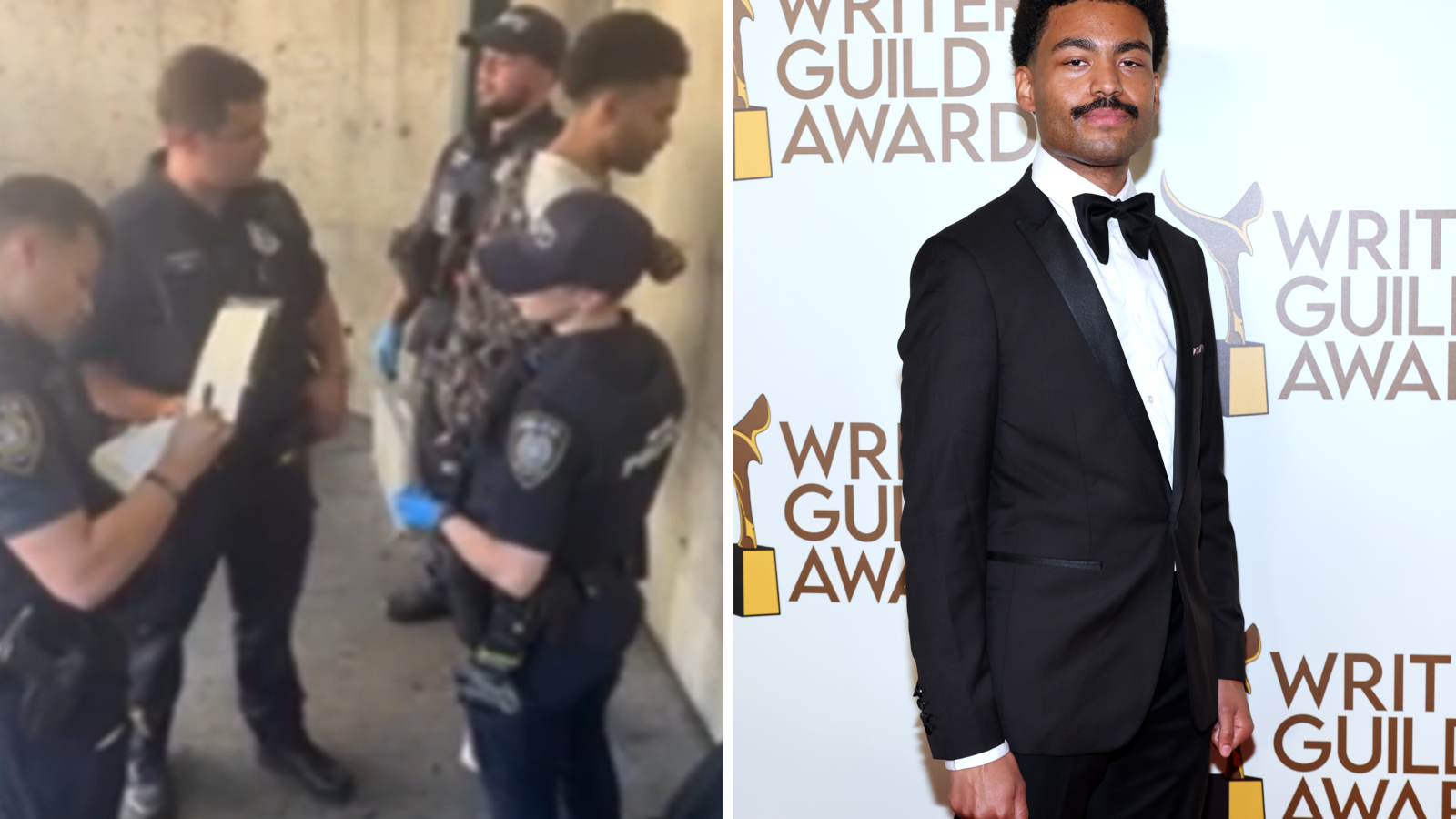
In a shocking incident that has ignited fierce debates on race, policing, and public space etiquette, award-winning screenwriter Alex O’Keefe found himself in handcuffs on a New York City subway train last week. O’Keefe, best known for his contributions to the Emmy-winning FX series The Bear, was traveling on an MTA train bound for Connecticut when an elderly white woman took issue with how he was seated. What began as a seemingly minor complaint escalated into a full-blown arrest, leaving O’Keefe detained on the platform and sparking a viral outcry across social media.
This event, captured in a raw video posted by Alex O’Keefe himself, underscores the precarious line Black individuals navigate in everyday settings, where a simple posture can trigger law enforcement involvement. The confrontation unfolded on September 18, 2025, aboard a Metro-North train departing from the Bronx. O’Keefe, a Black man in his mid-30s, was reportedly lounging with his feet propped up on the adjacent seat—a common, if frowned-upon, habit for weary commuters.
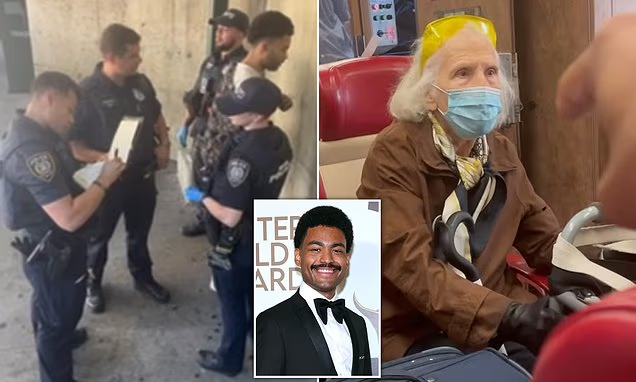
According to O’Keefe’s account, the woman, whom he later referred to as a “Karen” in a nod to the internet meme for entitled complainers, approached him and demanded he adjust his position. When he declined, citing no explicit rule violation, she escalated the matter to the train conductor. The conductor, in turn, halted the train and summoned MTA police officers. Bodycam footage isn’t available, but O’Keefe’s Instagram video provides a firsthand glimpse into the chaos. In the clip, which has amassed millions of views, he can be heard protesting as officers physically remove him from his seat: “This white woman didn’t like the way I was sitting on the train, so you call the police? You call the police to arrest the one Black dude on the train. I haven’t done anything illegal.”
The video shows O’Keefe pointing accusingly at the masked woman across the aisle, his voice steady but laced with incredulity. Officers, including a female cop urging him to “let’s go,” escort him off the train amid murmurs from other passengers. Notably, O’Keefe later wrote in his caption that “only Black folks stayed nearby and recorded the arrest,” highlighting the bystander dynamics at play. O’Keefe’s refusal to immediately comply stemmed from his insistence on clarity: “The police told me to leave the train, I refused and asked what I was doing illegally. They said I was disturbing the peace by not leaving the train.”
This led to his handcuffing and detention on the platform, where he was interrogated without the officers first speaking to the complainant. A friend of the woman allegedly remarked to O’Keefe during the wait, “You’re not the minority anymore,” a comment he cited as emblematic of the underlying racial tension. After demanding a lawyer and pointing out the lack of a statement from the woman, Alex O’Keefe was released without formal charges, though he received a summons for disorderly conduct—a minor violation that could still carry fines or court appearances.
This wasn’t just a random altercation; it unfolded against the backdrop of O’Keefe’s rising profile in Hollywood and politics. Born in Florida and now based in New York City, O’Keefe has carved out a multifaceted career that blends sharp storytelling with advocacy. He joined the writing team for The Bear in its breakout seasons, contributing to episodes that delve into the high-stakes world of Chicago’s restaurant scene. The show, which snagged the Outstanding Comedy Series Emmy in 2023, has been praised for its authentic portrayal of stress, ambition, and community—qualities Alex O’Keefe brings from his own experiences.
Read : Indian-Origin Writer Kamaladevi Aravindan Inducted into Singapore Women’s Hall of Fame
Prior to Hollywood, O’Keefe served as a speechwriter for Democratic heavyweights Senators Elizabeth Warren and Ed Markey, crafting words that shaped national conversations on economic justice and inequality. His political chops were on full display during the 2023 Writers Guild of America strike, where he emerged as a vocal leader. In interviews and on podcasts like Pod Save America, O’Keefe spoke candidly about the precarity facing writers of color in an industry rife with gatekeeping.
‼️BREAKING: White Woman Calls COPS on Award-Winning BLACK Screenwriter Alex O'Keefe ALL Because RACIST KAREN Didn't Like How “THE BLACK MAN WAS SITTING!”
— i Expose Racists & Pedos (@SeeRacists) September 21, 2025
📍MTA Train to Connecticut
Old White Woman Points at Him, Demands He "Correct" Posture—He Refuses, She Weaponizes Conductor… pic.twitter.com/eHR2BXDcKi
He ran for the WGA board during the strike, advocating for better residuals and diversity initiatives, even amid controversies over his personal anecdotes. One Reddit thread from earlier this year questioned the veracity of some strike-era stories, but supporters dismissed it as industry pushback against a rising Black voice. O’Keefe’s work extends beyond screens and Senate floors. He’s penned op-eds for outlets like The New York Times on topics ranging from labor rights to racial profiling in public transit—ironic, given his recent ordeal.
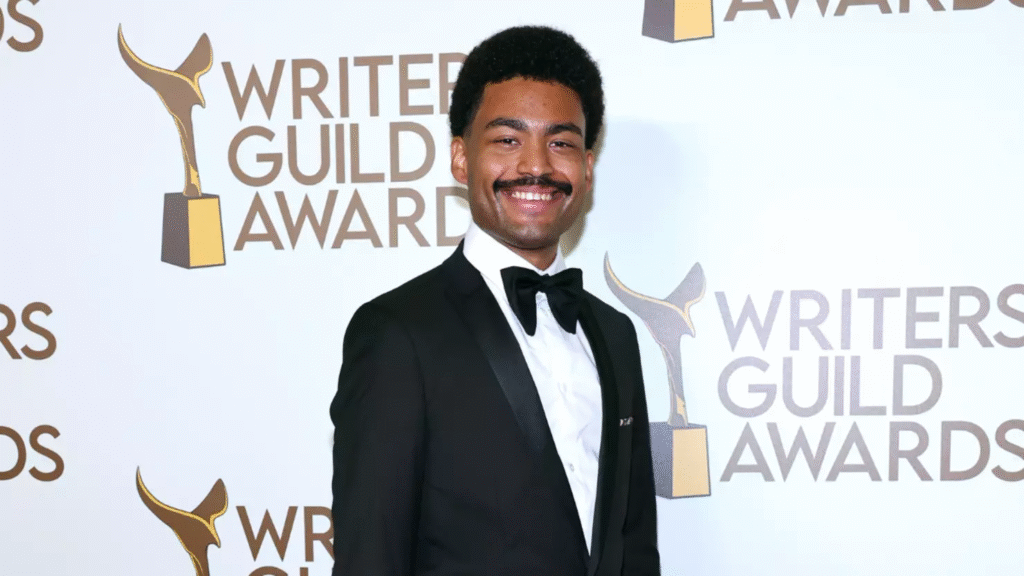
At the 2023 WGA Awards, where he was photographed in a sharp suit amid Los Angeles glamour, Alex O’Keefe embodied the breakthrough many hoped would signal progress for Black writers. Yet, as this train incident reveals, professional accolades offer scant shield against street-level bias. “This country is growing more psycho by the day,” O’Keefe concluded in his post. “What will you do about it?” It’s a rhetorical gut punch from a man whose scripts often unpack similar themes of resilience under pressure.
A Disturbing Echo of the ‘Karen’ Phenomenon
Alex O’Keefe’s arrest isn’t an isolated blip; it’s a stark echo of a broader pattern where white discomfort translates into Black punishment. The “Karen” archetype—coined for women who weaponize authority against perceived slights—has proliferated in viral videos since the mid-2010s, often targeting people of color for mundane acts like barbecuing in parks or birdwatching in Central Park. In 2018, Harvard professor Khalil Muhammad linked this surge to the Trump era’s emboldened nativism, telling NPR that it reflected a “presumption of criminality” toward Black bodies.
Consider the 2020 Central Park birdwatching incident, where Amy Cooper called 911 on Christian Cooper (no relation), falsely claiming he threatened her life over leash rules for dogs. Or the 2018 Philadelphia Starbucks arrests, where two Black men were cuffed for waiting for a business meeting. O’Keefe’s case slots right in: a posture deemed “disorderly” enough for police intervention, sans evidence or dialogue with the accuser. Social media erupted with parallels. A TikTok repost of his video racked up 1.3 million views and 160,000 shares, with comments decrying, “Don’t the police QUESTION the lady about her complaint?!” Another user fumed, “White people MUST start defending Black folks. You’re complicit as bystanders.”
Critics on platforms like Lipstick Alley and Reddit’s r/popculturechat amplified the racial lens. “Supreme Court said racial profiling is okay now,” one user lamented, referencing recent rulings on affirmative action. Others zeroed in on the woman’s mask—worn post-pandemic—as “coward activities,” symbolizing hidden prejudice. The MTA’s response was tepid: a spokesperson confirmed the summons but offered no apology, framing it as standard protocol for disturbances. This hands-off approach only fueled accusations of systemic complicity, where transit authorities prioritize swift resolution over equitable investigation.
Yet, nuance creeps in. Some online voices questioned O’Keefe’s non-compliance: “Why not just move your feet?” they asked, echoing debates on de-escalation versus dignity. Alex O’Keefe addressed this preemptively in follow-up stories, arguing that capitulation normalizes bias. “It’s not about the seat; it’s about the entitlement to police a Black man’s space,” he told a podcaster the day after. This pushback highlights the exhaustion of constant negotiation—where Black excellence, like O’Keefe’s, coexists with vulnerability.
Social Media Storm and the Urgent Call for Accountability
The video’s virality turned Alex O’Keefe’s personal nightmare into a public referendum. By September 22, it had trended on X (formerly Twitter) under hashtags like #JusticeForAlex and #KarenOnTrain, amassing over 5 million impressions. Celebrities from The Bear cast, including Ayo Edebiri, reposted in solidarity: “This is why we write,” she captioned, tying it to the show’s themes of survival. Pod Save America hosts, old allies from O’Keefe’s strike days, devoted a segment to it, interviewing him about the emotional toll. “I felt like I was back in the writers’ room, pitching a script no one wants to greenlight: everyday racism,” he quipped, masking hurt with humor.
Public reaction split along predictable lines. Supporters rallied with calls for MTA reform—demanding bodycams on all officers and mandatory bias training. A Change.org petition for O’Keefe’s summons dismissal hit 50,000 signatures in 48 hours. Detractors, a vocal minority, branded him “entitled,” citing his WGA candidacy controversies. One Reddit thread in r/Fauxmoi dissected his past: “Some stories weren’t true,” a user claimed, dredging up strike-era skepticism. But the chorus drowned them out: “It doesn’t matter if he’s award-winning,” another replied. “No Black person deserves this harassment. Full stop.”
This digital firestorm extends beyond outrage; it’s a mirror to America’s fraying social fabric. O’Keefe’s plea—”What will you do about it?”—resonates amid rising hate crimes, with FBI data showing a 20% uptick in anti-Black incidents since 2020. For transit riders, it spotlights enforcement disparities: white fare evaders often get warnings, while Black sitters get cuffs. Allies urged bystander intervention: “It just takes one person to say, ‘Leave him alone,'” as one Instagram comment urged.
Alex O’Keefe, ever the storyteller, ended his saga with resolve. In a follow-up Reel, he reflected: “This isn’t my ending—it’s a plot twist. I’ll keep writing, keep speaking, keep sitting how I damn well please.” His words, laced with defiance, remind us that resilience isn’t passive. As The Bear illustrates, kitchens—and trains—thrive on heat, but unchecked egos burn everything down.
In the end, this arrest isn’t just Alex O’Keefe’s story; it’s ours. It probes how far we’ve come since Jim Crow benches and how much further we must go. Until complaints are met with questions, not cuffs, these viral moments will persist—not as entertainment, but as urgent dispatches from the front lines of inequality. What will we do about it? The script is unwritten, but the call is clear: rewrite the rules, or watch the credits roll on justice.