
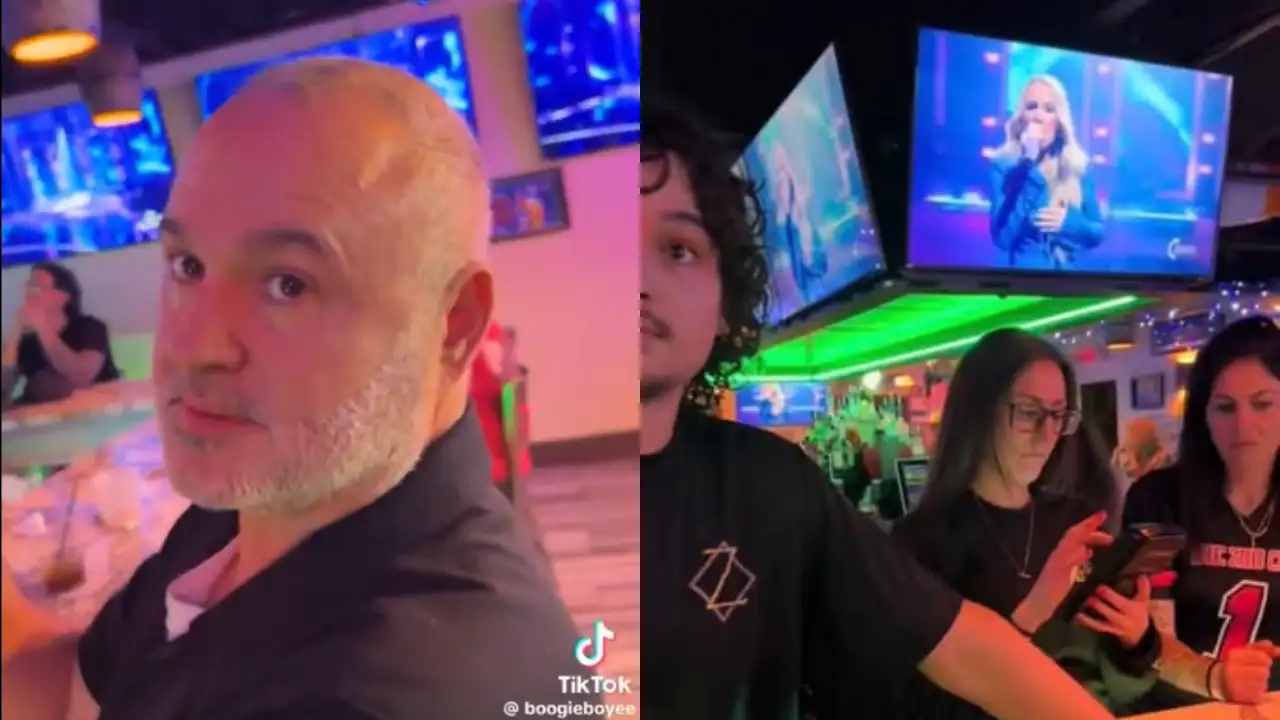
A Florida bar has found itself at the center of a national online debate after a confrontation between a patron and management during the Super Bowl spread rapidly across social media. The incident, which unfolded at The Zoo Club in St. Petersburg, highlights how entertainment choices in public spaces can become flashpoints for broader cultural and political tensions.
What began as a disagreement over what should be shown on a television during halftime escalated into accusations of discrimination, assertions of consumer rights, and a viral moment that has drawn praise and criticism in equal measure. As the clip circulated widely after the game, the bar’s decision-making process, the customer’s response, and the wider reaction have all become part of a larger conversation about expectations, ownership, and expression in shared social settings.
The Confrontation That Sparked the Viral Moment
The viral incident occurred during the Super Bowl halftime, when patron Julio Santiago began recording himself while confronting a manager at The Zoo Club. Santiago demanded that the bar switch from Turning Point USA’s “All-American Halftime Show” to the official Super Bowl halftime performance by Bad Bunny. In the video, Santiago is visibly upset, repeatedly asserting that the Super Bowl halftime show is an essential part of the event and accusing the bar of depriving customers of what they came to see.
Santiago argued that patrons had gathered specifically for the Super Bowl experience, which he framed as inseparable from the mainstream halftime performance. He criticized the TPUSA broadcast in dismissive terms and insisted that the bar was obligated to show what he described as the “real halftime.” Throughout the exchange, he questioned the legitimacy of any alternative programming and rejected the explanation offered by the manager.
The manager, who remained calm during the encounter, responded by explaining that the decision had already been made. He stated that a vote had been taken among patrons earlier and that the majority preferred to watch the “All-American Halftime Show.” He also emphasized that, as the person responsible for the establishment, the final decision rested with him. His response was concise and direct, reiterating that the televisions would not be changed.
As the conversation continued, Santiago grew louder and more confrontational. He dismissed the idea that a vote reflected the will of the crowd and suggested that the choice undermined what the Super Bowl represented for him personally. At one point, he described the halftime show as “a proud moment for me and my people,” framing the issue not only as a matter of entertainment preference but also as cultural significance.
Read : Former Owner of Stone Balloon Bar Charged with Killing Wife Linda Stevenson
The manager countered by telling Santiago that he was free to leave if he did not like what was being shown. Santiago replied that he would not leave until his tab was settled and warned that he intended to post the video online to inform others about the bar’s decision. The manager acknowledged this, instructed him to pay his bill, and again stated that the channel would not be changed.
TRIGGERED lib melts down at bar: Screams “RACIST!” over owner switching EVERY screen to TPUSA’s All-American Halftime Show instead of Bad Bunny’s.
— ♡Land Of ILLUSION♡ (@Landofillusion1) February 10, 2026
Owner stays cool: “This is what the majority wants… If you don’t like it, don’t come back.”
Pure patriot move, no apologies, just… pic.twitter.com/aHJg5HI2F3
The clip ends with Santiago walking toward the exit, still recording and warning that the bar had lost a customer and would likely lose more once the video spread. The manager’s final response, delivered calmly, was a polite dismissal directing him to the door. Background laughter and cheers from other patrons can be heard as the manager returns to his duties behind the bar.
Ownership, Policy, and the Question of Consumer Expectation
At the heart of the controversy is a fundamental question about what customers can reasonably expect in privately owned public venues such as bars. The Zoo Club had promoted its Super Bowl watch party on social media, but according to reports, it did not specify in advance that it would air Turning Point USA’s halftime programming instead of the official Super Bowl performance. This omission has been cited by critics as a reason for customer frustration, while supporters of the bar argue that ownership and management retain full discretion over what is shown on their screens.
From a legal and operational standpoint, bars and restaurants routinely make decisions about programming based on their target audience, brand identity, and logistical considerations. While major sporting events often carry implicit expectations about certain traditions, such as the Super Bowl halftime show, there is no formal obligation for an establishment to meet those expectations unless explicitly advertised. The manager’s assertion that a patron vote was taken suggests an attempt to gauge audience preference, even if that process was informal and disputed by Santiago.
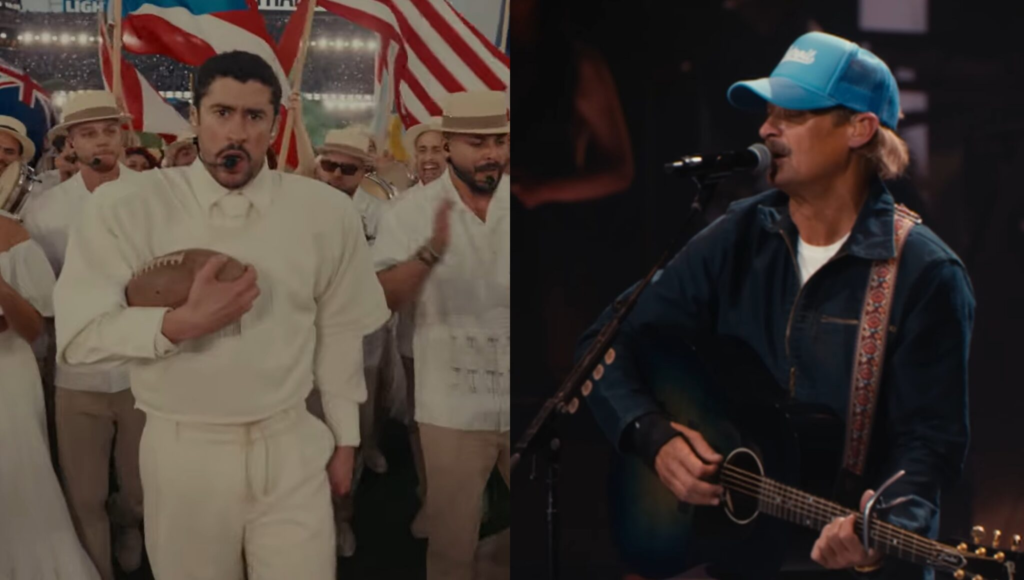
The manager’s repeated statement, “It’s my bar, my TV, my decision,” encapsulates a viewpoint shared by many business owners who see control over their environment as an extension of property rights. Supporters of The Zoo Club have argued that patrons dissatisfied with programming choices are free to leave and take their business elsewhere, a position the manager articulated during the confrontation.
On the other hand, critics argue that events like the Super Bowl are culturally significant communal experiences, and that deviating from widely expected programming without prior notice can feel misleading. For some viewers, the halftime show is as central to the event as the game itself. Santiago’s insistence that people “paid for” a certain experience reflects a broader consumer mindset in which attendance at a themed event carries assumed promises, even when those promises are not formally stated.
The dispute also illustrates how quickly a disagreement can escalate when recording devices are involved. The presence of a camera changed the dynamic of the interaction, turning a private dispute into a public performance. Santiago’s stated intention to post the video online was fulfilled, and the resulting virality transformed a local argument into a national talking point.
Online Backlash, Accusations, and Broader Cultural Fault Lines
After the Super Bowl, the video spread widely across social media platforms, drawing strong reactions from viewers on all sides. Santiago accused The Zoo Club of being “racist” for choosing to air the “All-American Halftime Show” instead of Bad Bunny’s performance, framing the decision as an exclusion of cultural representation. This accusation intensified the backlash and brought broader social and political interpretations into the discussion.
Read : Julius E. Burkes Jr. Arrested in Fatal Shooting of Courtney Drysdale Inside Her Own Bar
Turning Point USA is a conservative political organization, and its involvement in the halftime programming added a political dimension to the controversy. For some critics, the decision to air TPUSA content during such a high-profile cultural moment was seen as a deliberate statement rather than a neutral entertainment choice. Supporters of the bar, however, viewed the situation as an example of a business exercising its freedom to choose content aligned with its values or its patrons’ preferences.
The reaction online has been polarized. Some commenters praised the manager for remaining calm and standing by his decision under pressure, interpreting his demeanor as professional and respectful. Others criticized Santiago’s approach, arguing that yelling at staff and making public accusations was inappropriate and counterproductive. Conversely, many sympathized with Santiago’s frustration, especially those who felt blindsided by the programming choice and believed the bar should have been transparent in its promotion.
The incident also underscores how entertainment, politics, and identity can intersect in unexpected ways. What might once have been a simple disagreement over a television channel became a proxy for larger debates about inclusion, nationalism, and cultural recognition. The laughter and cheers heard in the background of the video, as the manager dismissed Santiago, have themselves been scrutinized by viewers interpreting them as either harmless barroom reactions or evidence of insensitivity, depending on perspective.
As the viral moment continues to circulate, The Zoo Club has become a symbol in a wider discussion about the boundaries between private business decisions and public cultural expectations. While some see the backlash as overblown, others view it as indicative of how deeply invested people are in shared cultural events and how quickly those investments can turn into conflict when expectations are not met.
Ultimately, the episode illustrates the power of social media to amplify everyday disputes and transform them into national conversations. A few minutes of video captured during a Super Bowl watch party have sparked debates far beyond St. Petersburg, raising questions about choice, communication, and the evolving nature of public spaces in an increasingly polarized cultural landscape.