

The coastline of West Sussex witnessed an extraordinary and unexpected scene when thousands of bananas and several shipping containers washed ashore at Selsey following an incident off the Isle of Wight. What began as a routine cargo journey for the refrigerated vessel Baltic Klipper quickly turned into a complex maritime recovery operation after 16 containers were lost overboard near the Nab Tower lighthouse.
The event has raised concerns for maritime safety, environmental management, and public interaction with wreck material, while also drawing significant attention due to the nature of the cargo—bananas, avocados, and plantains scattered across the beach. With multiple agencies coordinating efforts and warnings issued to shipping traffic in the Solent, the incident has unfolded into a detailed case study of risk management at sea and the challenges posed when cargo unexpectedly enters public coastal areas.
The Unusual Coastal Discovery at Selsey
Residents and visitors at Selsey Beach were met with an almost surreal sight as cartons of bananas, loose fruit, and parts of shipping containers drifted onto the shoreline. Local authorities quickly established a cordon around the area, responding to both public curiosity and the need to secure the site. West Sussex Fire and Rescue Service, Sussex Police, and Coastguard rescue teams were deployed as boxes and debris began arriving in increasing quantities.
Early investigations confirmed that eight of the lost containers held bananas, two contained avocados, one carried plantain, and five were empty. The Maritime and Coastguard Agency (MCA) stressed that the cargo was “non-hazardous”, but the public was nonetheless advised to avoid the site. Concerns related not to toxicity but rather to safety, as heavy debris, shifting containers, and tidal movement posed risks to onlookers.’
This story is bananas… no, really. Shipping containers full of bananas washed ashore on Selsey beach on England’s south coast on Sunday after falling off a cargo ship the day before. pic.twitter.com/JZrx455sA8
— AccuWeather (@accuweather) December 8, 2025
The HM Coastguard also reiterated the legal requirement that all wreck material found in the United Kingdom must be reported to the Receiver of Wreck. Members of the public are not permitted to retrieve or keep goods washed ashore unless they follow the formal declaration procedures. Failure to report wreck material within 28 days can result in legal action, a point emphasised as images of crates and fruit circulated across social media.
The Maritime Incident and Its Consequences
The unusual coastal event stemmed from a significant maritime mishap the previous evening. At around 18:00 GMT on Saturday, the refrigerated cargo ship Baltic Klipper lost 16 containers overboard during its passage near Bembridge, just off the Isle of Wight. The cause of the container loss has yet to be publicly detailed, but the incident immediately prompted widespread monitoring efforts, including aerial search operations conducted by HM Coastguard.
The Baltic Klipper, a vessel specialising in the transportation of soft fruits from regions such as the Caribbean and West Africa, has long been a familiar sight in the area. Its monthly round-robin routes have made it a dependable link in the fruit import chain, which only amplifies the attention drawn by such an unexpected maritime incident. According to Steve Wenham, a Portsmouth-based maritime professional familiar with Solent ferry operations, containers that have sunk pose minimal concern, but those still floating represent major navigational hazards.
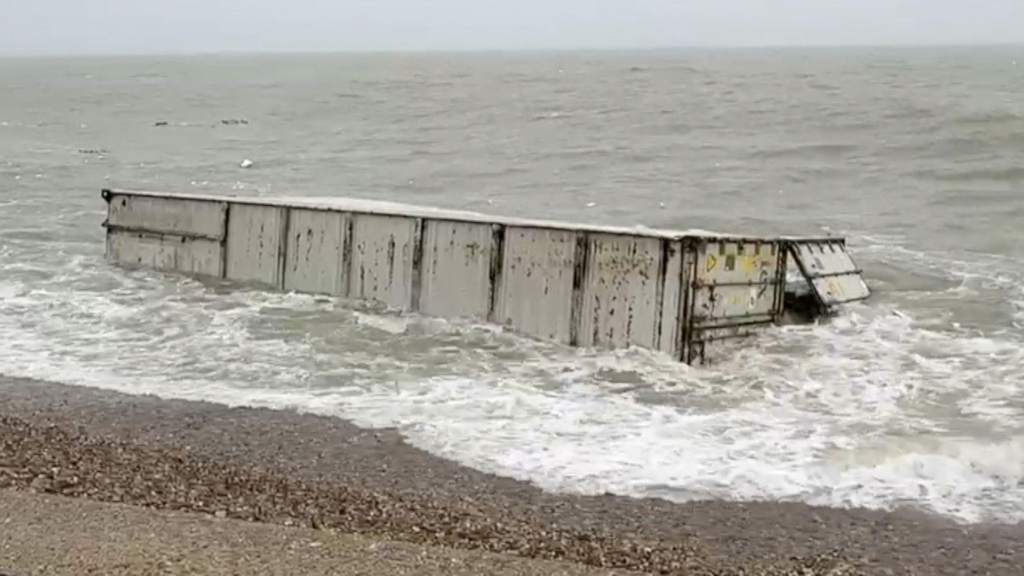
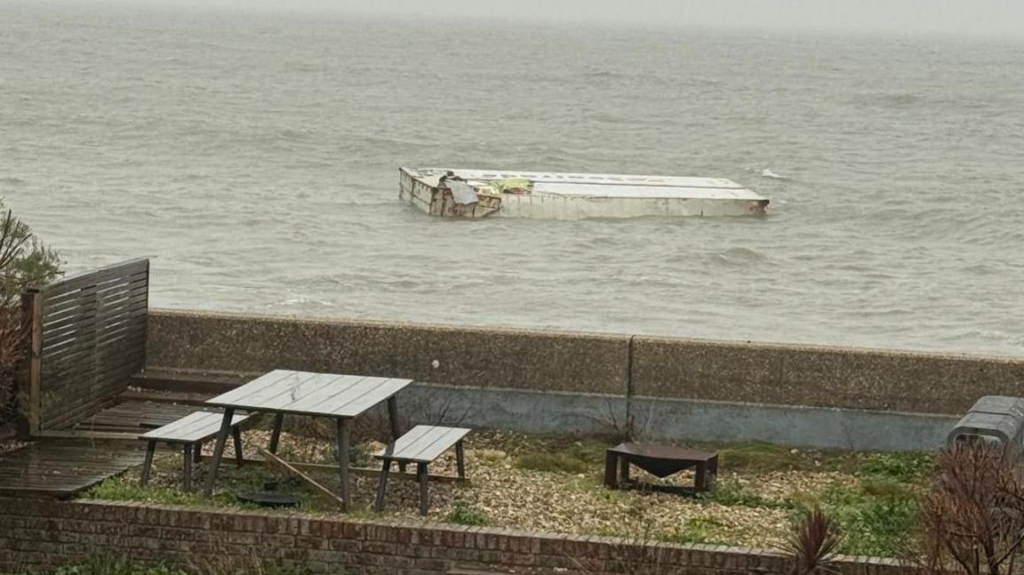
Floating containers are notoriously dangerous for maritime vessels, as they can be difficult to detect and can inflict significant damage if struck. In this case, the drifting containers affected shipping movement throughout the Solent, prompting continuous radio broadcasts alerting vessels in the vicinity. The P&O Cruises ship Iona, with a capacity of over 5,000 passengers, had been scheduled to depart for a two-week voyage to Spain, Portugal, and the Canary Islands. Its departure was delayed until clearance was granted on Sunday afternoon, emphasising the impact floating debris can have on large-scale commercial maritime operations.
The presence of containers above the waterline prompted an intensified response from both the MCA and local rescue teams, who sought to monitor drift paths, coordinate retrieval operations, and reduce hazards to both commercial ships and smaller private vessels. The vessel’s owners are responsible for the recovery of the lost containers, a process that can be logistically complex and highly dependent on sea and weather conditions.
Recovery Challenges, Public Safety, and Ongoing Efforts
As recovery operations continue, the priority has been ensuring public safety while facilitating the coordinated retrieval of the drifting containers. With at least five containers already ashore in Selsey and others still afloat off the coast, authorities are working swiftly to mitigate risks. Coastguard patrols remain active along the shoreline and in surrounding waters to monitor movement and respond to any emerging hazards.
Read : 33-Year-Old Man Dies After Falling from Hot Air Balloon in West Sussex
The local authorities’ response reflects a larger framework of maritime law, environmental stewardship, and navigational safety. Although the contents of these containers pose no toxic threat, the structural debris itself presents risks of injury or damage. Heavy metal containers moved by tides can shift unpredictably, and their torn or broken components may create sharp hazards along the beach. Moreover, any salvageable goods must undergo proper reporting procedures to avoid conflicts over ownership under maritime law.
From an environmental standpoint, the washed-up fruit is expected to decompose naturally, though authorities continue to manage the area to ensure wildlife and marine ecosystems face minimal disruption. While bananas and avocados do not pose ecological threats in the same way as chemical or industrial cargo, the influx of large quantities of organic matter may still require careful monitoring depending on how much remains along the shore.
For shipping operations in the Solent, the presence of floating containers underscores the fragility of maritime logistics. Even non-hazardous cargo can trigger substantial disruptions when lost at sea, particularly in busy channels like those servicing Southampton. The delayed departure of Iona illustrates how a single maritime incident can ripple outward to impact thousands of passengers, numerous scheduled routes, and port operations at large.
Search efforts by HM Coastguard continue to focus on identifying, tracking, and retrieving the remaining containers. Weather conditions play a crucial role in how quickly this work can be completed, as rough seas can complicate both detection and recovery. Maritime authorities remain in close coordination with the vessel’s owners, who bear the responsibility for recuperating their lost cargo.
As the situation unfolds, Selsey Beach has become the latest site of a curious maritime episode—one that has drawn interest from residents, tourists, and observers fascinated by the spectacle of thousands of tropical fruits scattered across an English shoreline. Yet beneath the surface of this unusual event lies a reminder of the delicate interplay between maritime commerce, navigational safety, public curiosity, and environmental responsibility.
The incident surrounding the Baltic Klipper offers valuable insights into the operational vulnerabilities that can arise even during routine shipping journeys. It also underscores the readiness and coordination of UK maritime authorities, whose swift broadcasts, patrols, and protective measures have helped to ensure public and navigational safety despite the unexpected nature of the event. With recovery operations underway and continued monitoring in progress, the focus now shifts to securing the remaining containers and restoring normal conditions along both the shoreline and the Solent’s busy shipping lanes.