
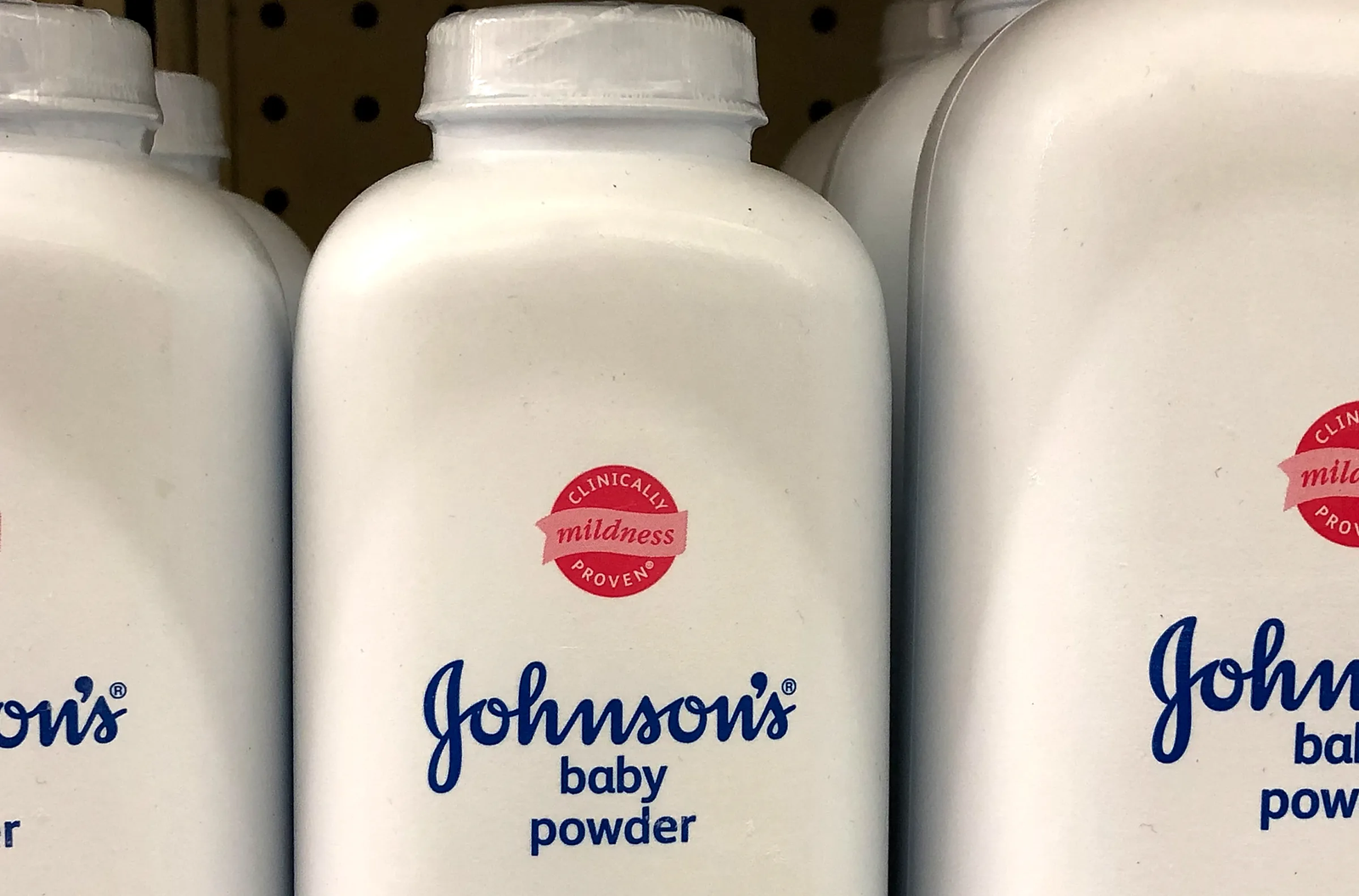
A major legal battle has erupted in the United Kingdom as pharmaceutical giant Johnson & Johnson faces a class-action lawsuit involving 3,000 claimants who accuse the company of knowingly selling asbestos-contaminated baby powder for decades. The allegations, supported by internal documents and scientific reports obtained by the BBC, suggest that J&J was aware as early as the 1960s that its talcum powder contained traces of asbestos—an industrial mineral known to cause cancer.
This case mirrors the extensive litigation already seen in the United States, where claimants have won billions in damages, and is shaping up to become one of the largest product liability lawsuits in British history. Lawyers representing the plaintiffs estimate that damages in the UK could stretch into the hundreds of millions of pounds. The claim, filed by KP Law against Johnson & Johnson and its consumer health spin-off Kenvue Ltd, argues that the company deliberately withheld information about the presence of asbestos fibres—specifically tremolite and actinolite—in its talc-based products.
Both minerals, when present in fibrous form, are classified as asbestos and are directly linked to mesothelioma, ovarian cancer, and other deadly diseases. Despite these risks, J&J continued to market its baby powder as a symbol of “purity and safety,” particularly targeting mothers and newborns through generations of advertising campaigns. The firm, however, has firmly denied all allegations, maintaining that its baby powder has always met regulatory standards, did not contain asbestos, and does not cause cancer.
Allegations of Concealment and Regulatory Influence
At the heart of the UK lawsuit are decades-old internal communications that appear to reveal J&J’s long-standing knowledge of asbestos contamination. One key document from 1973, cited in court papers, allegedly reads: “Our baby powder contains talc fragments classifiable as fiber. Occasionally sub-trace quantities of tremolite or actinolite are identifiable.” This statement, if authenticated, could prove that the company was aware of potential contamination more than half a century ago. Another internal memo from that same year shows executives debating whether to seek a patent for a process that could remove asbestos fibres from talc—before deciding it might be wiser to keep the matter confidential to avoid “letting the whole world know.”
These documents are central to the plaintiffs’ argument that J&J’s decision to conceal test results and maintain secrecy was a calculated effort to protect its brand and profits. Lawyers allege that the company not only failed to warn consumers but also worked to influence regulatory standards in its favour. According to the claim, during the 1970s, J&J executives lobbied the U.S. Food and Drug Administration (FDA) to accept lower sensitivity thresholds for asbestos detection, effectively allowing small amounts of asbestos to go undetected in testing. By tolerating contamination levels of up to one percent, the lawsuit argues, J&J could continue advertising its baby powder as pure and asbestos-free.
Kenvue, now responsible for J&J’s former consumer health division, rejects this interpretation. It insists that the referenced calculations were hypothetical and that discussions with regulators were transparent and scientifically grounded. Nonetheless, the presence of memos urging discretion, as well as documents showing concern about public disclosure, has added weight to claims that the company placed brand protection over consumer safety.
Read : 16-Year-Old Noah Johnson Suffers Kidney Failure After Spider Bite
The BBC’s reporting also points to marketing documents from the 2000s in which J&J executives acknowledged that “the reality that talc is unsafe for use on/around babies is disturbing,” a statement the firm later explained as relating to the rare but known risk of asphyxiation from powder inhalation rather than any link to asbestos or cancer.
Read : Johnson & Johnson Ordered to Pay $260 million to U.S. Cancer Patient Blaming Its Baby Powder
The allegations, if proven, suggest a troubling pattern: that one of the world’s most trusted consumer brands may have spent decades manipulating both scientific standards and public perception to avoid accountability. Such accusations strike at the core of corporate responsibility and could redefine legal expectations for multinational companies operating in the UK.
Human Stories Behind the Legal Battle
Behind the dense legal arguments and scientific evidence are the human stories of those who claim to have been harmed by J&J’s products. Among them is Siobhan Ryan, a 63-year-old mother from Somerset, who says she used Johnson’s Baby Powder for decades—first as a child and later on her own babies—believing it to be safe and gentle. “My mother used it and I used it. It smelt nice and was soft and lovely,” she told the BBC. “When my babies were born I used it on them. I thought I was doing my best for them.”
That sense of trust was shattered when Siobhan was diagnosed with stage 4 ovarian cancer. After rounds of chemotherapy, major abdominal surgery, and a life-threatening episode of sepsis, she remains alive but in ongoing treatment. Recently, doctors discovered another tumour in her groin, and she has resumed chemotherapy. “They knew it was contaminated and still they sold it to new mums and their babies,” she said, her voice reflecting both anger and disbelief.

Many of the UK claimants share similar experiences. Some are living with mesothelioma, an aggressive cancer almost exclusively linked to asbestos exposure, while others have died and are represented by family members. All are believed to have used Johnson & Johnson’s talc-based products extensively. Their stories lend a deeply personal dimension to what might otherwise seem like a corporate and scientific dispute.
Medical experts stress that ovarian cancer and mesothelioma have multifactorial causes, with both genetic and environmental components. Professor Christina Fotopoulou, a gynaecological oncology specialist at Imperial College London, explains that the female reproductive tract is naturally exposed to external elements, making it susceptible to environmental carcinogens. “Cancer is usually an accumulation of mistakes in the reproduction cycle of the cells,” she said, “and any harmful factors—internal or external—that disrupt the balance of the cells may contribute to these mistakes that eventually may lead to cancer.”
While no single factor can be blamed for every case, the possibility that asbestos-contaminated consumer products could have contributed to thousands of illnesses underscores the seriousness of the allegations. It also raises questions about how many generations of consumers may have been unknowingly exposed.
Global Legal Fallout and Corporate Response
The UK lawsuit comes amid a wave of similar claims filed in the United States, where Johnson & Johnson has faced more than 40,000 lawsuits alleging that its talc-based products caused cancer. In some American cases, juries have awarded massive sums to victims and their families. Earlier this month, a court in Connecticut ordered J&J and its successor entities to pay $25 million to a man who developed terminal peritoneal mesothelioma after lifelong use of the baby powder. The court found that the company was negligent in selling a product contaminated with asbestos despite being aware of safer alternatives such as cornstarch.
The Connecticut case also brought to light deposition testimony from Dr. Steve Mann, a former director of toxicology at J&J Consumer Products. Dr. Mann admitted that he had made safety claims about the baby powder without reviewing test data and had received results showing asbestos contamination but chose not to alert company executives or regulators. The presiding judge noted that J&J’s continued sale of talc-based powders—even after being aware of the risks—demonstrated a disregard for consumer safety.
In response, Johnson & Johnson has consistently denied wrongdoing and announced plans to appeal verdicts it deems unjust. The company maintains that multiple independent laboratories, universities, and regulatory bodies worldwide have tested its talc products and found no evidence of asbestos contamination. In a statement provided to the BBC, the company said its baby powder “was compliant with any required regulatory standards, did not contain asbestos, and does not cause cancer.”
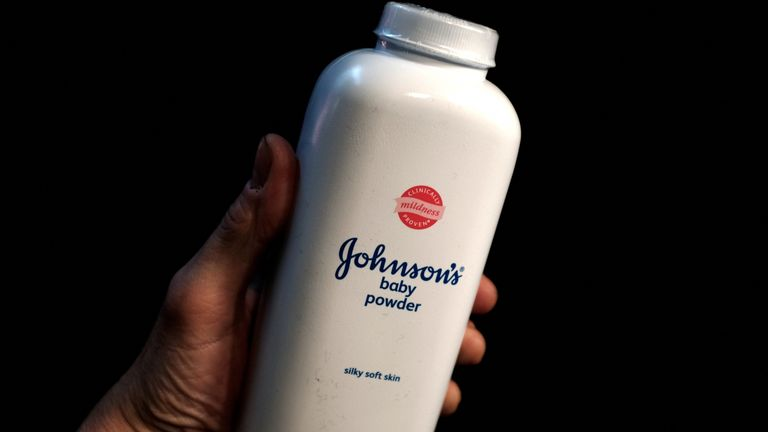
The firm’s consumer health business, now operating under Kenvue following a corporate restructuring, echoed these assurances. “We sympathise deeply with people living with cancer,” a Kenvue spokesperson said. “We understand that they and their families want answers—that’s why the facts are so important.” The company further emphasised that the decision to keep certain research and correspondence confidential was related to commercial patent value, not concealment of health risks.
Nevertheless, the optics of internal memos urging secrecy and downplaying contamination risks have continued to haunt the company’s public image. In 2023, J&J ceased sales of its talc-based baby powder in the UK and transitioned to cornstarch-based formulations worldwide. While the company attributed this change to shifting consumer preferences and “misinformation about talc safety,” many observers saw it as an implicit acknowledgement of reputational damage.
If the UK class action proceeds successfully, it could mark a turning point in corporate liability for multinational firms operating across borders. Legal experts note that British courts have rarely seen a product liability case of this scale or complexity, particularly one involving such a globally recognised household name. The outcome could also influence pending litigation in other jurisdictions, potentially paving the way for additional claims from consumers outside the United States.
For now, Johnson & Johnson continues to fight on multiple legal fronts, defending both its scientific integrity and its corporate legacy. But the accumulation of evidence—spanning decades of internal communications, scientific debate, and marketing strategy—has already reshaped public perception of one of the world’s most trusted brands. What began as a product marketed to soothe newborn skin has become a symbol of corporate controversy, raising profound questions about transparency, ethics, and accountability in the global pharmaceutical and consumer goods industry.
The coming months will determine whether Johnson & Johnson can convince the UK courts, and by extension the public, that its actions were lawful and its products safe. For the thousands of claimants and their families, however, the case represents something more personal—a fight for recognition, justice, and answers to a question that has lingered for decades: how could a product once synonymous with purity become a source of such pain and mistrust?
What i do not realize is in truth how you’re now not actually much more well-liked than you might be right now. You’re so intelligent. You understand therefore considerably in the case of this matter, made me in my opinion believe it from so many varied angles. Its like men and women aren’t involved unless it¦s one thing to accomplish with Lady gaga! Your individual stuffs nice. Always take care of it up!
As a Newbie, I am always exploring online for articles that can be of assistance to me. Thank you
Some genuinely nice stuff on this website , I like it.