

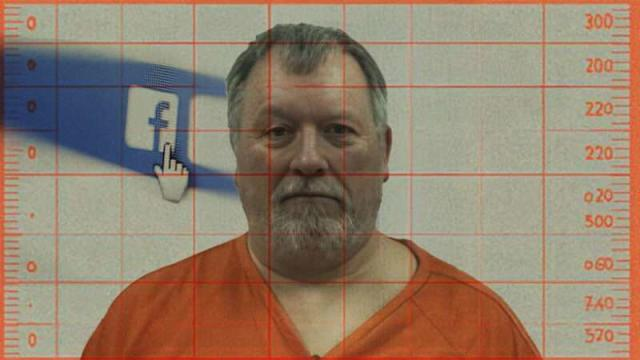
In a swift federal response to escalating political tensions, authorities have arrested 69-year-old George Russell Isbell Jr. from San Diego, California, for allegedly mailing a graphic death threat to prominent conservative podcaster Benny Johnson. The incident, which unfolded just days after the assassination of Johnson’s close associate Charlie Kirk, underscores the growing wave of politically motivated violence targeting right-wing figures.
Federal prosecutors announced the charges on October 10, 2025, emphasizing their commitment to protecting free speech amid rising threats. Isbell faces serious federal charges that could result in up to five years in prison if convicted, marking another chapter in the nation’s struggle with ideological extremism. The arrest comes at a time when conservative media personalities report an uptick in harassment, particularly in the wake of high-profile attacks like Kirk’s killing on September 18, 2025, at Utah Valley University.
Benny Johnson’s receipt of the letter on the same day as Kirk’s death amplified the sense of urgency, prompting immediate involvement from the FBI and U.S. Postal Inspection Service. This case highlights the vulnerabilities faced by public figures in an era of polarized discourse, where online rhetoric increasingly spills into real-world dangers. As details emerge, the focus remains on the specifics of the threat, the rapid investigation, and the broader implications for public safety.
The Threatening Letter: Graphic Details and Motive
The handwritten letter, postmarked from San Diego and mailed on or about September 18, 2025, arrived at Johnson’s Tampa, Florida, residence shortly after Kirk’s assassination. According to the federal complaint filed in the Middle District of Florida, the missive contained explicit wishes for violence against Johnson, his wife Kate, and their four young children. Prosecutors described it as a “horrific” document filled with hate speech directed at Johnson’s conservative viewpoints.
Key excerpts from the letter, as detailed in the Department of Justice press release, reveal a chilling level of specificity. Isbell allegedly wrote that he hoped an American flag would “strangle the life out of you,” invoking a perverse twist on patriotic symbolism to express his disdain. He further escalated the threats by stating, “Maybe someone will blow your head off!!! We can hope! Planning any public engagements? Love to see your head explode and your blood stain the concrete red. What a sight!” The letter explicitly called for Johnson’s “extermination,” labeling him a “prostrating Trump boot licker” and a “worm s—” unworthy of direct action from the sender, who claimed he would not risk his own freedom.
Investigators noted that Isbell referenced Kirk’s recent death, drawing parallels to how Benny Johnson might meet a similar fate in an open field, with vivid descriptions of blood loss from a head wound. This connection suggests the threat was timed to exploit the raw grief following Kirk’s shooting by 22-year-old Tyler Robinson, who reportedly cited frustration with Kirk’s “hatred” in pre-attack messages. The motive appears rooted in ideological opposition: Isbell’s words targeted Johnson’s identity as a “white, cis, Christian Trump supporter,” framing the threats as retribution for his pro-Trump commentary and alignment with figures like Kirk, the co-founder of Turning Point USA.
🚨 BREAKING: Leftist who sent violent threatening letter to Benny Johnson:
— Publius (@OcrazioCornPop) October 10, 2025
George Russel Isbell Jr.
69 years old
San Diego, CA
PHOTO via @JLRINVESTIGATES pic.twitter.com/Ht8M6gtJTs
The letter’s arrival at Johnson’s family home—where he resides with Kate and their children—added a deeply personal dimension to the terror. Johnson later recounted to reporters how the document detailed hypothetical scenarios of his family’s demise, evoking fears of copycat violence in the wake of Kirk’s murder. Federal authorities emphasized that such communications cross the line from protected speech into criminal intimidation, particularly when they involve mailed threats across state lines. The U.S. Postal Inspection Service played a pivotal role in intercepting and analyzing the envelope, which bore no return address but included damning forensic evidence.
This incident is not isolated; it fits a pattern of escalating threats against conservative influencers. In recent months, similar cases have involved doxxing, swatting, and anonymous online harassment, but the physical mailing of such a letter represents a more tangible escalation. Experts in political violence warn that these acts can inspire lone actors, making swift arrests like Isbell’s crucial for deterrence. The content’s graphic nature also raises questions about mental health factors, though prosecutors have not yet commented on Isbell’s background beyond his age and residence.
Arrest and Federal Charges: A Model Investigation
George Russell Isbell Jr.’s arrest on October 7, 2025, in San Diego exemplifies interagency collaboration at its finest, according to U.S. Attorney Gregory Kehoe for the Middle District of Florida. The operation involved the FBI, U.S. Postal Inspection Service, and local law enforcement, culminating in Isbell’s peaceful detention without incident. Fingerprints lifted from the letter’s envelope provided the breakthrough: matches were found not only to Isbell but also to Johnson’s wife, a security team member, and a UPS store employee where the mailbox was rented—ruling out coincidences and confirming the chain of custody.
Read : Employee Fired Over ‘Racist’s Fav Drink’ Message on Ohio Woman’s Starbucks Cup Honoring Charlie Kirk
Isbell, a 69-year-old resident of San Diego, was charged federally with one count of mailing threatening communications under 18 U.S.C. § 876(c). This statute prohibits sending any communication through the mail containing threats to injure another person, carrying a maximum penalty of five years in federal prison and fines up to $250,000. A federal district court judge will ultimately determine sentencing upon conviction, guided by the U.S. Sentencing Guidelines, which consider factors like the threat’s severity and the victim’s vulnerability—here, a family with young children.

Attorney General Pam Bondi announced the charges during a October 10 press conference in Tampa, flanked by Johnson and Kehoe. Bondi labeled Isbell a “left-wing radical” and a “coward hiding behind a keyboard,” though the letter was handwritten, underscoring the irony of analog threats in a digital age. She stressed the administration’s zero-tolerance policy: “We have arrested the author of this letter. If convicted, he is going to prison. This arrest serves as a reminder: Do not do this. We will find you.” FBI Director Kash Patel echoed this in a statement, affirming that the bureau “will not tolerate threats of violence like the kind allegedly made by the defendant about a media personality” and vowed continued pursuit of those responsible.
Kehoe described the probe as a “textbook” effort, highlighting how routine postal forensics—ink analysis, handwriting comparison, and DNA traces—led investigators from Tampa back to San Diego in under three weeks. Surveillance footage from the UPS store corroborated Isbell’s involvement, showing him mailing the envelope. As of October 11, Isbell remains in federal custody pending arraignment, with no plea entered. Contact information for his defense attorney was unavailable, and court records indicate he has no prior federal convictions, though local checks are ongoing.
The speed of the arrest prevented potential escalation, but it also exposed gaps in protecting public figures. Johnson praised the response on social media, thanking the agencies for “acting quickly to protect my family.” This case sets a precedent for handling mailed threats, potentially streamlining future investigations through shared forensic databases.
Reactions and Broader Implications: A Call for Unity
Benny Johnson’s response to the threat blended relief with outrage, framing it as part of a larger assault on conservative voices. Speaking at the Tampa press conference, the podcaster, known for his pro-Trump podcasts and Turning Point USA affiliations, described the emotional toll: “The major question here is, how many of us need to die? Until people take it seriously?” He detailed the letter’s sadistic fantasies, including visions of his head exploding at public events, and tied it to what he called the “mainstreaming of violence by the Democrat Party.” Johnson advocated for peace, stating, “I don’t want political violence. I want to be able to debate like Charlie did. I love this country.”
Attorney General Bondi used the platform to decry ideological extremism, noting the letter’s timing—just days after Kirk’s death—suggested opportunistic malice. She warned potential copycats: “Anyone sending threatening communications through the mail like they did to Benny Johnson, we’re going to find them and prosecute them.” FBI Director Patel reinforced this, committing resources to safeguard media personalities amid a reported 30% rise in threats since the 2024 election cycle.
Public reactions poured in from conservative circles, with figures like Tucker Carlson and Sean Hannity amplifying Johnson’s statement on their platforms. They portrayed the incident as evidence of left-wing hypocrisy on free speech, especially given Isbell’s apparent radical leanings. Liberal commentators, however, urged caution against politicizing the case, pointing to isolated extremism on all sides and calling for mental health reforms. Civil liberties groups like the ACLU issued measured statements supporting the arrest but reminding that threats must meet a high bar for true intent to harm.
The implications extend beyond this arrest. With midterm elections looming, experts predict a spike in such incidents, straining law enforcement. Johnson’s case could influence protective measures for influencers, including enhanced postal screening and AI-driven threat detection. It also reignites debates on social media’s role in radicalization, though Isbell’s low-tech method bucks that trend.
Ultimately, this event serves as a stark reminder of democracy’s fragility. As Bondi put it, protecting voices like Johnson’s ensures robust discourse. Isbell’s prosecution will test the system’s resolve, but for now, it offers solace to a family under siege—and a warning to those tempted by hate’s dark pull. (Word count: 1,028)
**mind vault**
mind vault is a premium cognitive support formula created for adults 45+. It’s thoughtfully designed to help maintain clear thinking