

A senseless act of youth violence has left a Manchester community devastated and searching for answers after the tragic death of a promising 14-year-old boy, Ibrahima Seck. The fatal stabbing took place on a seemingly ordinary Sunday evening in the New Moston area of Manchester, a neighborhood not typically associated with such harrowing events.
The quiet of Nevin Road was abruptly shattered around 5pm when emergency services were called to respond to a report of a serious assault. Ibrahima was found critically injured at the scene and was rushed to hospital, where he tragically died from his injuries. His death sent shockwaves through the local community, stirring widespread grief, disbelief, and a call for justice.
Greater Manchester Police swiftly launched a homicide investigation into the attack, quickly identifying and arresting multiple suspects. In the days that followed, three teenagers—two aged 14 and one aged 16—were charged with Ibrahima’s murder and with possession of a bladed article.
They are due to appear at Manchester Magistrates’ Court, where the case is expected to move into the formal judicial process. In addition, a 37-year-old woman and a 14-year-old girl were arrested on suspicion of assisting an offender, though both have since been released on bail as inquiries continue.
The brutal nature of the crime and the young age of all involved—including the victim and the suspects—has reignited urgent conversations about knife crime, youth violence, and the safety of children in public spaces. For Ibrahima’s family, however, the focus remains on grieving the loss of a son, a sibling, and a friend whose life was taken far too soon.
Ibrahima Seck: A Life Cut Short
Described by those closest to him as a kind, cheerful, and hardworking boy, Ibrahima Seck was not just another statistic in the growing tide of youth violence—he was a beloved son, a brother, and a friend. In a moving tribute released by his family, Ibrahima was remembered as a “well-liked young boy” who was “funny, caring, and hardworking.” The family’s words painted a picture of a child who brought joy to those around him, always ready with a smile and known for his ability to make others laugh.
Read : 14-Year-Old Student Fatally Stabs School Assistant During Bag Check at Françoise Dolto School
“He was our best friend, and he looked after me,” one family member said. “He was so smiley and always made everybody laugh. He was a good boy.” The heartbreak in those words is palpable and underscores the profound sense of loss that now hangs over Ibrahima’s household. To his family, he was not just a victim of crime—he was a light in their lives, extinguished in an instant.
Read : Over 6,500 Adolescent Girls Die Giving Birth Every Year Across South Asia
Friends, teachers, and community members have echoed these sentiments, speaking of a young boy who showed promise, who was diligent in his studies, respectful in his demeanor, and full of life. For many in Manchester, Ibrahima’s death feels personal—a brutal reminder that no child is truly safe when knife crime continues to plague British streets.
Police Investigation and Legal Proceedings
In the wake of the stabbing, Greater Manchester Police launched what they described as a complex and fast-moving investigation. Led by Detective Chief Inspector Tony Platten, the investigative team quickly pieced together witness statements, CCTV footage, and forensic evidence. The arrests of the three teenagers came within 48 hours of the incident, a testament to what DCI Platten called an “extensive amount of police work.”
Speaking to the press, DCI Platten stated, “The last 48 hours have seen an extensive amount of police work which has seen multiple officers working to help get the answers Ibrahima’s family deserve.” He added that although charges have been secured, the investigation remains active, and the police will continue working closely with the Crown Prosecution Service to ensure a thorough legal process.
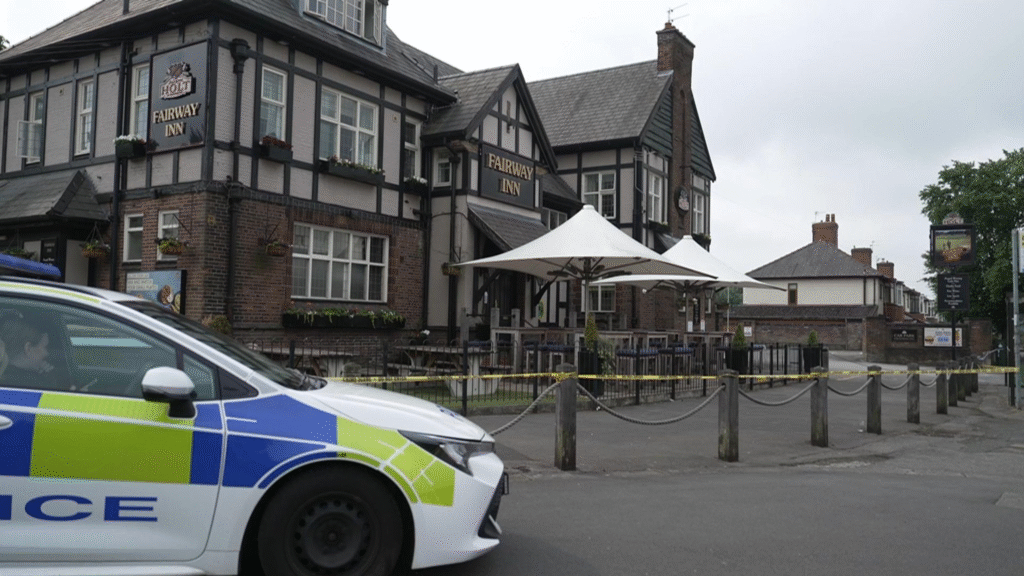
The three teenagers charged with Ibrahima’s murder will appear before Manchester Magistrates’ Court, marking the beginning of what is likely to be a lengthy judicial journey. If convicted, they face potentially long custodial sentences, though their age may complicate the legal proceedings, particularly with regard to sentencing guidelines for minors. The court will also have to consider the charges of possessing a bladed article, which adds another layer of legal severity to the case.
Meanwhile, the two additional suspects—a woman aged 37 and a girl aged 14—remain under investigation. They were arrested on suspicion of assisting an offender but have been released on bail pending further inquiries. Police have not released further details about their alleged roles in the aftermath of the incident.
Community Response and the Wider Issue of Youth Violence
The killing of Ibrahima Seck has left the New Moston community in a state of shock and mourning. Residents gathered to leave flowers, cards, and candles at the scene of the stabbing, creating a makeshift memorial on Nevin Road. Community leaders, school officials, and local clergy have all come forward to express their grief and offer support to Ibrahima’s family. Local vigils are being planned, with many calling for unity and a renewed effort to combat youth violence.
Manchester, like many UK cities, has struggled in recent years with the growing issue of knife crime among young people. Statistics from government agencies and police departments have shown a troubling rise in violent incidents involving teenagers, with knives being the weapon of choice in many fatal confrontations. For many parents and teachers, Ibrahima’s death is not just a personal tragedy—it’s a terrifying confirmation of a broader societal problem.

Schools in the area have already begun implementing additional safety measures and offering grief counseling to students and staff. Teachers are also addressing the issue head-on, using the tragedy as a point of discussion about the dangers of knife crime and the importance of conflict resolution. Community organizations are stepping in as well, offering youth programs and intervention services aimed at preventing similar incidents in the future.
Public officials have also taken note. Several Manchester councillors have pledged to push for increased funding for anti-knife crime initiatives and educational campaigns. There are renewed calls for the national government to provide more resources to communities affected by such violence. While policy changes and policing strategies are being discussed, for many in New Moston, the focus remains on honoring Ibrahima’s memory and ensuring that such a tragedy never happens again.
The killing of 14-year-old Ibrahima Seck is a chilling reminder of the fragility of life and the urgent need to address the scourge of youth violence in our communities. His death has left an irreplaceable void in his family’s life and raised profound questions about how society protects—or fails to protect—its youngest members. As legal proceedings begin and the investigation continues, the city of Manchester stands united in grief, outrage, and a shared determination to prevent such tragedies in the future.
Ibrahima was more than a name in a headline. He was a child with dreams, laughter, and love to give. The justice system will now play its part, but the responsibility of change rests with us all.