
An early morning incident at a McDonald’s drive-thru in Walnutport, Pennsylvania, has sparked concern over workplace safety and customer behavior after an elderly patron allegedly threw hot tea at a fast-food employee, causing injury. According to local police, the confrontation occurred shortly after 8 a.m. Tuesday at the McDonald’s located on Main Street, a routine hour when drive-thru traffic is typically steady with commuters and local residents.
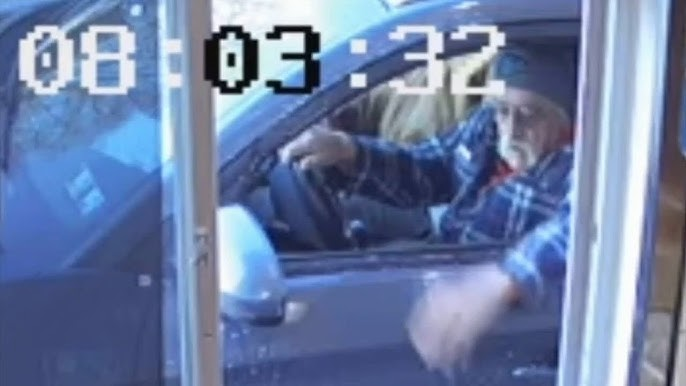
Surveillance footage reportedly captured the moment when a customer, later identified as an 80-year-old man from the area, received a cup of hot tea, removed the lid, and threw the liquid directly at the worker before discarding the cup. The employee required medical treatment at the scene, while police began an investigation that ultimately led to the man being identified through public assistance. The case raises broader questions about accountability, the risks faced by service workers, and how businesses and law enforcement respond to acts of violence in everyday commercial settings.
Details of the Incident and Police Response
Walnutport Police Chief Jason Nothstein stated that the incident unfolded moments after the customer was handed a cup of hot tea at the drive-thru window. According to police, the man allegedly removed the lid and intentionally threw the hot liquid at the female employee working the window. Afterward, he reportedly tossed the empty cup onto the ground and drove away. Authorities have not yet determined what provoked the alleged act, and investigators continue to examine the circumstances leading up to the assault, including any interaction or exchange that may have occurred before the tea was thrown.
The injured worker was treated by emergency responders at the scene. While officials confirmed that she suffered burns, her condition was not immediately available the following morning. Police emphasized that any injury caused by hot liquids can be serious, particularly when beverages are served at temperatures capable of causing burns within seconds of contact. Surveillance video from the restaurant played a critical role in the investigation, providing clear visual evidence of the event and the suspect’s actions.
After the incident, Walnutport police shared images and video clips from the surveillance footage on the department’s official Facebook page in an effort to identify the suspect. Members of the public responded with tips, messages, and calls, which ultimately led to the man being positively identified. Chief Nothstein publicly thanked community members for their assistance, noting that public cooperation was instrumental in advancing the case quickly.
Read : McDonald’s Worker Seen Drying a Dirty Mop Above the French Fry in Australia
The man is expected to face multiple charges, including simple assault, harassment, and disorderly conduct. Police indicated that formal charges would be filed later Wednesday. While the suspect’s age has drawn attention, law enforcement officials have stressed that age does not exempt an individual from responsibility when a deliberate act results in harm to another person. The investigation remains ongoing, and authorities have not ruled out additional charges depending on the outcome of their review.
Workplace Safety and the Risks Faced by Service Employees
The incident has renewed focus on the challenges and risks faced by fast-food and service-industry workers, particularly those who interact directly with customers. Drive-thru employees, in particular, work in close proximity to vehicles and are often exposed to unpredictable behavior from patrons, sometimes with little physical protection or immediate means of retreat. While most customer interactions are routine and uneventful, incidents involving verbal abuse, threats, or physical harm are not uncommon in the service sector.
Read : 19-Year-Old Giovanni Primo Blount Arrested After Allegedly Double-Charging McDonald’s Customers
Throwing a hot beverage at an employee presents a significant risk of injury. Hot liquids can cause burns to the skin, face, and eyes, with the severity depending on the temperature of the liquid and the duration of contact. Even brief exposure can lead to pain, blistering, and, in more severe cases, long-term scarring or infection. Service workers typically have limited control over the temperature at which beverages are served, as these standards are set by corporate policies designed to ensure product quality.
Although McDonald’s did not immediately comment on the specific temperature of its tea, industry guidelines provide context. The Tea Association of the USA recommends water temperatures between 180 and 190 degrees Fahrenheit for certain teas such as oolong and white varieties, while black teas often require even hotter water. Liquids at these temperatures are capable of causing burns in a very short period of time. Incidents involving hot beverages therefore carry inherent dangers when misused as weapons.
For employees, such events can have lasting effects beyond the immediate physical injury. Workplace assaults can lead to emotional distress, anxiety, and reluctance to return to similar duties. Employers often face pressure to review safety measures, such as installing protective barriers at drive-thru windows, providing additional training on de-escalation, or implementing clearer protocols for handling aggressive customers. Labor advocates frequently argue that service workers deserve the same level of protection and respect as employees in any other industry, especially given their public-facing roles.
Legal Implications and Broader Public Reaction
From a legal standpoint, the charges announced by Walnutport police reflect the seriousness with which authorities view the alleged conduct. Simple assault typically applies when an individual intentionally or recklessly causes bodily injury to another person. Harassment and disorderly conduct charges address behavior intended to alarm, annoy, or endanger others and disrupt public order. If convicted, the accused could face fines, probation, or other penalties under Pennsylvania law, though the final outcome will depend on court proceedings and any mitigating factors presented.
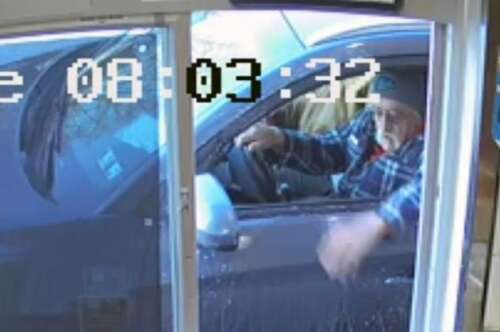
Public reaction to the incident has been shaped in part by the police department’s decision to release surveillance images and video. Many community members expressed outrage at the alleged attack, emphasizing that service workers should never be subjected to violence while performing their jobs. Others highlighted the importance of holding individuals accountable regardless of age, while also noting that underlying factors such as health or cognitive issues, if present, may be considered by the courts.
The case also underscores the role of social media in modern policing. By sharing images online, authorities were able to quickly enlist the public’s help, accelerating the identification process. While such strategies can be effective, they also raise questions about privacy and due process, particularly before formal charges are filed. In this instance, police stated that the information shared was necessary to identify a suspect in an active investigation.
More broadly, the incident fits into a pattern of reported confrontations between customers and service workers across the United States. Economic stress, impatience, and heightened tensions in public spaces have been cited by experts as contributing factors to increased aggression in everyday interactions. Businesses, law enforcement agencies, and policymakers continue to grapple with how best to prevent such incidents while ensuring that workers feel safe and supported.
As the legal process moves forward, attention will likely remain on the condition of the injured employee and the outcome of the charges against the suspect. The incident serves as a reminder of the vulnerabilities faced by frontline workers and the importance of maintaining clear boundaries between customer dissatisfaction and unacceptable, harmful behavior.