
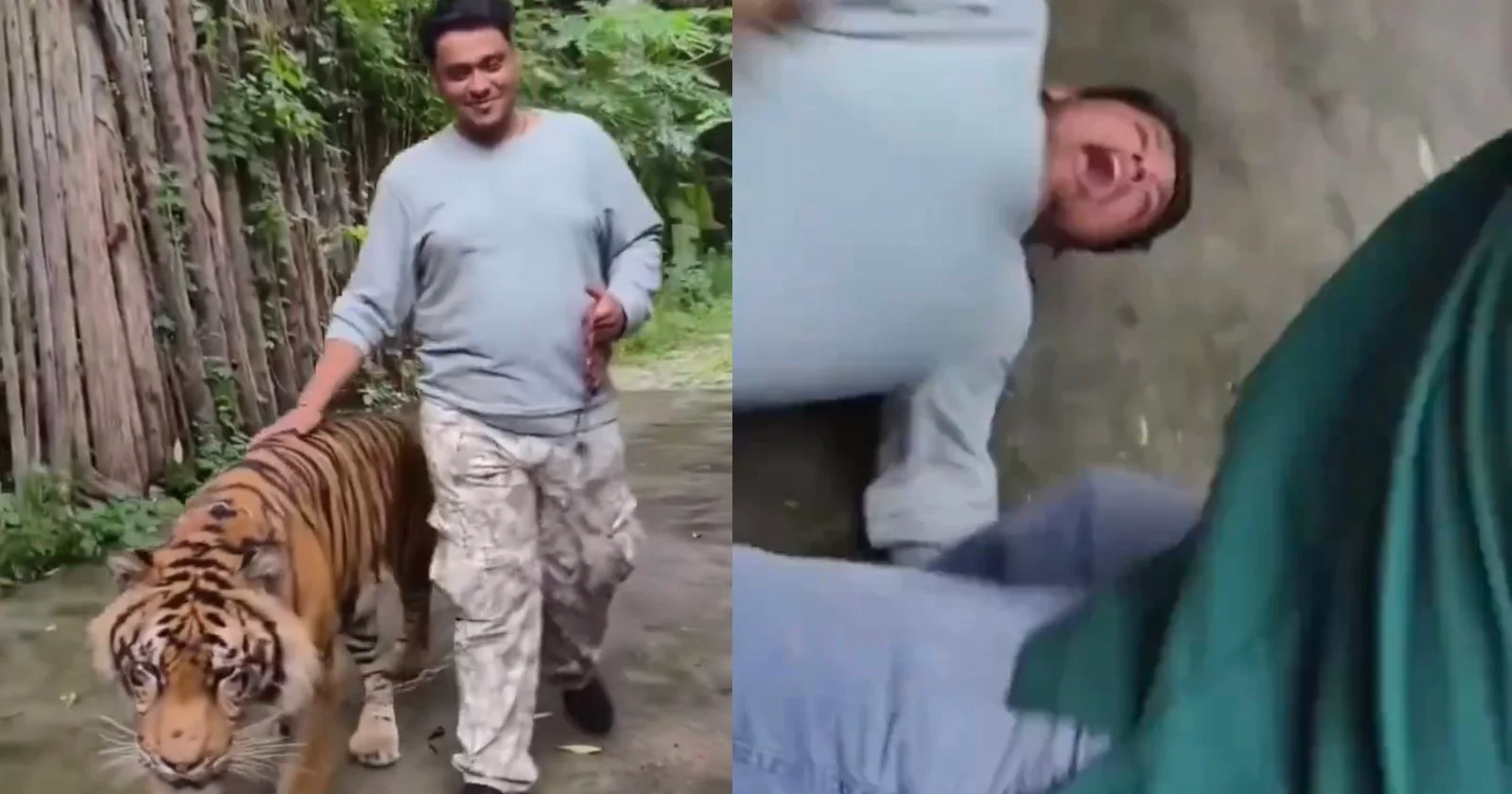
The serene calm of a tourist experience turned into a nightmare at a well-known animal park in Thailand when Tiger Mauls Tourist Which was kept for human interaction. This horrifying incident, captured on video and circulated on social media platform X (formerly Twitter), has ignited fierce debate over the ethics and dangers of wildlife tourism.
As the footage spread across platforms, the unsettling moment shocked viewers worldwide, particularly those familiar with such animal attractions in Thailand. What should have been a memorable photo opportunity became a sobering reminder of the untamed nature of wild animals, even in captivity.
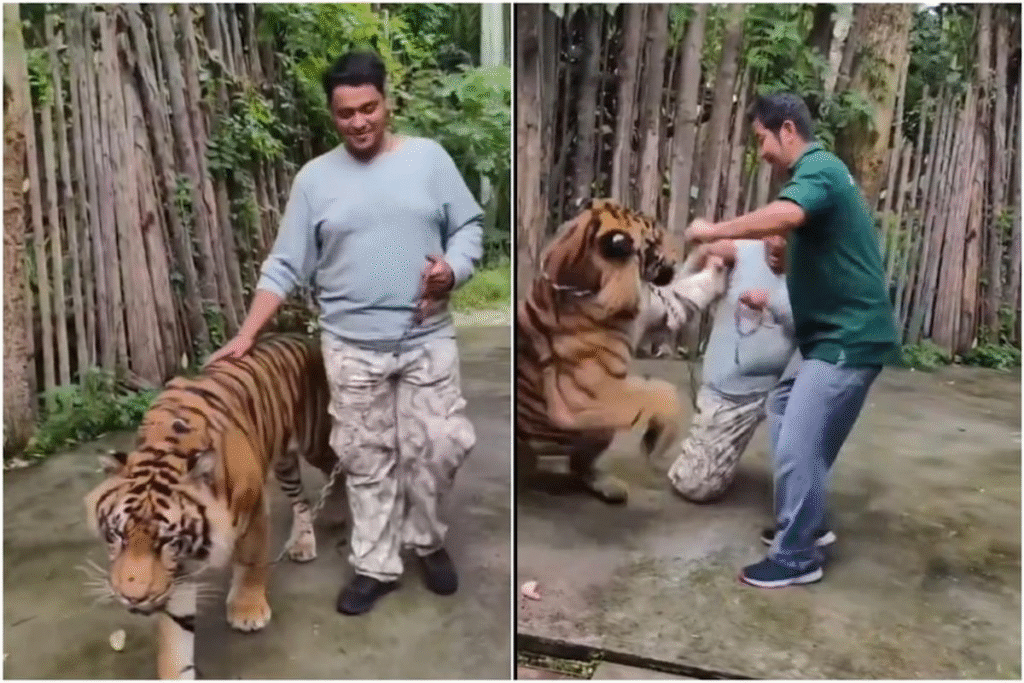
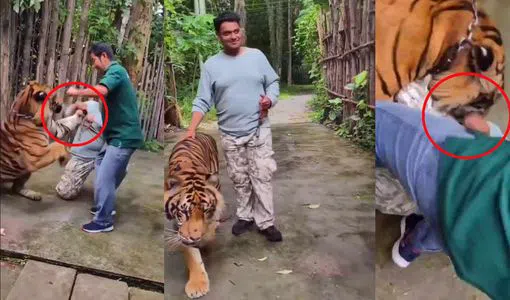
The video begins with a seemingly ordinary scene—an Indian tourist, a chained tiger, and a trainer with a stick walking alongside. The tourist kneels beside the tiger, presumably to pose for a photo, and for a moment, everything appears peaceful. But within seconds, the tiger turns and lunges at the man.
Screams pierce the air, the camera jerks violently, and chaos ensues. The blurry visuals reflect the terror of that moment as onlookers react in panic. Though the man’s exact condition remains unclear, the video has sparked intense conversations around safety, animal welfare, and the commodification of wildlife.
Wildlife Tourism Gone Wrong: The Allure and the Consequences
Thailand is renowned for its wildlife attractions, where tourists can interact with exotic animals—posing for selfies with tigers, feeding elephants, and even walking with wild cats. One such destination is the Tiger Kingdom in Phuket, a facility that allows close encounters with tigers of various ages and sizes. These experiences are aggressively marketed to tourists seeking Instagram-worthy moments and adventurous thrills.
But they come with an often-overlooked risk—proximity to unpredictable, powerful predators. This incident highlights the dark underside of wildlife tourism. Though marketed as safe and thrilling, these encounters often involve sedation, chains, and an unnatural environment for the animals.
Multiple visitors have previously raised concerns that tigers in such parks appear drugged or lethargic—accusations often met with denial from park officials. However, this video reinforces those concerns. A creature capable of immense strength, the tiger’s sudden reaction serves as a stark reminder that no amount of training or sedation can completely suppress its instincts.
Read : 14-Year-Old Girl Mauled by Lioness After Being Taken from Kenya Home
Eyewitnesses and former visitors have chimed in on social media. One commenter noted that the tourist had been patting the tiger near its lower back and rear—areas known to agitate felines. Another remarked that the tigers are sedated just enough to keep them subdued, but such sedation isn’t foolproof.
Analysis of the Tiger Attack in Thailand: @AmazingThailand@Protect_Wldlife
— Ajay Joe (@joedelhi) May 30, 2025
Character 1 : Tiger
Character 2 : Cruel Handler
Character 3 : Stupid Indian Tourist
1. Tiger was provoked to pose with a tourist.
2. Instinctively, the tiger leapt on the tourist—not the… pic.twitter.com/Q7JOI5YTLU
As the drugs wear off or the animal becomes overstimulated, the risk of an attack escalates. These revelations have raised important ethical questions about the operation of such animal parks and the pressures placed on animals to behave contrary to their nature.
The Human Cost: Peer Pressure, Ignorance, and the Price of a Photo
For many travelers, particularly first-time international tourists, wildlife parks like Tiger Kingdom offer what seems like a once-in-a-lifetime opportunity. The chance to touch, sit beside, and take pictures with a tiger feels exhilarating and surreal. Yet, this thrill often comes at the cost of informed consent and awareness. In many cases, tourists are not adequately warned about the risks or the conditions these animals are kept in.
Instead, they are encouraged to believe in the illusion of safety—that chains and trainers can completely neutralize a wild animal’s instincts. One viewer of the viral video shared a chilling reflection: “That could have been me.” This sentiment echoes with many who’ve visited similar parks, often under peer pressure or social media expectations.
The lure of capturing a unique moment for Instagram or Facebook overshadows any apprehension. Many tourists from countries like India, where such close animal encounters are rare, are particularly vulnerable to the appeal. In their excitement and trust in the facility’s safety protocols, they may overlook subtle red flags—like the tiger’s body language or the unnatural docility that comes from sedation.
There’s also a concerning trend among some facilities to minimize visible signs of danger. Trainers often use sticks—not to discipline but to distract or control the animals in case they show signs of aggression. However, such methods are no guarantee.
In this incident, despite the trainer being present, the tiger’s reaction was too swift to be stopped. It’s a stark example of how quickly things can go wrong when dealing with apex predators. No chain, stick, or sedation can provide complete security when animals are provoked or stressed.
Reevaluating Animal Parks: Ethics, Regulation, and the Path Forward
The attack at the animal park has ignited a broader debate around the ethics of wildlife tourism, particularly in countries where such practices remain loosely regulated. While some parks claim to follow international safety standards and animal care protocols, incidents like this expose the vulnerabilities in such claims. Many experts argue that wild animals belong in the wild or sanctuaries—not in photo booths or chained enclosures.
They are not props for human amusement but sentient beings with instincts and boundaries. Animal rights organizations have long criticized facilities like Tiger Kingdom for promoting an artificial and dangerous relationship between humans and predators.
They argue that such interactions not only endanger humans but also compromise the welfare of the animals. Tigers, in particular, are solitary creatures and not naturally inclined to tolerate touch, noise, or confinement. Forcing them into human interaction often results in psychological distress, aggression, and in some tragic cases—attacks.
The need for stricter regulations and greater awareness is more urgent than ever. Tourism boards and governments must reconsider the message they send by promoting such interactions as safe and ethical. Licensing, regular inspection, mandatory tourist safety briefings, and independent welfare audits are essential steps. There must also be greater transparency—visitors should know whether animals are sedated, how they are trained, and what measures are in place if something goes wrong.
Education plays a crucial role. Tourists must be made aware of the inherent risks and moral implications of their choices. Ethical alternatives—such as observing animals in sanctuaries or the wild—should be promoted. These experiences may lack the intimacy of a selfie, but they offer something deeper: respect for nature and a genuine appreciation of wildlife in its true form.
As the video continues to circulate, the conversation it ignites must go beyond outrage. It should lead to meaningful change in how we perceive and engage with wild animals. No photo is worth a life—human or animal. This incident, tragic as it may be, should serve as a wake-up call for tourists, tour operators, and regulators alike. The glamour of wildlife encounters must not blind us to the grim realities behind the scenes.
The tiger, in this case, was merely acting on instinct—responding to touch, stress, or perhaps a moment of panic. The true tragedy lies in the conditions that allowed such a moment to arise. It’s a sobering reminder: wild animals are not toys, and nature cannot be tamed by tourism.