

The world is no stranger to the power of social media, with platforms like TikTok enabling rapid information dissemination across the globe. However, the speed at which information spreads can sometimes lead to consequences that spiral out of control.
One such incident occurred in Myanmar when a TikTok astrologer, John Moe The, was arrested for causing public panic with a false earthquake prediction. This event sheds light on the broader issue of misinformation in the age of social media and the potential harm it can cause to societies already reeling from disasters.
The False Prediction and Public Panic
On April 9, 2023, John Moe The, an astrologer with over 300,000 followers on TikTok, shared a video that would soon spiral out of control. In the video, Moe The claimed that a major earthquake would strike every city in Myanmar on April 21, 2023.
The astrologer, using his platform to make predictions based on astrology and palmistry, urged viewers to evacuate buildings with their belongings as soon as they felt any tremors. The video quickly went viral, and the panic it caused was palpable.
The prediction was based on nothing but astrology, an area of belief that many people in Myanmar adhere to, yet it had no scientific grounding. Seismologists and experts have consistently stated that predicting earthquakes is impossible, given the complex factors involved in such natural disasters.
Despite this, many people in Myanmar took the astrologer’s warning seriously, driven by the fear that had lingered since the deadly earthquake that struck the country just weeks earlier.
On March 28, 2023, Myanmar was hit by a devastating earthquake of magnitude 7.7 that left more than 3,500 people dead and caused widespread destruction in the Mandalay and Sagaing regions.
Read : Woman Gives Birth On Bangkok Street After Earthquake Led to Hospital Evacuation
The tremors were felt as far away as Thailand, China, and India, leaving a deep sense of insecurity among residents. In this context, Moe The’s prediction played into existing fears and uncertainties, amplifying the anxiety people were already feeling.
The astrologer’s claims caused many people to panic, with some even abandoning their homes and camping outdoors in anticipation of the predicted earthquake on April 21. This mass exodus of residents in major cities, including Yangon, is a clear example of the impact misinformation can have on a population already traumatized by natural disasters.
The Arrest and Legal Implications
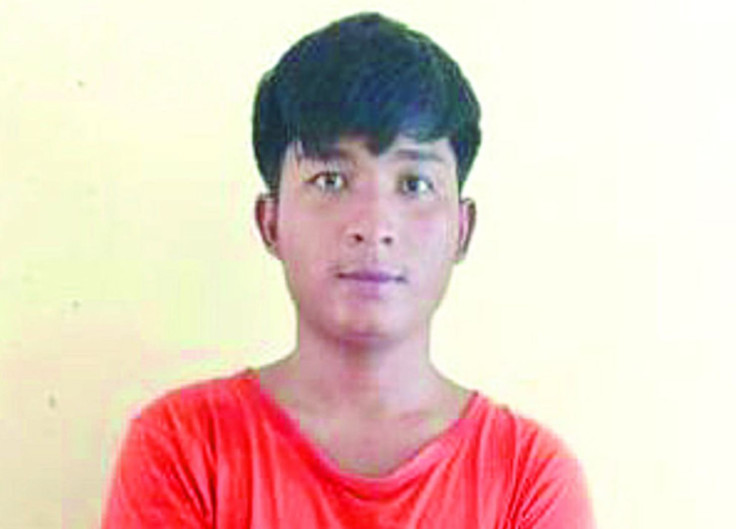
As the panic spread, Myanmar authorities were quick to respond. On April 10, 2023, the Information Ministry announced that Moe The had been arrested for causing public panic by spreading false information.
Authorities stated that Moe The had made “false statements with the intention of causing public panic,” a charge that carried significant legal ramifications. His TikTok account, which had over 300,000 followers, was taken down shortly after his arrest.
The arrest highlighted the growing concern around misinformation on social media platforms and the potential consequences for those who spread it.
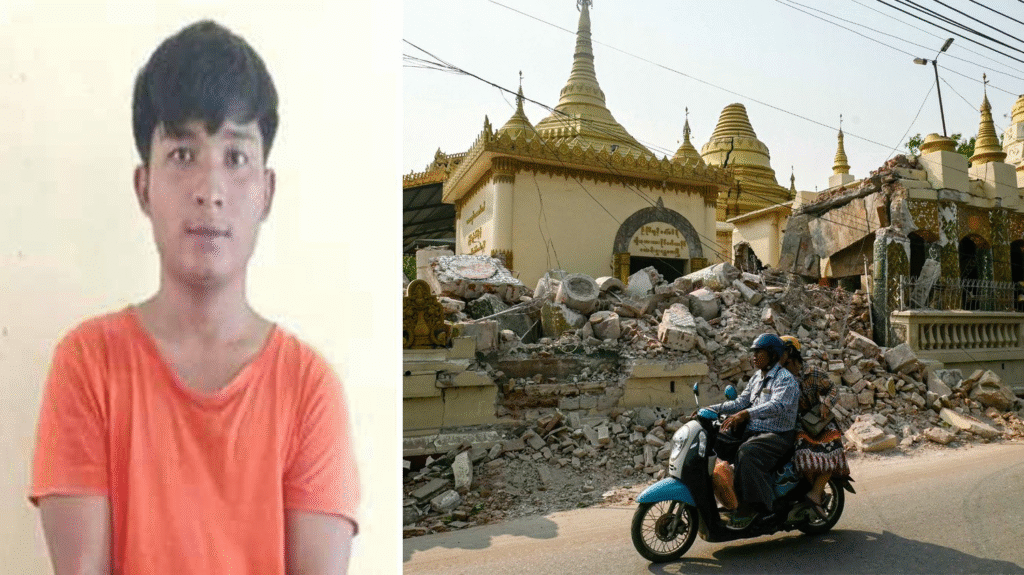
The Myanmar government made it clear that anyone found guilty of spreading false news would face legal action, stating, “We will take action effectively against those who write or spread or share fake news.” This stance is in line with broader global efforts to curb the spread of misinformation, especially when it has the potential to cause real-world harm.
In this case, the government acted swiftly to address the issue, arresting Moe The at his home in Sagaing, central Myanmar, during a raid.
The authorities were aware of the potential danger that his video posed and acted to prevent further panic from escalating. The arrest also underscores the broader implications of social media use in times of crisis, where misinformation can spread faster than the truth, often with devastating results.
While Moe The’s case is particularly notable due to the scale of his following and the severity of the prediction, it also serves as a broader cautionary tale about the risks associated with the unchecked spread of information in the digital age. It is not just the creators of false content who are at fault; the platforms that allow this content to proliferate without proper oversight are also complicit.
The Impact of Misinformation on Public Safety
Misinformation, especially in the context of natural disasters, can have dire consequences for public safety. In the case of John Moe The’s false earthquake prediction, the panic it caused among Myanmar’s population was a clear example of how rumors and unverified claims can lead to dangerous situations. The fear of an impending earthquake on April 21 led many people to abandon their homes, with some taking refuge in makeshift camps.
While it is difficult to quantify the full extent of the damage caused by the astrologer’s false prediction, it is clear that the public’s response was fueled by a mix of fear, uncertainty, and a deep-seated belief in astrology.
For those who had already witnessed the devastating effects of the March 28 earthquake, the warning seemed credible, even if it was ultimately baseless. The psychological toll of such misinformation can be profound, especially for communities already dealing with the aftermath of a recent disaster.
The psychological aspect of panic caused by false predictions is an important factor to consider. The trauma experienced by those affected by the March 28 earthquake may have amplified the fear surrounding the prediction. In this sense, the astrologer’s prediction was not just a false statement—it was a trigger that compounded the existing fear in the population.
The Myanmar government’s efforts to address misinformation come at a time when the world is grappling with similar challenges. The rapid spread of fake news, particularly on social media, has become a pressing issue worldwide. Governments and tech companies are under increasing pressure to develop mechanisms to curb the spread of misinformation without infringing on freedom of expression.
The Need for Media Literacy and Accountability
John Moe The’s arrest serves as a stark reminder of the dangers posed by misinformation, especially in a world where social media platforms have the power to amplify even the most outlandish claims. While the authorities acted quickly to address the situation, the incident highlights the need for greater media literacy and accountability in the digital age.
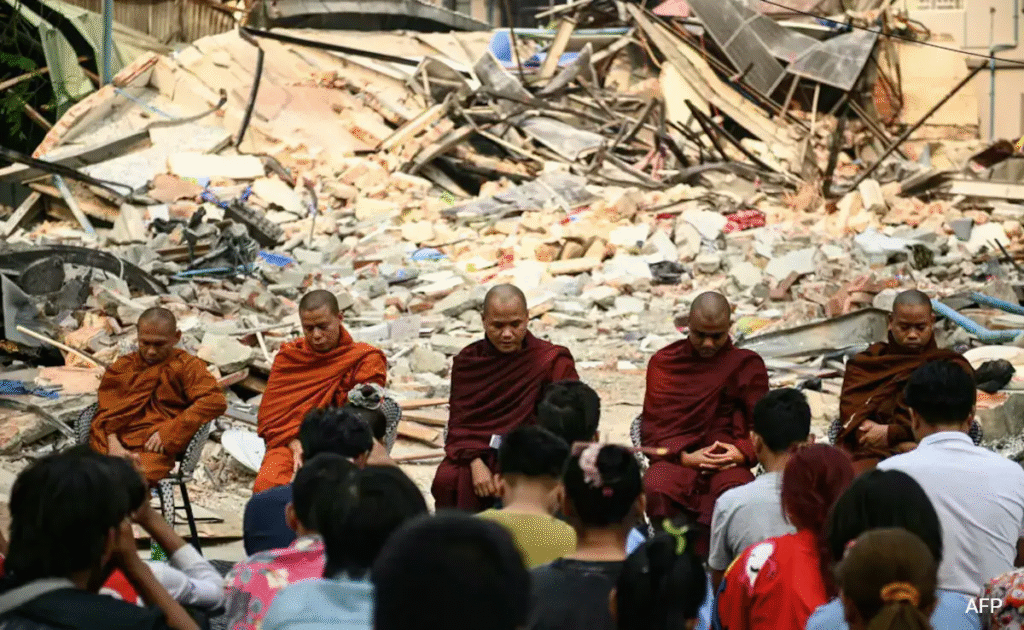
In the case of Myanmar, where astrology plays a significant cultural role, the spread of such false predictions can be particularly damaging. While astrology may be seen as a source of comfort or guidance by some, its use to predict events like earthquakes can have real-world consequences. In this context, it is important for both individuals and authorities to be vigilant about the information they share and consume, particularly in times of crisis.
Ultimately, the story of John Moe The is a reminder that social media platforms must take greater responsibility in curbing the spread of misinformation. It also underscores the importance of critical thinking and media literacy, both of which are essential in navigating a world increasingly shaped by digital platforms.
As Myanmar continues to recover from the devastating effects of its recent earthquakes, it is crucial that the public remains informed and cautious of the content they consume on social media.
The incident also serves as a warning to others who might use their platforms to spread unfounded predictions and cause unnecessary panic. In the end, the truth remains that earthquakes, as powerful and terrifying as they may be, cannot be predicted by astrology or any other form of pseudoscience.