
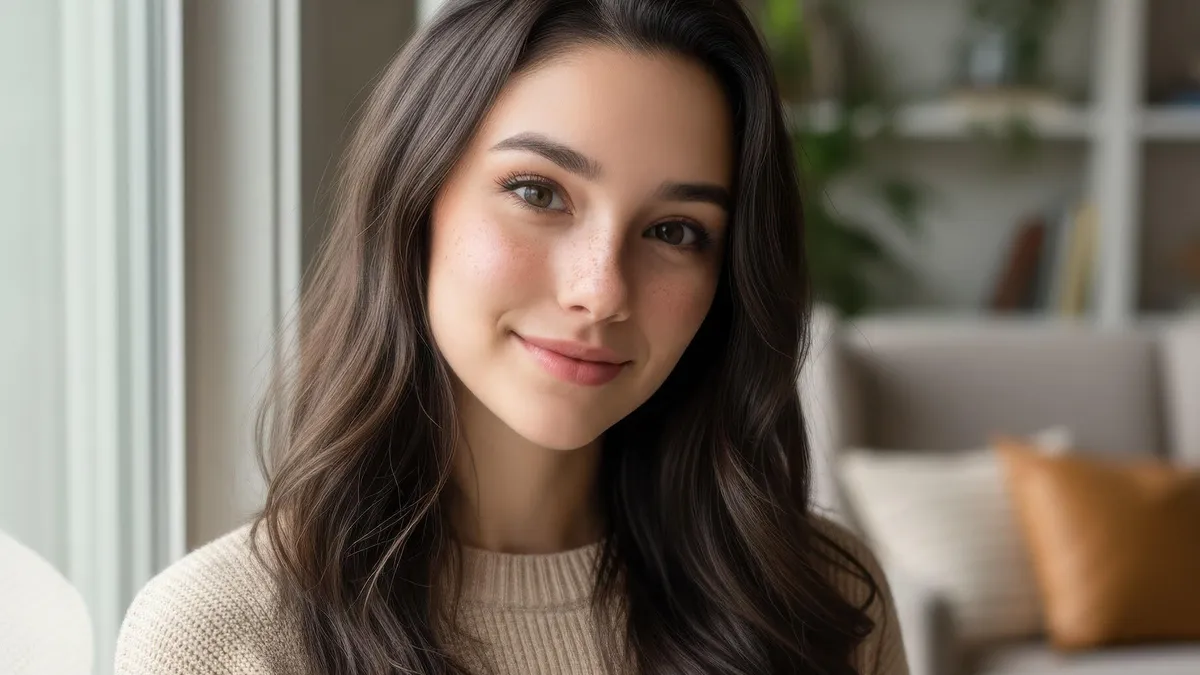
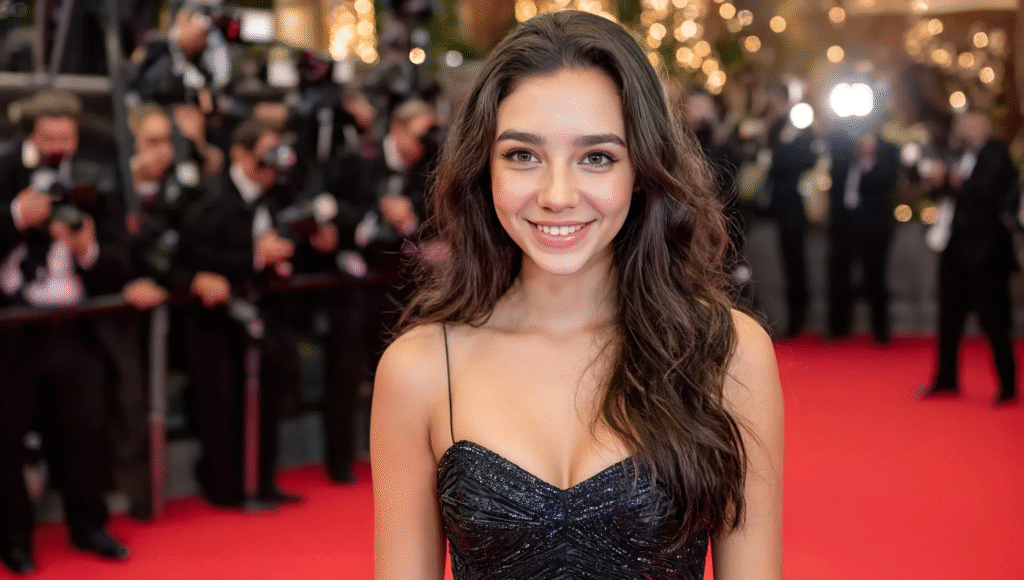
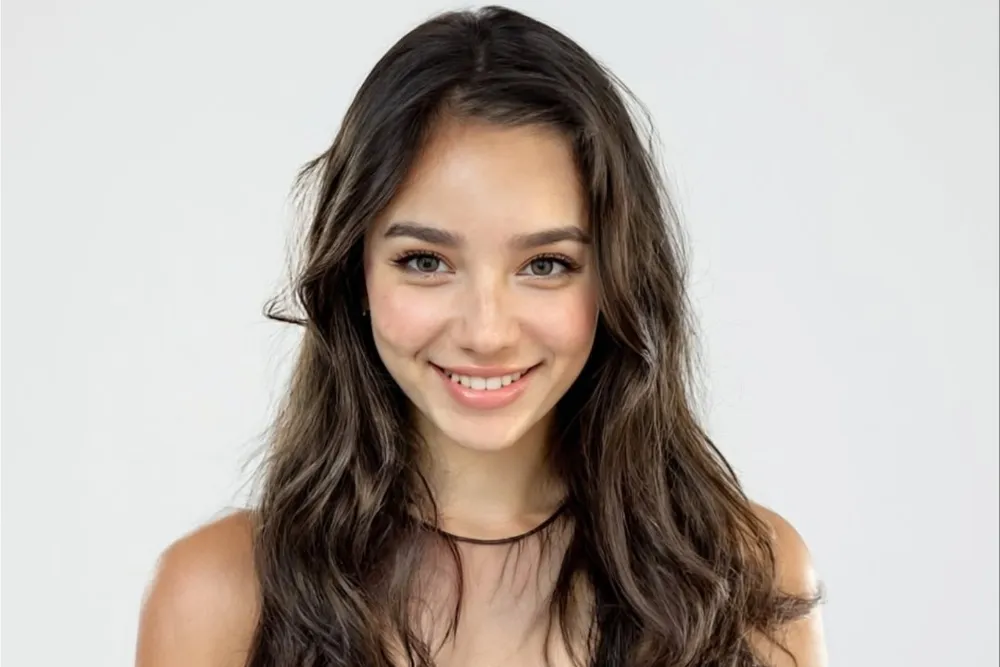
In a development that has ignited fierce debates across the entertainment industry, Tilly Norwood, an entirely AI-generated character, has emerged as a polarizing figure in Hollywood. Unveiled just days ago at the Zurich Film Festival, Norwood represents a bold—and highly contentious—step forward in the integration of artificial intelligence into acting roles. Created by Dutch actress and technologist Eline Van der Velden, the brunette digital performer has already drawn interest from multiple talent agencies eager to represent her.
This news, reported widely on September 29, 2025, has prompted swift backlash from human actors, industry guilds, and commentators who fear it signals the erosion of jobs and artistic integrity in an already precarious profession. As studios quietly explore AI applications behind the scenes, Tilly Norwood’s debut underscores the growing tension between technological innovation and the human essence of performance. With calls for boycotts and pointed social media takedowns dominating the discourse, the question arises: Is Tilly Norwood a groundbreaking artistic tool or a harbinger of Hollywood’s dystopian future?
The Creation of Tilly Norwood: From Concept to Digital Debut
Tilly Norwood’s origins trace back to Particle6, a London-based AI production company founded by Eline Van der Velden, a self-described actress, comedian, and technologist. Van der Velden, who serves as CEO, launched Norwood as the flagship creation of Xicoia, a newly spun-off AI talent studio announced at the Zurich Summit during the film festival. The studio positions itself as “the world’s first artificial intelligence talent studio,” aimed at developing synthetic performers that can star in films, interact with fans, and never age or tire.
Norwood, with her wide-eyed, doe-like features and a voice synthesized to sound effortlessly natural, was designed as a composite of real-world influences—though Van der Velden has not disclosed specifics on the training data, raising immediate ethical flags about potential unauthorized use of actors’ likenesses. Norwood’s public introduction came via a short comedy sketch titled “AI Commissioner,” released online in July 2025 by Particle6. In the three-minute video, the character navigates a satirical bureaucratic scenario with quippy dialogue and expressive facial tics that mimic human nuance.
Posted to her dedicated Facebook and Instagram accounts—where her bio reads, “You’ll either get it or pretend you don’t”—the clip quickly amassed views, positioning Tilly Norwood as a meta-commentary on AI’s role in society. Van der Velden has described the process as an “act of imagination and craftsmanship,” likening it to traditional character development in animation or scriptwriting. “We believe the next generation of cultural icons will be synthetic,” she told Broadcast International earlier this year, expressing ambitions for Norwood to emulate stars like Scarlett Johansson or Natalie Portman.
Read : ‘The Walking Dead’ and ‘Chicago Med’ Actress Kelley Mack Dies at 33
The Zurich Summit panel on September 27, 2025, marked Norwood’s formal coming-out party. There, Van der Velden revealed that initial skepticism had given way to enthusiasm from industry insiders. “When we first launched Tilly, people were like, ‘What’s that?’” she recounted. “Then, by May, people were like, ‘We need to do something with you guys.’” By the event’s close, she claimed up to eight talent agencies were in discussions to sign Tilly Norwood, potentially making her the first AI entity to secure professional representation in Hollywood.
Read : “I Was Alone for Five Years, Was Going to Adopt a Baby at 35”: Selena Gomez
This move comes amid broader AI adoption in production, from de-aging effects in blockbusters to background extras in streaming series. However, critics argue that blurring the line between tool and talent commodifies human labor. Van der Velden’s dual role as creator and advocate—while insisting she’s “an actor myself”—has only amplified perceptions of conflict, as her company now eyes a roster of dozens more AI “stars.” As of September 30, no agency has finalized a deal, but the mere prospect has accelerated Hollywood’s reckoning with synthetic performers.
Hollywood’s Swift and Scathing Backlash
The announcement of Tilly Norwood’s agency pursuits unleashed a torrent of condemnation from across the industry, with high-profile actors taking to social media to voice their outrage. Melissa Barrera, known for her roles in the Scream franchise, was among the first to react, posting on her Instagram Story: “Hope all actors repped by the agent that does this, drop their a$$. How gross, read the room.” Her words echoed a sentiment of betrayal, framing the pursuit of AI representation as a direct affront to working performers.
Lukas Gage, star of The White Lotus, opted for dark humor, quipping, “She was a nightmare to work with!!!!” in a sarcastic nod to the character’s fabricated persona. Natasha Lyonne, co-founder of an “ethical” AI studio that licenses content for training, went further, covering a Deadline article on Norwood with vomit emojis and declaring, “Any talent agency that engages in this should be boycotted by all guilds. Deeply misguided & totally disturbed. Not the way. Not the vibe. Not the use.”
The backlash extended to daytime television, where Whoopi Goldberg addressed the issue on the September 29 episode of The View. “The problem with this, in my humble opinion, is that you are suddenly up against something that’s been generated with 5,000 other actors,” Goldberg said, highlighting the “unfair advantage” of AI’s composite nature. She emphasized the irreplaceable human elements: “Our faces move differently.
Our bodies move differently.” Emily Blunt, caught off-guard during a promotional interview for The Smashing Machine on September 29, reacted viscerally upon seeing Tilly Norwood’s image. “No, are you serious? That’s an AI? Good Lord, we’re screwed,” she exclaimed. “That is really, really scary. Come on, agencies, don’t do that. Please stop taking away our human connection.” Other voices, including Kiersey Clemons, Mara Wilson, and Nicholas Alexander Chavez, piled on, with Chavez bluntly stating, “Not an actress actually nice try.”
Online forums like Reddit amplified the fury, with users decrying Norwood as a “pornbot upgrade” or a “graphic export” masquerading as talent. Comments ranged from fears of job loss—”We’re so cooked”—to ethical concerns over deepfakes and consent. The rapid response underscores lingering scars from the 2023 SAG-AFTRA strike, where AI protections were a core demand. By September 30, hashtags like #BoycottAIActors trended, signaling a grassroots mobilization against what many see as an existential threat. This isn’t mere NIMBYism; it’s a collective alarm that AI, unchecked, could flood the market with tireless, low-cost alternatives, devaluing the years of training and vulnerability that define acting.
Industry Statements and the Broader AI Debate
As the controversy swelled, institutional responses crystallized the divide. SAG-AFTRA, the union representing 160,000 performers, issued a blistering statement on September 30, rejecting Norwood outright. “To be clear, ‘Tilly Norwood’ is not an actor, it’s a character generated by a computer program that was trained on the work of countless professional performers—without permission or compensation,” the guild declared. It lambasted the initiative as creating “the problem of using stolen performances to put actors out of work, jeopardizing livelihoods and devaluing human artistry.”
Emphasizing that “creativity is, and should remain, human-centered,” SAG-AFTRA opposed “the replacement of human performers by synthetics,” arguing that AI lacks “life experience to draw from, no emotion,” and fails to resonate with audiences seeking authentic connection. In response, Van der Velden posted a measured defense on Instagram, shared across Norwood’s channels. “To those who have expressed anger over the creation of my AI character, Tilly Norwood, she is not a replacement for a human being, but a creative work—a piece of art,” she wrote.
Framing AI as “a new tool” or “a new paintbrush” for storytelling, akin to CGI or animation, Van der Velden insisted it enhances rather than supplants human craft. “I’m an actor myself, and nothing—certainly not an AI character—can take away the craft or joy of human performance,” she added, urging that AI entities be “judged as part of their own genre” rather than direct competitors. Particle6 echoed this in communications to outlets like Newsweek, positioning Tilly Norwood as a spark for “conversation” that demonstrates creativity’s power.
This exchange encapsulates Hollywood’s fractured AI landscape. On one side, proponents like Van der Velden highlight efficiency—AI for stunts, extras, or global localization—citing quiet studio pilots. Opponents, bolstered by recent wins like Scarlett Johansson’s suit against OpenAI, warn of a slippery slope toward exploitation. Current copyright laws permit purely machine-generated works, but guilds push for reforms mandating consent and royalties for training data.
As of September 30, 2025, no major awards bodies have weighed in, though some have updated rules to scrutinize AI submissions. The debate extends beyond jobs to artistry: Can a synthetic entity capture the “messy” spontaneity fans crave, from red-carpet banter to scandalous tweets? With Xicoia’s plans for more AI “icons,” the coming months could redefine casting—or entrench resistance. For now, Tilly Norwood stands as a digital lightning rod, forcing Hollywood to confront whether progress means progress for all, or just the machines.
It is in reality a great and helpful piece of information. I am happy that you just shared this useful info with us. Please stay us up to date like this. Thank you for sharing.
hello!,I like your writing very so much! percentage we keep up a correspondence extra approximately your article on AOL? I need a specialist in this space to resolve my problem. Maybe that’s you! Having a look forward to see you.
Hey there just wanted to give you a quick heads up and let you know a few of the images aren’t loading correctly. I’m not sure why but I think its a linking issue. I’ve tried it in two different internet browsers and both show the same outcome.