

In a shocking incident that has sent ripples through international law enforcement and aviation communities, a 46-year-old Australian pilot, Timothy James Clark, lost his life in a light aircraft crash in rural Brazil. The wreckage, discovered in a sugarcane field, revealed a staggering haul of nearly 200 kilograms of cocaine, ingeniously packaged in counterfeit SpaceX branding. This tragic event, unfolding on September 14, 2025, near the coastal town of Coruripe in Brazil’s Alagoas state, underscores the perilous intersection of global drug trafficking and small-plane operations.
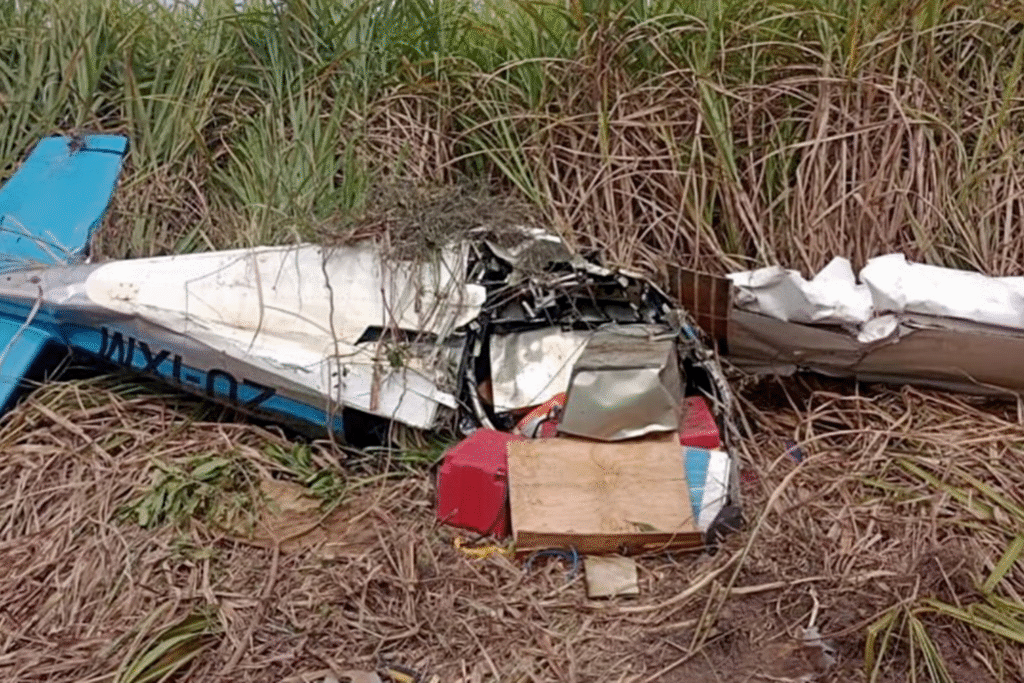
As authorities piece together the final moments of Clark’s flight, questions abound about his role in what appears to be a sophisticated smuggling operation. This story not only highlights the dangers faced by pilots in remote regions but also exposes the evolving tactics of narco-traffickers who exploit legitimate corporate logos to mask their illicit cargo. The crash occurred around 1:30 p.m. local time, when Clark’s single-engine plane, a Sling Aircraft D8 Sling 4 TSI, plummeted into the field after what investigators believe was a mechanical failure or evasive maneuver gone wrong. Clark, the sole occupant, was found dead just outside the twisted fuselage, his identification documents confirming his Australian nationality.
Brazilian Federal Police quickly secured the site, where they uncovered over 187 bricks of the white substance, totaling between 180 and 195 kilograms—precisely the “nearly 200kg” that has dominated headlines. Each brick was meticulously wrapped in packaging mimicking the sleek, futuristic design of Elon Musk’s SpaceX rockets and spacecraft, complete with the company’s iconic logo. This brazen use of a high-profile brand has baffled experts, who note it may have been intended to blend the cargo with legitimate aerospace shipments or simply serve as a psychological ploy in the underworld.
Local media, including outlets like Gazeta and G1 Globo, were the first to report the discovery, with images circulating of the upside-down aircraft amid snapped sugarcane stalks. The plane, registered in Zambia but hangared in Brazil for at least two years, bore no logged flight plan with authorities, fueling speculation about its clandestine origins. Extra fuel tanks fitted to the aircraft suggested it was prepared for a long-haul journey, possibly hopping remote airstrips to evade radar.
As the sun beat down on the humid coastal terrain, police transferred the drugs to the Integrated Public Security Centre in Coruripe, where testing confirmed the substance as high-purity cocaine. The seizure’s immediate value in Brazil was estimated at around nine million Brazilian reais, or roughly AUD 2.5 million at wholesale prices to traffickers. However, if successfully smuggled to markets like Australia, the street value could soar to AUD 80 million, given the drug’s premium pricing Down Under—one gram fetching AUD 250 to 400, compared to just USD 5 in Brazil.
Read : Two Injured After Small Plane Crashes at Mona Vale Golf Course in Australia
This event is more than a isolated tragedy; it’s a stark reminder of Brazil’s pivotal role in the global cocaine trade. Producing minimal amounts domestically—Colombia supplies about 70 percent of the world’s cocaine—Brazil serves as a critical transit hub. A 2016 United Nations report highlighted it as the second-most cited departure point for shipments to Africa, Asia, and Europe, trailing only Colombia. Coruripe’s location on the tropical coastline makes it an ideal launchpad for such operations, with its labyrinth of rural airstrips and proximity to major ports.
Read : World’s Biggest Rocket Launched by SpaceX Successfully Splashes Down in Indian Ocean
Narco-traffickers have long favored light aircraft for their agility, often modifying them with auxiliary tanks for transatlantic legs. The fake SpaceX packaging adds a modern twist, potentially designed to exploit supply chain vulnerabilities or launder the drugs amid genuine cargo. As one unnamed federal police source told local reporters, “This wasn’t amateur hour; the branding suggests a network with resources and audacity.”
The Enigma of Timothy James Clark: From Melbourne Boardrooms to Brazilian Skies
At the heart of this saga is Timothy James Clark, a Melbourne native whose life story reads like a thriller novel—equal parts legitimate ambition and shadowy undertones. Born and raised in the suburbs of Lilydale, east of Melbourne, Clark was 46 at the time of his death, a man whose public persona painted him as a savvy businessman with a passion for aviation. He studied finance at university, honing skills that led him to directorships in several investment firms. These entities held major stakes in Australian mining and energy companies, positioning Clark as a behind-the-scenes player in resource sectors.
His LinkedIn profile, last updated years ago, boasted expertise in corporate jet operations across Australia, New Zealand, and Southeast Asia, including stints as a contractor for high-profile outfits. Yet, Clark’s foray into piloting added layers of intrigue. Friends and family described him as holding a full pilot’s license, though his father, in a heartbreaking interview, insisted Timothy only had a learner’s permit and hadn’t flown commercially in years. “He’s not in Brazil—he’s in South Africa,” the elder Clark told reporters, learning of the crash through media alerts rather than official channels.
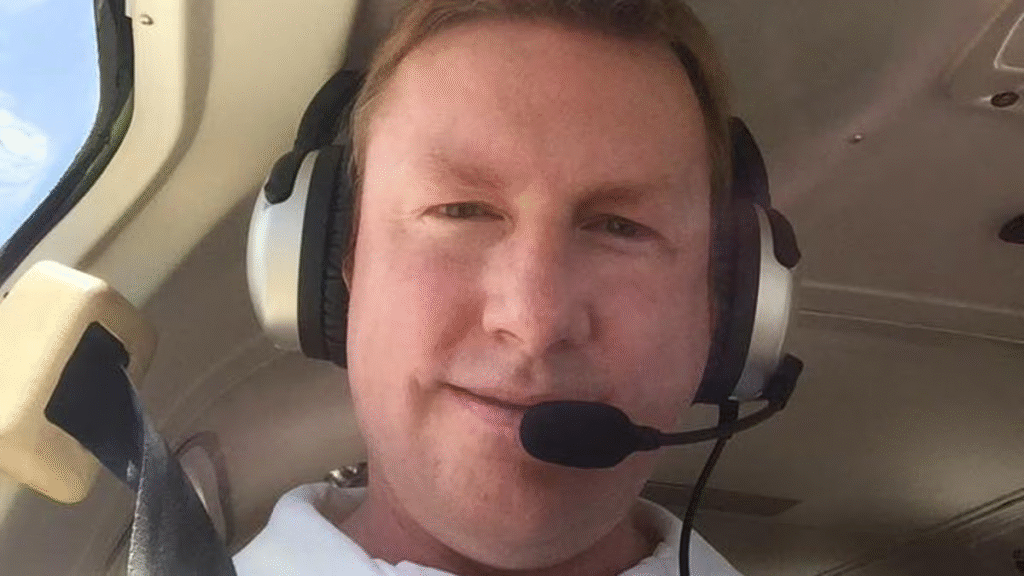
This disconnect hints at a double life: one foot in legitimate enterprise, the other perhaps treading illicit paths. A Facebook page under his name, dormant since 2018, featured photos of Clark at the controls of small planes, grinning amid cockpit gauges, alongside videos of bush flights in remote terrains. Australian authorities, including the Department of Foreign Affairs and Trade, have been tight-lipped, but whispers suggest Clark had spent time in Africa and South America, regions notorious for aviation’s underbelly.
What drove Clark to this fatal flight? Investigators are probing his connections to Brazil’s air routes, wondering if prior knowledge lured him into the cartel web. No public record of criminal activity stains his name, stunning acquaintances who recall a “rogue but affable” figure—nicknamed “The Broker” in some circles for his deal-making prowess. Wreckage details paint a poignant picture: amid the cocaine bricks lay Australian snacks like Tim Tams and vegemite jars, as if Clark sought a taste of home on his perilous errand.
Was he coerced, desperate for cash, or seduced by the thrill? As Brazilian police deepen their inquiry, Clark emerges not as a cartoonish villain, but a complex everyman ensnared in forces larger than himself. His death leaves a void for his family, who broke their silence to express devastation, grappling with the chasm between the son they knew and the smuggler the world now sees.
Unraveling the Crash: Mechanical Mishap or Cartel Cover-Up?
The mechanics of the crash itself remain shrouded in fog, with Brazilian authorities treating it as both an aviation accident and a potential crime scene. The Sling D8, a nimble kit plane popular among hobbyists for its versatility, was ill-suited for hauling such a heavy load—nearly 200kg of cocaine would have strained its center of gravity, possibly contributing to the plunge. Eyewitnesses in the sugarcane fields reported hearing the engine sputter before a sharp descent, the blue-tailed aircraft inverting upon impact. Clark’s body, found ejected nearby, showed no signs of foul play, but autopsies are ongoing to rule out sabotage or self-induced factors.
No black box was present on the light aircraft, leaving investigators reliant on wreckage analysis and satellite data. The Zambian registration raises red flags—such flags of convenience often mask ownership in trafficking rings. Hangared in Brazil for two years, the plane likely shuttled between unmonitored strips in the northeast, a hotspot for “narco-flights.” Federal Police have opened a formal inquiry, vowing to trace the cocaine’s provenance and any accomplices. Early theories posit the crash as accidental, triggered by overloaded weight or fuel imbalances from the extra tanks. Others speculate a mid-air distress call went unanswered, or worse, that rivals forced the ditch to claim the payload.
Snopes and other fact-checkers have vetted the core claims, confirming the incident via local Brazilian reports from Alagoas 24 Horas, though details like exact weight vary slightly between 180kg and 195kg. As of September 18, the probe continues, with no arrests announced. This case echoes past narco-crashes, like those in Colombia’s jungles, where pilots perish guarding fortunes in powder. For Clark, the irony is bitter: a man who once chased legitimate horizons ended his days inverted in a field, his cargo a toxic legacy.
The fallout from Clark’s crash extends far beyond Alagoas’ sugarcane rows, igniting debates on transnational crime and corporate vulnerabilities. Brazil’s role as a narco-superhighway is laid bare—its 16,000 kilometers of border and lax rural oversight make it a smuggler’s dream. The UN’s 2016 findings ring truer today, with cocaine flows adapting to crackdowns elsewhere. This haul, if destined for Australia, underscores the Pacific nation’s status as a high-value market, where purity and scarcity drive prices skyward.
The SpaceX branding is particularly galling, a cheap counterfeit exploiting the company’s prestige to perhaps infiltrate legit shipments or deter inspections. Elon Musk’s firm has no ties to the incident, but the stunt spotlights risks for brands in global logistics. Aviation regulators worldwide are scrutinizing light-plane ops, with calls for tighter tracking of foreign-registered craft. In Australia, the tragedy prompts reflection on expat pilots’ perils abroad, while families like the Clarks mourn in private.
As investigations grind on, Clark’s story serves as a cautionary tale: ambition untethered can lead to freefalls from which there’s no recovery. In the end, nearly 200kg of fake-futurism lies impounded, a grim monument to hubris and greed. The skies over Brazil remain watchful, but for one Australian dreamer, they’ve closed forever.