
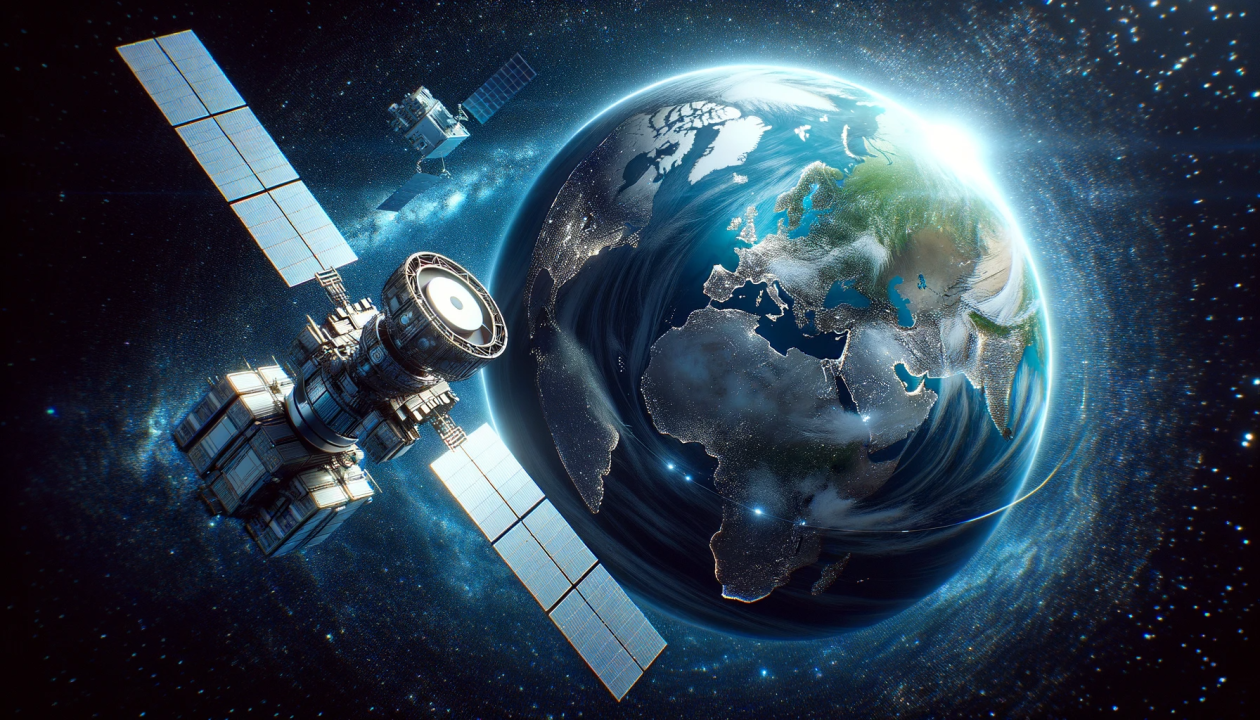
Countries with the most satellites orbiting Earth have been investing in space technology at unprecedented levels, pushing the boundaries of communication, navigation, and surveillance from space. With over 25,000 satellites in orbit, this rapidly evolving landscape highlights the importance of space as a critical frontier for global innovation, security, and connectivity.
The countries leading in satellite deployment have diverse goals, from providing internet access to remote areas to monitoring climate change and enhancing global navigation systems. Below, we explore the top ten countries with the most satellites and delve into what’s fueling this astronomical growth.
The United States: Leading the Satellite Race
The United States leads the pack with an impressive 11,655 satellites as of 2023. This dominance is largely attributed to the robust involvement of private companies like SpaceX, which alone has launched thousands of satellites for its Starlink project, aimed at providing global internet coverage.
NASA, the U.S. military, and private sector collaborations fuel the rapid pace of satellite launches, positioning the U.S. at the forefront of space exploration and technology.
SpaceX’s significant investment in satellite technology symbolizes the broader trend of space commercialization in the U.S. Additionally, with ongoing projects from companies like Amazon’s Project Kuiper and OneWeb, the U.S. is setting the bar high for satellite deployment and utilization.
Read : Chinese Astronauts to Test Bricks Made of Lunar Soil in Space\
These satellites serve various roles, from defense and Earth observation to enhancing global positioning systems (GPS) that benefit industries worldwide.
Russia: A Legacy of Space Ambitions
With 7,187 satellites, Russia remains a major player in the satellite arena. The country’s legacy in space exploration traces back to the Soviet Union’s launch of Sputnik in 1957, marking humanity’s first artificial satellite.
Today, Russia’s satellite fleet serves multiple purposes, including national security, communications, and scientific research. Its state agency, Roscosmos, works closely with defense ministries to maintain satellite networks that support critical infrastructure.
Read : Ranking the World’s Top 10 Strongest Space Agencies
Russia’s focus has also shifted to collaborating with countries that have limited access to space technology, strengthening its influence and partnerships. Recent Russian satellite launches have also targeted advanced radar and imaging capabilities, indicating a renewed interest in Earth observation and climate monitoring.
China: An Expanding Space Power
China’s rise in satellite deployment is one of the most significant developments in the 21st-century space race. With 5,330 satellites in orbit, China stands as a testament to rapid technological advancement and government investment in space.
The China National Space Administration (CNSA) plays a vital role in launching satellites for scientific research, telecommunications, and navigation through its BeiDou satellite navigation system, a rival to GPS.
China’s recent ambitions include establishing a permanent lunar base and contributing to Mars exploration, illustrating its commitment to becoming a dominant force in space. Collaborations with developing nations also underscore China’s strategy of providing space-based services globally, further boosting its satellite count.
India: Rising Space Power in Asia
India’s space program, led by the Indian Space Research Organisation (ISRO), has launched 218 satellites, establishing India as a prominent space-faring nation.
India’s affordable and efficient satellite launch capabilities have positioned it as a leader in cost-effective space solutions. The recent Chandrayaan missions highlight India’s interest in both lunar and interplanetary exploration, making it a strong competitor in the space race.
Top 30 Countries with the Most Satellites Orbiting Earth
| Rank | Country/Organization | Number of Satellites |
|---|---|---|
| 1 | USA | 11,655 |
| 2 | Russia | 7,187 |
| 3 | China | 5,330 |
| 4 | UK | 735 |
| 5 | France | 604 |
| 6 | Japan | 294 |
| 7 | India | 218 |
| 8 | Canada | 105 |
| 9 | ESA | 102 |
| 10 | Germany | 80 |
| 11 | Luxembourg | 68 |
| 12 | Italy | 57 |
| 13 | South Korea | 48 |
| 14 | Australia | 44 |
| 15 | Israel | 40 |
| 16 | New Zealand | 38 |
| 17 | Uruguay | 37 |
| 18 | Spain | 35 |
| 19 | EU | 31 |
| 20 | Brazil | 31 |
| 21 | Finland | 26 |
| 22 | Singapore | 25 |
| 23 | Turkey | 23 |
| 24 | EUMETSAT | 22 |
| 25 | Taiwan | 18 |
| 26 | Switzerland | 18 |
| 27 | Indonesia | 18 |
| 28 | UAE | 17 |
| 29 | Saudi Arabia | 17 |
| 30 | Sweden | 15 |
Satellite Growth and the Future of Space Exploration
The satellite industry is booming, with government agencies and private companies alike contributing to a new era in space exploration and communication. The rapid expansion of satellite constellations, particularly in low Earth orbit (LEO), is reshaping how we connect and gather data on a global scale.
With projects like Starlink and OneWeb, satellites are also offering connectivity in previously underserved regions, bridging the digital divide.
The Challenges Ahead for the Satellite Industry
Despite the benefits of satellite deployment, the exponential growth of satellites in orbit raises concerns about space congestion and debris. Collisions and malfunctioning satellites can create hazardous debris fields, posing a threat to future missions and essential space-based services.
Addressing these challenges will require international cooperation, the development of deorbiting technology, and stringent regulatory measures.
In the race to space, countries continue to push boundaries, achieving remarkable milestones in satellite technology. These advancements not only represent technological prowess but also reflect strategic efforts to establish a competitive advantage in the information age.
As more countries and companies join this celestial frontier, the satellite industry will remain at the heart of global connectivity, security, and exploration.
References:
Hollywood casino tunica ms
References:
https://sub.elfejewelry.com:443/index.php?fabriciusklavsen480641
References:
What are the best steroids to use
References:
https://git.ccmhub.se/princedube0246
References:
Reef casino cairns
References:
https://matkafasi.com/user/mimosagemini0
References:
Anabolic steroid review
References:
https://www.endoheroes.at/Infos-aus-der-Community/index.php/;focus=W4YPRD_com_cm4all_wdn_Flatpress_7743342&path=?x=entry:entry250303-114436%3Bcomments:1