
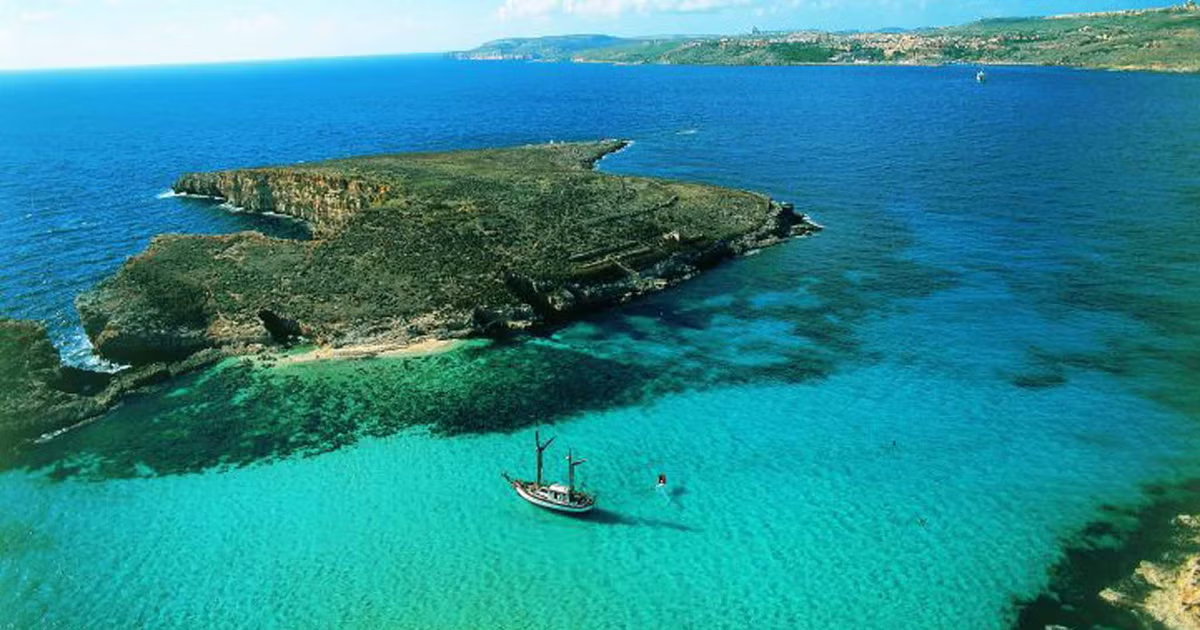
In a heartbreaking incident that has cast a shadow over one of the Mediterranean’s most idyllic destinations, a 43-year-old British tourist tragically lost his life while swimming at Malta’s renowned Blue Lagoon Bay. The accident occurred on Tuesday, September 16, 2025, around 1:30 p.m. local time, when the man, whose identity has not been publicly disclosed, used a slide from a tourist catamaran to enter the turquoise waters off the island of Comino. What began as a moment of carefree fun quickly turned into a desperate struggle, highlighting the unpredictable dangers lurking beneath the surface of this popular beauty spot.
As news of the drowning spreads, it serves as a stark reminder of the risks associated with overcrowded tourist areas and the need for heightened vigilance in paradise-like settings. The Blue Lagoon, nestled between the tiny islands of Comino and Cominotto, is a jewel in Malta’s crown, drawing thousands of visitors each year with its crystal-clear waters and dramatic limestone cliffs. Yet, this serene paradise has increasingly become synonymous with peril, as this incident marks the 13th drowning in Malta this year alone and the third in Comino.
Eyewitness accounts describe a scene of chaos amid the summer crowds: the man slid down the inflatable slide into the lagoon, but moments later, he was seen flailing and submerging. Fellow tourists, reacting swiftly, pulled him from the water and began cardiopulmonary resuscitation (CPR) on the spot. Emergency responders from the Emergency Response and Rescue Corps (ERRC) arrived promptly by boat, providing advanced first aid before rushing him to Mġarr Harbour in Gozo. Despite these valiant efforts, he was pronounced dead later that afternoon in a hospital on the main island.
This tragedy unfolds against a backdrop of escalating concerns about safety at the Blue Lagoon. Local authorities and tourism officials have long grappled with the site’s dual identity as both a magnet for adventure-seekers and a hotspot for accidents. The pleasure boat from which the tourist descended was one of many catamarans offering recreational slides as part of organized tours, a feature designed to enhance the thrill of the experience.
Read : Barcelona is Planning to Ban Tourist Apartment Rentals by 2028
However, in the lagoon’s busy waters—often teeming with swimmers, snorkelers, and speedboats—such activities can amplify risks. Strong undercurrents, sudden depth changes, and exhaustion from navigating crowded conditions have been cited in previous mishaps. Police have launched a full investigation into the incident, focusing on the boat’s safety protocols and whether any lapses contributed to the outcome. While no charges have been announced, the probe underscores the scrutiny now falling on tour operators to ensure their equipment and briefings adequately prepare passengers for the realities of open-water entry.
Read : Two Elderly Women Narrowly Survived After They Almost Drowned in a Hot Tub
As the sun sets on this somber day in Comino, the victim’s family is receiving consular support from the British Foreign Office, which has extended its deepest condolences and pledged full assistance during this difficult time. Statements from Maltese police emphasize that while the exact cause of the drowning—potentially a medical event, current-related fatigue, or simple misjudgment—remains under review, the response from bystanders and rescuers was exemplary. This event not only devastates those close to the deceased but also ripples through the global community of travelers who flock to Malta for its unspoiled charm.
The Allure and Hidden Perils of Blue Lagoon Bay
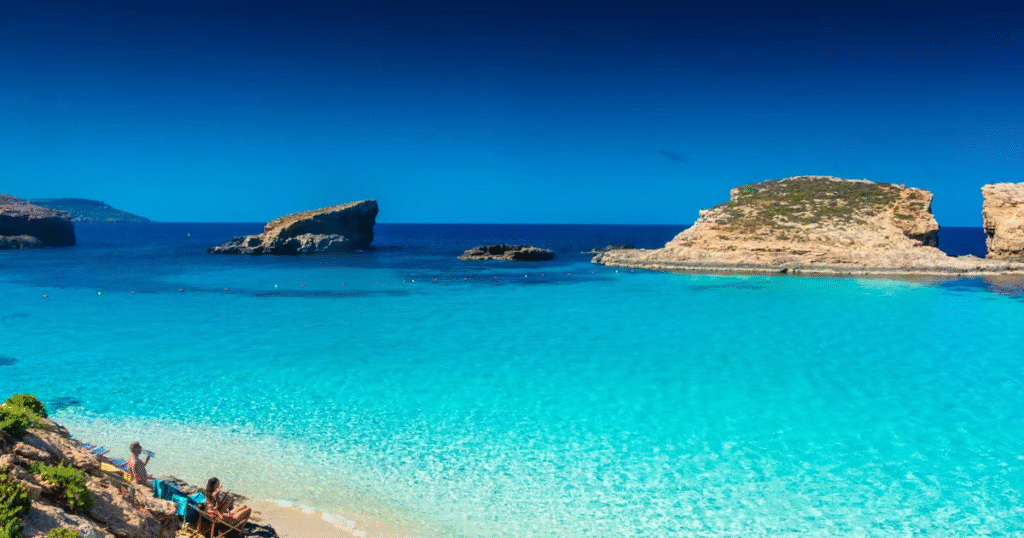
Malta’s Blue Lagoon Bay is nothing short of mesmerizing, a postcard-perfect expanse of azure water framed by rugged cliffs and fringed with white sandy pockets that seem plucked from a dream. Located on the minuscule island of Comino, just a short ferry ride from the mainland, the lagoon spans a sheltered bay where the sea floor drops gently into depths that reveal vibrant marine life teeming with colorful fish and swaying seagrass.
Its name evokes the vivid hue of the water, a result of the interplay between sunlight filtering through the clear Mediterranean and the fine limestone particles suspended in the shallows. For centuries, this spot has captivated sailors and explorers, but in the modern era, it has evolved into a cornerstone of Malta’s tourism industry, welcoming over 4,000 visitors daily during peak season.
The bay’s appeal lies in its versatility: families bob in the calm shallows, adventure enthusiasts leap from rocky outcrops, and snorkelers drift lazily above coral formations. Pleasure boats like the catamaran involved in Tuesday’s tragedy anchor just offshore, transforming the area into a floating playground with slides, trampolines, and paddleboards. These vessels, operated by licensed tour companies, promise an adrenaline-fueled escape from the mainland’s bustle, often complete with onboard bars serving chilled cocktails as the sun dips toward the horizon. Yet, beneath this veneer of leisure lurk insidious hazards that have claimed lives with alarming frequency.
The lagoon’s geography, while beautiful, contributes to its treachery. Narrow channels funnel tidal movements, creating unpredictable currents that can catch even strong swimmers off guard. Depths vary dramatically—from ankle-deep pools to sudden plunges exceeding 20 meters—making orientation difficult for newcomers. Add to this the summer heat, which saps energy and impairs judgment, and the stage is set for disaster. Overcrowding exacerbates every issue: boats jostle for space, swimmers collide in the melee, and lifeguards, though present from May to October, are stretched thin across the expansive area.
Historical data paints a grim picture; drownings here are not anomalies but patterns, often involving tourists unaccustomed to the sea’s moods. Just last month, a 35-year-old Italian man met a similar fate at the same site, succumbing after struggling in the water during a swim. In April, a 71-year-old local fisherman vanished off Comino’s coast, his body recovered hours later. And in July, a Spanish tourist suffered grievous injuries from a boat propeller strike while boarding a vessel nearby, an accident that left her fighting for life.
These incidents reveal a troubling trend: foreign visitors, lured by the lagoon’s Instagram-worthy allure, underestimate the blend of natural forces and human congestion. Pleasure boat slides, while exhilarating, introduce variables like entry velocity and disorientation upon submersion. A slide’s momentum can propel users into deeper, current-swept zones, where resurfacing proves challenging. Experts note that alcohol consumption—a common feature on these tours—further dulls reflexes, turning a splashy descent into a silent peril.
As Malta’s tourism surges post-pandemic, with visitor numbers rebounding to pre-2020 levels, the pressure on sites like Blue Lagoon intensifies. Local environmentalists argue that unchecked commercialization erodes not just the ecosystem—threatening posidonia seagrass meadows vital for marine biodiversity—but also visitor safety. The bay’s official guidelines stress swimming only in designated zones marked by buoys, yet enforcement remains inconsistent amid the daily influx.
Broader Safety Concerns and Recent Incidents in Malta
This latest tragedy amplifies longstanding safety alarms across Malta’s coastal hotspots, where the island nation’s compact size belies the volume of water-based activities it hosts. With over 300 kilometers of coastline and a tourism sector employing one in four workers, Malta draws 2.8 million visitors annually, many converging on the sea for respite from the scorching summers. Drownings, sadly, form a persistent thread in this narrative: 13 lives lost to the waters in 2025 so far, surpassing last year’s tally and prompting calls for systemic reform. Comino, despite its diminutive footprint of just 2.5 square kilometers, accounts for three of these fatalities, underscoring how concentrated tourism can breed vulnerability.
Beyond the Blue Lagoon, patterns emerge in the data. Many victims are middle-aged males, like the British tourist, engaging in recreational pursuits without full awareness of local conditions. Strong winds, known locally as the “Gregale,” whip up choppy seas unexpectedly, while undertows pull swimmers seaward. Medical factors—heart conditions exacerbated by exertion or dehydration—often interplay with environmental risks. The Spanish propeller incident in July exemplifies mechanical dangers: as boats ferry hordes to and fro, propeller zones become deathtraps for those in the water. Similarly, the Italian drowning in August involved a solo swimmer venturing beyond marked areas, only to be overwhelmed by fatigue.
Maltese authorities have responded with incremental measures. Lifeguard stations operate seasonally, equipped with defibrillators and rescue drones, but staffing shortages persist. Public awareness campaigns urge hydration, buddy systems, and avoidance of alcohol before swimming, yet compliance varies among international crowds. Tour operators face mandates for safety briefings and life vest provisions, though audits reveal gaps in adherence. The Foreign Office’s travel advice for Malta now includes explicit warnings about currents and overcrowding, advising against unsupervised water sports. Nonetheless, critics contend that reactive policies fall short; a 2024 audit by the Malta Tourism Authority flagged inadequate signage and buoy maintenance at high-risk sites.
Comino’s woes mirror broader Mediterranean challenges, from Greece’s Ionian isles to Croatia’s Adriatic gems, where overtourism strains infrastructure. In Malta, the economic boon—tourism contributes 12% to GDP—clashes with sustainability goals. Overloaded ferries risk collisions, and anchor damage scars seabeds, indirectly heightening hazards by altering water flows. Stakeholders, including hoteliers and dive operators, advocate for tech solutions like AI-monitored buoys that alert to distress signals. Yet, implementation lags, leaving lives in the balance.
Rehabilitation Efforts and a Call for Cautious Tourism
In the wake of this drowning, renewed focus falls on the “Blue Lagoon Rehabilitation: Balancing Nature and Experience” initiative, unveiled earlier this month by Deputy Prime Minister and Tourism Minister Ian Borg. This ambitious project, spearheaded by the Malta Tourism Authority in collaboration with architect Jonathan Mizzi’s studio, aims to harmonize visitor thrills with ecological and safety imperatives. Central to the plan is expanding the designated swimming area by 5,600 square meters, creating buffer zones to separate bathers from boat traffic. Kiosks cluttering the shoreline will be dismantled, replaced by a 200-meter elevated walkway that preserves beachfront while offering panoramic views.
Docking protocols will relocate pleasure boats farther offshore, minimizing propeller risks and slide-related submersion hazards. Capacity caps at 4,000 daily visitors, promised in February, will be enforced via timed ticketing, easing congestion that amplifies currents’ impact. Environmental restorations include seagrass replanting and waste management upgrades to curb plastic pollution, which endangers marine life and swimmers alike. Borg emphasized the dual ethos: “We cherish the Blue Lagoon as Malta’s gem, but it must endure for generations without claiming more souls.”
For tourists, these changes herald a safer, more immersive visit—perhaps guided eco-tours or app-based current alerts. Yet, execution demands vigilance; past pledges have faltered under commercial pressures. As investigations into Tuesday’s incident proceed, operators may face tightened slide regulations, like mandatory flotation aids or depth checks.
This tragedy implores a collective pause: paradise exacts a price when treaded lightly. To the British man’s loved ones, our hearts ache; to fellow travelers, heed the whispers of the sea. Malta’s waters beckon with beauty, but respect their power. Swim wisely, stay alert, and let joy prevail over peril. In remembering one life cut short, may we safeguard many more.
So với mấy trang clone thì u888 trang chính chủ vẫn là lựa chọn số 1 của mình. Mình đã bị lừa mất 1 triệu ở trang giả rồi nên giờ chỉ tin tưởng trang chính!