
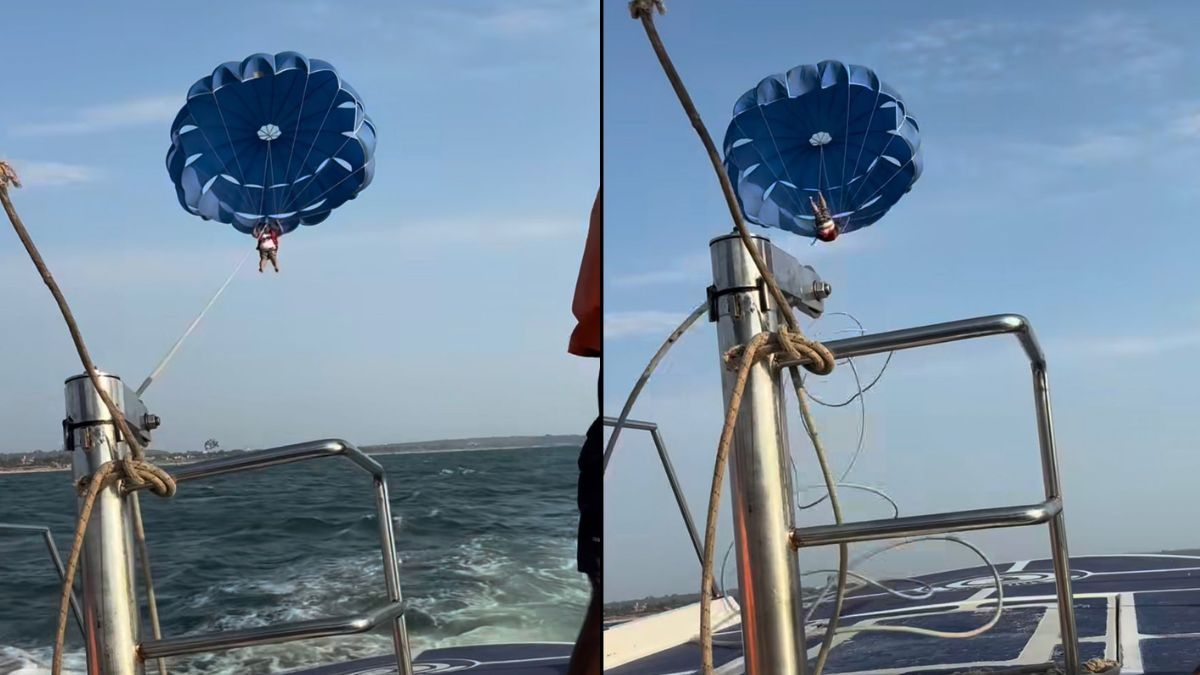
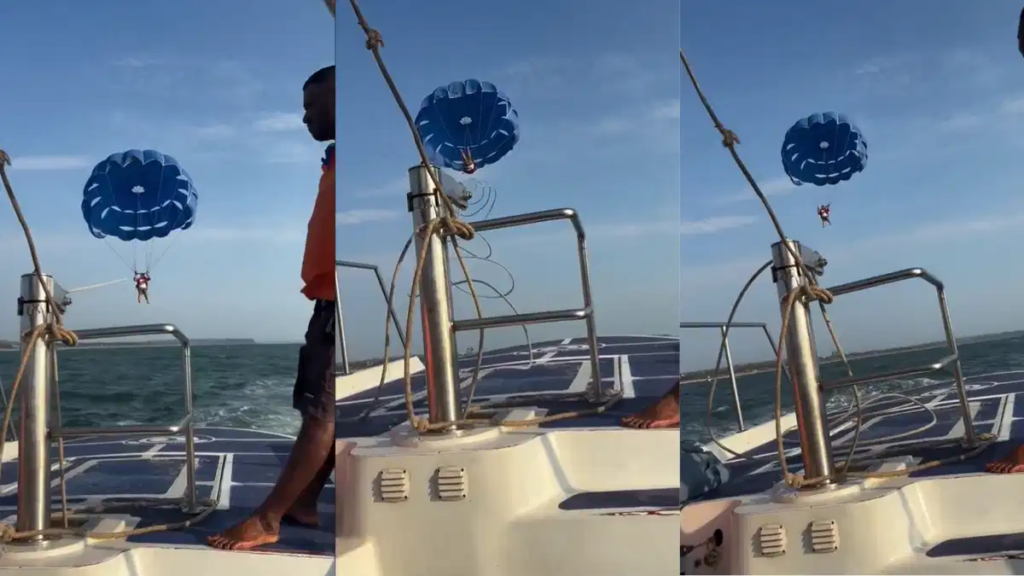
A parasailing mishap at one of Goa’s most popular tourist destinations has once again highlighted the risks associated with adventure sports in India. The incident unfolded at Baga Beach when a tourist, whose identity has not been disclosed, plunged into the sea after the cable connecting his parachute to the towing vessel suddenly snapped mid-air.
The accident occurred on Monday and could have ended in tragedy, but swift action by the crew ensured the man was rescued without sustaining serious injuries. While the immediate outcome was not fatal, the incident has triggered renewed scrutiny of safety practices in the country’s growing adventure tourism sector, where lapses in training, equipment maintenance, and regulatory oversight have been a recurring concern.
A Close Call at One of Goa’s Busiest Beaches
Baga Beach, known for its vibrant atmosphere and water sports offerings, attracts thousands of tourists each year seeking thrill and leisure along the Arabian Sea coastline. Parasailing, in particular, remains a major draw, offering participants a panoramic aerial view of the coastline while being tethered to a speedboat. However, the same activity that promises excitement can quickly turn dangerous when safety mechanisms fail.
In this case, the tourist was airborne during a routine parasailing session when the cable attached to the parachute abruptly snapped. Such cables are designed to withstand significant tension and are a critical component of the activity’s safety system. Their failure mid-flight leaves little room for controlled descent, making the situation potentially life-threatening. Eyewitness accounts suggest that the man fell directly into the sea, prompting immediate action from the boat crew who rushed to retrieve him.
Fortunately, the individual was pulled out of the water quickly and did not suffer any serious injuries. The presence of trained crew members and the relatively calm sea conditions at the time played a crucial role in preventing a more severe outcome. However, the incident has raised pressing questions about the condition of the equipment used and whether proper safety checks were conducted prior to the ride.
Baga Beach, Goa – A terrifying incident occurred during a parasailing ride at Baga Beach when the tow cable suddenly snapped while a tourist was mid-air, causing him to crash into the sea from a significant height. pic.twitter.com/2nLJKO1dW3
— NextMinute News (@nextminutenews7) March 31, 2026
Local authorities have since launched an investigation into the circumstances surrounding the accident. Officials are reportedly examining whether the equipment was properly maintained, whether the operators followed standard safety procedures, and if there were any lapses in oversight. The findings of this inquiry are expected to determine whether negligence played a role and what corrective measures may be required.
Recurring Safety Concerns in Adventure Tourism
The Goa incident is not an isolated case but rather part of a broader pattern of accidents linked to adventure tourism activities across India. Over the past few years, several similar incidents have brought attention to the vulnerabilities in the sector. These events have collectively raised concerns about the adequacy of safety protocols and the enforcement of regulations designed to protect participants.
Read : Canadian Tourist Dies While Climbing Tiger Cave Temple’s 1,260 Steps
In October of the previous year, a trainee participating in a government-run paragliding event in Uttarakhand lost control while attempting to land near Tehri Lake. Although the individual survived after falling into the water and being rescued, the incident underscored the challenges faced by beginners and the importance of proper supervision and training. Earlier, a 25-year-old visitor from Ahmedabad lost his life in Himachal Pradesh after his paraglider failed to gain sufficient lift during take-off. The crash resulted in injuries to both the tourist and the pilot, with the former later succumbing to his injuries.
Another tragic accident occurred in Goa itself when a 27-year-old woman and her instructor died during a paragliding session. Reports indicated that they crashed into a ravine shortly after launching from a cliff at the Keri plateau. Such incidents, involving both tourists and trained professionals, highlight systemic issues that go beyond isolated human error. They point toward gaps in equipment maintenance, pilot training, weather assessment, and adherence to safety protocols.
These repeated accidents have led to growing calls for stricter regulation and better enforcement mechanisms. While guidelines for adventure sports do exist, their implementation often varies across states and operators. In many cases, small-scale operators may lack the resources or incentives to maintain high safety standards, leading to inconsistent practices across the industry.
The rapid growth of adventure tourism in India has outpaced the development of a robust regulatory framework. As more tourists seek adrenaline-fueled experiences, the demand for services like parasailing, paragliding, and other high-risk activities has surged. However, without standardized training programs, regular equipment inspections, and clear accountability measures, the sector remains vulnerable to accidents that could otherwise be prevented.
Calls for Stricter Regulations and Tourist Awareness
In the wake of the Baga Beach incident, experts and officials are once again emphasizing the need for comprehensive reforms in the adventure tourism sector. One of the key recommendations is the establishment of uniform national guidelines that clearly define safety standards for all operators. Such guidelines would include mandatory equipment checks, certification requirements for operators, and regular audits to ensure compliance.
Read : Russian Tourist Accused of Inappropriately Touching Women Choked Out by Locals in Bali
Training is another critical area that requires attention. Operators and instructors must undergo rigorous training to handle emergency situations effectively. This includes not only technical skills but also decision-making under pressure, risk assessment, and communication with participants. Proper training can significantly reduce the likelihood of accidents and improve response times when incidents do occur.
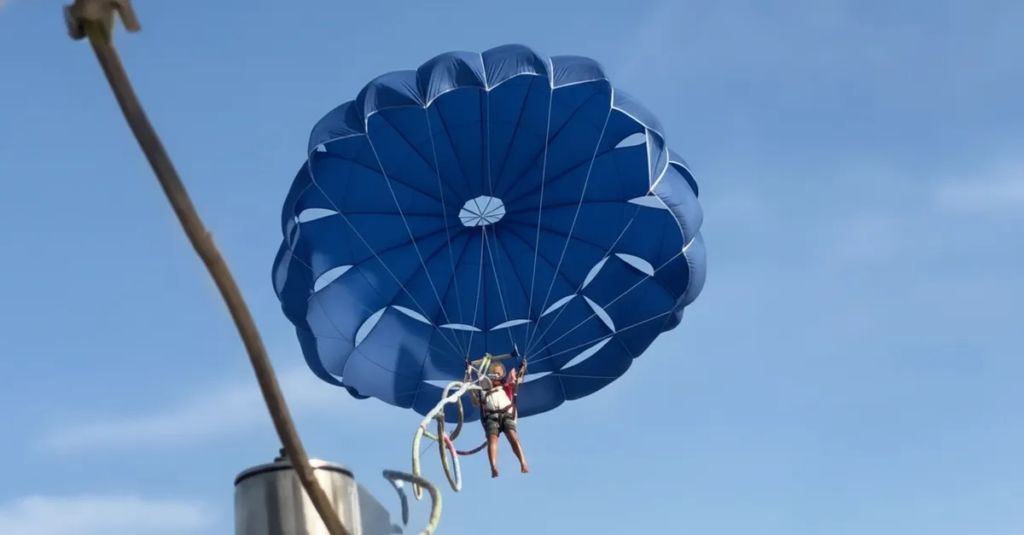
Equipment maintenance is equally important. Parasailing cables, harnesses, and parachutes must be inspected regularly for wear and tear. Any compromised equipment should be replaced immediately to prevent failures during operation. Authorities may consider implementing a certification system that verifies the condition of equipment before it is used in commercial activities.
Enforcement mechanisms also need to be strengthened. This includes imposing stricter penalties for operators who violate safety norms and ensuring that inspections are carried out consistently. Without effective enforcement, even the best regulations may fail to achieve their intended outcomes. Tourists themselves have a role to play in ensuring their safety. Before participating in any adventure sport, individuals are advised to verify the credentials of the service provider.
This includes checking whether the operator is licensed, whether the equipment appears to be in good condition, and whether safety instructions are clearly explained. Tourists should also be cautious of unusually low prices, which may indicate compromised safety standards. Public awareness campaigns can further help educate tourists about the risks involved and the precautions they should take. By making informed choices, participants can reduce their exposure to unsafe practices and contribute to a culture of accountability within the industry.
The incident at Baga Beach serves as a reminder that while adventure tourism offers excitement and unique experiences, it also carries inherent risks that must be managed responsibly. The fact that the tourist escaped without serious injury is a fortunate outcome, but it should not overshadow the underlying issues that led to the accident. Addressing these challenges requires coordinated efforts from authorities, operators, and tourists alike, ensuring that safety remains a priority as the industry continues to grow.