
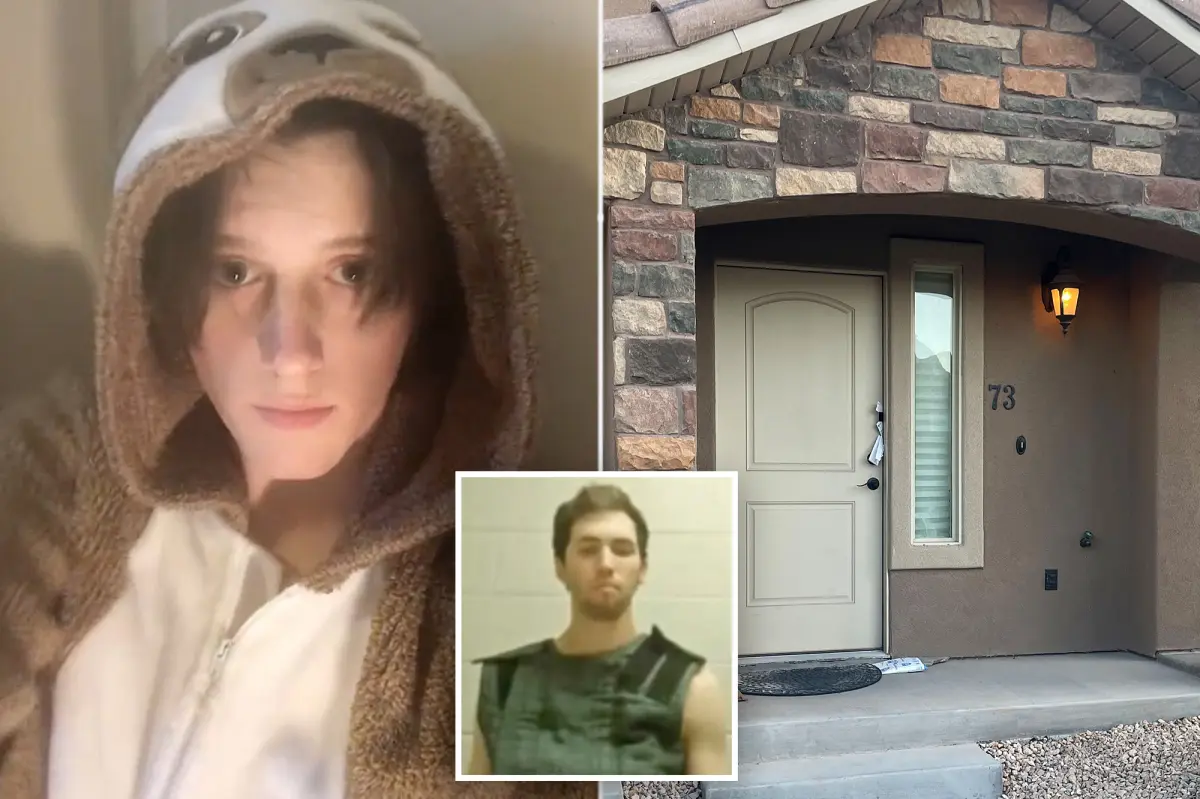
In a story that continues to unfold amid national shockwaves, new details have emerged about Lance Twiggs, the transgender partner of Tyler Robinson, the 22-year-old accused of assassinating conservative activist Charlie Kirk. Twiggs, who has been cooperating with federal investigators since the September 10, 2025, shooting at Utah Valley University, was reportedly expelled from his family home years earlier due to escalating conflicts rooted in his gender identity, behavioral issues, and family values.
This revelation, drawn from family statements and investigative sources, paints a picture of a young man navigating personal turmoil in a conservative Mormon household, long before becoming entangled in one of the most high-profile criminal cases of the year. The killing of Kirk, the 31-year-old founder of Turning Point USA, has gripped the nation, with prosecutors charging Robinson with aggravated murder and seeking the death penalty.
As the case progresses, Twiggs’ backstory has come into sharper focus, highlighting the personal struggles that may have shaped his life and relationship with Robinson. Reports indicate that Twiggs, a transitioning individual identifying as female, faced rejection from his family in St. George, Utah, a region steeped in Latter-day Saints traditions. This expulsion not only marked a turning point in his adolescence but also underscores broader tensions around LGBTQ+ acceptance in conservative communities.
Lance Twiggs’ Early Struggles and Family Rejection
Lance Twiggs’ path to independence was fraught with hardship, beginning in his teenage years in a devout Mormon family in southwestern Utah. At around age 18, Twiggs was forced to leave his parents’ home following a series of confrontations that family members describe as stemming from his “problematic” behavior, including substance abuse, excessive video gaming, and challenges related to his emerging gender identity. A relative, speaking anonymously to investigators and media outlets, recounted how Twiggs’ father viewed him as disrespectful and disruptive, ultimately deciding that expulsion was necessary for the household’s stability.
“He thought he wasn’t being respectful and was problematic, so they kicked him out,” the relative explained, emphasizing that these issues compounded over time. Twiggs, then a high school senior, briefly stayed with his grandparents before securing a spot in a shared townhome with college-aged roommates in St. George. This arrangement allowed him to graduate and maintain a part-time job, demonstrating resilience amid adversity. However, the rift with his family ran deep; his parents, adhering to traditional Mormon doctrines that have historically viewed transgender identities with skepticism, saw his transition as a profound betrayal of familial and religious norms.
Twiggs’ brother, Braylon, offered a more affectionate perspective in interviews, recalling fond memories despite the estrangement. “I loved Lance,” Braylon said, noting that after the initial fallout, Twiggs had lived with the family temporarily before the final break. Yet, even Braylon admitted the challenges, including clashes over faith that mirrored broader generational divides in Utah’s religious communities.
Read : Employee Fired Over ‘Racist’s Fav Drink’ Message on Ohio Woman’s Starbucks Cup Honoring Charlie Kirk
Twiggs’ social media posts from that era, now under scrutiny by the FBI, reveal a young person grappling with isolation—darkly humorous quips about mental health ads for conditions like schizophrenia and borderline personality disorder hint at the emotional toll of his circumstances. By 2022, Twiggs had publicly expressed support for progressive figures like Joe Biden, a stark contrast to his upbringing.
Trans boyfriend of Charlie Kirk suspect Tyler Robinson was kicked out of family’s home over Mormon faith https://t.co/uTgjn5mm3L pic.twitter.com/G9PuTLWnT2
— New York Post (@nypost) September 25, 2025
This political awakening, coupled with his gender transition, solidified his status as the “black sheep” of the family, as one relative put it. The expulsion left lasting scars; Twiggs reportedly maintained minimal contact with his parents, forging his own path in a townhome that would later become a focal point of the Kirk investigation. These early rejections, sources say, fostered a sense of alienation that may have influenced his later relationships and worldview, though investigators stress that Twiggs himself bears no blame in the shooting.
The Relationship with Tyler Robinson and Post-Shooting Turmoil
Twiggs’ life took another turn when he began a romantic relationship with Tyler Robinson, a fellow 22-year-old from a similarly conservative Mormon background in Washington, Utah. The two shared a modest $1,800-per-month three-bedroom townhome in St. George, a quiet subdivision where neighbors described them as reclusive but unassuming. Witnesses, including a next-door resident, recalled seeing the couple holding hands and kissing in the weeks leading up to the tragedy, confirming what authorities have described as a committed partnership.
Robinson, a former Utah Valley University student with a high-achieving academic record, moved in last year, filling the void left by Twiggs’ previous roommates. Their bond, however, was thrust into the spotlight on September 10, when Robinson allegedly fired a .30-06-caliber Mauser bolt-action rifle at Kirk from about 200 yards away during a campus speaking event titled “American Comeback.”
The shots, inscribed with provocative messages like “Hey fascist, catch,” struck Kirk in the neck shortly after an audience question about transgender mass shooters—a detail that has fueled speculation about motive. In the chaotic aftermath, Robinson texted Twiggs a frantic confession: “I had enough of his hatred,” referencing Kirk’s vocal opposition to transgender ideology. He also left a handwritten note under Twiggs’ keyboard, admitting he seized the “opportunity to take Kirk out” and hoped to keep the secret until old age.
Twiggs, “aghast” at the revelation, immediately cooperated with law enforcement. He shared Discord messages and electronic communications that proved pivotal, including details about Robinson stashing the weapon in bushes near the university, wrapped in a towel. “That’s what happened? Oh my God, no,” Twiggs reportedly told investigators, handing over evidence that helped secure Robinson’s arrest after a 33-hour manhunt.
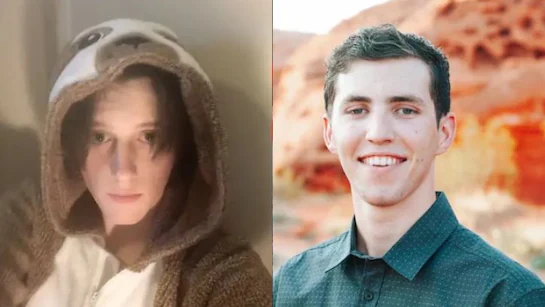
FBI officials have praised Twiggs’ assistance, noting he had “no idea” of the plot and is not facing charges. Utah Governor Spencer Cox confirmed the romantic nature of their relationship, describing Twiggs as a “boyfriend who is transitioning from male to female” and emphasizing his full cooperation. In the days following Robinson’s surrender—prompted by a confrontation with his own father and a youth minister—Twiggs faced intense scrutiny.
Online sleuths dissected their shared social media, uncovering gaming profiles and Reddit threads where Twiggs discussed transitioning, including a post about being called “possessed by a demon” and kicked out of the house. These digital footprints, while not directly linked to the crime, illustrate the couple’s immersion in online subcultures that may have amplified Robinson’s radicalization. Friends told authorities Robinson had delved into “deep, dark internet” spaces like Reddit, where leftist ideologies clashed with his conservative roots.
Broader Implications and Ongoing Investigation
The saga of Lance Twiggs and Tyler Robinson extends far beyond their personal story, touching on America’s deepening cultural divides over gender, politics, and violence. Kirk’s death, prosecutors argue, was a targeted political assassination, with Robinson facing seven charges including witness tampering and committing a violent offense in the presence of a child. The seek for the death penalty underscores the case’s gravity, as Utah weighs capital punishment in a high-stakes trial expected to draw national attention.
Twiggs’ family rejection mirrors a troubling pattern in conservative enclaves, where transgender youth face disproportionate rates of homelessness and mental health crises. Advocacy groups, though not directly involved, have cited statistics showing that LGBTQ+ individuals in religious households are four times more likely to experience expulsion. In Twiggs’ case, the blend of gender identity struggles with substance issues and gaming addiction created a perfect storm, one that relatives now reflect on with a mix of sorrow and hindsight.
As of September 26, Twiggs remains in an undisclosed “safe space” far from St. George, relocated by authorities amid death threats from online extremists. Washington County Sheriff Nate Brooksby confirmed Twiggs needs to “lay low for a long time,” as mail piles up at the empty townhome and police cruisers patrol the neighborhood. The FBI continues to probe digital evidence, including cloud storage from Robinson’s devices, to uncover the full extent of his radicalization—from a “very normal young man” in a conservative family to an alleged assassin.
This case serves as a stark reminder of how personal pain can intersect with public rhetoric. While Robinson’s motives—possibly tied to Kirk’s anti-transgender stance—remain under investigation, Twiggs emerges as a reluctant figure in the narrative, a survivor of familial exile now navigating the fallout of his partner’s alleged crime.
As the trial looms, questions linger: How did these two young men, products of Utah’s insular world, drift into such darkness? And what does their story reveal about the fractures in modern America? For now, the answers rest in court documents and quiet testimonies, but the echoes of rejection—of home, identity, and belonging—resonate long after the headlines fade.