

A startling legal and social milestone unfolded in Florida on March 19, 2025, when 20-year-old transgender college student Marcy Rheintgen became the first known person in the United States to be arrested for violating a transgender bathroom law.
This case, which civil rights attorneys believe is the first of its kind, has garnered national attention and stirred intense debate about the reach, enforcement, and consequences of such laws.
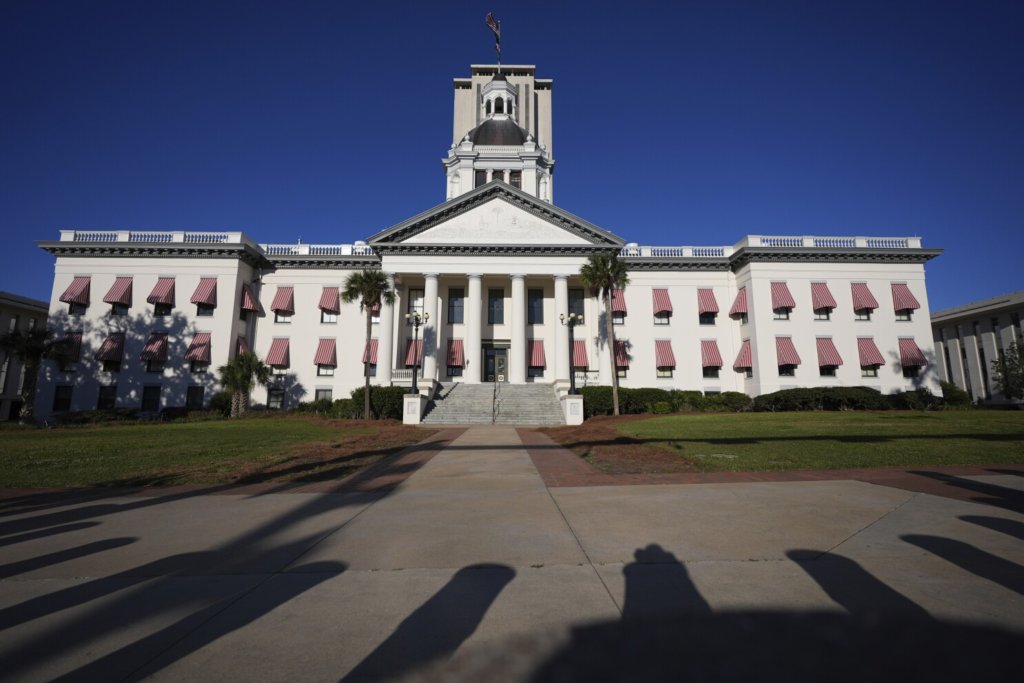
Marcy Rheintgen, who is originally from Illinois, walked into the Florida State Capitol in Tallahassee that day with a clear purpose—to challenge what she saw as an unjust law. Her arrest has since sparked wider conversations about civil disobedience, human dignity, and the ongoing wave of anti-trans legislation across the country.
A Personal Protest Turned Legal Landmark
Marcy Rheintgen’s arrest wasn’t a spontaneous act. It was a deliberate, planned demonstration of civil disobedience rooted in frustration and a desire to expose the impact of Florida’s restrictive bathroom law.
While visiting her grandparents in Florida, Marcy Rheintgen decided to directly confront the statute by entering the women’s restroom at the State Capitol, despite warnings from law enforcement officers stationed there in anticipation of her actions. Before walking in, she declared, “I am here to break the law.” She then proceeded to enter the restroom to wash her hands and pray the rosary.
The act, while peaceful and brief, resulted in her being escorted out in handcuffs by Capitol police. She now faces a misdemeanor trespassing charge, which could carry a sentence of up to 60 days in jail.
What makes this case significant isn’t just the charge, but the unprecedented nature of the arrest. According to attorneys from the American Civil Liberties Union (ACLU), Rheintgen’s case is the first arrest under such a criminal statute concerning transgender bathroom usage in the United States.
Read : Transgender Man Brutally Tortured and Murdered at Patty’s Lodge Motel in Canandaigua
The decision to act was deeply personal for Marcy Rheintgen. She sent a letter to all 160 Florida state legislators ahead of the incident, informing them of her intentions and appealing to their conscience.
Read : The Rainbow Connection: How the Rainbow Became a Symbol of the LGBTQ+ Community
“I know that you know in your heart that this law is wrong and unjust,” she wrote. “I know that you know that transgender people are human too, and that you can’t arrest us away.” Her letter reflected both vulnerability and resolve—a plea for humanity cloaked in an act of defiance.
The Legal and Political Landscape of Bathroom Bans
In recent years, the legal landscape surrounding transgender rights—particularly in relation to public restroom usage—has become increasingly hostile. At least 14 U.S. states have passed laws that bar transgender individuals from using restrooms that align with their gender identity in public schools and government buildings.
Florida and Utah, however, stand out as the only states to explicitly criminalize this act. This adds a severe legal dimension to what is already a deeply personal issue for many transgender individuals.
What makes the enforcement of these laws particularly controversial is the vagueness and variability across different states. Laws in places like Alabama, Kansas, Kentucky, and North Dakota do not include clear enforcement mechanisms.

In most cases, enforcement depends on public complaints or individual reports, creating a murky system that often relies on suspicion, profiling, or confrontation. Utah’s recent law even led to a tip line set up by state officials—only for activists to overwhelm it with thousands of hoax reports as a form of protest.
In Florida, where the law is more explicit and now actively enforced, the arrest of Marcy Rheintgen raises troubling questions about how such policies will affect transgender people’s ability to move freely and safely in public spaces. Republican lawmakers like Rep. Rachel Plakon and Sen.
Erin Grall, who sponsored Florida’s bathroom law, have argued that the measure is intended to protect women and girls in single-sex spaces. However, critics argue that this logic promotes fear rather than safety, and fails to account for the lived realities of transgender individuals who have been using public restrooms aligned with their gender for decades without incident.
For LGBTQ+ advocates, the law’s impact is not hypothetical—it is real and immediate. Nadine Smith, executive director of Equality Florida, called Marcy Rheintgen’s arrest a clear act of cruelty.
“Transgender people have been using restrooms aligned with their gender for generations without incident,” she said. “What’s changed is not their presence—it’s a wave of laws designed to intimidate them out of public life.”
The Human Cost: Fear, Isolation, and the Fight for Dignity
Behind every policy is a person, and Marcy Rheintgen’s story offers a window into the emotional and psychological toll these laws can inflict. Her decision to protest was fueled by anger, but also fear—fear of a society turning increasingly hostile toward her identity. “I did it because I was upset,” she said. “I can’t have any expectations for what’s going to happen because this has never been prosecuted before. I’m horrified and scared.”
That fear extends beyond the courtroom. If convicted, Rheintgen could face imprisonment—potentially in a men’s facility—be forced to cut her hair, and temporarily lose access to her gender-affirming hormone therapy.
These are not minor inconveniences; they are deeply personal, destabilizing consequences that could severely impact her mental and physical health. Her case is also raising concerns about the broader implications of criminalizing transgender existence in public spaces.
These laws, critics argue, don’t just bar people from bathrooms—they reinforce a message that trans lives are less valuable, that their presence is unwanted, and that their bodies are open to scrutiny, judgment, and punishment. It fosters a culture where anyone who doesn’t conform to traditional gender norms can be challenged, harassed, or even arrested.
This environment of surveillance and control is one that many civil rights advocates compare to historical patterns of discrimination against marginalized communities.
It reflects a dangerous precedent where legal mechanisms are used not to protect, but to exclude and punish. For transgender youth and adults alike, these laws can lead to increased isolation, heightened risk of violence, and a decline in mental well-being.
Marcy Rheintgen’s case has become a rallying point not only for transgender rights activists but also for a broader movement defending civil liberties. Her act of civil disobedience echoes earlier struggles in American history—where individuals, often at great personal risk, broke unjust laws to shine a light on systemic injustice.
Whether her case becomes a turning point in the legal battle over transgender bathroom rights remains to be seen, but it has already illuminated the human stakes of these policies.
As her court date in May approaches, supporters across the country are watching closely. Some see her as a pioneer, others as a scapegoat. But few can deny that her actions have brought an urgent issue into sharp relief.
In a time when laws are increasingly targeting transgender people, Marcy Rheintgen’s story is a stark reminder of the cost of conscience—and the power of standing up, even when the consequences are steep.
For now, Marcy Rheintgen waits, hoping that her arrest will serve as a catalyst for change rather than a warning. She did not set out to become a symbol, but in challenging a law she viewed as unjust, she has forced a national conversation on the ethics, legality, and humanity of legislating identity.