

The dramatic, last-minute commutation of Tremane Wood’s death sentence in Oklahoma has drawn national attention, not only for its timing but also for the complex legal and moral questions it raises. Wood, who was convicted in the 2002 felony murder of 19-year-old Ronnie Wipf, had spent more than two decades on death row and came within minutes of execution before Governor Kevin Stitt intervened. The governor’s decision, made shortly after the U.S. Supreme Court declined to halt the execution, aligned with the Oklahoma Pardon and Parole Board’s rare recommendation for clemency.
The episode left Wood’s family, supporters, and legal team simultaneously relieved and emotionally drained, while also sparking renewed discussion about the death penalty, clemency standards, and the trauma associated with eleventh-hour decisions. With its combination of last-minute action, contested evidence, and the lingering impact of a decades-old crime, the case of Tremane Wood continues to resonate far beyond Oklahoma’s state penitentiary walls.
Clemency Granted Moments Before Execution
The timeline leading to Tremane Wood’s commutation was extraordinarily compressed. On the day of the scheduled execution, Wood’s attorneys made a final attempt to delay the lethal injection through an emergency appeal to the U.S. Supreme Court. When the high court declined to intervene, preparations for the execution proceeded at the Oklahoma State Penitentiary in McAlester.
Witnesses, including Wood’s son, were already waiting on the premises for what appeared to be the final moments of the 46-year-old inmate’s life. It was within this narrow window that Governor Stitt announced his decision to commute Wood’s sentence to life imprisonment without parole. Although the governor has served nearly seven years in office, this was only the second time he had granted clemency to a death row prisoner.
His statement emphasized both parity and punishment: he noted that Wood’s brother, Zjaiton “Jake” Wood—who died by suicide in prison in 2019 after admitting in court to being the one who stabbed Wipf—had also received a life-without-parole sentence, and that the commutation ensured a severe penalty while removing the possibility of release.
Read : FSSAI Recommended Cotton Ball Method to Check the Presence of Chemicals in Watermelons
The Pardon and Parole Board had issued an uncommon recommendation for clemency the previous week, citing concerns raised by Wood’s attorneys about the original trial, including allegations that key details involving a witness plea agreement were not properly disclosed. The board’s decision did not diminish the severity of the crime but indicated that, in their view, the death penalty was not an appropriate sentence given the totality of the evidence. Governor Stitt’s acceptance of this recommendation marked the culmination of years of appeals, advocacy, and legal challenges.
Conflicting Narratives and Legal Complexities
The case against Tremane Wood has long been shaped by competing narratives regarding his role in the 2002 robbery that resulted in the death of Ronnie Wipf, a migrant farm worker from Montana. Wood’s legal team has consistently maintained that although he participated in the robbery, he was not the one who inflicted the fatal stab wounds. This claim gained additional weight after Jake Wood confessed in court to stabbing Wipf, a confession made years into his own incarceration prior to his death in 2019.
Despite this, prosecutors argued that Tremane Wood was fully responsible under Oklahoma’s felony murder rule, which permits a murder conviction if a death occurs during the commission of certain felonies, regardless of intent. They also stressed his conduct while imprisoned, describing him as a violent and manipulative figure who continued engaging in organized gang activity and illicit schemes.
Reports submitted by the state attorney general’s office alleged that Wood had used contraband cellphones to conduct drug transactions and had even ordered an attack on another inmate. In contrast, Wood used his clemency hearing to express remorse, accept responsibility for his involvement in the robbery, and reject any portrayal of himself as inherently violent. He insisted once again that he was not the person who killed Wipf.
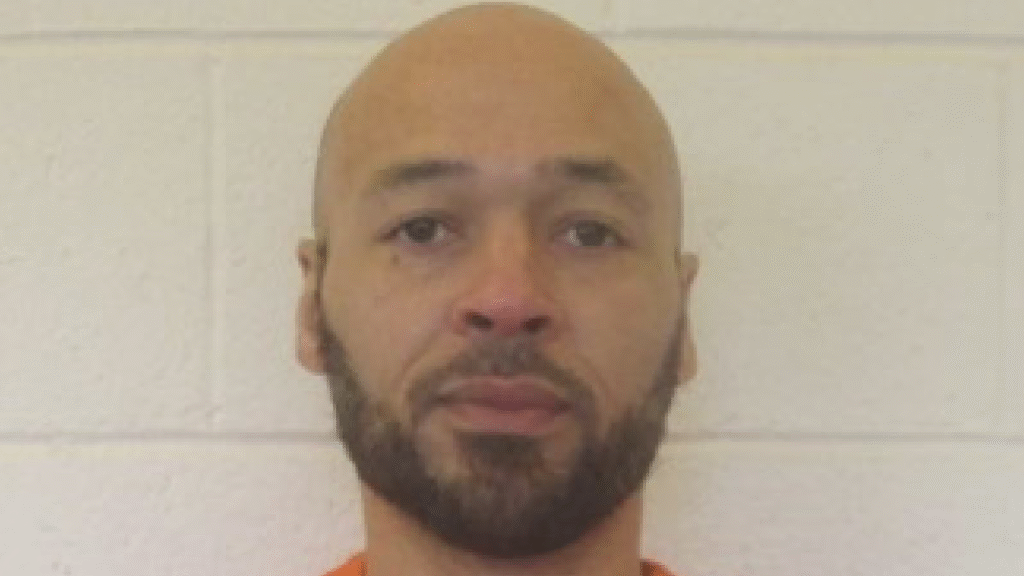
“I’m not a monster. I’m not a killer,” he said during his video testimony. “I never was, and I never have been.” His attorneys reiterated concerns about undisclosed plea deals affecting witness credibility during the trial, and they argued that the decades Wood had spent in incarceration, coupled with his brother’s confession, warranted reconsideration of the death penalty.
The tension between these perspectives has fueled ongoing debate in Oklahoma’s legal and political circles. Supporters of the commutation argue that mitigating evidence and trial irregularities justified sparing Wood’s life, while critics contend that his record in prison and the gravity of the crime still supported execution. In granting clemency, Governor Stitt positioned his decision as an act of both caution and consistency, ensuring equal punishment between the two brothers involved in the crime.
Emotional Toll on Family and Advocates
The clemency decision, though ultimately sparing a life, brought significant emotional strain to Wood’s family members and advocates, many of whom had lived with the uncertainty of the case’s outcome for years. For Wood’s son, Brendon Wood, the hours leading up to the governor’s announcement were excruciating. Having arrived at the penitentiary prepared to witness his father’s execution, he described feeling immense relief and gratitude once the commutation was confirmed.
“I feel lighter,” he said afterward. “I feel like a thousand pounds has been lifted off my shoulders.” Yet he also condemned the timing of the decision, calling it “mental torture” for both the condemned prisoner and the family. Brendon Wood suggested that legislative changes may be necessary to prevent such last-minute outcomes, arguing that no individual should be forced to face their final hours without knowing whether clemency might still be granted.
The psychological distress created by this uncertainty, he said, was unnecessary and inhumane. His comments echoed broader concerns raised by human rights advocates who argue that the death penalty process in the United States often inflicts prolonged trauma on multiple groups—family members of victims, family members of the condemned, legal teams, and corrections staff.
Community organizer Jasmine Brown-Jutras, who worked closely with the Wood family, also described profound fear and emotional exhaustion leading up to the decision. She expressed gratitude toward Governor Stitt while acknowledging the lingering trauma experienced by everyone involved. For Brown-Jutras and others, the situation reinforced the harsh realities of death penalty cases, in which long campaigns for clemency can culminate in hours of acute anxiety as the execution time approaches.
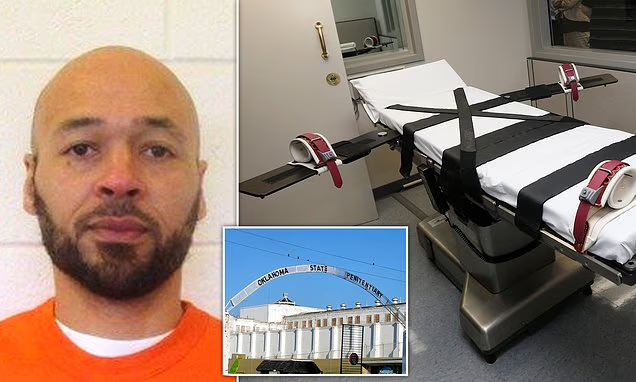
Meanwhile, Wipf’s family has endured more than two decades of pain stemming from the murder. Though their reactions were not included in the available reporting, cases of this nature often generate conflicting emotions among victims’ families, who may feel both the weight of their loss and the complexities introduced by clemency decisions. The felony murder doctrine, plea agreements, and varying accounts of responsibility can contribute to prolonged uncertainty about justice and closure.
Across the United States, the death penalty remains a deeply divisive issue. According to the Death Penalty Information Center, 41 people have been executed this year, with at least 17 more scheduled for execution in the coming months. Cases like Wood’s—resolved at the final hour—intensify public scrutiny of clemency processes, legal safeguards, and the psychological dimensions of capital punishment. They also highlight the uneven application of the death penalty across states and even within individual jurisdictions, as governors and boards wield significant discretion in granting or denying clemency.
In Oklahoma, the case has brought renewed attention to the state’s capital punishment system, which has faced controversy in recent years over botched executions and procedural challenges. While Governor Stitt’s commutation of Tremane Wood’s sentence offers a rare example of intervention, it does not signal a broader shift in policy. Instead, it underscores how exceptional circumstances, such as concerns about evidence, inmate conduct, or co-defendant admissions, can influence decisions even in states that actively carry out death sentences.
The story of Tremane Wood’s narrowly avoided execution encapsulates the intersection of legal nuance, gubernatorial discretion, and human vulnerability. It illustrates the weighty consequences of decisions made in courtrooms, prisons, and governor’s offices, and the profound emotional impact these decisions have on individuals and families. Although Wood will now spend the remainder of his life in prison, his case leaves lasting questions about consistency, fairness, and humanity within the death penalty system.