
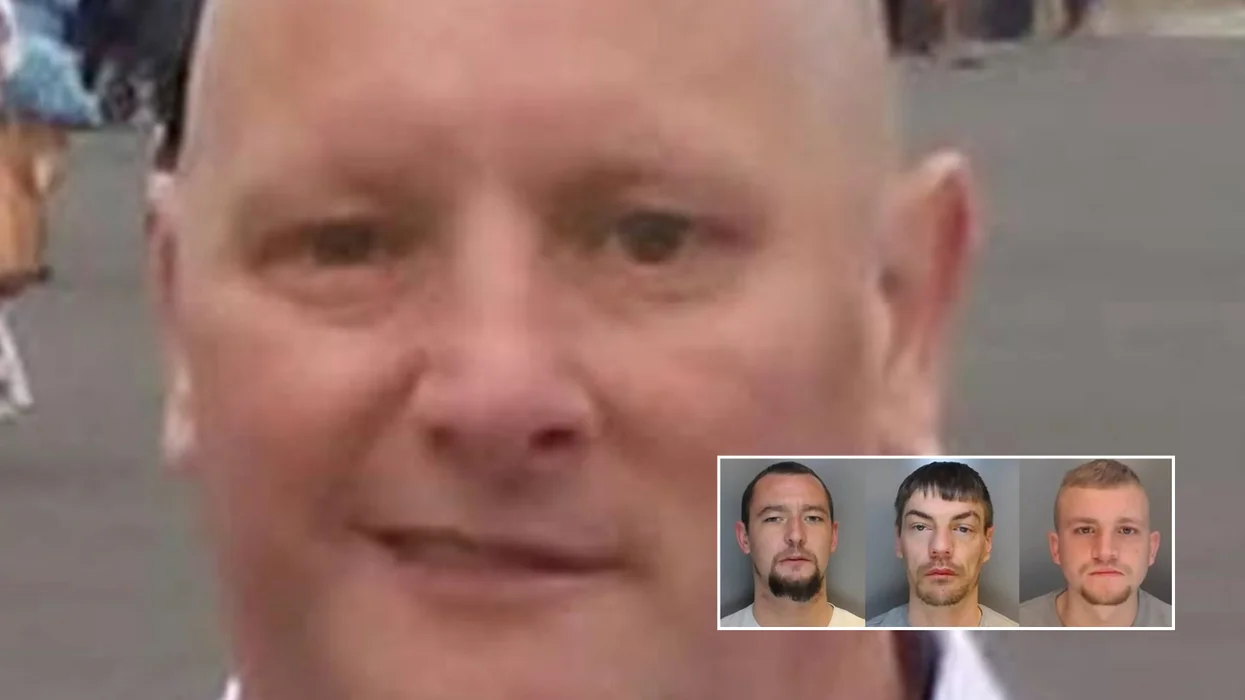
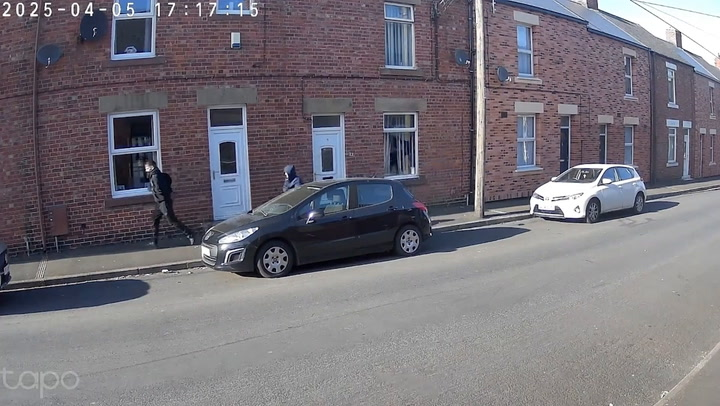
The fatal shooting of 60-year-old Barry Dawson in Stanley, County Durham, stands as one of the most disturbing acts of violence to unfold in an otherwise quiet residential community. On the afternoon of April 5, children were playing on Elm Street when a single gunshot tore through the calm, striking Dawson in his own living room and ending his life within moments. The attack, captured in chilling detail on a nearby doorbell camera, shocked the nation and left a tight-knit neighbourhood reeling.
In October, after a harrowing trial at Teesside Crown Court, three men were found guilty of Dawson’s murder. They have now been sentenced to life imprisonment, marking the conclusion of a case that exposed the brutal consequences of a misguided vendetta and a criminal code that ultimately destroyed several lives. Barry Dawson, a grandfather known affectionately as “Buck”, had lived on Elm Street for more than two decades. Well liked and respected among neighbours, he had no connection to the altercation that set this tragedy in motion.
His death was the result of an entirely avoidable act of vengeance—one that placed innocent lives in danger and shattered a family that continues to grieve an irreplaceable loss. As details of the attack and subsequent investigation were laid out in court, the magnitude of the crime became even more apparent, revealing the violent escalation that followed a confrontation earlier that day. The sentences handed down reflect both the gravity of the offence and the judge’s assessment that those responsible posed a continuing danger unless they ultimately rejected the destructive code by which they lived.
The Lead-Up to the Killing and the Deadly Attack
The events that culminated in Barry Dawson’s death began with what police described as a suspected drug-related dispute outside the home of 30-year-old Sean Reay. Earlier on the day of the shooting, Reay claimed he had been involved in an altercation in which he was threatened, including with claims that his house might be burned down. Though the precise origins of the conflict were not fully resolved during the trial, the judge noted that Reay’s belief that he had been wronged became the driving force for a reckless plan rooted in retaliation.
Reay and his associates, 38-year-old Kelvin Lawson and 22-year-old Thomas Sterling, assumed that the individual they sought was inside Barry Dawson’s home. With no evidence to support this assumption, the trio decided to escalate the situation. Lawson reportedly smashed the downstairs window of Dawson’s terraced house in an effort to lure out the person they believed had crossed Reay earlier that day. The shattering glass brought Barry Dawson downstairs from where he had been resting. At that moment, Reay seized the opportunity to fire a single shot through the window, striking Dawson directly in the chest.
The bullet tore through Barry Dawson’s heart, lung, and liver. He died almost instantly. The entire attack, including the immediate aftermath, was captured on a doorbell camera in the street. The footage recorded the sound of the gunshot followed by a heart-wrenching cry from Dawson’s son, Shane, who ran to his father yelling, “They shot my dad.”
Read : Jakob Walpole Jailed for Manslaughter of His 81-Year-Old Grandfather John Brown
For residents who had been going about their normal Saturday afternoon routines, the violence seemed surreal—something they associated with distant crime dramas rather than the quiet estate they called home.
Prosecutors argued throughout the trial that Reay acted as the ringleader, with Lawson and Sterling fulfilling critical supporting roles. Mr Justice Cotter, who presided over the sentencing, described the trio’s behaviour that day as a deliberate “show of strength.” He told the court that all three men subscribed to a criminal “code” that saw police as adversaries and violence as a means of resolving grievances. It was this mindset, he said, that fuelled their decision to bring a loaded firearm into a residential street teeming with families and children.
Court Proceedings, Sentencing, and the Judge’s Scathing Remarks
The trial at Teesside Crown Court concluded in October with unanimous verdicts. The gravity of the crime—taking place in broad daylight in a family area—was central to the prosecution’s case, as was the fact that Barry Dawson was entirely uninvolved with the earlier dispute. In delivering the sentences, Mr Justice Cotter emphasised the extraordinary nature of the crime, telling the defendants: “This was an extraordinary crime in an ordinary residential street. It was the sort of thing most people only see in television or films, and then not in this country.”
Sean Reay received the harshest sentence. As the gunman, he was jailed for life with a minimum term of 32 years before he can be considered for parole. Lawson, who facilitated the shot by smashing the window, was sentenced to life imprisonment with a minimum of 28 years. Sterling, though younger, was also deeply involved in the intimidation and violence that preceded the shooting. He received a minimum term of 26 years.
The judge reserved some of his strongest criticism for the mentality that he said underpinned the trio’s actions. He remarked that the three men “lived by a code which saw the police as the enemy” and told them they could reflect on “where your code has got you during your decades in prison.” He added that unless they abandoned this mindset, they would remain dangerous and unfit for reintegration into society.

In addition to the three convicted of murder, two other men—Kevin Dorward, 38, and his cousin Keith Dorward, 48—were prosecuted for their role in attempting to cover up the crime. Reay had recruited Kevin Dorward to drive the group to the scene, while Keith Dorward accompanied them. Both men were cleared of murder but admitted perverting the course of justice after trying to burn the getaway car in an attempt to destroy evidence. They received sentences of 20 months and 16 months respectively. Kevin Dorward’s partner, Michaela Hetherington, was also sentenced to 15 months after admitting she had lied to police by claiming the vehicle had been stolen. Having already served 246 days in remand, she was released immediately.
Throughout the sentencing hearing, the courtroom heard powerful victim impact statements, particularly from Barry Dawson’s partner, Sarah Hopwood. She described the devastating loss of a man who was an “adored father and grandfather,” and told the court that her family’s hearts had been “broken” by the needless killing. The judge acknowledged the immense suffering endured by Dawson’s loved ones, noting that his death was the result of actions that were not only criminal but utterly senseless.
Community Impact, Police Response, and the Lasting Legacy of the Case
The shooting sent shockwaves through Stanley and the wider County Durham community. Elm Street, where Barry Dawson had lived for two decades, was a place where residents felt secure enough to let children play outside. Many were outside at the time of the shooting, adding to the scale of potential tragedy. The randomness and brutality of the attack deeply unsettled local families, many of whom struggled to comprehend how such extreme violence could erupt so suddenly in their neighbourhood.
Read : Mary Cooper Returned a Book to Ocean County Library Borrowed by Her Grandfather 99 Years Ago
Detective Chief Inspector Neil Fuller, who led Operation Hamnett—the extensive investigation into the murder—praised the community for their assistance and expressed hope that the sentences would send an unequivocal message to those who believe they can bring weapons and violence into residential areas. “There is no place for guns on our streets,” he said, reiterating the police force’s zero-tolerance stance on firearms. He emphasised that Barry Dawson’s death was a direct consequence of the “despicable actions” of the three convicted killers, and that justice had now been secured for the family.
The case also raised broader concerns about access to firearms, the escalation of retaliatory violence, and the dangers posed by individuals entrenched in criminal networks or codes of behaviour. While Stanley is not known as a hotspot for gun crime, the case underscored how disputes linked to criminal activity—particularly those involving drugs—can quickly spiral beyond control. The court heard that the three men acted with little regard for who might be harmed, and that the presence of children and families did nothing to deter their actions.
For Barry Dawson’s family, the sentences mark a significant milestone but do not erase the grief of losing a husband, father, and grandfather. They continue to mourn a man described as gentle, caring, and central to the lives of those around him. His partner spoke of a loss from which the family will “never recover,” a sentiment that resonates deeply with many who knew him.
Barry Dawson’s death also serves as a stark reminder of the fragility of safety in communities where criminal retaliation spills into public spaces. His murder, though the result of targeted anger, claimed the life of a man who had no involvement in the dispute and no awareness of the danger that approached his home that afternoon. The tragedy has prompted conversations about the need for continued vigilance, community support, and strong police responses to early signs of escalating tensions.
As the three men begin their lengthy prison terms, the lasting impact of their actions remains most deeply felt in the home on Elm Street where a family now lives with an irreplaceable void. The ordinary street that witnessed an extraordinary crime continues to rebuild, holding close the memory of a neighbour whose life was senselessly taken.
Gamebet, huh? Never heard of it, but I’m always open to new platforms. Might give it a shot. Anyone else playing there? Learn more here: gamebet.
**mitolyn**
Mitolyn is a carefully developed, plant-based formula created to help support metabolic efficiency and encourage healthy, lasting weight management.