
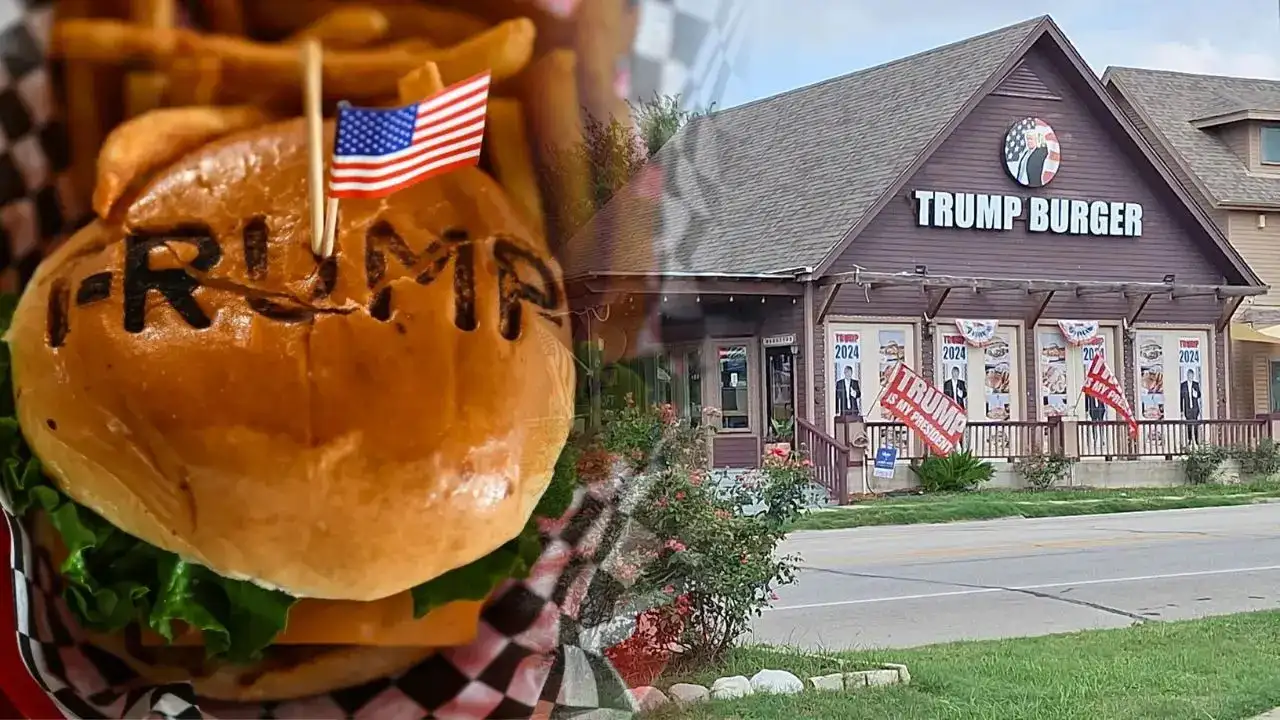
The American Dream often comes with its share of turbulence, and for Roland Beainy, a Lebanese immigrant and co-owner of the Trump Burger chain in Texas, that turbulence has escalated into legal and immigration battles that threaten not only his business interests but his future in the United States.
What began as a venture rooted in political branding and a promise of entrepreneurial success has now spiraled into a complex dispute involving allegations of a fraudulent marriage, ownership conflicts, and the looming possibility of deportation.
Beainy, who arrived in the United States in 2019 from Lebanon, has recently come under scrutiny from U.S. immigration authorities. At the same time, he is also entangled in a heated legal fight with his business partner over the ownership of the Trump-themed burger joint that has made headlines in Texas. As the legal clouds gather over both his immigration status and business dealings, the future looks uncertain for this controversial entrepreneur.
Immigration Trouble: The Green Card Crisis
According to a report by The Fayette County Record, Roland Beainy and his wife are currently facing serious immigration challenges that may lead to the revocation of their green cards. The issue began when the U.S. Citizenship and Immigration Services (USCIS) questioned the validity of Beainy’s marriage—an essential factor in the approval of a Form I-130, which is used to establish a family relationship that serves as the basis for lawful permanent residency.
A letter sent by USCIS on January 10, 2025, to Beainy’s wife revealed the agency’s skepticism regarding the legitimacy of their union. “No lease documents or other evidence show that you and Roland Beainy ever actually lived together during your marriage,” the letter reportedly stated. This raises the possibility that the marriage may be viewed as fraudulent, which would not only invalidate the I-130 petition but could also lead to deportation proceedings.
Read : In-N-Out Burger Sues YouTuber Bryan Arnett Over Lewd Remarks to Customers in a Prank Video
Beainy now faces an immigration hearing scheduled for November 18, 2025, in Houston, Texas. While deportation is not yet certain, the situation puts him at significant risk. If USCIS concludes that his marriage was fraudulent, both he and his wife could lose their legal residency status and be forced to leave the country.
Read : Man Orders McDonald’s Burger With “Everything Removed,” Gets Empty Box With $19.81 Bill
In immigration law, marriage fraud is taken extremely seriously. The U.S. government often uses stringent benchmarks to determine whether a marriage is legitimate. Among those are cohabitation records, shared financial responsibilities, and testimonies from acquaintances. If a couple cannot prove that their marriage is genuine, the consequences are often irreversible.
The Battle Over Trump Burger: A Legal Dispute Erupts
While facing immigration uncertainty, Beainy is also embroiled in a civil lawsuit with his business partner, Eddie Hawa, over ownership of the Trump Burger franchise. The burger joint, themed after former President Donald Trump, first opened its doors in Flatonia, Texas, on November 5, 2020—coincidentally, the day of the U.S. presidential election. It soon gained attention for its overt political branding and patriotic menu items.
Beainy has claimed in court filings that he paid Hawa $65,000 in 2019 for a 50% stake in the business. According to him, the agreement made him an equal partner in Trump Burger. However, this claim is being challenged by Hawa, who insists that no such deal ever took place. He has filed a counterclaim denying Beainy’s ownership stake and is seeking $1 million in damages.

This lawsuit, which began in April 2025, has exposed a bitter rift between the two former allies. Beainy filed the suit in Fayette County on April 19, hoping the court would validate his claim of joint ownership. However, Hawa’s counterclaim casts doubt on the legitimacy of Beainy’s position within the company, threatening not just his investment but also his professional credibility.
The legal documents exchanged between the parties reportedly include conflicting narratives regarding verbal agreements, bank transfers, and the day-to-day management of the restaurant chain. With no signed contract to back up Beainy’s claim, the case rests on circumstantial evidence and the credibility of each party’s testimony. The outcome could significantly affect the ownership structure of Trump Burger and the future of the brand.
A Political Brand, A Personal Crisis
Trump Burger was always more than just a fast-food joint. With its red, white, and blue décor, menu items named after conservative ideals, and unabashed support for Donald Trump, the restaurant chain was as much a political statement as a business venture. In a deeply divided America, the branding helped the restaurant stand out—but also drew its fair share of controversy.
For Beainy, the branding seemed to align with his vision of the American Dream: freedom, entrepreneurship, and prosperity. However, the current challenges threaten to turn that dream into a nightmare. His immigration crisis and legal battles not only endanger his personal residency but could also tarnish the public image of the Trump Burger brand, especially if customers perceive instability or scandal.
Moreover, the restaurant’s overt political messaging may not be helpful in the legal arena. Though there’s no suggestion that Beainy’s legal troubles are politically motivated, the association with a polarizing figure like Trump could influence public perception, even in conservative-leaning regions like rural Texas.

Adding to the complication is the impact of these legal issues on the restaurant’s employees and operations. If the courts rule against Beainy, and if his green card is revoked, it could have operational consequences. Ownership changes, restructuring, and a loss of investor confidence could all disrupt the business at a time when small restaurant chains across America are struggling to stay afloat post-pandemic.
The Trump Burger saga also offers a cautionary tale about mixing personal relationships with business without proper legal safeguards. Beainy’s failure to secure a written contract for his alleged investment in the franchise is now a major obstacle in court. Likewise, the immigration issues point to the necessity of having strong, documented proof in marriage-based residency applications.
As for the public, the story of Beainy’s rise and potential fall is both intriguing and sobering. It highlights the high stakes of the U.S. immigration system and the complexities of small business ownership, particularly for immigrants trying to establish themselves in a new country. The controversy is also likely to fuel political conversations around immigration reform, border policy, and the treatment of legal immigrants caught in bureaucratic limbo.
At present, Roland Beainy remains in Texas, awaiting his court hearing in November and monitoring the progress of his business lawsuit. Until then, the fate of his American journey hangs in the balance, shaped by a web of legal uncertainties that even the strongest branding and patriotic theming may not be able to overcome.
As the courts deliberate on Beainy’s legal battles and as immigration authorities scrutinize his residency claims, the Trump Burger co-owner faces perhaps the biggest challenge of his life—one that could determine not just his place in America, but the survival of the business he helped create.