
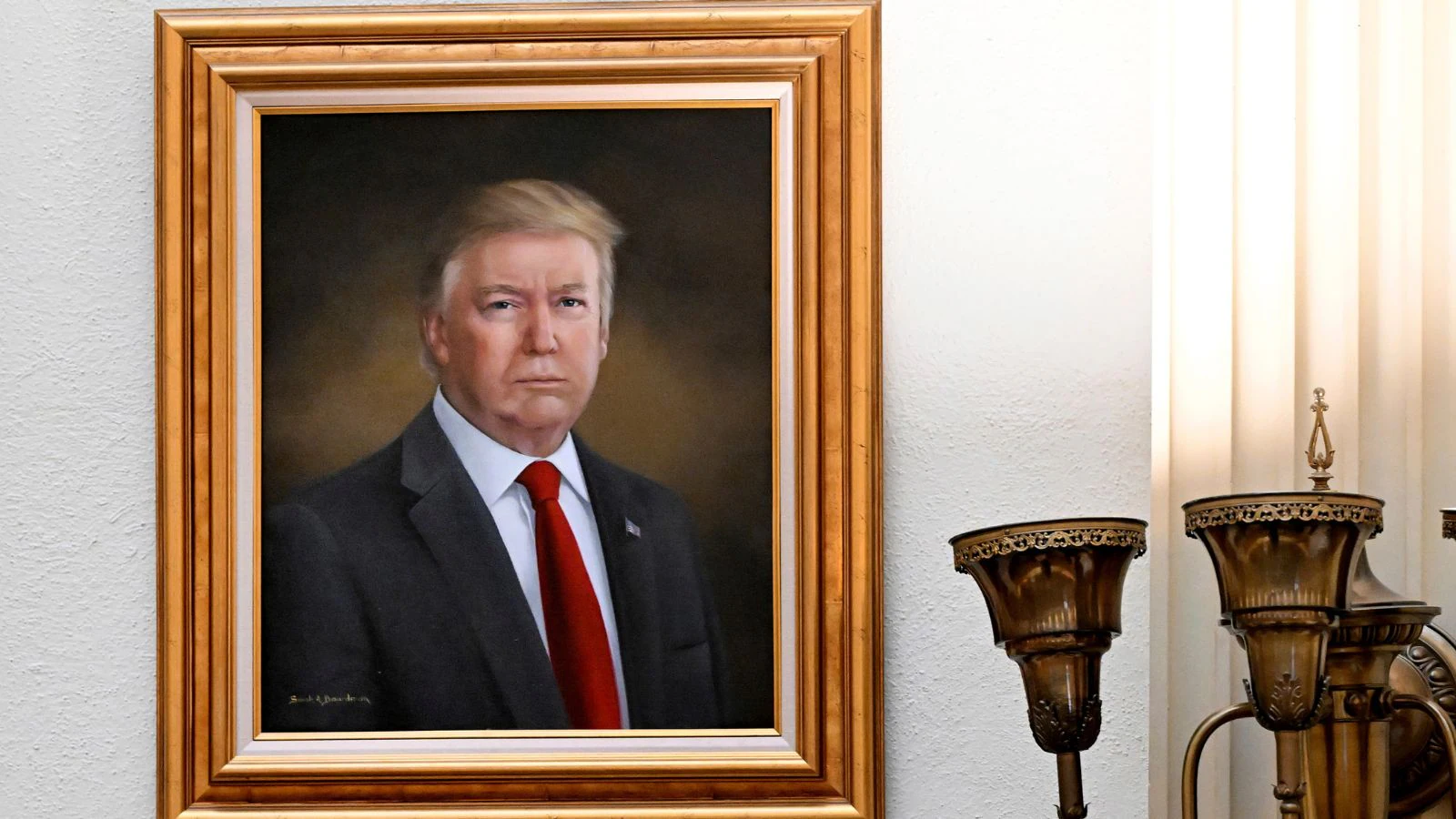
Donald Trump’s tenure as president was defined by controversy, and even after his presidency, he continues to attract attention for his reactions to public criticism. One such instance recently unfolded in Colorado, where Trump publicly criticized his own portrait hanging in the state capitol, calling it “truly the worst.”
His vocal complaints led to the portrait’s removal, sparking debates across political lines about the significance of presidential portraits and the pettiness of public figures engaging in disputes over them.
The Origins of Trump’s Portrait and Reaction
Trump’s portrait in question was commissioned by a Trump admirer and funded by a Republican former state senator through a crowdfunding campaign. It was unveiled in 2019, two years after Trump took office.
Despite its origins as a tribute from his supporters, Trump took to his social media platform, Truth Social, to lambast the painting, describing it as a poorly executed depiction of himself. He did not hold back in his criticism, even going so far as to blame Colorado’s Democratic governor, Jared Polis, for its existence, despite Polis having no role in its commission or selection.
Trump’s reaction to the portrait was widely ridiculed. Liberal commentators, media figures, and even some Republicans dismissed his outrage as an example of his thin-skinned nature.
Sam Stein of MSNBC humorously pointed out that Trump was so bothered by the portrait that he felt compelled to post about it multiple times. Other critics labeled him “fragile” and an “insecure baby” for his disproportionate response to a painting.
The situation escalated when Trump, clearly dissatisfied with the artwork, posted alternative images of himself that he deemed more flattering. His insistence that the painting was “purposefully distorted” only fueled the mockery from his opponents, who saw his complaints as another example of his obsession with image and self-promotion.
Read : Will Stay in the US Presidential Race, I’m the Best Person to Defeat Trump: Biden
The uproar surrounding the portrait revealed how even something as seemingly trivial as a painting could become a flashpoint for political division.
Republican Efforts to Replace the Portrait
Following Trump’s complaints, Republican leaders in the Colorado legislature took swift action to have the portrait removed. Senate Minority Leader Paul Lundeen led the effort, arguing that the painting did not accurately reflect Trump’s current likeness and should be replaced with a more suitable image.
The decision to remove the portrait was met with mixed reactions, as some questioned whether it was worth the political effort to address Trump’s grievances over an artistic representation. Democrats in Colorado were quick to point out the irony of Republicans catering to Trump’s demands while ignoring more pressing political matters.
Jarrett Freedman, a spokesperson for the Colorado House Democrats, noted that if Republicans wanted to spend their time and resources on selecting a different portrait for Trump, that was their prerogative. However, he made it clear that other legislative priorities should take precedence over appeasing the former president’s aesthetic concerns.
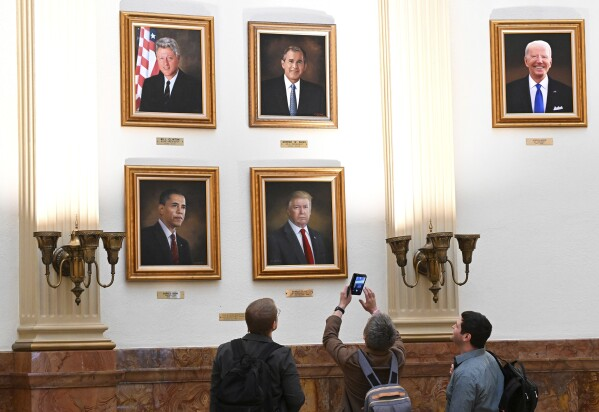
Despite the backlash, Trump’s comments drew increased public interest in the portrait. Visitors to the Colorado state capitol flocked to see the painting before it was taken down, with many posing for photos in front of it.
Some Trump supporters, like 18-year-old Kaylee Williamson from Arkansas, found the portrait acceptable, saying it resembled him well enough. Others, such as Aaron Howe from Wyoming, noted that the depiction made Trump look “a little chubby” but did not see it as a deliberate slight.
The Broader Implications of Trump’s Outburst
Trump’s reaction to the portrait highlights a recurring pattern in his public persona—his intense sensitivity to criticism and his tendency to make even minor issues a national spectacle. His social media outburst over a painting underscores how much he values personal image and perception, often at the expense of more substantive political matters.
While presidential portraits are a traditional way of honoring leaders, they are rarely the subject of such dramatic controversy. The situation also sheds light on the broader divisions within the Republican Party.
Some conservatives remain staunchly loyal to Trump, willing to go to great lengths to accommodate his wishes, even when they involve something as trivial as a portrait. Others view these incidents as distractions from more significant policy discussions and worry about the long-term implications of catering to Trump’s every demand.
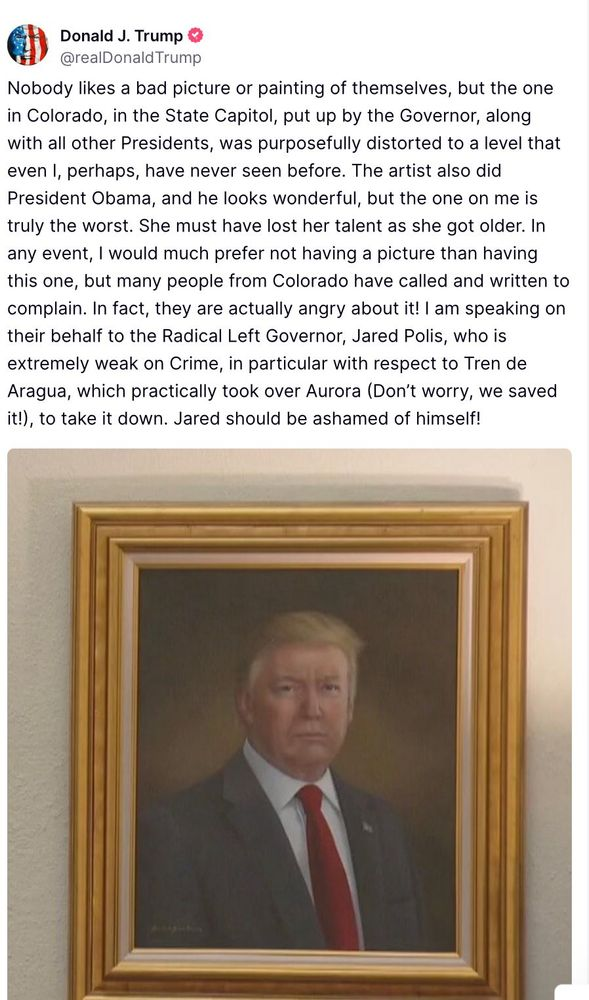
For Democrats and anti-Trump Republicans, the episode served as further confirmation of Trump’s narcissism and inability to handle criticism. The contrast between Trump’s complaints and his praise for Barack Obama’s portrait in the same capitol building only added to the perception that he was obsessed with how he was depicted.
His claim that Obama “looks wonderful” in his portrait while his own was “the worst” illustrated how deeply personal he took the issue. Beyond the immediate controversy, the removal of Trump’s portrait raises questions about how presidential legacies are preserved and interpreted.
While past presidents have had their likenesses displayed in state capitols across the country, few have reacted as personally as Trump did to their portrayal. The incident highlights the growing politicization of historical and artistic representations, reflecting the deep ideological divides in modern American politics.
Ultimately, the removal of Trump’s portrait from the Colorado state capitol may not have lasting political consequences, but it serves as a revealing snapshot of his character and the current state of American political discourse.
As Trump continues to dominate headlines with his reactions to perceived slights, his critics will likely use these moments to reinforce their portrayal of him as overly sensitive and focused on trivial matters.
The uproar over the portrait may eventually fade from the public consciousness, but it will remain another entry in the long list of controversies that have defined Trump’s political career.
Whether the new portrait selected by Republican legislators will meet Trump’s approval remains to be seen, but one thing is certain—his preoccupation with image and reputation will continue to shape how he engages with the public, his supporters, and his detractors.