
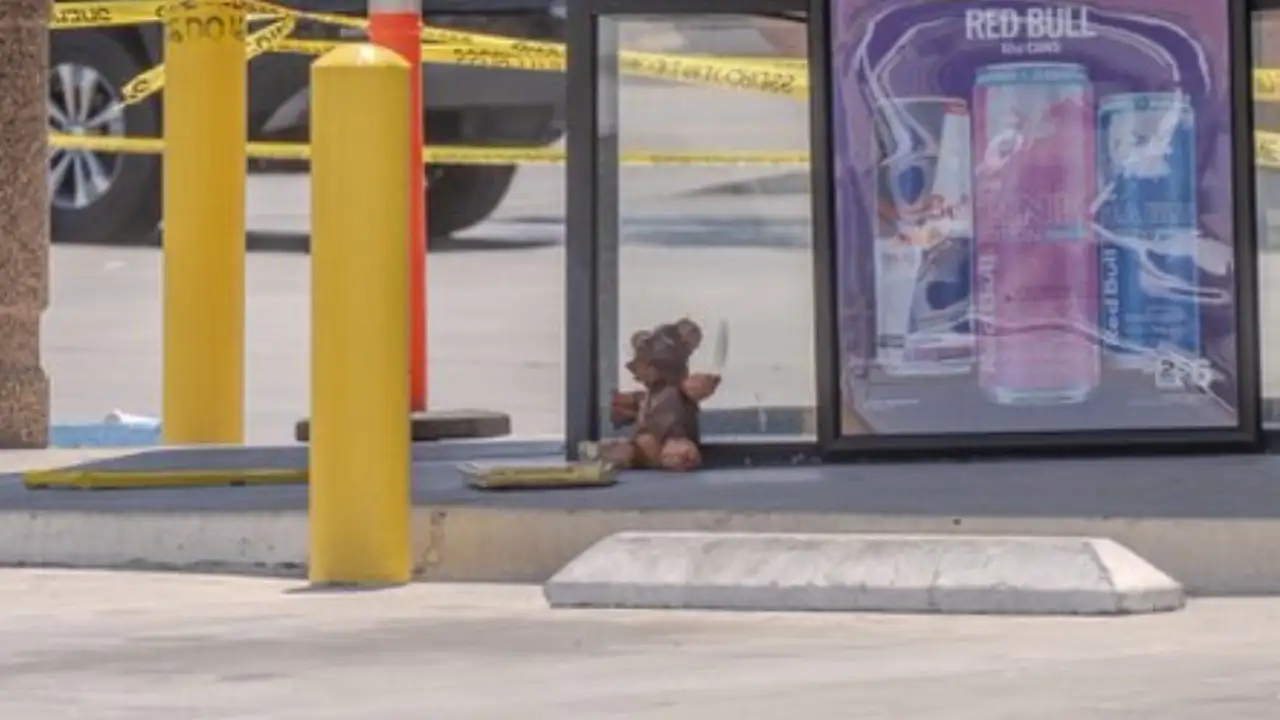
On the surface, it seemed like the beginning of a horror film — a grotesque Human Skin Teddy Bear left unattended outside a gas station in Victorville, California. Shocked locals called authorities, prompting a full investigation from the San Bernardino County Sheriff’s Department.
The story quickly made national headlines, stirring panic, curiosity, and countless questions. But as investigators unraveled the mystery, what was first believed to be human remains turned out to be a disturbing yet harmless piece of art.
What actually happened was not the result of a crime scene, but a dramatic misunderstanding sparked by an eerie art piece. The teddy bear, unsettling in its lifelike and skin-like appearance, is the creation of South Carolina-based artist Robert Kelly — a man who has built a name for himself in the horror special effects and haunted attractions community.
What followed was a whirlwind of media attention, speculation, and a conversation about how realistic art can blur the line between fantasy and fear.
The Scene at Victorville: A Morning of Panic and Mystery
The events unfolded on Sunday, July 13, when concerned residents near the AMPM store on Bear Valley Road in Victorville spotted an object that appeared alarmingly lifelike. Positioned just outside the entrance of the gas station, the teddy bear — which had all the appearances of being stitched together from human skin — alarmed bystanders.
Multiple calls were made to local authorities, leading the San Bernardino County Sheriff’s Department to cordon off the area and initiate an investigation. A coroner investigator was summoned to assess the object, indicating just how seriously the matter was initially taken.
Footage obtained by KTLA captured the intensity of the response, showing the parking lot taped off while authorities examined the bizarre object. Given its appearance, many feared the worst — that the teddy bear might be made from actual human remains. Spokesperson Mara Rodriguez confirmed to NBC 4 Los Angeles that the coroner had taken possession of the object and that an active investigation was underway.
BREAKING – A teddy bear believed to be wrapped in crudely stitched human skin was discovered today at a Victorville, California gas station. The Victorville coroner’s office is actively investigating this unsettling find. pic.twitter.com/TNvupolo7K
— Right Angle News Network (@Rightanglenews) July 14, 2025
The local community buzzed with speculation. Was it a serial killer’s message? A cult symbol? A deranged warning? Social media users began sharing their theories as photos of the bear spread quickly across platforms. But the truth would soon be revealed — and it was far less sinister than people imagined, though no less strange.
The Artist Behind the Horror: Robert Kelly and DarkSeed Creations
As the news spread and social media lit up with viral posts and horror-fueled theories, artist Robert Kelly from South Carolina started getting flooded with messages. Friends, fans, and even strangers were tagging him in articles, videos, and discussion threads. Within hours, Kelly realized the now-infamous bear was one he had created and shipped just the week before.
Kelly is the founder of DarkSeed Creations, a brand that specializes in horror props, latex sculptures, and haunted house decor. His work is popular among horror fans and professionals in the industry for its lifelike appearance and macabre aesthetic. Among his offerings is the “human skin teddy bear,” a latex prop meticulously crafted to appear as if it were stitched from patches of flesh. Retailing for $165 on platforms like Etsy, the bear is part of a wider collection of grotesque items designed to shock and impress.

Once Kelly recognized his bear in the media, he decided to speak out. In an email to PEOPLE magazine, he confirmed, “Every artist wants credit for their work, so I said ‘I made that’ and haven’t been able to catch up with messages since.” He expressed a mixture of amusement and bewilderment at how quickly the situation escalated. While he made it clear that he had no prior knowledge of the buyer’s intention to leave the bear in public, Kelly admitted that the publicity had been unexpectedly positive for his brand.
Speaking to ABC7 Eyewitness News, Kelly shared, “I guess I’d probably be lying if I said I wasn’t enjoying it a little bit. I’m an independent artist… so, a little attention is sometimes good regardless of not being able to condone whatever.” He explained that the bear, like many of his products, was molded from latex and designed to resemble human skin but was entirely synthetic.
Kelly also posted a video on Facebook, explaining the situation to his followers and emphasizing that the bear had been “used in a prank.” He clarified that he did not ship it with any malicious intent and had no involvement in its public placement. Still, he noted the power of art to provoke, saying, “Our stuff is pretty recognizable in the industry. Once this happened a few hours ago, my phone started blowing up, Facebook started blowing up.”
Public Reactions and Ongoing Questions
Despite Kelly’s quick clarification, the event has ignited broader discussions about the role of art, shock value, and public safety. While the teddy bear was ultimately harmless, the fear it instilled was very real. For residents of Victorville and the responding authorities, it created a brief but intense scare that drained resources and unsettled a community.
The incident also raises legal and ethical questions. As of now, it remains unclear if the person who placed the bear at the AMPM store broke any laws. Public safety officials have not issued any charges or statements indicating legal repercussions, but the matter is still under review.
While pranks are not illegal per se, if they cause significant alarm or waste emergency services’ time, they can potentially lead to charges of public mischief or disorderly conduct. The event has also spotlighted the increasing realism of horror props and how difficult it can be to distinguish art from actual threat.
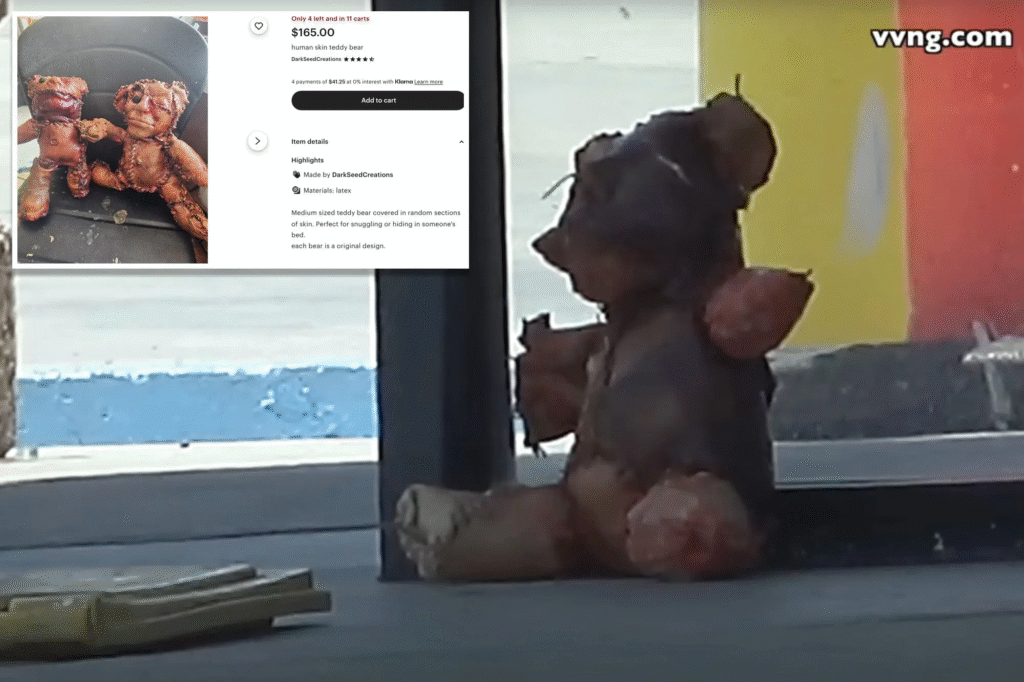
In a world where true crime, horror films, and realistic effects dominate popular culture, it becomes more and more plausible that something made of latex could be mistaken for a crime scene prop or worse. What responsibility do artists have when their creations provoke such intense reactions? And where should the line be drawn between artistic freedom and public disturbance?
In the case of the “human skin teddy bear,” it seems the creator had no intention of disturbing the peace. Still, it’s undeniable that his work stirred a powerful reaction — one that says as much about society’s fears as it does about the art itself.
Meanwhile, the bear remains available for purchase online, continuing to draw curiosity from horror fans and Halloween enthusiasts alike. DarkSeed Creations has seen a spike in attention, and Robert Kelly, now a name in the media, may benefit from the kind of exposure that money can’t buy — even if it came with a few frantic phone calls and a temporary public scare.
Ultimately, this surreal episode serves as a strange tale of how modern art, when dropped into an everyday setting, can transform the mundane into something terrifying — even if unintentionally. It is a reminder that not everything that appears sinister is rooted in evil, and not every mystery ends in tragedy. Sometimes, it’s just a teddy bear made of latex — and a lesson in how far realism can go.