
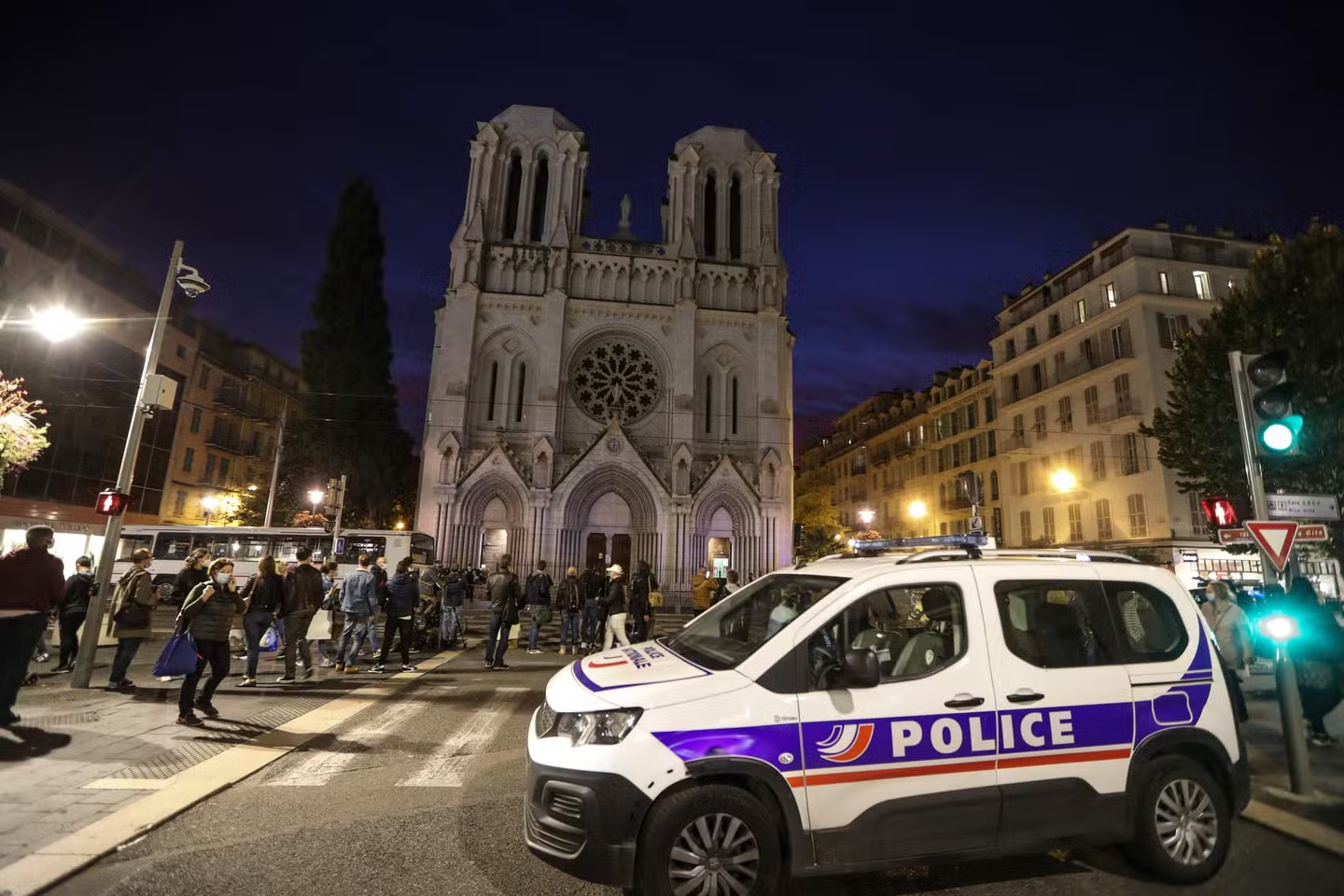
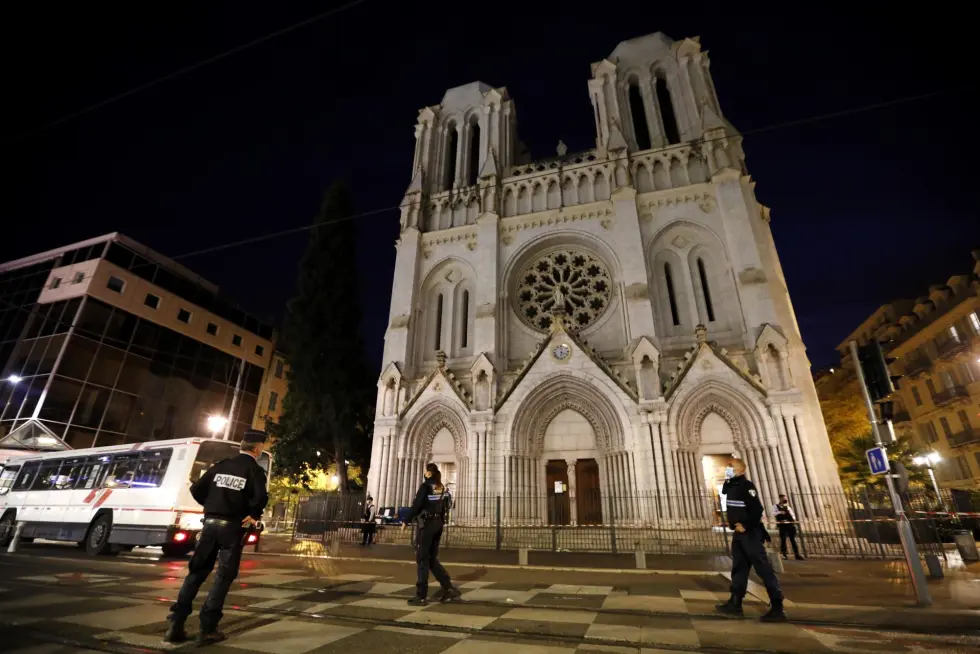
The trial of Tunisian national Brahim Aouissaoui reached its conclusion on February 26, 2025, when a French court sentenced him to life in prison without the possibility of commutation. Aouissaoui, who was 25 at the time of sentencing, was convicted for his brutal knife attack on October 29, 2020, at the Basilica of Our Lady of the Assumption in Nice, France.
The attack resulted in the tragic deaths of three innocent individuals: Nadine Devillers, Simone Barreto Silva, and Vincent Loques. The court delivered the harshest possible sentence, marking a significant moment in France’s ongoing battle against extremist violence.
The ruling reinforced the country’s firm stance on terrorism-related offenses, particularly in light of several deadly attacks that have plagued France since 2015.
The Events of October 29, 2020: A Morning of Horror in Nice
The morning of October 29, 2020, started like any other in the picturesque city of Nice. However, the tranquility was shattered when Aouissaoui entered the Notre Dame Basilica with sinister intentions.
Armed with a copy of the Quran, three knives, and two cell phones, he quickly turned the sacred church into a scene of horror. His first victim, 60-year-old Nadine Devillers, was brutally attacked inside the church. She stood no chance against the armed assailant and succumbed to his brutal assault.
Shortly after, Simone Barreto Silva, a 44-year-old Franco-Brazilian mother, entered the church upon hearing disturbing noises. She was met with unspeakable violence as Aouissaoui inflicted fourteen stab wounds upon her.
Despite her injuries, Silva managed to flee the church, seeking refuge in a nearby establishment. Tragically, her wounds were too severe, and she succumbed to them minutes later. Her last words reportedly called for her children, a heart-wrenching moment that resonated deeply with the French public.
The church’s sacristan, 55-year-old Vincent Loques, attempted to intervene in an act of sheer bravery. He fought to stop the attacker, but Aouissaoui’s rampage proved too overpowering, and Loques was fatally stabbed. The chaos only ended when municipal police officers, who were patrolling the area, entered the church upon hearing the commotion.
As the officers confronted him, Aouissaoui reportedly shouted “Allahu Akbar” before lunging at them with his knife. The police immediately responded with gunfire, seriously wounding him.
Read : Church of England Faces Threat of Split Over Stance on Gay Couples
He was taken into custody and placed in a medically induced coma, which lasted several weeks. After regaining consciousness, Aouissaoui claimed to have no recollection of the attack, a statement that was later disproven by medical evaluations.
The Trial: A Fight for Justice
The French judiciary ensured that the trial was conducted with meticulous attention to detail, given the significance of the case. The prosecution argued that Aouissaoui’s actions were premeditated and carried out with the intent to spread terror.
They pointed to his behavior in the days leading up to the attack, noting that he had visited the church multiple times before the fatal morning. Surveillance footage further confirmed that Aouissaoui had carefully studied the layout of the basilica, reinforcing the argument that this was a calculated act rather than a spontaneous outburst.
The accused, however, provided inconsistent testimonies throughout the trial. Initially, he denied remembering anything about the attack. Later, during his interrogation, he shifted his narrative and admitted to the killings, but claimed that they were an act of revenge.
He attempted to justify his actions by referencing perceived injustices against Muslims worldwide, stating that he was retaliating against “the West” for its involvement in conflicts affecting Muslim-majority regions.
Despite his attempts to portray his actions as personal vengeance rather than an act of terrorism, the court was not swayed. Medical examinations confirmed that Aouissaoui suffered no brain damage, and psychiatric evaluations determined that he was fully aware of his actions at the time of the attack. The prosecution dismantled his defense by presenting evidence of his radicalization and emphasizing the brutality of the attack.
Throughout the proceedings, the families of the victims remained steadfast in their pursuit of justice. Many were present in court, enduring the painful process of reliving the tragic events of 2020.
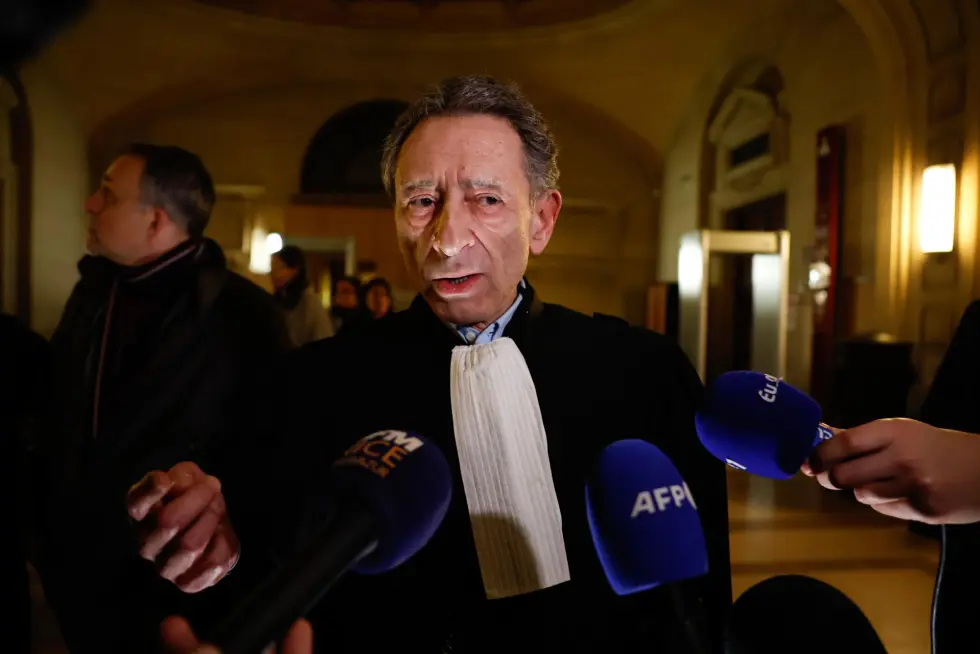
Philippe Soussi, the lawyer representing the victims’ families, spoke after the verdict, expressing both relief and sorrow. He highlighted the irreversible damage inflicted upon the families and the wider community, emphasizing that no sentence could ever truly compensate for the lives lost.
France’s Ongoing Struggle Against Extremist Violence
The Nice church attack was one of several acts of extremist violence that have shaken France in recent years. Just two weeks before the church rampage, France was rocked by the brutal murder of history teacher Samuel Paty, who was beheaded by an 18-year-old Chechen refugee.
Paty had become a target after showing caricatures of the Prophet Muhammad in a classroom discussion about freedom of speech. His murder ignited a nationwide debate on radicalization and the limits of free expression.
Since 2015, France has experienced numerous deadly attacks linked to Islamist extremism, with hundreds of lives lost. The government has responded with heightened security measures, legislative changes, and crackdowns on radical networks.
The sentencing of Aouissaoui is viewed as part of these broader efforts to reinforce the country’s commitment to countering terrorism.
The ruling also reflects the gravity with which France treats acts of religiously motivated violence. The decision to impose life imprisonment without parole underscores the country’s zero-tolerance policy towards such crimes.
Many political leaders, including President Emmanuel Macron, have emphasized that France will not allow extremists to undermine the nation’s values of secularism and freedom.
However, the sentencing of Aouissaoui does not erase the trauma inflicted upon the victims’ families or the broader community. Religious institutions, particularly Christian churches, have faced heightened security concerns in the wake of repeated attacks. Many have called for increased protection for places of worship, urging authorities to remain vigilant against potential threats.
As France continues to grapple with the complexities of extremism, the sentencing of Aouissaoui serves as a sobering reminder of the persistent dangers posed by radicalized individuals. While justice has been served in this case, the scars left by the attack will remain for years to come.
The tragic events of October 29, 2020, will not be forgotten, and the memories of the victims—Nadine Devillers, Simone Barreto Silva, and Vincent Loques—will endure as a testament to the resilience of those who refuse to be silenced by fear.