
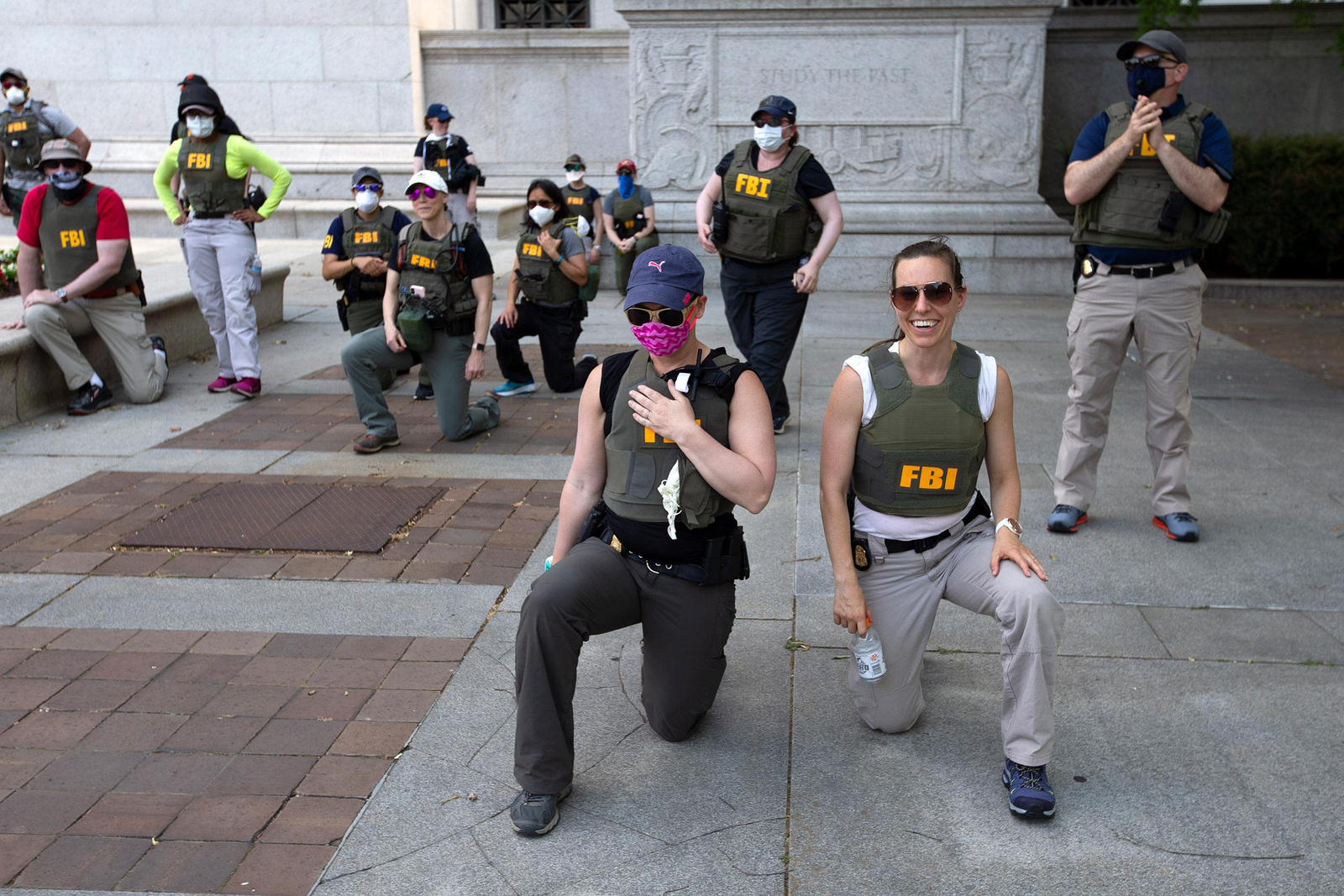
In a newly filed lawsuit that brings into focus long-standing questions about political influence, law enforcement discretion, and employee rights, twelve former FBI agents have accused the agency and its current director, Kash Patel, of unlawfully terminating them for kneeling during a 2020 Washington, DC, protest following the murder of George Floyd. The plaintiffs contend that their actions were not political gestures but measured, tactical decisions taken during a volatile encounter with a crowd that had turned confrontational.
Their lawsuit alleges that Patel moved to dismiss them for reasons tied not to agency policy or investigative findings but to political considerations, including perceived disloyalty to the administration in power at the time. With this complaint, the former agents add to an expanding constellation of legal challenges from ex-officials who argue that Patel orchestrated targeted purges that violated constitutional protections and internal FBI rules. The case exposes complex intersections between civil liberties, chain-of-command accountability, and the increasingly fraught relationship between federal law enforcement and political leadership.
Tactical Decisions Amid a Volatile 2020 Protest
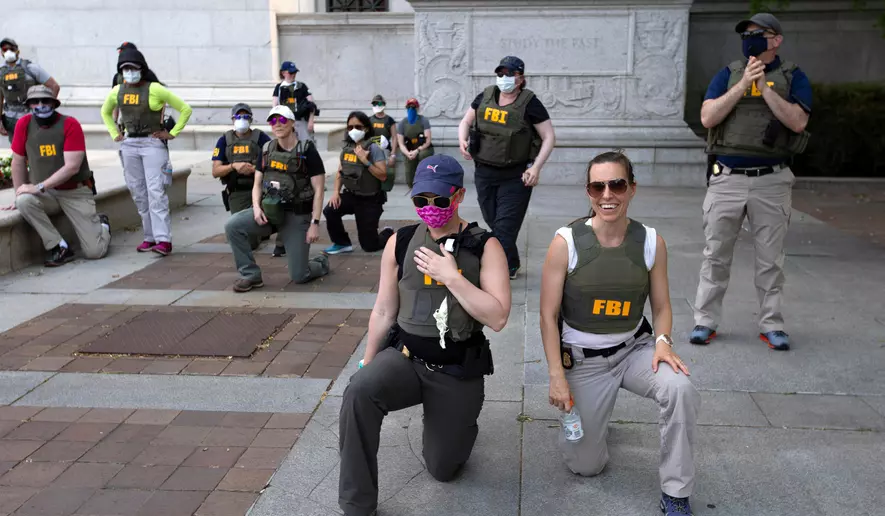
The lawsuit centers on a widely circulated photograph from June 2020 in which FBI personnel are seen kneeling during a period of tense standoffs between law enforcement and demonstrators in the nation’s capital. According to the plaintiffs, the gesture was not a display of political alignment but a response to a rapidly escalating situation in which a crowd had become confrontational.
By kneeling, the agents argue, they sought to de-escalate tensions, disperse the gathering peacefully, and prevent a potentially violent clash. Their filing describes the scene as a “mob that included hostile individuals” and asserts that the tactical choice to kneel successfully defused the confrontation, allowing the group to move on without further escalation. The lawsuit recalls that, in the aftermath of the incident, the FBI conducted an internal review that concluded the agents had not violated the Hatch Act, which restricts political activity by federal employees.
The internal findings, according to the plaintiffs, stated clearly that each agent acted apolitically, prioritizing public safety and operational stability. These conclusions form the backbone of the group’s contention that their later terminations were neither policy-based nor performance-related but driven by senior leadership’s political considerations. The kneeling occurred during a moment in U.S. history marked by unprecedented public demonstrations, urgent demands for police reform, and widespread scrutiny of federal law enforcement’s role in crowd control.
Read : Livie Rose Henderson Loses DoorDash Job Over Viral Video of Alleged Delivery Assault
In that context, the agents maintain that the gesture was part of a well-established de-escalation approach often used by officers facing unpredictable and emotionally charged assemblies. Their lawsuit emphasizes that, far from endorsing any political statements, the agents were motivated solely by a desire to reduce the risk of harm to civilians and law enforcement alike. This framing challenges the narrative advanced in their termination letters and seeks to establish that their actions fell squarely within acceptable tactical conduct.
Allegations of Political Retaliation Under Kash Patel’s Leadership
A central theme of the legal action is the claim that Director Kash Patel moved to fire the agents not because of policy violations but because their kneeling was perceived as being out of alignment with the political posture of then-President Donald Trump. Before joining the FBI earlier this year, Patel served in various high-ranking positions within the Trump administration, and the plaintiffs argue that he carried political expectations into his new role.
They allege that Patel decided to fire them even before assuming leadership of the agency, based on seeing the 2020 photograph and interpreting it as disloyal or politically oppositional. The lawsuit details an internal exchange in which Patel sought the names of the kneeling agents. Steven Jensen, then the Assistant Director in Charge of the Washington field office, recommended that the matter be handled through standard investigation procedures rather than immediate disciplinary action.
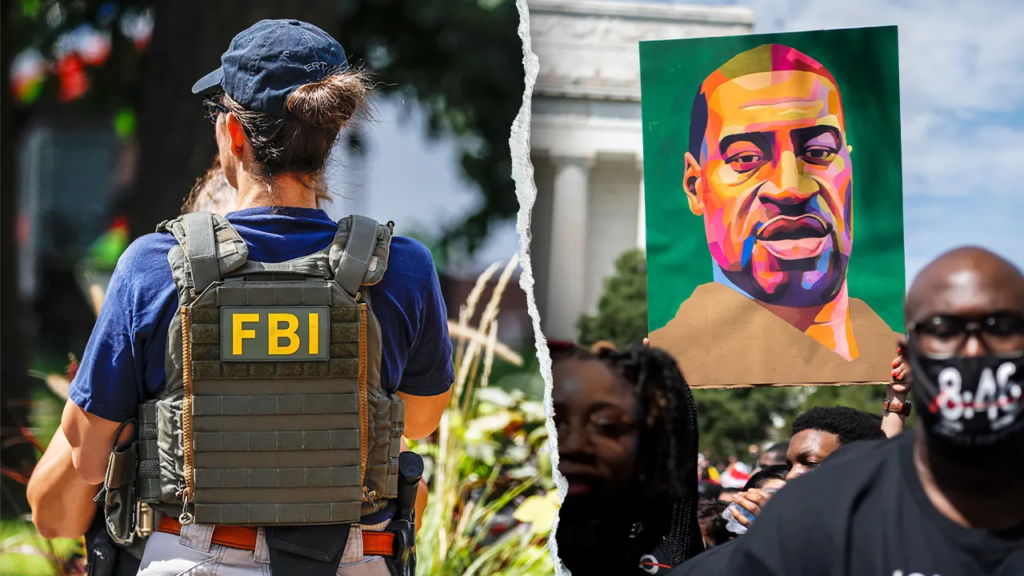
Jensen himself was fired by Patel at a later date and has since brought a separate lawsuit alleging politically motivated retaliation. His inclusion in this narrative strengthens the plaintiffs’ argument that Patel engaged in a broader pattern of dismissing officials whose past actions, however unrelated to political advocacy, were viewed through a partisan lens. In the plaintiffs’ account, Patel’s refusal to follow internal review processes, paired with his decision to disregard findings that cleared the agents of misconduct, signals a deliberate circumvention of established FBI protocols.
They claim this amounted to a violation of their constitutional rights, including First Amendment protections, by punishing them for actions wrongly construed as expressive political conduct. The termination letters cited “unprofessional conduct and a lack of impartiality” and went further to accuse the agents of contributing to the “political weaponization of government.” Such language, the plaintiffs argue, reflects a mischaracterization of a tactical decision and relies on assertions unsupported by the agency’s investigative record.
The allegation that the White House influenced the terminations adds another layer of constitutional concern. If proven, it would suggest a direct link between political directives and personnel decisions in a law enforcement agency intended to operate with independence from partisan pressures. The lawsuit portrays this as a breach of the institutional boundaries that safeguard the integrity of federal investigations, employee rights, and public trust. The plaintiffs assert that the terminations served no legitimate administrative purpose but instead reinforced loyalty expectations tied to political identity.
Expanding Legal and Institutional Repercussions for the FBI
The lawsuit against Patel arrives in a moment when the FBI is facing increasing legal and political scrutiny, both from officials who served in prior administrations and from critics across the ideological spectrum. Several former high-level FBI executives have already sued Patel, accusing him of orchestrating politically motivated firings that removed career officials based on perceived insufficient loyalty rather than on performance evaluations or legitimate disciplinary grounds.
Read : Ex-FBI Agent Eduardo Valdivia Sentenced for Raping Women in Tattoo Studios
The new plaintiffs, as former agents rather than executives, widen the scope of those alleging harm and highlight the downstream effects senior leadership decisions can have on operational personnel. If successful, the lawsuit could have long-term implications for how federal agencies manage employee discipline during politically sensitive moments.
It raises fundamental questions about the extent to which agency heads must defer to internal investigative processes and about the protections afforded to employees who make tactical decisions that might be misinterpreted in highly polarized environments. Within law enforcement agencies where public demonstrations often require rapid response and improvisation, the plaintiffs argue that punishing officers for good-faith tactical decisions may erode operational flexibility, discourage de-escalation strategies, and introduce political uncertainty into split-second field judgment.
The case also underscores the tension that can arise when federal personnel decisions are perceived as aligned with political messaging. During the 2020 protests, various law enforcement bodies across the country navigated complex interactions with demonstrators, and some officers used gestures such as kneeling to calm tensions. The plaintiffs contend that singling out their decision for punitive action sends a contrary message that tactical choices may be evaluated through a partisan lens rather than according to outcomes or procedural compliance.
Moreover, the lawsuit contributes to a broader conversation about the independence of federal law enforcement agencies. Historically, the FBI’s ability to function without overt political interference has been considered essential to its mission. Allegations that disciplinary decisions were directed from the White House challenge this principle and amplify concerns that the agency’s leadership may be vulnerable to political pressure. The plaintiffs argue that their terminations not only damaged their careers but undermined core values essential to maintaining public trust and internal morale.
While the FBI has declined to comment on the litigation, the agency may eventually need to address questions about how it distinguishes political expression from legitimate tactical conduct, how it ensures that internal investigations retain authority, and how it protects personnel from politically motivated retribution. The outcome of this case may set a precedent for how future disputes about expressive acts—or acts perceived as expressive—are judged within federal agencies.
The lawsuit reflects a growing effort by former FBI employees to challenge what they describe as politicized decision-making at the highest levels of the bureau. For the twelve former agents now bringing their case forward, the core argument remains that their dismissal was not rooted in policy enforcement or misconduct but in a misinterpretation of an effort to keep the peace during one of the most turbulent public moments in recent American history.
Their claims, now part of an expanding legal record, invite renewed scrutiny of how political leadership interacts with law enforcement institutions, how constitutional protections apply within federal agencies, and what standards should guide the evaluation of tactical decisions made in the field during periods of national unrest.