
The UK Sees 42% Drop in Visa Applications following the implementation of restrictive immigration policies aimed at reducing legal migration levels.
Between April and December 2024, the number of visa applications fell by 42%, a sharp drop of nearly 400,000 compared to the same period in 2023. This reduction, driven by new rules targeting overseas students and foreign care workers, has sparked widespread concerns about the potential impact on key sectors like healthcare and education.
Restrictions and Their Immediate Impact
In an effort to curb legal migration, the UK government introduced a series of restrictions between January and April 2024. These included bans on overseas care workers and students bringing family dependents, along with an increased salary threshold for skilled workers to £38,700. These measures aimed to cut annual arrivals by 300,000, a goal the government appears to have met, albeit with significant trade-offs.
Provisional figures from the Home Office reveal that visa applications fell to 547,000 between April and December 2024, a steep decline from the 942,500 applications received during the same period in 2023. The drop of 395,100 applications reflects a 42% reduction overall, with certain categories of visas seeing even more dramatic declines.
Read : Rhino Kills Male Zebra at UK’s Colchester Zoo
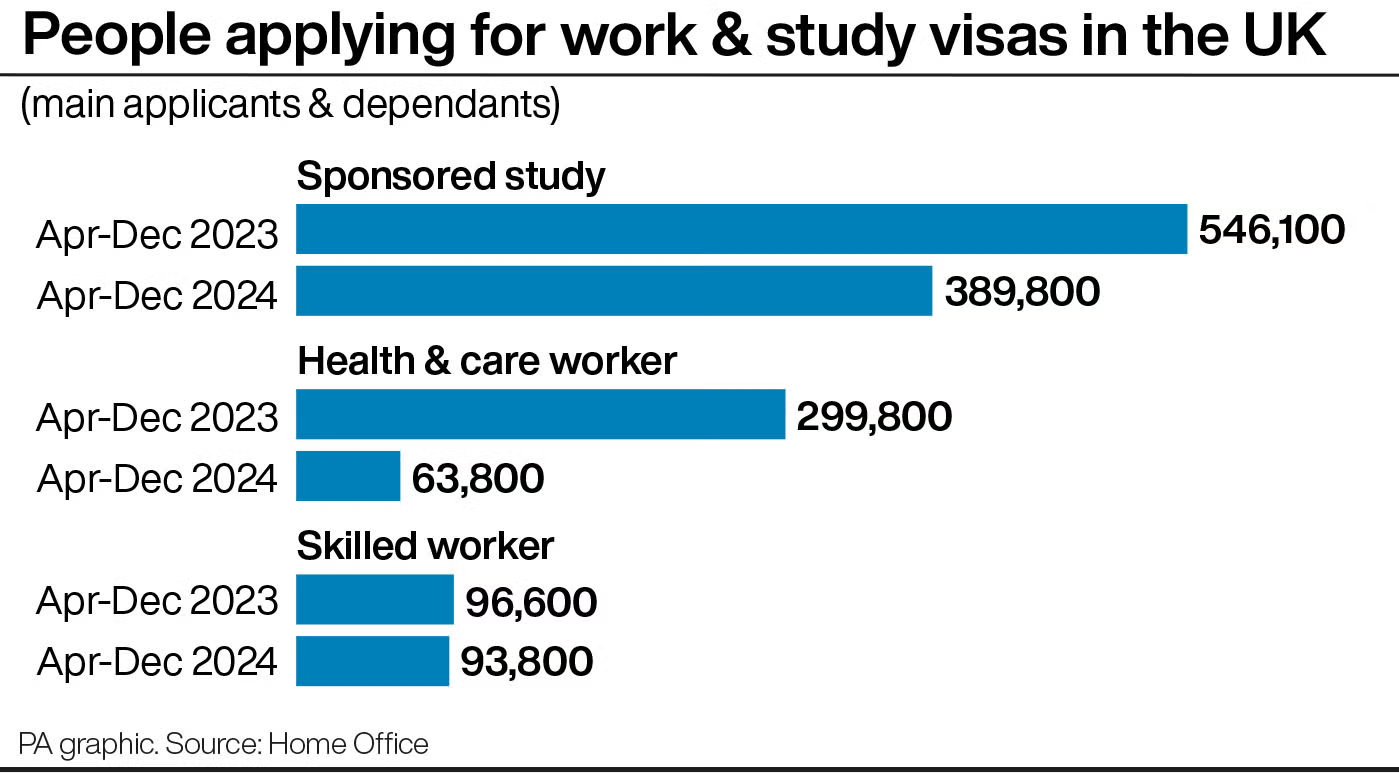
Applications for health and care worker visas, for example, plummeted by 79%, from 299,800 in 2023 to just 63,800 in 2024. This decrease has been particularly concerning for the social care sector, which has relied heavily on overseas staff to fill critical gaps. Additionally, there was a 29% drop in sponsored study visa numbers, falling from 546,100 to 389,800, raising alarms within the education sector.
Consequences for Key Sectors
The social care sector has been one of the hardest-hit industries, with the dependents ban and other restrictions described as “brutal” by industry representatives. Social care organizations have warned that the policies are cutting off a crucial “lifeline” of overseas workers, leaving many positions unfilled and placing additional strain on an already overstretched system.

The healthcare sector, too, has expressed concerns about the implications of these changes. The 79% drop in health and care worker visa applications signals a significant blow to efforts to address the ongoing staffing crisis in the NHS and other healthcare providers.
Many organizations argue that the inability to bring family dependents is discouraging qualified professionals from pursuing opportunities in the UK, exacerbating workforce shortages.
In the education sector, universities are grappling with the dual impact of reduced international student numbers and frozen domestic tuition fees.
Read : First Dog-Centric Airline “Bark Air” Takes Inaugural Flight in US
Sponsored study visas fell by 29% in the nine months from April to December 2024 compared to the same period the previous year. This decline poses a financial challenge for universities, which have traditionally relied on tuition fees from overseas students as a critical revenue source.
A Complex Picture of Immigration
While the overall drop in visa applications is striking, the impact varies significantly across different categories of immigration. For instance, applications for skilled worker visas fell by just 3%, from 96,600 in 2023 to 93,800 in 2024.
Interestingly, this figure is still slightly higher than the number recorded in the same period in 2022, suggesting that demand for skilled workers in specific sectors remains relatively stable despite the restrictions.
The government’s focus on reducing legal migration has sparked a broader debate about the balance between controlling immigration and meeting the country’s economic and social needs.

Critics argue that the policies, while effective in cutting migration numbers, are short-sighted and risk undermining vital sectors that depend on foreign talent. Proponents of the restrictions, however, contend that the measures are necessary to address public concerns about migration and to prioritize opportunities for UK citizens.
As the UK continues to navigate the implications of these changes, questions remain about the long-term impact on the country’s workforce, economy, and global reputation as a destination for education and employment.
Balancing the need for immigration control with the demands of critical industries will require careful consideration and a willingness to adapt policies to evolving circumstances.
The dramatic 42% drop in visa applications highlights the far-reaching consequences of restrictive immigration policies. While the government’s goal of reducing legal migration levels has been achieved, the ripple effects on sectors like healthcare and education underscore the complexity of this issue.
Striking a balance between immigration control and the needs of the economy remains a pressing challenge for policymakers as they navigate the path forward.