
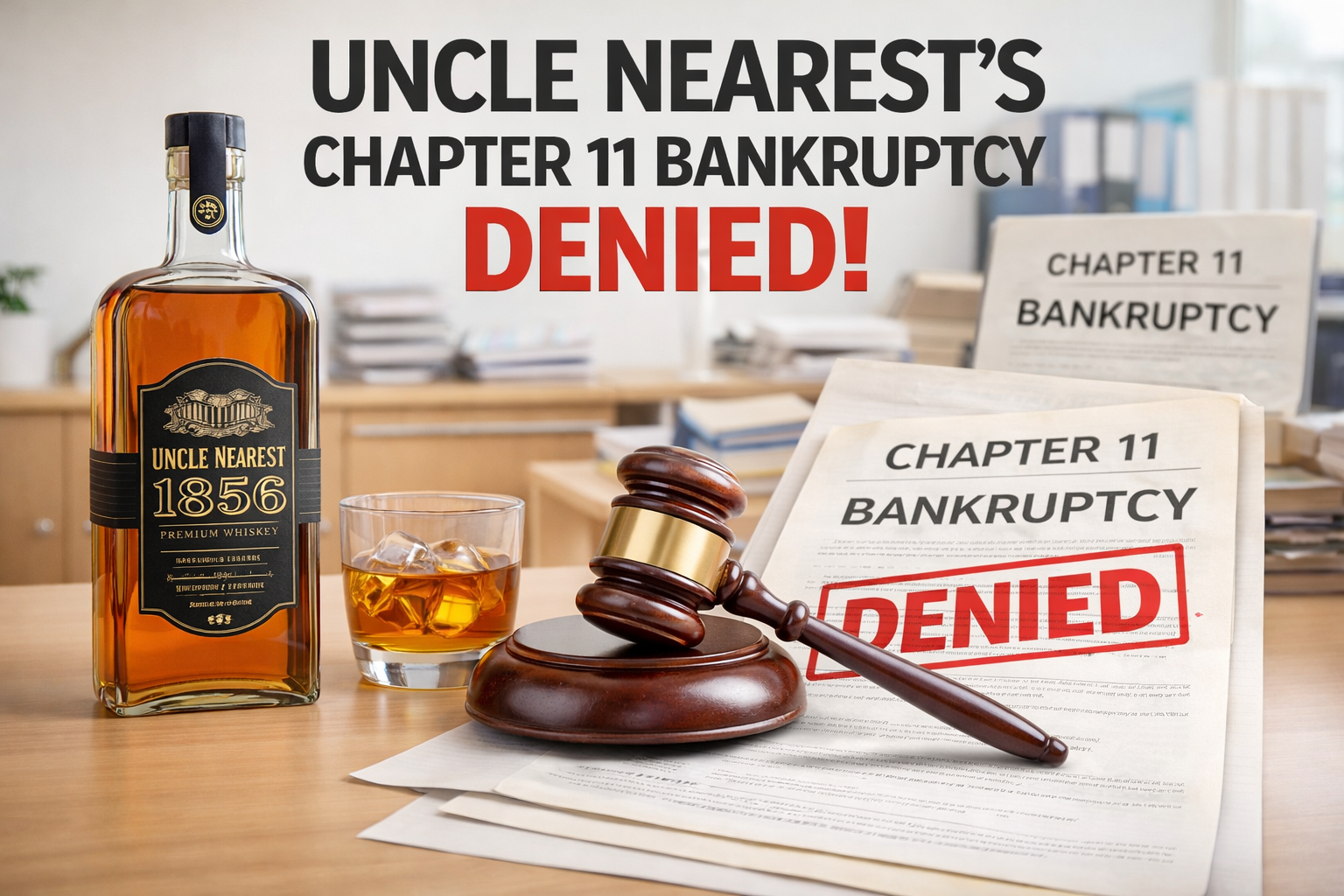
The unfolding legal and financial challenges surrounding Uncle Nearest have placed one of the most prominent names in the modern whiskey industry under intense scrutiny. Once celebrated for its rapid growth and cultural significance, the brand now finds itself navigating a complex web of litigation, debt obligations, and leadership disputes.
A recent federal court ruling has added another layer of uncertainty, denying the company’s attempt to file for Chapter 11 bankruptcy and reinforcing the authority of a court-appointed receiver. This development has raised critical questions about the future direction of the company, the role of its founder, and the broader implications for businesses facing similar financial pressures.
Court Ruling Reinforces Receiver Control
The denial of the Chapter 11 bankruptcy filing represents a pivotal moment in the ongoing legal battle over control of Uncle Nearest. The court’s decision was based on a fundamental issue of authority: the company is currently under receivership, meaning that control of its operations has been transferred to a court-appointed receiver. In such circumstances, the power to make major financial or legal decisions, including filing for bankruptcy protection, no longer rests with the company’s founder or its existing leadership.
Receivership is typically imposed when a business is deemed unable to manage its financial obligations or when its operations risk harming creditors or shareholders. In this case, the receiver was appointed to stabilize the company while addressing significant outstanding debts. The court’s ruling effectively affirmed that only the receiver has the legal standing to initiate bankruptcy proceedings, rendering the founder’s filing invalid.
This decision underscores the strict legal framework governing distressed companies. While Chapter 11 bankruptcy is often used as a tool to restructure debts and regain operational control, it cannot be invoked unilaterally when a receiver is already in place. The ruling also signals the court’s intent to maintain continuity in the company’s management under the receiver, rather than allowing a shift in control that could complicate ongoing legal proceedings.
Read : The Enigmatic Mysteries of the Virgin Islands
For Uncle Nearest, this means that its immediate future will continue to be shaped by the receiver’s strategy rather than the vision of its founder. The receiver’s mandate typically focuses on preserving value, managing assets, and ensuring that creditors have the best possible chance of recovering their funds. This approach can sometimes conflict with the long-term growth ambitions of a company’s original leadership, creating tension over the direction of the business.
Financial Disputes and Mounting Debt
At the core of Uncle Nearest’s current predicament lies a substantial financial dispute involving more than $100 million in debt. The company’s lender initiated legal action after alleging that the business had defaulted on loans and failed to meet critical financial conditions outlined in its agreements. These allegations include claims of negative cash flow, insufficient cash reserves, and discrepancies in the valuation of inventory used as collateral.
Such disputes are not uncommon in industries that require significant upfront investment and long maturation periods, such as whiskey production. Inventory in this sector often consists of aging spirits, which may not generate immediate revenue but are expected to appreciate in value over time. However, this business model also introduces risks, particularly when valuations are questioned or when liquidity becomes constrained.
Read : Baker & Taylor Files For Chapter 11 Bankruptcy
The lender’s claims suggest that Uncle Nearest may have overstated the value of its inventory, a key factor in securing and maintaining its credit facilities. If proven, such discrepancies could undermine the company’s financial credibility and complicate efforts to renegotiate or refinance its obligations. Additionally, the alleged failure to maintain required cash balances points to potential liquidity challenges, which can quickly escalate into broader financial instability.

In response to these issues, the receiver has explored various strategies to stabilize the company. One of the primary approaches has been the potential sale of non-core assets, including real estate holdings, vineyards, and other related ventures. By divesting these assets, the company could generate immediate cash to address its debt obligations and improve its financial position.
Despite these challenges, Uncle Nearest has continued to operate, indicating that its core business retains some level of viability. Ongoing negotiations between investors, lenders, and other stakeholders suggest that there may still be opportunities for restructuring. However, the outcome of these discussions remains uncertain, particularly in light of the ongoing legal disputes and the recent court ruling.
Leadership Conflict and Future Uncertainty
The legal battle has also highlighted a deeper conflict over leadership and control within Uncle Nearest. The founder’s attempt to file for Chapter 11 bankruptcy and regain authority over the company reflects a broader effort to reclaim influence during a critical period. Alongside this move, a lawsuit was filed against the lender, alleging that it engaged in a smear campaign by spreading false information about the company’s financial condition.

According to the claims, these alleged actions were intended to damage the brand’s credibility and undermine its position in the market. Such accusations, if substantiated, could have significant implications not only for the ongoing legal case but also for the company’s reputation. In industries where brand image and consumer trust play a crucial role, any perception of instability or misconduct can have lasting effects.
The court’s rejection of the bankruptcy filing, however, represents a setback for the founder’s efforts to regain control. With the receiver firmly in charge, the company’s strategic decisions will continue to be guided by the priorities of creditors and the court, rather than the original leadership. This dynamic can create uncertainty for employees, partners, and investors, all of whom must navigate an evolving and often unpredictable situation.
Looking ahead, several possible scenarios could shape the future of Uncle Nearest. One outcome could involve a successful restructuring of its debt, allowing the company to continue operating under revised financial terms. Another possibility is the sale of significant assets or even the entire business, which could result in new ownership and a different strategic direction. In more severe cases, prolonged financial difficulties could lead to further legal actions or liquidation.
The situation also serves as a broader reminder of the challenges faced by rapidly growing companies. Expansion often requires substantial capital, and managing that growth effectively is critical to long-term success. When financial pressures mount, the balance between maintaining operations and meeting obligations can become increasingly difficult to sustain.
For Uncle Nearest, the coming months will be crucial in determining its trajectory. The interplay between legal proceedings, financial negotiations, and operational decisions will ultimately shape whether the brand can overcome its current challenges or undergo a more fundamental transformation.