

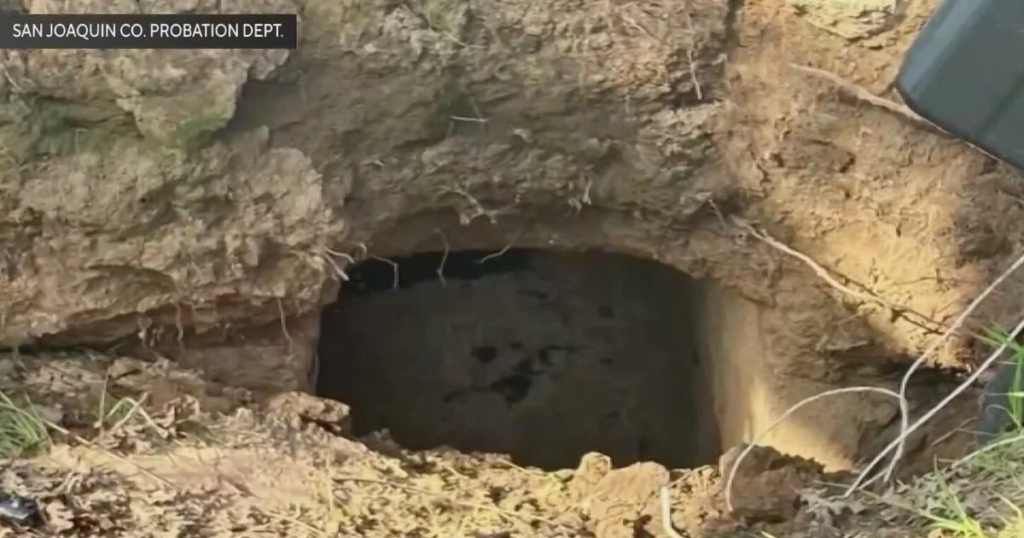
The discovery of a hand-dug underground homeless camp beneath a bridge in Stockton has intensified concerns among city and state officials about infrastructure safety, fire risk, and the broader challenges of managing homelessness in high-risk locations. Video footage showing a sizable hollowed-out space carved into the dirt beneath the bridge immediately raised alarms about the potential for structural damage, uncontrolled fires, and hazardous living conditions.
The response from authorities was swift, reflecting both the perceived urgency of the situation and a growing recognition that informal encampments in and around critical infrastructure present complex risks that extend beyond humanitarian considerations alone. As Stockton continues to grapple with homelessness, the incident has become a focal point for debates about enforcement, prevention, and long-term solutions.
Immediate Response and Infrastructure Concerns
Once the underground space was identified, state transportation officials moved quickly to assess whether the bridge itself had been compromised. Caltrans District 10 inspected the site and reported that the holes discovered beneath the structure were filled in after the inspection. While no individuals were present at the time crews arrived, the conditions documented on video were enough to prompt immediate action.
Large amounts of debris were visible, along with signs that people had been living there for some time. Officials cited fire danger as a primary concern, noting that campfires in confined, dirt-walled spaces under bridges pose a serious threat not only to occupants but also to the integrity of the structure above. Caltrans also indicated that debris removal would follow, contingent on the removal of loose dogs from the area, either by their owners or through local animal control.
The mention of animals underscored another layer of risk: unmanaged encampments often involve pets, which can complicate cleanup efforts and raise public safety issues for workers. The agency noted that it has removed approximately 30 encampments in Stockton since December 2024, a figure that highlights how frequently such situations arise and how resource-intensive they can be. From an engineering perspective, bridges are not designed to accommodate voids created by excavation beneath their abutments or embankments.
Read : Billionaires in the US Are Freezing Themselves for Future Revival
Even relatively small cavities can alter load distribution, increase erosion, and weaken structural supports over time. Officials have pointed to past bridge fires in Stockton, including incidents in 2018 and 2021, as evidence that encampments near infrastructure can lead to costly damage and prolonged closures. In that context, the decision to fill in the excavation was framed as a preventative measure to protect public assets and ensure the safety of motorists and pedestrians who rely on the bridge daily.
Policy Debates and the Question of Deterrence
The Stockton bridge discovery has reignited an ongoing policy debate about how to deter people from seeking shelter in dangerous locations without simply displacing them to other areas. City leaders have been considering physical modifications to bridges and embankments, such as slope paving, rock armoring, and riprap installations, to make digging or camping more difficult. One proposed pilot project at the Airport Way Bridge has become particularly contentious. City officials have described it as a dual-purpose effort: repairing damage from earlier fires while also discouraging future encampments.
Read : What is Chapter 11 Bankruptcy, and Why Has Pat McGrath Labs Filed for It?
Critics, including some council members and housing advocates, have questioned both the cost of such projects and their effectiveness. They argue that hardening infrastructure may temporarily reduce camping in specific spots but does little to address the underlying causes of homelessness. Without adequate shelter, housing, and supportive services, people displaced from one location often move to another equally unsafe area. This pattern, advocates warn, perpetuates a cycle of displacement rather than resolution.
Over the past year, Stockton has tightened its camping rules and declared a local emergency on homelessness, signaling a shift toward a more enforcement-heavy approach. Supporters of this strategy say it provides city agencies with additional tools and flexibility to respond quickly to high-risk situations like the one under the bridge. They contend that allowing encampments to remain in places that pose clear dangers to life and infrastructure is not an option, regardless of broader housing shortages.
Opponents counter that enforcement must be matched with expanded housing capacity and services if it is to be humane and effective. They emphasize that clearing encampments without offering viable alternatives often results in people simply relocating, sometimes to even more hazardous environments. The debate reflects a broader tension seen in many cities, where immediate safety concerns collide with long-term social policy challenges.
Lessons From Past Discoveries and What Comes Next
The Stockton incident is not an isolated case. A similar situation in nearby Modesto, where people were found living in caves along the Tuolumne River, has been frequently cited by officials as a cautionary example. In that case, reporters documented blankets, groceries, and evidence of campfires inside the caves. Neighbors expressed alarm after reporting sightings of loose dogs, weapons, and even a child in the area. Those concerns ultimately led local authorities to restrict access and clear the caves, citing urgent safety hazards.
Read : American Electric Truck Maker Company Nikola Files for Chapter 11 Bankruptcy
Such examples help explain why officials tend to treat hand-dug shelters under bridges or along riverbanks as high-risk problems rather than curiosities. Confined spaces increase the likelihood of fires, collapses, and health emergencies, while their hidden nature can delay detection until conditions become severe. For emergency responders, these environments pose additional dangers, as access is often limited and unstable.

Looking ahead, the newly uncovered camp in Stockton is expected to accelerate coordination among city departments, law enforcement, and state agencies. Officials have pointed to previous multi-agency efforts, such as the large Pixley Slough cleanup conducted last summer, as a model for how to address complex encampments. Those operations typically combine enforcement actions with on-site outreach teams and service providers, aiming to connect individuals with shelter options, healthcare, and other resources while also addressing immediate safety concerns.
Jurisdiction plays a significant role in how such responses unfold. Because the hollowed-out space under the Stockton bridge sits on or near state right of way, Caltrans has primary authority over inspections and structural repairs, while the city handles outreach, enforcement of local ordinances, and coordination with social services.
City council agenda materials available on official Granicus pages reference the Airport Way Bridge repair project and outline proposed measures such as slope paving and rock armoring. Officials argue that these targeted repairs are necessary to protect infrastructure and prevent future incidents, especially in locations with a history of fires or repeated encampments.
At the same time, advocates continue to press for a housing-first approach, asserting that lasting change will only come when people have stable places to live. They acknowledge the need to address immediate dangers but caution that without significant investment in housing and supportive services, the cycle of risky encampments is likely to continue. The Stockton bridge discovery, in their view, is a symptom of a larger systemic issue rather than an isolated anomaly.
As Stockton moves forward, the challenge will be balancing urgent safety measures with longer-term strategies that address homelessness at its roots. The filled-in excavation under the bridge may eliminate one immediate hazard, but it also serves as a stark reminder of the lengths to which people will go in search of shelter. How city and state officials respond in the coming months may shape not only the physical landscape around Stockton’s bridges but also the broader trajectory of homelessness policy in the region.