
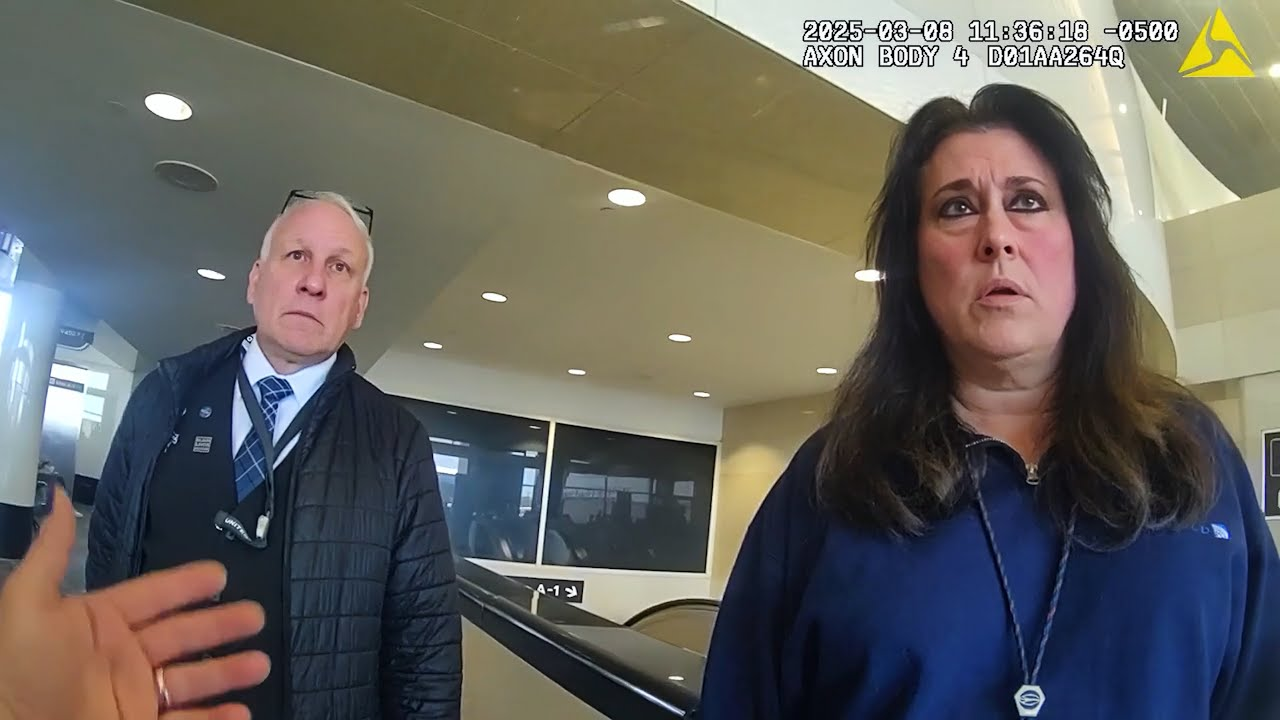
A routine pre-departure morning at Tampa International Airport escalated into a police matter after a United Airlines flight attendant was arrested moments before boarding his scheduled flight. The arrest stemmed from a confrontation with a Cayman Airways crew member that began on an employee shuttle bus and culminated in an allegation of battery. Although the physical contact involved was limited to a tap on the shoulder, the incident has since sparked broader debate about workplace conduct, policing discretion, and how minor disputes can spiral into serious legal consequences in highly regulated aviation environments.
The incident occurred on March 8, 2025, but only gained widespread attention months later after body camera footage from responding police officers was released by a YouTube channel. The footage, combined with police reports and witness accounts, has fueled discussion about accountability, professionalism, and the thin line between inappropriate conduct and criminal behavior. At its core, the case revolves around a disagreement over a loud phone call, a momentary physical interaction, and how authorities chose to respond.
The Incident at Tampa International Airport
According to statements provided to police, the dispute began on an employee shuttle transporting airline staff from a parking area to the terminal. The Cayman Airways crew member was speaking on her phone using speaker mode, a practice that often draws irritation in shared public spaces. The United Airlines flight attendant reportedly asked her to lower her voice or stop using speakerphone, believing her behavior was disruptive to others on the shuttle.
The Cayman Airways employee later told officers that she had been on a call with her uncle and felt offended by the way the United flight attendant addressed her. She claimed he commented on her voice and confronted her again after the shuttle ride, accusing him of singling her out and questioning whether his behavior was racially motivated. The exchange quickly became heated, with both parties alleging verbal hostility from the other.
What transformed the argument into a criminal matter was a brief physical interaction. The United flight attendant admitted to tapping the Cayman Airways employee on the shoulder to get her attention. He also acknowledged moving her identification badge so he could photograph it, explaining that he intended to report her behavior to her airline. The Cayman Airways crew member interpreted the contact as unwanted and threatening, telling police that he touched her without consent and implied he could jeopardize her job.
Read : Wheel Falls Off United Airlines Flight Moments After Takeoff in U.S.
When police officers arrived, they interviewed both individuals separately. The United flight attendant was candid in acknowledging that he had made physical contact, emphasizing that it was minimal and intended only to gain her attention in a noisy environment. Despite this, officers informed him that any unwanted physical contact, regardless of severity, could meet the legal definition of battery under Florida law. Based on that interpretation, he was arrested and removed from his flight just minutes before departure.
Body Camera Footage and Conflicting Perspectives
The subsequent release of police body camera footage has been central to public discussion of the case. In the footage, the United flight attendant appears cooperative, calm, and forthcoming about his actions. He repeatedly acknowledges tapping the other crew member on the shoulder and explains his frustration with what he perceived as disruptive behavior. He also recounts being insulted, accused of racism, and subjected to profanity during the argument.
The Cayman Airways employee, in her statement, focuses on feeling harassed and followed. She describes the shoulder tap and the photographing of her ID badge as intimidating, particularly in a professional setting where identification badges carry employment and security implications. From her perspective, the encounter crossed a line from a verbal disagreement into something more serious, warranting police involvement.
The footage has led to divided opinions. Some viewers argue that the officers applied the law too rigidly, criminalizing behavior that could have been resolved through workplace reporting channels or mediation. Others contend that the law is clear and that physical contact, however minor, cannot be excused simply because emotions were running high. The officers themselves appear to wrestle with the decision, explaining the legal standard while acknowledging the relatively minor nature of the contact.
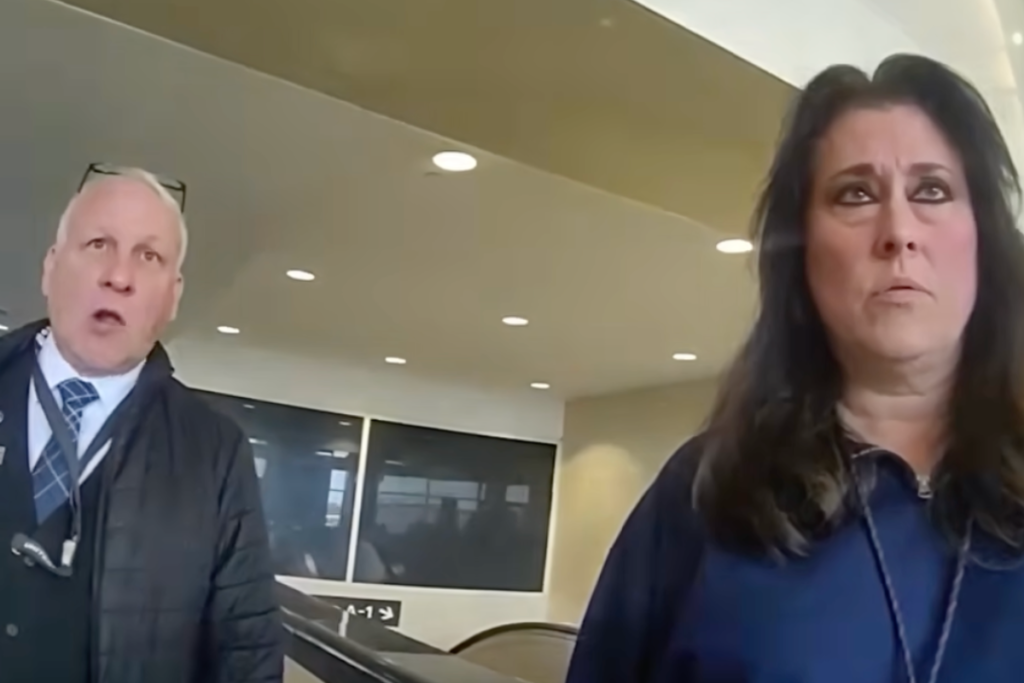
This divergence in interpretation highlights a broader issue in modern law enforcement: the balance between strict adherence to legal definitions and the exercise of discretion. While battery statutes are designed to protect individuals from unwanted contact, their application to situations involving minimal, non-violent touch can appear disproportionate to some observers. Yet for others, especially in professional environments emphasizing zero tolerance for harassment, such enforcement is seen as necessary.
Broader Implications for Airline Employees and Public Conduct
Beyond the immediate legal questions, the arrest raises important considerations for airline employees, who operate under intense scrutiny and strict codes of conduct even when off duty but on airport property. Airports are complex workplaces where multiple airlines, contractors, and security agencies intersect. Behavior that might be brushed off elsewhere can carry heavier consequences in such regulated spaces.
For airlines, the incident underscores the operational ripple effects of employee arrests. United Airlines was forced to remove a crew member at the last minute, potentially risking flight delays or cancellations affecting dozens or hundreds of passengers. While airlines routinely plan for contingencies, sudden removals due to legal issues create logistical challenges and reputational concerns.
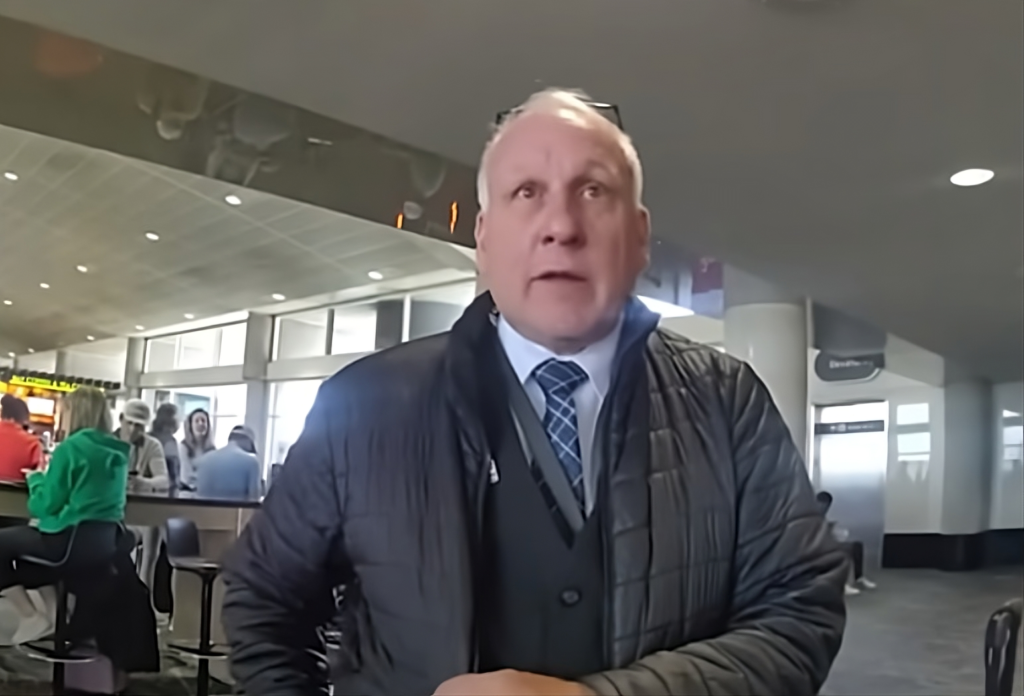
The case also serves as a cautionary tale about escalating everyday frustrations. Speakerphone use in public spaces is a common annoyance, yet the incident demonstrates how quickly a minor irritation can spiral when combined with confrontational communication and emotional responses. Both individuals involved might have benefited from disengaging or deferring the matter to supervisors rather than continuing the confrontation.
From a legal standpoint, the arrest illustrates how the definition of battery does not require injury or aggressive force. In many jurisdictions, including Florida, intentional and unwanted touching can be sufficient. This reality places a burden on individuals, particularly professionals in public-facing roles, to be acutely aware of personal boundaries even during disputes.
At the same time, questions remain about proportionality and policing priorities. Critics argue that arresting a flight attendant over a shoulder tap represents an inefficient use of police resources, particularly in a busy airport environment where officers must address serious security concerns. Supporters counter that consistent enforcement of the law is essential and that minimizing such incidents could discourage reporting of genuinely threatening behavior.
Ultimately, the case reflects the complexities of modern professional life, where interpersonal conflicts, legal standards, and public scrutiny intersect. It highlights the importance of conflict de-escalation, clear workplace policies, and understanding the legal implications of even brief physical contact. As the footage continues to circulate and debate persists, the incident stands as a reminder that in highly regulated spaces like airports, small actions can carry unexpectedly large consequences.
Yo folks, 88vin.stone just might be your lucky ticket. Heard some folks hitting big there. Gotta be in it to win it, right? Give 88vin.stone a try. You never know!