
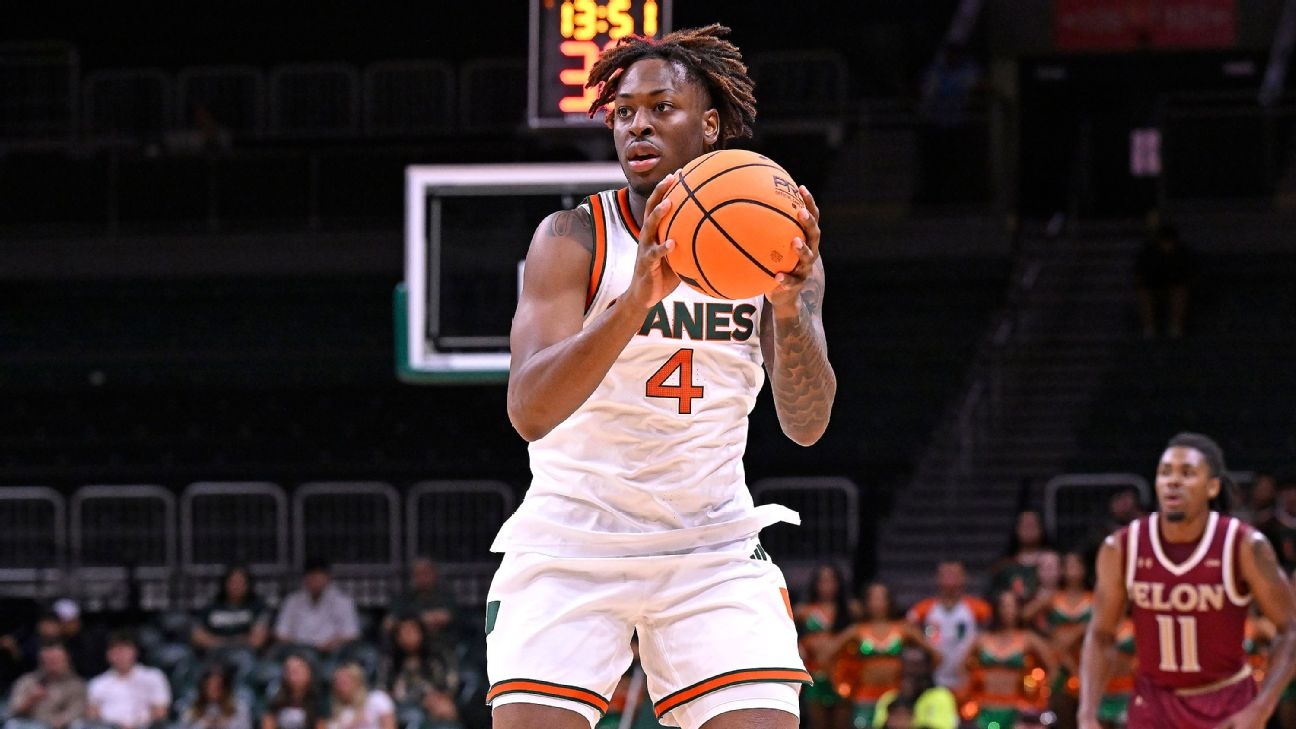
The University of Miami basketball program has been confronted with a sobering and deeply challenging development following the announcement that sophomore forward Marcus Allen has been diagnosed with non-Hodgkin lymphoma. The diagnosis, confirmed after routine medical testing, brings an abrupt pause to what had been an important season in Allen’s collegiate career and shifts the focus entirely to his health and recovery.
The Hurricanes confirmed that Allen will miss the remainder of the season as he undergoes chemotherapy treatments, marking a significant moment not only for the team but also for the wider college basketball community. At a time when the sport is often dominated by discussions of rankings, performances, and postseason aspirations, Allen’s situation has underscored the human realities that exist behind every athlete’s jersey.
Allen, a Miami native, joined the Hurricanes this season after beginning his college career at Missouri. His return home was viewed as a meaningful step both personally and professionally, as he sought to establish himself within a program undergoing transition under new leadership.
Before his diagnosis, Allen had appeared in multiple games for Miami, contributing valuable minutes in the frontcourt and offering a blend of physicality and effort that reflected his playing style. While his statistical output was modest, his presence was part of the team’s rotation, and his role was expected to grow as the season progressed. The announcement of his illness has brought an immediate and emotional halt to those expectations, replacing competitive goals with a singular priority: his well-being.
Diagnosis and Immediate Impact on the Season
The Hurricanes and Allen’s family revealed that the diagnosis of non-Hodgkin lymphoma followed routine medical tests, a detail that highlights how unexpectedly the situation emerged. There were no public indications prior to the announcement that Allen was facing a serious health concern, making the news all the more jarring for teammates, coaches, and supporters. Non-Hodgkin lymphoma is a form of cancer that affects the lymphatic system, and while treatment outcomes vary depending on the specific type and stage, chemotherapy is a standard component of care.
Allen has already begun his treatment regimen, confirming that the coming months will be dedicated entirely to his recovery rather than competition. From a basketball standpoint, Allen’s absence removes a young player who had been averaging 5.3 points and 3.1 rebounds per game in 18.9 minutes. Those numbers, while not headline-grabbing, reflected steady contribution and reliability within Miami’s rotation.
For a sophomore still adjusting to a new program and conference environment, the season represented an opportunity to solidify his role and continue his development. Instead, Miami will need to adjust its lineup while prioritizing support for Allen off the court. The program has made clear that competitive considerations are secondary to ensuring that Allen and his family receive the backing they need during this period. The announcement also carried emotional weight within the locker room.
Read : Viral Video Shows 7-Foot-3-Inch Tall Female Basketball Player Included in China Team
Head coach Jai Lucas emphasized Allen’s character as much as his athletic contributions, describing him as an incredible person and teammate who brings toughness and selflessness to the program every day. Such qualities, Lucas noted, would be critical as Allen confronts his diagnosis. The coach’s remarks reflected a broader sentiment within the program, framing Allen not simply as a player on the roster but as a central member of a collective that extends beyond the court. In college athletics, where players often cycle through programs quickly, moments like this reinforce the enduring bonds formed through shared experience and commitment.
Marcus Allen’s Basketball Journey and Background
Marcus Allen’s path to the University of Miami has been shaped by consistent achievement and high expectations. As a consensus four-star recruit out of high school, he entered the collegiate ranks with a reputation as a versatile forward capable of impacting the game on both ends of the floor. His high school career was particularly notable at Miami Norland High School, where he averaged 22.7 points and 13.2 rebounds per game and led the program to a state championship in 2024. Those performances established him as one of the most prominent prospects in the region and earned him recognition on the national stage.
Read : Indiana High School Basketball Referee Jeff Tamarri Collapses and Dies During Girls’ Game
Among the honors that underscored Allen’s standing was his selection to the Allen Iverson Classic All-American game, an event reserved for elite high school talent across the country. Participation in that game placed him alongside many of the nation’s top prospects and highlighted the level of regard in which he was held by recruiters and analysts. In addition to his success at Norland High, Allen also played a key role with AZ Compass Prep, helping the program reach the title game at the GEICO Nationals in 2023. That experience exposed him to high-level competition and further reinforced his readiness for the college game.
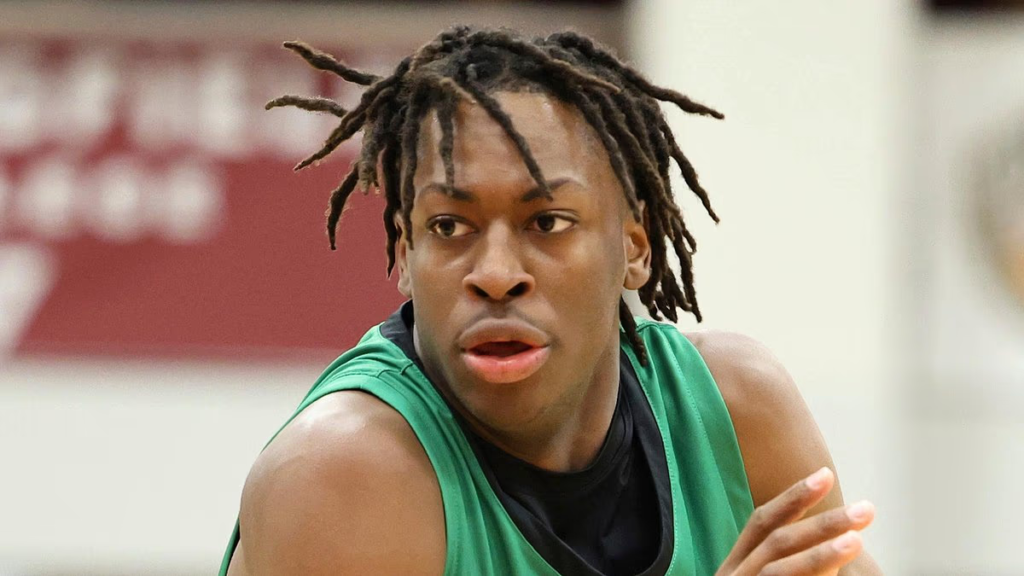
Allen began his collegiate career at Missouri, where he took his first steps into the demanding environment of Division I basketball. The transition from high school to college is often challenging, particularly for players adjusting to increased physicality, speed, and tactical complexity. While his time at Missouri was a formative period, Allen ultimately chose to transfer, returning to his hometown to join the Hurricanes. That move carried personal significance, allowing him to represent his city while continuing his development at a major program.
At Miami, Allen was seen as a player with room to grow. His sophomore season was expected to be one of adjustment and opportunity, as he acclimated to new systems and built chemistry with teammates. His averages of 5.3 points and 3.1 rebounds reflected a role player still finding consistency, but his minutes indicated trust from the coaching staff. Beyond statistics, his approach to the game and willingness to do the less visible work on the floor contributed to his value within the team structure. The diagnosis has temporarily halted that progression, but it has not erased the foundation he built through years of dedication and performance.
Support from the University, Family, and Broader Community
In the wake of the announcement, messages of support have centered on Allen’s strength, character, and the collective commitment to standing with him throughout his treatment. Coach Jai Lucas’s statement captured the tone adopted by the program, emphasizing unwavering support and confidence in Allen’s resilience. By highlighting Allen’s toughness and selflessness, Lucas framed the challenge ahead as one that aligns with the qualities Allen has already demonstrated as a teammate.
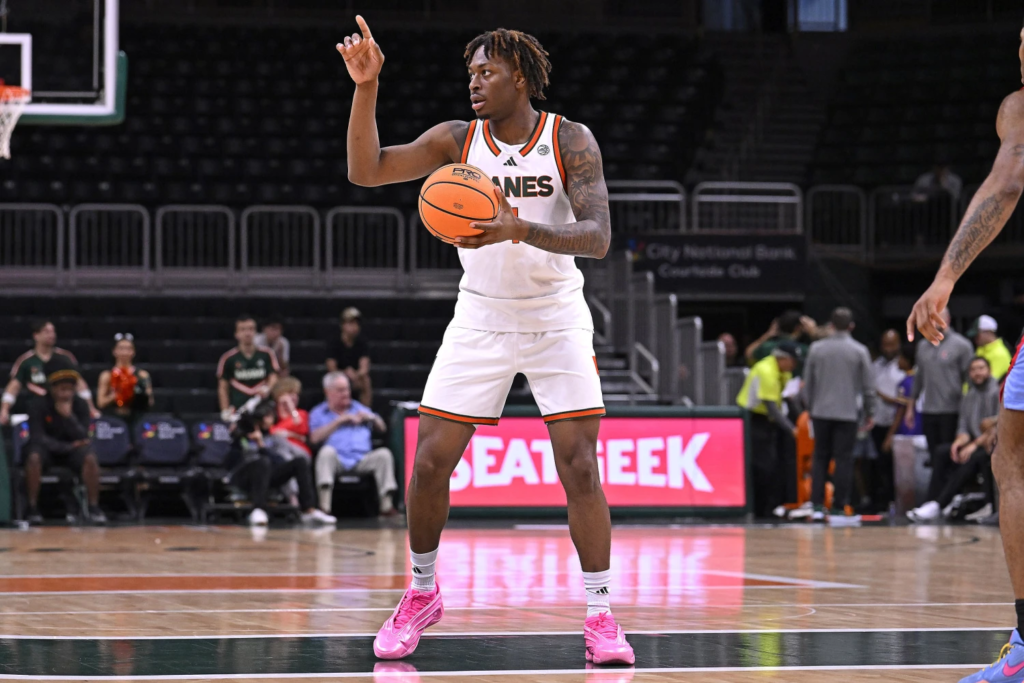
The statement also reinforced that the program’s responsibility extends beyond wins and losses, encompassing the holistic well-being of its players. Allen’s family echoed a similar sentiment in their own statement, expressing gratitude for the thoughts and prayers they have received during what they described as an extremely difficult time. Their words reflected a focus on faith and hope, emphasizing belief in healing and resilience. Such messages often resonate deeply within sports communities, where shared support can play a meaningful role in navigating personal hardship.
While the medical journey ahead will be defined by treatments and clinical milestones, the emotional and psychological dimensions are equally significant, and public expressions of solidarity can provide comfort and strength. Within the broader college basketball landscape, Allen’s diagnosis serves as a reminder of the unpredictability of life, even for young athletes in peak physical condition.
Routine medical tests, intended as a safeguard, became the means by which a serious illness was identified. This reality underscores the importance of comprehensive health monitoring in collegiate athletics and the value of early detection. It also places a spotlight on the support structures that universities must maintain to assist athletes facing medical challenges, from access to treatment to academic accommodations and mental health resources. As Miami moves forward with its season, Allen’s presence will continue to be felt in ways that transcend the box score.
Teammates will carry his influence into practices and games, motivated by the knowledge that one of their own is facing a far greater contest away from the court. For Allen, the coming months will be defined not by minutes played or points scored, but by perseverance and recovery. His basketball journey, marked by notable achievements and steady progression, now includes a chapter that extends beyond sport, one that will be followed closely by those who have watched his rise and now stand behind him in support.