
The rise of generative artificial intelligence tools like ChatGPT is profoundly reshaping education systems across the globe, particularly in the UK, where academic integrity is now being tested in unprecedented ways. According to a Guardian investigation, nearly 7,000 proven cases of university students Cheating in Exams Using AI tools were recorded in the academic year 2023–2024.
This figure marks a sharp increase compared to the previous year and underscores the rapid evolution of both AI technologies and their misuse in academic settings. While the figures are startling on their own, experts believe they represent only a fraction of actual misuse, as many instances go undetected due to the complex and often ambiguous nature of AI-generated content.
As UK universities race to adapt, they face the dual challenge of maintaining rigorous academic standards while embracing new technologies that are fast becoming indispensable in modern learning environments.
A Shifting Landscape: From Plagiarism to Cheating in Exams Using AI
The education sector has long dealt with the challenge of academic dishonesty, traditionally focusing on plagiarism as the primary threat. In the pre-AI era, particularly during the 2019–2020 academic year, plagiarism accounted for nearly two-thirds of all misconduct cases in UK universities.
However, the landscape shifted dramatically following the COVID-19 pandemic, when the migration to online assessments provided new opportunities for students to exploit digital tools in unauthorized ways.
By the time tools like ChatGPT became mainstream, academic cheating had taken a new form. The 2023–2024 academic year saw a rise in confirmed cases of AI misuse, equating to approximately 5.1 cases for every 1,000 students—up from 1.6 cases per 1,000 students in the prior year. Projections for the remainder of 2024 suggest this figure could climb to around 7.5 per 1,000, further emphasizing the growing scale of the issue.
In contrast, traditional plagiarism has seen a marked decline. Data shows that confirmed plagiarism cases dropped from 19 per 1,000 students in 2019–2020 to 15.2 in 2023–2024, with early estimates for this academic year suggesting another drop to about 8.5 per 1,000 students. This inverse relationship suggests that many students are now turning to generative AI as a more sophisticated and less detectable method of academic misconduct.
However, the real challenge lies in detection. Plagiarism is relatively straightforward to prove because it involves matching copied text with existing sources. AI-generated content, on the other hand, often appears original and unique, even when created entirely by a language model. Tools designed to detect AI-generated text are still in their infancy and frequently suffer from low accuracy and high false-positive rates.
Universities Scramble to Respond Amid Limited Tools and Policies
To better understand the scale and nature of this new wave of academic misconduct, The Guardian sent Freedom of Information requests to 155 UK universities, 131 of which responded with at least partial data. This wide-reaching inquiry revealed a patchwork of policies and recording practices.
Notably, over 27% of the universities that responded did not yet categorize AI misuse separately in their academic misconduct logs for 2023–2024, highlighting a lack of standardized protocols and a sector still coming to grips with the implications of generative AI.
Read : You Don’t Have to Go to University to Succeed in Life: UK PM Rishi Sunak
This inconsistency in tracking AI misuse points to a broader systemic challenge. Many institutions lack clear guidelines on what constitutes acceptable use of AI in assignments and assessments. As a result, enforcement varies widely across institutions, and many incidents may be going unreported or unrecognized.
The Higher Education Policy Institute’s survey in February 2024 adds another layer to the problem. It found that 88% of students had used AI tools like ChatGPT for some form of academic work. Whether for summarizing, brainstorming, or generating complete essays, students are integrating AI into their workflow at an unprecedented scale.
This growing reliance on AI is not entirely malicious; many students use it to enhance their understanding or structure their thoughts rather than to copy outright. Nonetheless, the blurred lines between legitimate and illegitimate use create a grey area that many institutions are ill-prepared to navigate.
Moreover, AI’s capacity to evade detection makes it an attractive option for students inclined to cheat. A study conducted by researchers at the University of Reading revealed that AI-generated work submitted through their own assessment systems went undetected 94% of the time. This suggests that existing academic integrity frameworks are ill-equipped to manage AI-enabled cheating.
Dr Peter Scarfe, an associate professor at the University of Reading and co-author of the study, emphasized that AI detection differs significantly from plagiarism detection. Without clear, provable evidence, institutions are often hesitant to accuse students for fear of false allegations, making enforcement even more difficult.
The Future of Education in the AI Era
As the debate around AI in education intensifies, a growing number of academics and policymakers are calling for systemic change. The reality, many argue, is that AI is here to stay. Rather than resisting it entirely, educational institutions must find ways to incorporate it into their teaching and assessment frameworks.
Dr Thomas Lancaster of Imperial College London, a leading academic integrity researcher, noted that AI misuse is hard to prove when students know how to edit the output. He expressed hope that students are still learning from the process, even when using AI tools.
This raises the question: how should universities respond? Simply increasing the number of traditional, in-person exams is not a sustainable solution. As Lancaster points out, rote learning and memorization are becoming less relevant in today’s rapidly evolving workplace. Instead, he advocates for an educational model that emphasizes skills not easily replicated by AI, such as interpersonal communication, collaboration, and critical thinking.
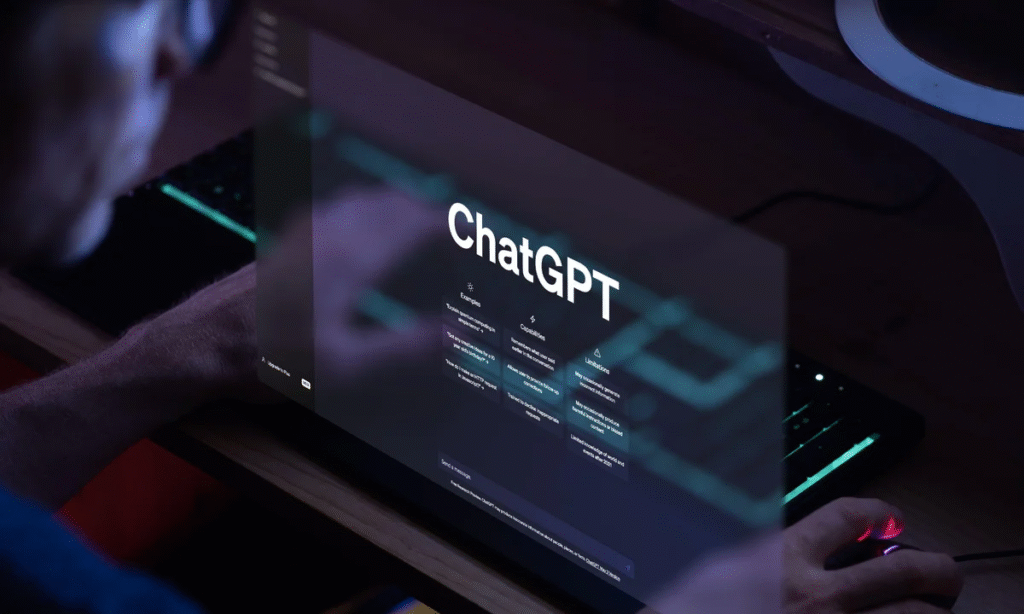
The experiences of students like Harvey and Amelia also offer insight into how AI can be used responsibly. Harvey, a final-year business management student, described using ChatGPT for idea generation and structuring assignments, noting that he rewrote AI-generated content in his own words. Amelia, a first-year music business student, highlighted AI’s usefulness for students with learning difficulties, such as her dyslexic friend who used it to structure her own notes.
These examples underscore the importance of context in evaluating AI use. Banning AI tools outright could hinder students who genuinely benefit from them. Instead, educators need to provide clear guidelines that differentiate between appropriate support and academic misconduct.
Governments and technology companies are also playing a role in this evolving dynamic. The UK government, for example, is investing over £187 million in national skills programs and has published guidance on the use of AI in schools. Technology companies, meanwhile, are actively targeting students with AI services. Google is offering free Gemini tool upgrades to university students for 15 months, while OpenAI provides discounted access to students in North America.
Such initiatives highlight the need for balanced policies that promote innovation while maintaining academic integrity. Integrating AI into the curriculum, rather than viewing it as a threat, may ultimately prove to be the best way forward. By doing so, universities can equip students with the skills needed to engage with emerging technologies responsibly and effectively.
Ultimately, the rise of AI in education reflects broader shifts in society and the workplace. As automation and digital tools become more embedded in daily life, the role of educators will need to evolve as well. The challenge lies not in preventing the use of AI, but in harnessing its potential while preserving the core values of education: integrity, creativity, and genuine learning.