
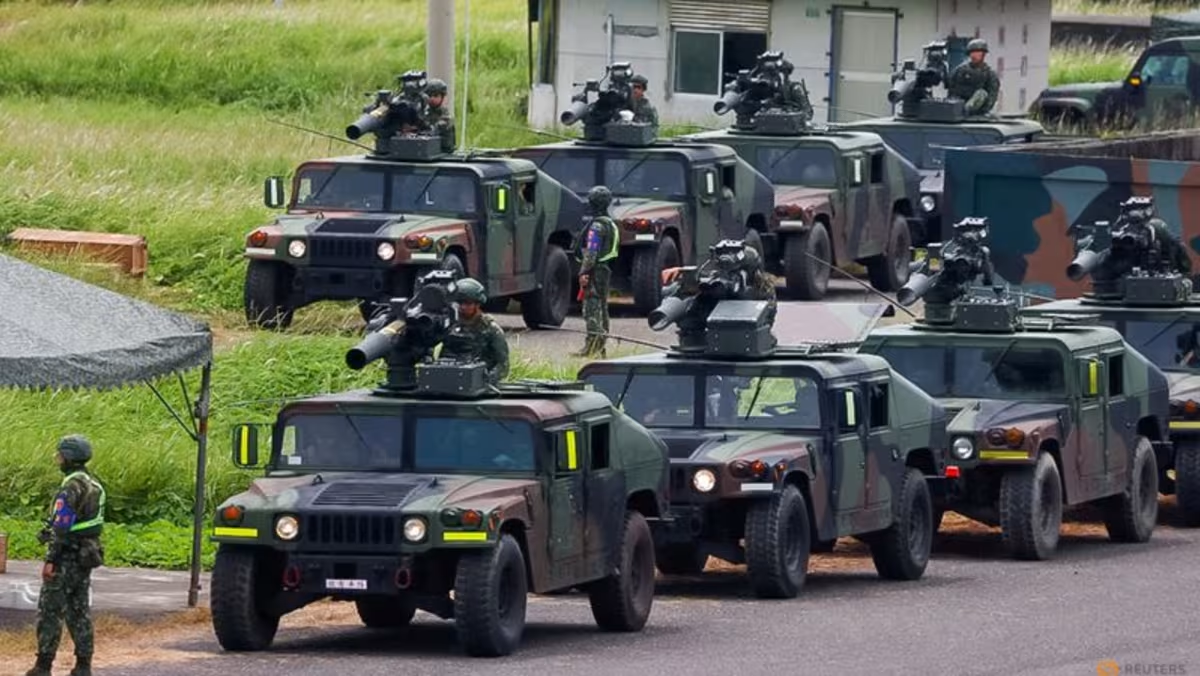
Military aid for Taiwan has become a pivotal element in the United States’ strategic response to rising tensions in the Asia-Pacific region. Recently, U.S. President Joe Biden approved $567 million in military aid for Taiwan, marking a significant step in strengthening the island’s defense capabilities.
This support, while a continuation of Washington’s longstanding backing of Taiwan, takes on greater urgency as China continues to increase both political and military pressure on the self-ruled island. The military aid for Taiwan is expected to bolster its ability to resist any potential aggression from Beijing and enhance its overall defense posture.
The decision came in the form of a directive that allows for the drawdown of defense articles and services from the U.S. Department of Defense, including military education and training. This move is part of a broader strategy by the U.S. to ensure Taiwan’s security in the face of an increasingly assertive China.
Read : China Freezes 9 U.S. Firms’ Properties Over Weapons Sales to Taiwan
Though the U.S. does not have formal diplomatic relations with Taiwan, military aid for Taiwan has long been a critical factor in preserving the island’s autonomy and deterring threats from the mainland.
Rising Tensions Between Taiwan and China
The approval of military aid for Taiwan comes at a time when tensions between Taiwan and China have reached new heights. Beijing considers Taiwan to be a breakaway province and has not ruled out the use of force to bring the island under its control.
Read : Biggest Challenge for Taiwan is to Face Powerful Rise of China: President Lai Ching-te
China has repeatedly demanded that the U.S. cease its military aid for Taiwan, viewing it as interference in its internal affairs. Despite these demands, the U.S. has continued to provide military support, arguing that it is essential for maintaining stability in the region.

This latest package of military aid for Taiwan is part of a larger effort by the U.S. to counter China’s growing influence and military presence in the Asia-Pacific. Earlier this year, the U.S. approved billions of dollars in military aid for Taiwan, signaling Washington’s commitment to ensuring Taiwan’s self-defense.
This aid includes advanced weaponry, such as air defense systems, missile technology, and naval capabilities, all aimed at enhancing Taiwan’s ability to deter any potential military actions by China.
China’s military maneuvers around Taiwan have also intensified in recent months. The Chinese military has conducted numerous drills near Taiwan’s airspace and waters, including large-scale amphibious landing exercises that some analysts believe simulate an invasion.
The military aid for Taiwan is therefore seen as a critical measure to help the island prepare for such scenarios and to strengthen its defenses.
U.S. Support Amid Growing Chinese Pressure
The military aid for Taiwan is not just about providing equipment and training; it also signals strong political support from Washington. While the U.S. does not officially recognize Taiwan as a sovereign state, it maintains close unofficial ties, with arms sales being a key component of that relationship.
The United States remains Taiwan’s largest supplier of military equipment, and this latest aid package only further solidifies that role.
China, on the other hand, has been increasingly vocal about its dissatisfaction with U.S. involvement in Taiwan. Beijing views the U.S. military aid for Taiwan as a direct challenge to its claims of sovereignty over the island.

In response, China has ramped up its rhetoric about “unification,” describing it as an inevitable outcome, regardless of U.S. actions. Chinese officials have also accused the U.S. of escalating tensions in the region and undermining peace.
Despite these criticisms, the U.S. insists that military aid for Taiwan is necessary to preserve peace and stability in the Taiwan Strait. Washington has pointed to Taiwan’s strategic location in the region and the need to maintain a balance of power to prevent conflict.
The U.S. has long maintained a policy of “strategic ambiguity” concerning Taiwan, meaning it has not explicitly stated whether it would come to Taiwan’s defense in the event of a Chinese invasion. However, military aid for Taiwan has remained a consistent aspect of U.S. policy, indicating that Washington is prepared to assist Taiwan in maintaining its security.
Taiwan’s Reaction and Future Outlook
Taiwan has welcomed the continued military aid from the United States. The Taiwanese government has repeatedly emphasized that it is committed to defending itself and that any future of the island should be decided by its people, not imposed by external powers. The military aid for Taiwan is seen as crucial in ensuring that the island can make its own decisions free from coercion.
However, Taiwan has faced some delays in receiving U.S. arms deliveries, including for advanced fighter jets like the F-16. The military aid for Taiwan, while robust, has encountered logistical hurdles, partly due to the high demand for military equipment globally and supply chain issues exacerbated by the COVID-19 pandemic.
Taipei has expressed concerns over these delays but remains confident that its partnership with the U.S. will continue to provide the necessary support in the long run.
Looking ahead, the approval of this military aid for Taiwan is likely to provoke further reactions from China. Beijing has not renounced the use of force to bring Taiwan under its control and may escalate its military activities around the island in response.

Nevertheless, the U.S. is expected to continue its military support, as it views Taiwan as a critical ally in the region and a key player in countering China’s influence.
The U.S. Congress has also been supportive of military aid for Taiwan, with many lawmakers advocating for even more robust support to ensure that Taiwan has the means to defend itself. This bipartisan backing indicates that military aid for Taiwan is likely to remain a consistent feature of U.S. foreign policy for the foreseeable future.
The approval of $567 million in military aid for Taiwan represents a crucial step in the ongoing efforts to bolster the island’s defense capabilities in the face of increasing pressure from China.
The military aid for Taiwan reflects the United States’ commitment to supporting its allies and maintaining peace and stability in the region. As Taiwan continues to face growing challenges from Beijing, this aid will play a key role in ensuring that the island can defend itself and determine its own future.
With China ramping up its military maneuvers and rhetoric about “unification,” the importance of military aid for Taiwan has never been more apparent.
As the geopolitical landscape continues to evolve, the U.S. and Taiwan will need to work closely to ensure that the island remains secure and that its people have the right to choose their destiny.
The military aid for Taiwan, while a subject of controversy with China, remains a vital aspect of regional stability and U.S. foreign policy.