
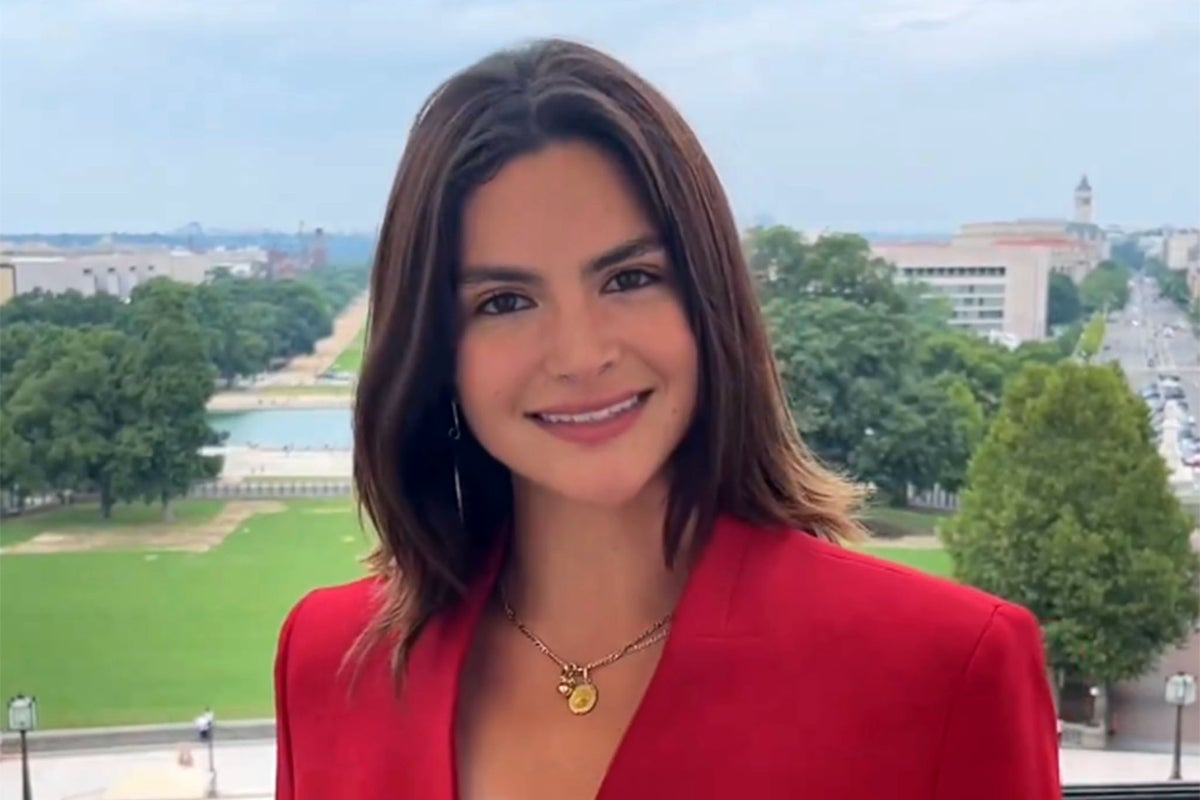
Valentina Gomez has emerged as one of the most controversial far-right voices in recent political discourse, gaining attention through provocative rhetoric, polarizing activism, and a growing presence within hardline nationalist circles. Her name recently returned to international headlines after the United Kingdom barred her from entering the country ahead of a planned far-right rally in London.
The decision, reportedly taken at the highest levels of government, underscores the increasing scrutiny placed on individuals whose speech is viewed as crossing into extremism. Gomez’s trajectory from a relatively unknown figure to a widely discussed political agitator reflects broader tensions around free speech, immigration, and the limits of acceptable public discourse in democratic societies.
Rise of a Provocative Political Voice
Valentina Gomez, a US-based influencer in her mid-twenties, built her public identity through a mix of social media activism and political ambition. Born in Colombia and later relocating to the United States, she positioned herself as a staunch conservative aligned with the “Make America Great Again” movement. Her content quickly gained traction among audiences receptive to nationalist and anti-immigration messaging, but it also drew sharp criticism for its inflammatory tone and targeting of specific religious communities.
Her rise to notoriety accelerated during her attempt to secure a Republican nomination for Congress. While her campaign ultimately failed, it provided a platform to amplify her views. During this period, she released a series of videos that openly attacked Islam, framing it as incompatible with Western values. One of the most widely condemned incidents involved her burning a copy of the Quran in a staged act intended to symbolize resistance against the religion. The act drew international outrage, with critics describing it as deliberately provocative and harmful to interfaith relations.
Gomez’s rhetoric did not soften after her electoral defeat. Instead, she doubled down on her messaging, continuing to publish videos and statements that called for Muslims to leave certain regions and, in some cases, advocating for the eradication of Islamic influence altogether. Her language frequently crossed into territory that critics labeled as hate speech, while supporters defended her right to express controversial opinions under the banner of free speech.
Her ability to generate attention, both supportive and critical, became central to her influence. By embracing confrontation and controversy, she carved out a niche within far-right political spaces, where such tactics often translate into visibility and engagement.
The UK Ban and Political Fallout
The decision to block Gomez from entering the United Kingdom marked a significant escalation in how governments respond to controversial figures. Initially granted permission through an electronic travel authorization system, her entry was later revoked after intervention by senior government officials. The justification cited was that her presence would not be conducive to the public good, a standard often used in cases involving individuals accused of promoting extremism or social division.
Gomez had been scheduled to speak at a rally organized by a prominent far-right activist in London. The event itself was expected to draw significant attention, given the scale of previous gatherings and the presence of high-profile speakers. Her participation would likely have amplified the already contentious nature of the rally, particularly given her history of inflammatory remarks about Muslims and political institutions.
The UK government’s move placed Gomez in the same category as other controversial figures who have been denied entry due to concerns over their statements and potential impact on public order. Officials emphasized that while freedom of expression is a fundamental democratic value, it does not extend to the promotion of hatred or rhetoric that could incite division or violence.
🇬🇧🇺🇸 UK bans MAGA influencer Valentina Gomez from attending Tommy Robinson’s Unite the Kingdom rally, revoking her travel authorization just days after approving it.
— Ghana Chronicles (@_GhChronicles) April 20, 2026
Officials say her presence “would not be conducive to the public good.” pic.twitter.com/soOjC08av9
The ban also sparked debate over consistency in how such decisions are applied. Critics argued that authorities must ensure equal standards regardless of the target of the speech, warning against perceptions of selective enforcement. Supporters of the ban, however, maintained that Gomez’s documented statements and actions justified the decision, particularly in a climate where tensions around religion and identity remain sensitive.
Gomez responded defiantly to the ban, using social media to criticize the decision and reiterate her views. Her reaction further fueled the controversy, drawing attention not only to her exclusion from the UK but also to the broader issues of censorship, political expression, and the boundaries of acceptable discourse.
A Symbol of Broader Cultural Conflict
Valentina Gomez’s rise and subsequent ban from the UK highlight a deeper cultural and political divide that extends beyond any single individual. She represents a growing category of influencers who operate at the intersection of politics, social media, and ideological activism. These figures often rely on provocation as a strategy, leveraging outrage to expand their reach and solidify their support base.
Read : Influencer Sneako Punched While Livestreaming on New York City Streets
Her case also illustrates the challenges governments face in balancing free speech with the need to maintain social cohesion. In democratic societies, the right to express controversial or unpopular opinions is protected, yet there are limits when such expressions are seen as promoting hatred or undermining public safety. Determining where that line lies is an ongoing and often contentious process, shaped by legal frameworks, political pressures, and public sentiment.
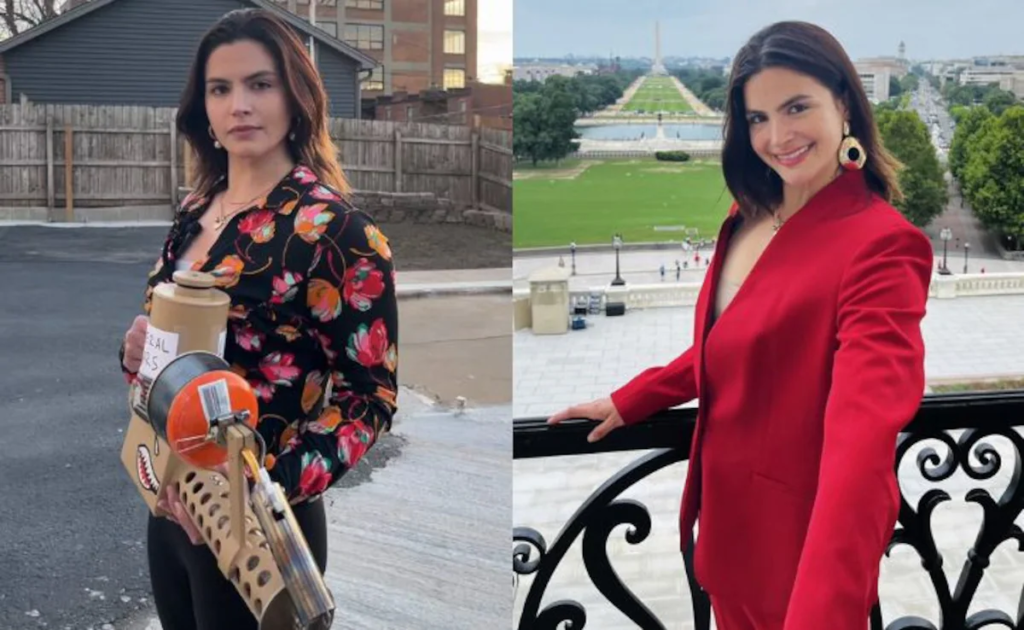
The reaction to Gomez’s actions and rhetoric has been sharply divided. Supporters argue that she is exercising her right to criticize a religion and advocate for her beliefs, framing her as a victim of censorship. Critics, on the other hand, contend that her statements go beyond criticism and enter the realm of dehumanization and incitement, making her exclusion from platforms and events not only justified but necessary.
Her involvement in large-scale rallies further complicates the issue. Events that bring together thousands of participants can amplify messages and increase the risk of unrest, particularly when those messages target specific communities. Authorities must weigh the potential consequences of allowing such figures to participate against the principles of open debate and political expression.
The controversy surrounding Gomez also intersects with the role of social media in shaping modern political discourse. Platforms have enabled individuals like her to reach global audiences without the traditional gatekeeping of mainstream media. This democratization of communication has expanded the range of voices in public debate but has also made it more difficult to manage the spread of extreme or harmful content.
As governments and societies continue to grapple with these challenges, cases like Gomez’s serve as a focal point for broader discussions about the future of free speech, the responsibilities of public figures, and the mechanisms used to address extremism. Her story is not an isolated incident but part of a larger pattern that reflects evolving dynamics in politics and communication.
In the end, Valentina Gomez remains a deeply polarizing figure whose influence extends beyond her immediate actions. Whether viewed as a defender of free expression or a promoter of divisive rhetoric, her presence in public discourse continues to provoke strong reactions and raise important questions about the limits of tolerance in an increasingly interconnected world.
Great article! Really insightful perspective. I found it very helpful and informative. mfxrgkejofarnrsvslvlpirbboanxa
Great article! Really insightful perspective. I found it very helpful and informative. gdegigrtmzlkcproudwvsarjxuhkec
This was a great reminder for me. Thanks for posting.
This content is gold. Thank you so much!
I appreciate how genuine your writing feels. Thanks for sharing.
I’ve read similar posts, but yours stood out for its clarity.
This is now one of my favorite blog posts on this subject.
This gave me a whole new perspective on something I thought I already understood. Great explanation and flow!
I’ve read similar posts, but yours stood out for its clarity.
So simple, yet so impactful. Well written!
This is now one of my favorite blog posts on this subject.