
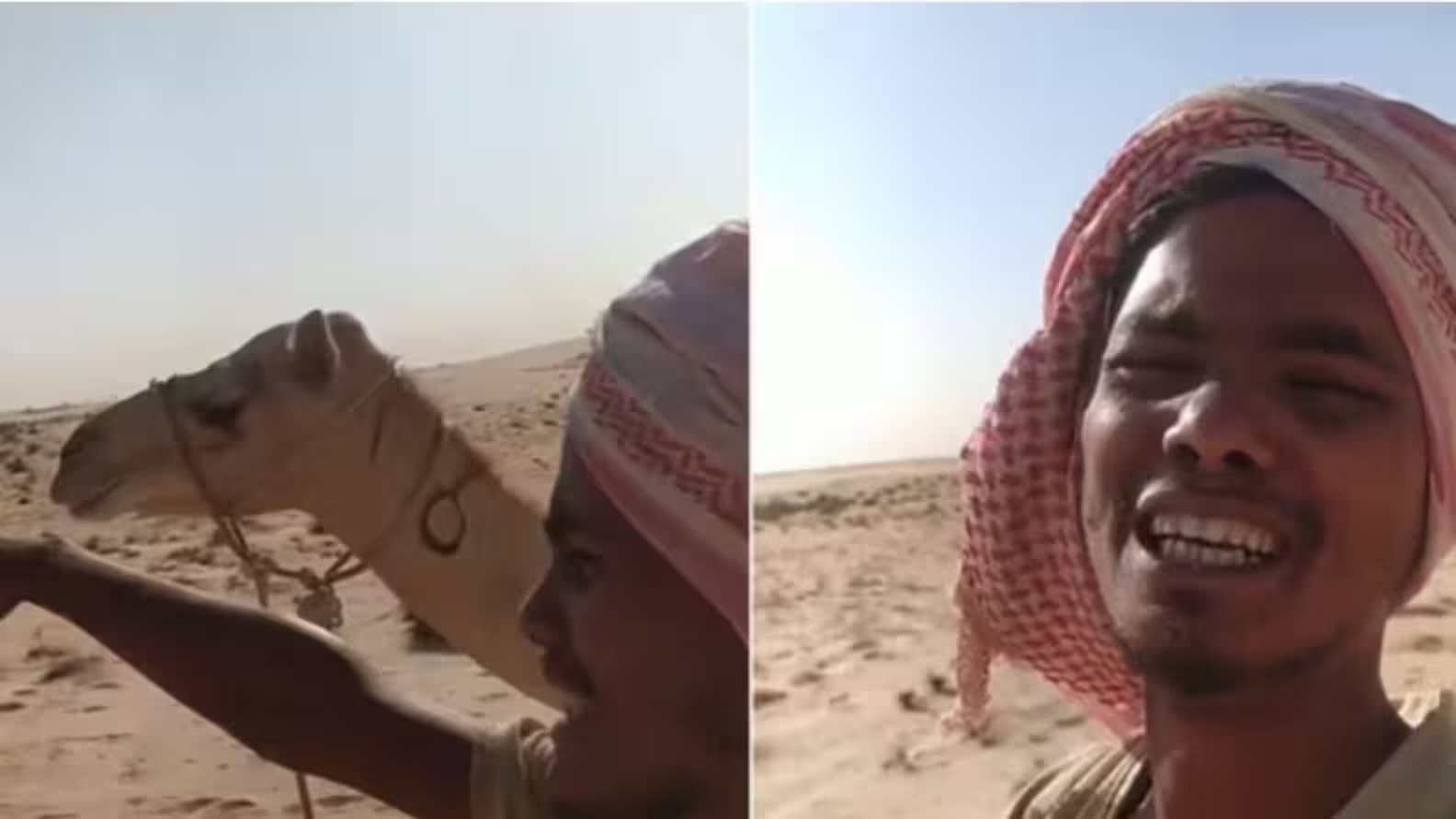
The recent viral video of an Indian Man Stranded in Saudi Desert alongside a camel and pleading for help from Prime Minister Narendra Modi, sent shockwaves across social media. His emotional appeal — “Please help me, I will die” — touched millions of hearts and triggered widespread concern among Indian citizens and the diaspora.
However, subsequent investigations by both Indian and Saudi authorities have painted a much more complex picture, suggesting that the video’s claims may not be entirely true. This incident sheds light not only on the vulnerabilities of migrant workers abroad but also on the growing phenomenon of misinformation and sensationalism in the digital age.
Indian Man Stranded in Saudi Desert
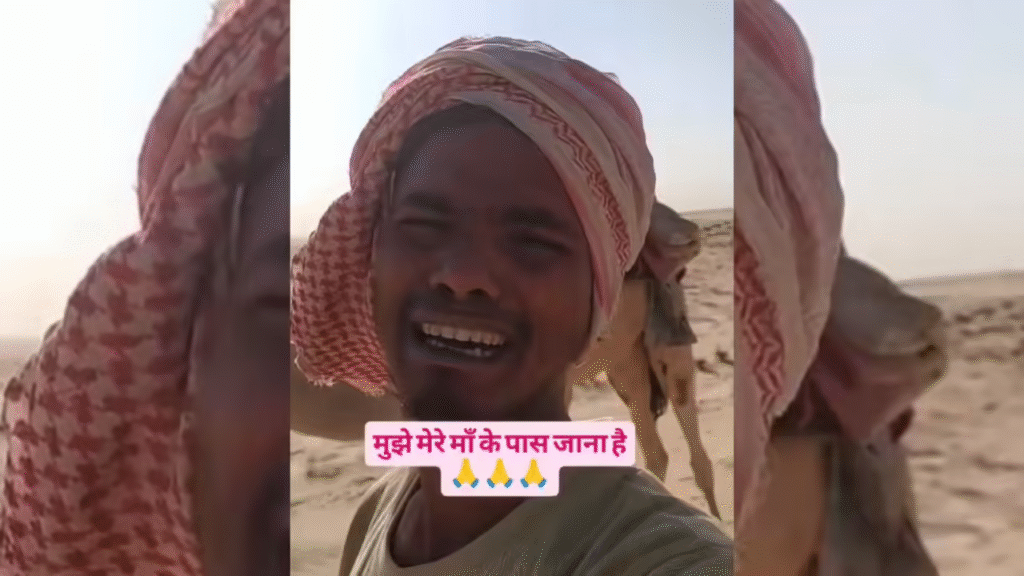
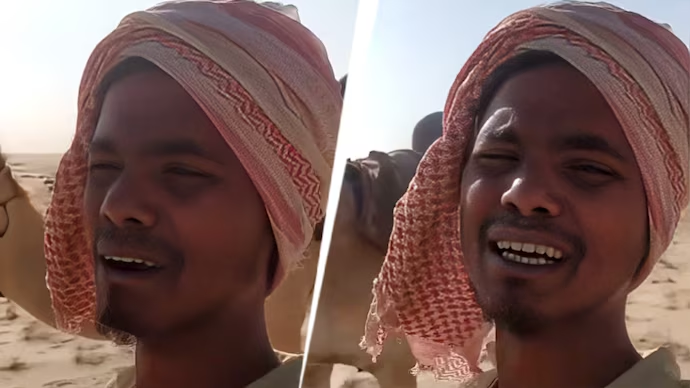
The viral clip, which surfaced on social media platforms last week, showed a visibly distressed man standing in an arid desert landscape, accompanied by a camel. In the short video, the man identified himself as a resident of Handia in Prayagraj district, Uttar Pradesh. He claimed that his employer, identified only as “Kapil,” had seized his passport, preventing him from returning to India. In a trembling voice, he accused his employer of threatening to kill him and begged for intervention from Indian authorities, saying, “Please help me, I will die. I just want to go back to my mother.”
The video quickly went viral across platforms such as X (formerly Twitter), Facebook, and WhatsApp, with users tagging Indian officials and urging immediate action. Many online posts included messages like, “Honourable Foreign Minister, please take immediate cognisance. A resident of Handia, Pratappur in Prayagraj, is stranded in Saudi Arabia.” The emotional tone of the man’s plea struck a chord with viewers, prompting calls for humanitarian assistance and diplomatic intervention.
Within hours of the video’s circulation, the Indian Embassy in Riyadh responded publicly. In a post on X, the Embassy stated, “The Embassy has been trying to locate the person. No further action can be taken as the video does not contain any details about the location/province in Saudi Arabia, or contact number or employer details.” The statement indicated that while officials were attempting to verify the man’s claims, the lack of identifying information posed significant challenges.
सऊदी अरब में रह रहे प्रयागराज के एक युवक का वीडियो सोशल मीडिया पर वायरल हो रहा है। जिसमें युवक मदद की गुहार लगा रहा है। उसका कहना है कि कफील ने उसका वीज़ा रख लिया है और उसको आने नहीं दे रहा। उससे कड़ी धूप मे रेगिस्तान मे ऊंट चरवाया जा रहा है। अंकित भारतीय उर्फ इंद्रजीत कमाने के… pic.twitter.com/Pslbf4bq6J
— Dainik Jagran (@JagranNews) October 24, 2025
Indian authorities began coordinating with Saudi officials to trace the individual, fearing that he might indeed be in danger. The timing of the video added urgency, as Saudi Arabia has been undergoing significant labour reforms aimed at improving the conditions of foreign workers. However, what appeared at first to be a desperate cry for help soon took an unexpected turn following official investigations.
Saudi Authorities Dismiss Claims as Baseless
After the video gained international traction and sparked diplomatic correspondence, Saudi Arabia’s Eastern Province Police initiated a formal inquiry. The investigation sought to verify the man’s identity, his claims of being held against his will, and the alleged confiscation of his passport by his employer.
The results of the inquiry, released by Saudi Public Security on X, contradicted the man’s allegations. The statement read, “The claim by an expat expressing his desire to return to his country has no validity. It was documented and posted to increase the number of views on his account on one of the social media platforms.” Authorities confirmed that the man had been located and summoned for questioning. After reviewing his case, they determined that there was “no dispute with the employer,” and that the entire episode had been fabricated for social media attention.
— ﮼ابو﮼ ﮼نواف﮼ الغالبي #قضاعه 🇸🇦 KSA (@gg202020) October 24, 2025
Furthermore, Saudi Public Security added that “legal measures have been taken against him in coordination with the relevant authorities,” indicating that the man could face charges for spreading misinformation or misusing social media under Saudi cybercrime laws.
Read : Ahmed al-Doush Jailed in Saudi Arabia for 10 Years Over a Now-Deleted Tweet from 2018
The Indian Embassy, after receiving updates from Saudi authorities, refrained from making additional public comments but continued to monitor the situation. It is understood that diplomatic officials have sought to ensure that the man’s rights are protected during any legal proceedings.
This development prompted a wave of debate online. While some users expressed relief that the individual was safe, others criticized him for allegedly exploiting public sympathy. Many commentators pointed out that such incidents undermine genuine cases of worker exploitation, which remain a persistent issue in parts of the Middle East despite recent labour reforms.
Labour Rights, Reforms, and the Kafala Legacy
To understand why the video initially appeared plausible to so many, it is essential to examine the historical context of migrant labour in Saudi Arabia. For decades, the Gulf region’s economic boom has been sustained by millions of migrant workers from South and Southeast Asia, including India, Bangladesh, Pakistan, Nepal, and the Philippines. Many of these workers, particularly those in construction, domestic service, and agriculture, have faced severe hardships under the now-reformed “kafala” (sponsorship) system.
Introduced in the 1950s, the kafala system required all foreign employees to be sponsored by a local employer, or “kafeel,” who effectively controlled their legal and professional status. Under this arrangement, employers had the power to confiscate workers’ passports, deny them permission to leave the country, and restrict their ability to change jobs. This system, which critics likened to modern-day indentured servitude, enabled widespread exploitation and abuse. Workers often reported long hours, unpaid wages, and unsafe living conditions, with little recourse to legal protection.
Human rights organizations and foreign governments repeatedly called for reform, citing numerous cases of workers trapped in abusive situations. The emotional authenticity of the Prayagraj man’s video resonated strongly because it echoed the documented experiences of countless others over the years.
In 2021, as part of Crown Prince Mohammed bin Salman’s Vision 2030 reform agenda, Saudi Arabia announced a landmark decision to abolish major elements of the kafala system. The reforms, which came into effect in March 2021, allowed migrant workers to change jobs without employer consent, apply directly for exit and re-entry visas, and leave the country without their employer’s approval — rights that were previously denied under the old system.
The Saudi government presented these reforms as a crucial step toward modernizing the labour market and improving human rights. Nearly 13 million migrant workers, including about 2.5 million Indians, are expected to benefit from these changes. However, international labour groups have noted that enforcement remains inconsistent and that isolated cases of abuse persist, particularly among domestic workers who still face unique vulnerabilities.
The recent viral video, though discredited, tapped into these longstanding fears. The idea that a migrant worker might still be trapped or mistreated underlines the fragile trust many foreign workers have in local systems of protection. This context helps explain why the man’s claims gained instant credibility before official verification.
Digital Virality and the Perils of Online Misinformation
Beyond the immediate facts of the case, the incident highlights a broader and troubling trend — the unchecked spread of misinformation through social media. In today’s hyperconnected world, emotional and sensational content often goes viral before its authenticity can be verified. Platforms such as X, Facebook, and TikTok reward engagement, leading some users to fabricate or dramatize stories for visibility and sympathy.
In this case, Saudi authorities concluded that the Prayagraj man’s video had been “recorded and published only to increase views” on his social media account. If accurate, this motive reflects the growing pressure some users feel to create dramatic or attention-grabbing content, even at the expense of truth. Such acts, while perhaps initially intended as harmless stunts, can have real-world consequences — consuming diplomatic resources, misleading the public, and potentially undermining legitimate cases of human rights violations.
India’s Ministry of External Affairs and its embassies abroad often deal with a high volume of genuine distress calls from migrant workers facing unpaid wages, poor working conditions, or legal disputes. False alarms like this one risk diverting attention from those who truly need assistance. Furthermore, when such incidents are exposed as hoaxes, they can erode public trust in future appeals for help, making it harder for genuine victims to be believed.
Nevertheless, this episode also demonstrates the responsiveness of both Indian and Saudi authorities in an era of digital diplomacy. The swift acknowledgment from the Indian Embassy and the prompt investigation by Saudi police underscore how international cooperation can function effectively in addressing viral crises, even when the claims prove unfounded.
It also serves as a reminder that while social media has empowered individuals to raise awareness and seek support in unprecedented ways, it also demands responsibility. Viewers, journalists, and policymakers alike must practice discernment before amplifying unverified claims.
In the end, the case of the “Saudi desert plea” stands as both a cautionary tale and a reflection of our times — a story that began with a desperate cry for help and concluded with a lesson about truth, reform, and the profound power of digital narratives in shaping global perceptions.