

Khanhi, a California woman, never imagined that a routine check-in with Immigration and Customs Enforcement (ICE) would turn into a nightmare for her family. Her husband, a Vietnamese Man Came to US at The Age of 5, was unexpectedly taken into custody earlier this year. Now, she fears that he may be deported, leaving her and their young daughter to navigate life without him.
The couple’s journey began decades ago when they were both brought to the U.S. as children. Their mothers made the courageous decision to flee Vietnam, seeking a better future in an unfamiliar country. Khanhi was just a year old when she arrived, while her husband was five.
Over the years, she was able to secure U.S. citizenship, but her husband remained in the country under an “order of supervision.” He had a valid work permit for more than a decade and complied with the requirement to check in with ICE regularly.
This year, however, everything changed. Khanhi’s husband left for his usual check-in at an ICE office in Adelanto, California, but he never came home. He was detained without warning, and the family’s world was turned upside down.
Read : Tufts Student Rümeysa Öztürk Cannot Be Deported Without Court Order, Judge Says
Their toddler, Evelyn, who had grown accustomed to hearing her father’s voice at night, now only gets to see him through video calls. The emotional toll has been overwhelming for Khanhi, who has struggled to explain the situation to their young daughter.
A Family’s Nightmare Begins
For years, Khanhi and her husband built a stable life together. He played a central role in raising their daughter, acting as her primary caregiver while Khanhi worked to support the family financially. He took care of everything—changing diapers, taking Evelyn to doctor’s appointments, preparing meals, and making sure she felt safe and loved.
Now, that sense of security has been shattered. Khanhi recalls the devastating moment when she realized her husband had been detained. She had expected him to return home after his check-in, just as he had done in previous years.
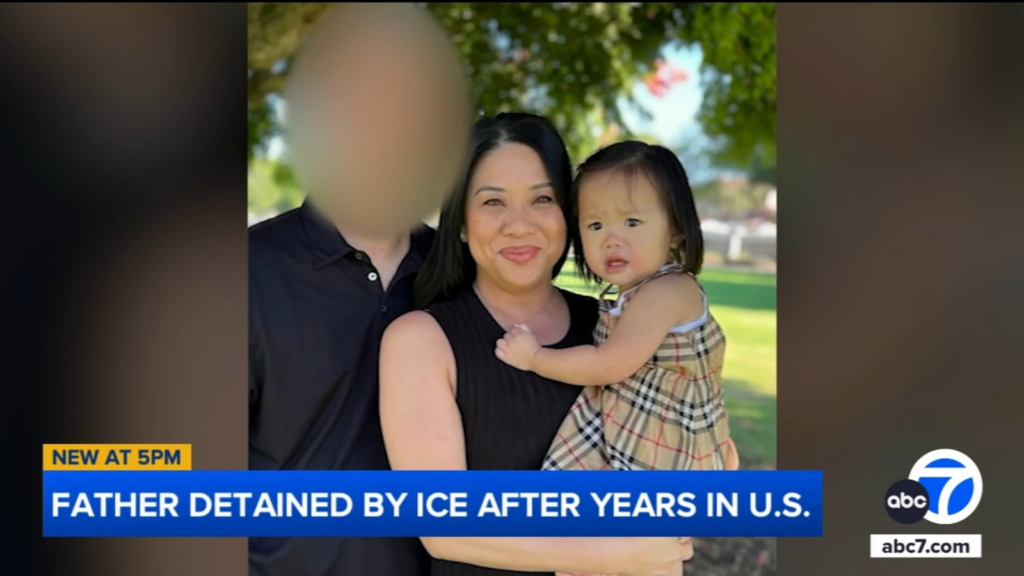
Instead, she received the news that he had been taken into custody. The drive home that day was filled with tears, and when she arrived, she was met with an empty house. The pain of explaining to her daughter why her father was suddenly gone was almost unbearable.
Read : Germany to Tighten Rules on Deporting Foreigners Who Glorify Terror Acts Amid Gaza War
Despite her deep love for her husband and the life they have built together, Khanhi feels powerless against the immigration system. She had once believed that there would be a fair process—an opportunity to stand before a judge and make a case for why her husband should stay.
However, she now realizes that the system does not offer such reassurances. Instead, she is left with uncertainty, fear, and the looming possibility of permanent separation.
The Challenges of Immigration Status
The struggles faced by Khanhi’s husband are not unique. Many Vietnamese immigrants who came to the U.S. as children now find themselves in legal limbo.
After the Vietnam War, thousands of Vietnamese refugees fled to America, seeking safety and stability. However, due to the complexities of immigration law and shifting policies over the decades, many never obtained citizenship.
Joseph Navales, an advocate with Asian Americans Advancing Justice in Southern California, explained that many Vietnamese immigrants were granted temporary protections because, at the time, there was no formal process for deporting them.
They were allowed to live and work in the U.S., but their legal status remained uncertain. As a result, they built lives, families, and careers in America while remaining vulnerable to detention and deportation.
Khanhi’s husband is one of many individuals who, despite following the rules and contributing to society, now face the possibility of being forcibly removed from the only home they have ever known. With immigration policies becoming increasingly strict, families like theirs are left with little hope of intervention or leniency.
The Impact on Families
The emotional and financial toll of her husband’s detention has been immense for Khanhi. While she has always been the primary earner, her husband played an equally crucial role in their household. His absence has left a significant gap in their lives, one that cannot easily be filled.
Beyond the immediate struggles, the potential deportation of Khanhi’s husband raises broader questions about the fairness and humanity of immigration policies. Should individuals who have spent nearly their entire lives in the U.S., contributing to society and raising families, be forcibly removed? What happens to the spouses and children left behind?
For Khanhi, the answers are painfully clear. Her husband is not just an immigrant—he is a father, a partner, and an integral part of their family. His deportation would not only tear them apart but also create lasting trauma for their daughter.
Despite the challenges, Khanhi remains determined to fight for her family. She hopes that their story will shed light on the struggles faced by countless other immigrant families and inspire change in a system that often prioritizes enforcement over compassion.