
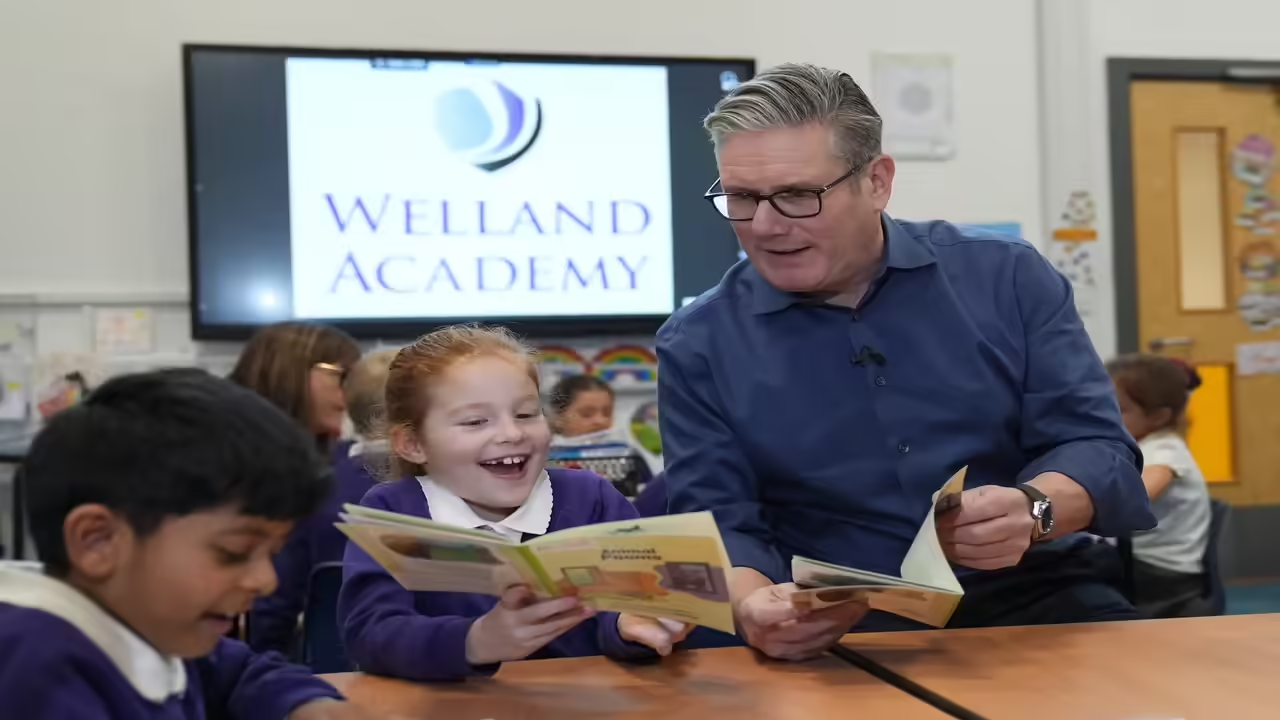
Sir Keir Starmer’s visit to Welland Academy in Peterborough became unexpectedly lively when he joined pupils in the viral ‘6-7’ trend during a reading session. What began as a routine engagement focused on education and free school meals momentarily shifted into a burst of laughter and hand gestures as students reacted to the prime minister’s participation in the popular meme.
The episode, though light-hearted, drew a humorous but pointed remark from a teacher who reminded him that the trend has become a classroom disruption in many schools. Starmer’s quick apology, combined with his awareness of the joke’s unintended impact, set the tone for a visit that balanced informality with a policy-driven message about the importance of school nutrition and tackling child poverty.
Background and Origins of the Viral ‘6-7’ Trend
The “6-7” trend, though seemingly random to outsiders, has evolved into a widely recognised meme among school-aged children. The expression surfaces when “six” and “seven” are mentioned together, prompting one person to call out “six” and others to respond “seven,” often accompanied by a juggling-style hand gesture. This simple cue has spread rapidly across classrooms, corridors and online platforms, becoming an instinctive reaction for many students.
Its origins trace back to rapper Skrilla’s track “Doot Doot (6 7),” which references a 6ft 7in basketball player. The phrase gained further cultural momentum through viral compilations and memes featuring NBA player LaMelo Ball, eventually crossing into mainstream youth culture. As with many digital trends, its appeal lies in its unpredictability, speed of recognition and shared understanding among peers.
While the gesture is often harmless, teachers across the UK have expressed concern that it interrupts lessons and encourages spontaneous outbursts. Some schools have even implemented minor disciplinary measures to curb its classroom use.
🚨 WATCH: Keir Starmer does the 6-7 trend with primary school children pic.twitter.com/0PekWAQ5Uz
— Politics UK (@PolitlcsUK) November 24, 2025
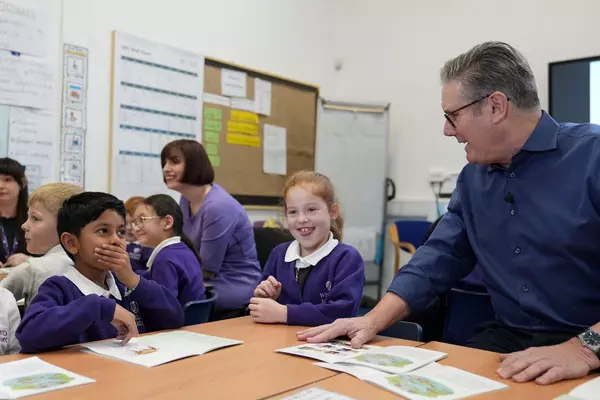
This broader context explains the teacher’s reaction when Sir Keir Starmer, reading with children during his visit, joined in the trend without realising that it had become a small behavioural challenge in some classrooms. The moment occurred when a pupil pointed out that they were on page 67 of their reading book, prompting Starmer to mimic the meme’s gesture. Several pupils quickly followed suit, creating a brief wave of excitement before the session returned to its planned routine.
The Prime Minister’s Apology and Reaction from Staff
Once Sir Keir Starmer left the reading area, the teacher accompanying the group commented humorously, “Thanks for that, prime minister, for that lovely 6-7. You know, children get into trouble for saying that in school.” Her light-hearted remark underscored the tension teachers often face between maintaining classroom order and navigating the unpredictable influences of digital culture. Starmer, visibly surprised, laughed and placed his head in his hand before replying, “Oh, do they… Sorry about that,” followed by the playful defence, “I didn’t start it, Miss.”
The exchange highlighted the ease with which modern trends can blur the boundaries between formal public engagements and the everyday realities of school environments. Sir Keir Starmer’s willingness to join pupils in a familiar cultural moment underscored his intention to connect with them on their level. Yet it also illustrated how even minor gestures from public figures can have unintended effects in structured settings like classrooms.
Read : 21-Year-Old Arrested Over Arson Attacks on Two Properties and a Car Linked to Sir Keir Starmer
Despite the humorous misstep, the encounter reinforced a recurring theme in political visits to schools: the challenge of balancing relatability with awareness of institutional norms. Staff members at Welland Academy took the moment in stride, ensuring the visit remained centred on its broader educational and policy-driven purposes.
The friendly tone of the teacher’s remark indicated no offence was taken, and pupils returned quickly to their activities. For many observers, the prime minister’s response—immediate, good-natured and self-aware—reflected an understanding of the importance of maintaining respect for teachers’ authority, even in moments of light-hearted spontaneity.
Focus on Free School Meals and the Fight Against Child Poverty
Beyond the viral moment, Starmer’s visit carried a significant policy message. Accompanied by education secretary Bridget Phillipson, he toured the school to highlight the government’s commitment to expanding access to free school meals for families receiving universal credit. The initiative, set to begin in September 2026, is expected to extend eligibility to an additional half a million children.
Read : Maria Fernanda Rojaz Ortiz Killed in Plane Crash on Her First Day as a Flight Nurse
During his time in the dining hall, Starmer helped serve meals including pasta, meatballs, salad and garlic bread, speaking with kitchen staff and meeting pupils as they sat for lunch. He noted that the policy aims to address circumstances in which a school meal may be the only substantial or nutritious food some children receive in a day. In a subsequent interview, he emphasised that the expanded programme is designed not only to provide daily nutrition but also to support educational outcomes by ensuring children can focus and learn effectively.
The initiative forms part of the government’s broader commitment to reducing child poverty. Starmer reiterated that improving access to healthy meals supports long-term goals related to academic achievement, wellbeing and equality. For many families struggling with rising costs, securing consistent access to nutritious food has become increasingly challenging. By widening eligibility for free school meals, the government aims to reduce pressure on vulnerable households while strengthening the foundations for children’s long-term development.
The visit also provided an opportunity to highlight the essential role of school catering staff, who work daily to deliver meals that meet nutritional standards while navigating tight budgets and high demand. By engaging directly with staff during the meal service, Starmer and Phillipson reinforced their message that educational support extends beyond the classroom and relies on an entire network of professionals dedicated to children’s wellbeing.
Throughout the visit, the prime minister maintained a focus on the broader social and economic implications of the policy, noting that improving access to food supports both learning and long-term societal outcomes. His comments underscored the government’s intention to integrate nutritional support into its wider strategy for combating child poverty and promoting educational opportunity across the country.
The brief episode involving the “6-7” gesture, while overshadowing the visit momentarily, did not detract from the central message of the government’s efforts to support families and improve learning conditions. Ultimately, the exchange provided a humanising moment during a policy-focused engagement, reflecting the unpredictable and lively nature of school environments and the importance of fostering genuine connections with pupils while advancing meaningful initiatives aimed at their wellbeing.
Needed an alternative and tried pk7app. Found what I needed ASAP and the app works great. Try them at pk7app.
Topical CBD https://www.cornbreadhemp.com/collections/thc-gummies products have carved out a particular niche in skincare and muscle treatment. Creams, salves, and roll-ons channel cannabidiol right to targeted areas, providing localized assistance without entering the bloodstream. Athletes, hands-on laborers, and whoever experiencing bodily tension appreciate this hands-on application technique. Combined with compounds like menthol or arnica, topical blends provide a comforting multi-layered approach to ease.